What an Instruments & Measurement OEM Should Prove Up Front
Author
Date Published
Reading Time

Before technical evaluators shortlist any supplier, an Instruments & Measurement OEM should prove the fundamentals: calibration accuracy, standards compliance, traceable testing, and long-term reliability in real operating conditions. In high-stakes industrial environments, upfront evidence is not a sales advantage—it is a qualification threshold that shapes risk, performance, and procurement confidence.
Why the qualification bar is rising for every Instruments & Measurement OEM
A clear shift is underway across industrial procurement. Technical evaluators are no longer satisfied with broad claims about precision, durability, or global service. They increasingly expect an Instruments & Measurement OEM to show documented proof before any serious commercial discussion begins. This change is visible across process industries, utilities, infrastructure, energy projects, environmental monitoring, and advanced manufacturing.
Several forces are driving this tighter standard. Plants are operating under greater uptime pressure. Compliance regimes are becoming more visible in cross-border sourcing. Digitalized maintenance systems make bad measurement performance easier to trace back to the original supplier. At the same time, project owners want fewer surprises after commissioning, especially when instrumentation is tied to safety interlocks, emissions control, billing accuracy, or product quality assurance.
For technical assessment teams, this means supplier evaluation is moving from feature comparison to evidence review. An Instruments & Measurement OEM that cannot present traceable calibration methods, credible validation data, and environmental reliability records may be filtered out long before pricing is considered. In short, the market is rewarding proof readiness, not presentation quality.
What changed in buyer expectations
The most important change is that buyers now view instrumentation risk as operational risk. When a pressure sensor drifts, a flow meter under-reads, or an analyzer fails in harsh conditions, the impact can spread well beyond replacement cost. It can affect safety reporting, process control, warranty liability, environmental compliance, and customer trust. Because of that, technical evaluators are screening suppliers more like long-term risk partners than component vendors.
A capable Instruments & Measurement OEM is therefore expected to prove not only that a device works in the lab, but that it remains stable through temperature shifts, vibration, contamination, humidity, electrical noise, and extended operating cycles. The review has become more lifecycle-oriented, especially for buyers supporting EPC projects, regulated plants, or geographically distributed facilities.
The main drivers behind this shift
The first driver is tighter operational visibility. Modern plants collect more data and review it more often. If measurements are unstable, the issue surfaces quickly in historians, quality deviations, alarm patterns, and maintenance records. This has made technical teams more cautious about accepting unverified claims from any Instruments & Measurement OEM.
The second driver is stronger compliance exposure. International projects frequently require conformity to multiple standards at once, and documentation gaps can delay approvals or create liability. Evaluators now want proof packages that are easy to audit, easy to compare, and aligned with project specifications from the beginning.
The third driver is the cost of lifecycle failure. A low purchase price does not matter if recalibration frequency is too high, spare part lead time is uncertain, or device drift causes process instability. This is why technical evaluators increasingly favor an Instruments & Measurement OEM that can demonstrate predictable performance over time rather than impressive initial specifications alone.

What an Instruments & Measurement OEM should prove up front now
The strongest market signal is simple: evidence must come earlier in the buying cycle. Technical evaluators want to see whether the supplier can support qualification, not just whether the product can perform under ideal conditions. In practical terms, an Instruments & Measurement OEM should be prepared to prove five things up front.
1. Calibration credibility
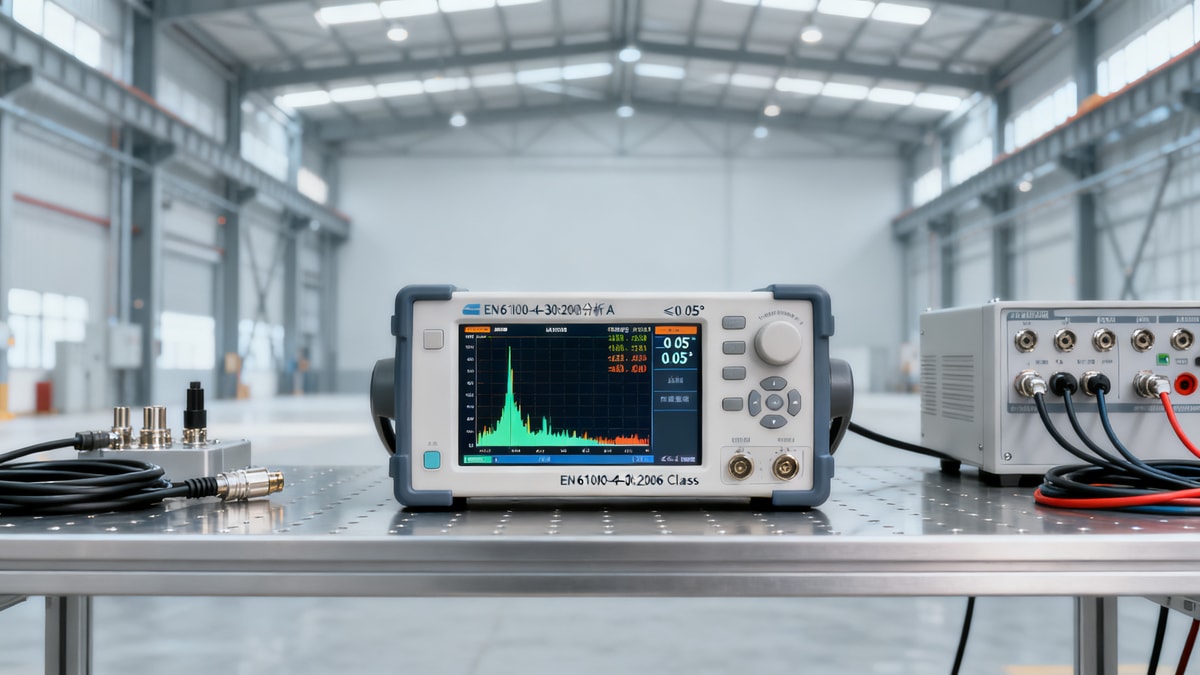
Accuracy without calibration traceability has limited value. Evaluators look for calibration procedures, uncertainty statements, interval recommendations, and links to recognized reference standards. They also want clarity on whether calibration is conducted per unit, per batch, or by sampling logic.
2. Standards alignment
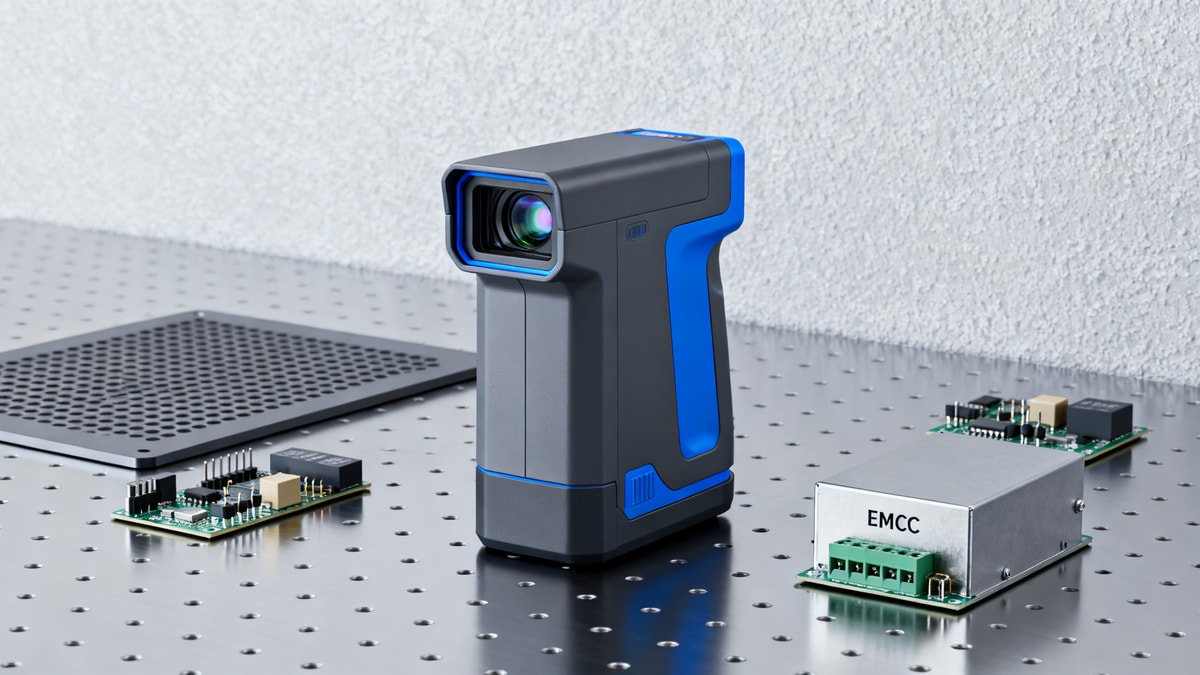
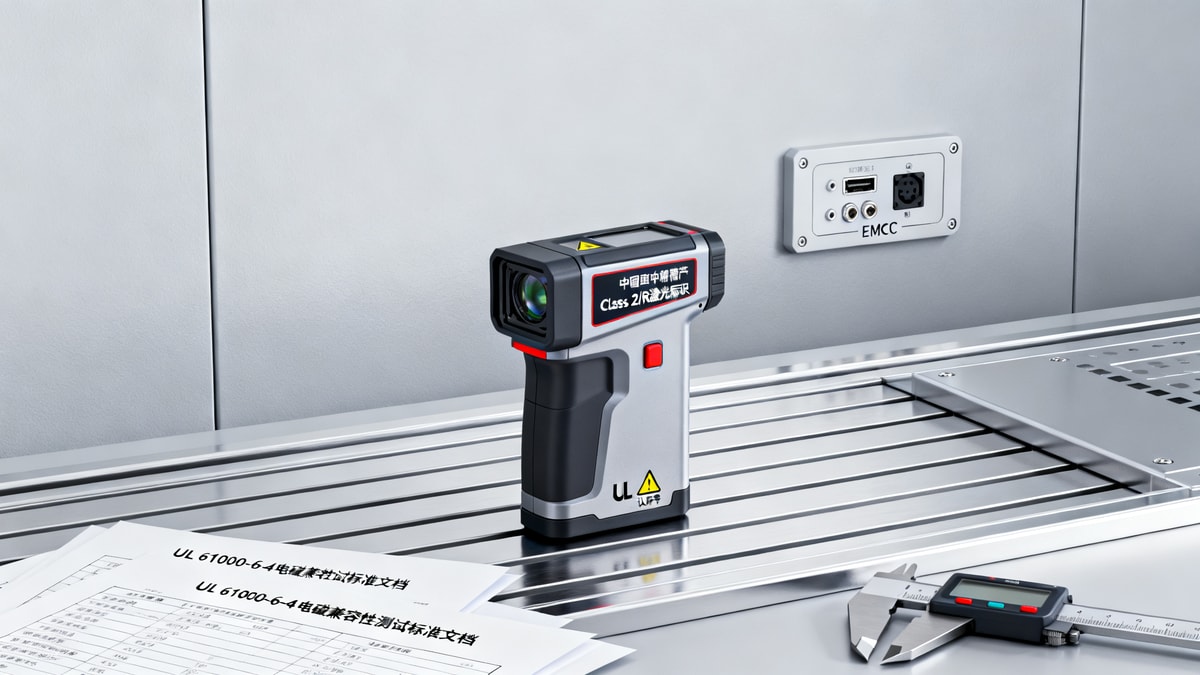
A serious Instruments & Measurement OEM should clearly map product lines to relevant CE, UL, ISO, EMC, safety, ingress protection, and sector-specific requirements. The expectation is not just possession of certificates, but usable technical evidence that matches actual deployment conditions.
3. Environmental reliability data
Technical teams increasingly ask how a device performs under temperature cycling, vibration, dust, corrosive exposure, moisture, and power fluctuation. This is especially important where measurement integrity affects control loops, emissions reporting, custody transfer, or hazardous area operations.
4. Documentation discipline
Evaluation delays often come from missing revision control, unclear test methods, or inconsistent naming across manuals, certificates, and drawings. A mature Instruments & Measurement OEM reduces risk by making technical files easy to verify and easy to integrate into project approval workflows.
5. Long-term support logic
Buyers want to understand spare part continuity, firmware governance where relevant, field replacement procedures, and service response models. Reliability is no longer judged only by failure rate, but by recoverability and support predictability over the installed life.
Who feels the impact most
Not every stakeholder experiences this change in the same way. However, the trend affects multiple roles across the sourcing and asset lifecycle. The table below shows where the pressure is strongest and what kind of proof matters most.
Signals technical evaluators should watch in the next selection cycle
One strong signal is whether an Instruments & Measurement OEM can answer detailed questions consistently across sales, engineering, and quality functions. Fragmented responses often indicate weak internal control, even if the product itself appears competitive.
Another signal is how easily the supplier translates technical performance into application relevance. For example, a high-accuracy claim matters differently in a controlled lab than in an offshore platform, wastewater facility, or heavy vibration environment. Suppliers that understand the application context tend to provide more credible qualification support.
A third signal is the maturity of after-sales structure. Technical evaluators should watch for realistic recalibration pathways, defined turnaround commitments, and documented obsolescence management. These factors are becoming more important as maintenance organizations seek fewer supplier transitions over the asset lifecycle.
How to judge future readiness rather than current marketing strength
Because technology cycles are moving faster, evaluators should not only confirm present compliance but also judge whether an Instruments & Measurement OEM can keep pace with future requirements. That includes support for tighter reporting expectations, digital documentation workflows, and more demanding environmental applications.
A practical approach is to assess three layers at once: proof quality, process maturity, and adaptability. Proof quality asks whether the data are credible today. Process maturity asks whether the supplier can deliver repeatable quality across batches, sites, and support cases. Adaptability asks whether the OEM can respond when standards evolve, project conditions shift, or validation depth increases.
A practical response framework for buyers and project teams
To respond to this market change, technical evaluators should update supplier review criteria so that evidence is requested earlier and compared more systematically. Instead of waiting for final approval stages, teams should screen an Instruments & Measurement OEM on traceability, test method transparency, compliance mapping, and support model during the initial technical review.
It is also useful to distinguish between acceptable proof for low-risk utility measurements and required proof for safety-critical or regulation-linked applications. This keeps evaluation efficient while maintaining discipline where the operational stakes are highest.
For suppliers, the implication is equally clear. The winning Instruments & Measurement OEM will not be the one with the most aggressive brochure language, but the one that can reduce uncertainty fastest. In a market shaped by resilience, accountability, and compliance visibility, proof has become part of the product.
Final judgment points worth confirming now
If a business wants to understand how this trend affects its own sourcing decisions, the key questions are straightforward. Can the Instruments & Measurement OEM demonstrate traceable calibration in a way your auditors can follow? Do its certificates and test records align with your exact installation conditions? Is long-term reliability supported by evidence from realistic operating environments? Can its documentation move smoothly through EPC, compliance, and maintenance workflows?
Those questions now shape shortlist decisions across modern industry. For technical evaluators, the most effective next step is to turn them into standard prequalification checkpoints. When evidence is reviewed early, supplier risk becomes easier to compare, project delays become easier to prevent, and procurement confidence becomes easier to defend.
Technical Specifications
- US DOE Level 3 Transformer Efficiency Rule Takes Effect July 1, 2026Author :Grid Infrastructure Analyst
- INMETRO Proposes EMP Immunity Requirement for Industrial Laser Distance Meters in BrazilAuthor :Precision Metrology Expert
- Indonesia BPOM Fast-Tracks Chinese Industrial Air PurifiersAuthor :Environmental Engineering Director
Expert Insights

Chief Security Architect
Dr. Thorne specializes in the intersection of structural engineering and digital resilience. He has advised three G7 governments on industrial infrastructure security.
Related Analysis
- May 05, 2026US DOE Level 3 Transformer Efficiency Rule Takes Effect July 1, 2026Author :Grid Infrastructure Analyst
- May 05, 2026INMETRO Proposes EMP Immunity Requirement for Industrial Laser Distance Meters in BrazilAuthor :Precision Metrology Expert
- May 05, 2026Indonesia BPOM Fast-Tracks Chinese Industrial Air PurifiersAuthor :Environmental Engineering Director
Core Sector // 01
Security & Safety
- INMETRO Proposes EMP Immunity Requirement for Industrial Laser Distance Meters in BrazilAuthor :Precision Metrology Expert

- EN 61000-4-30:2026 Mandatory for Industrial PQ Analyzers in EUAuthor :Precision Metrology Expert

- Industrial Standards Compliance Problems That Surface Too LateAuthor :Precision Metrology Expert

- What an Instruments & Measurement OEM Should Prove Up FrontAuthor :Precision Metrology Expert

- When Industrial Standards Solutions Reduce Rework Instead of PaperworkAuthor :Precision Metrology Expert

- CPSC Recalls 32 Batches of Chinese Industrial Laser Distance MetersAuthor :Precision Metrology Expert

- What makes an Instruments & Measurement supplier dependableAuthor :Precision Metrology Expert

- When rapid prototyping CNC saves money and when it does notAuthor :Precision Metrology Expert