Temperature Transmitters Setup Basics
Author
Date Published
Reading Time
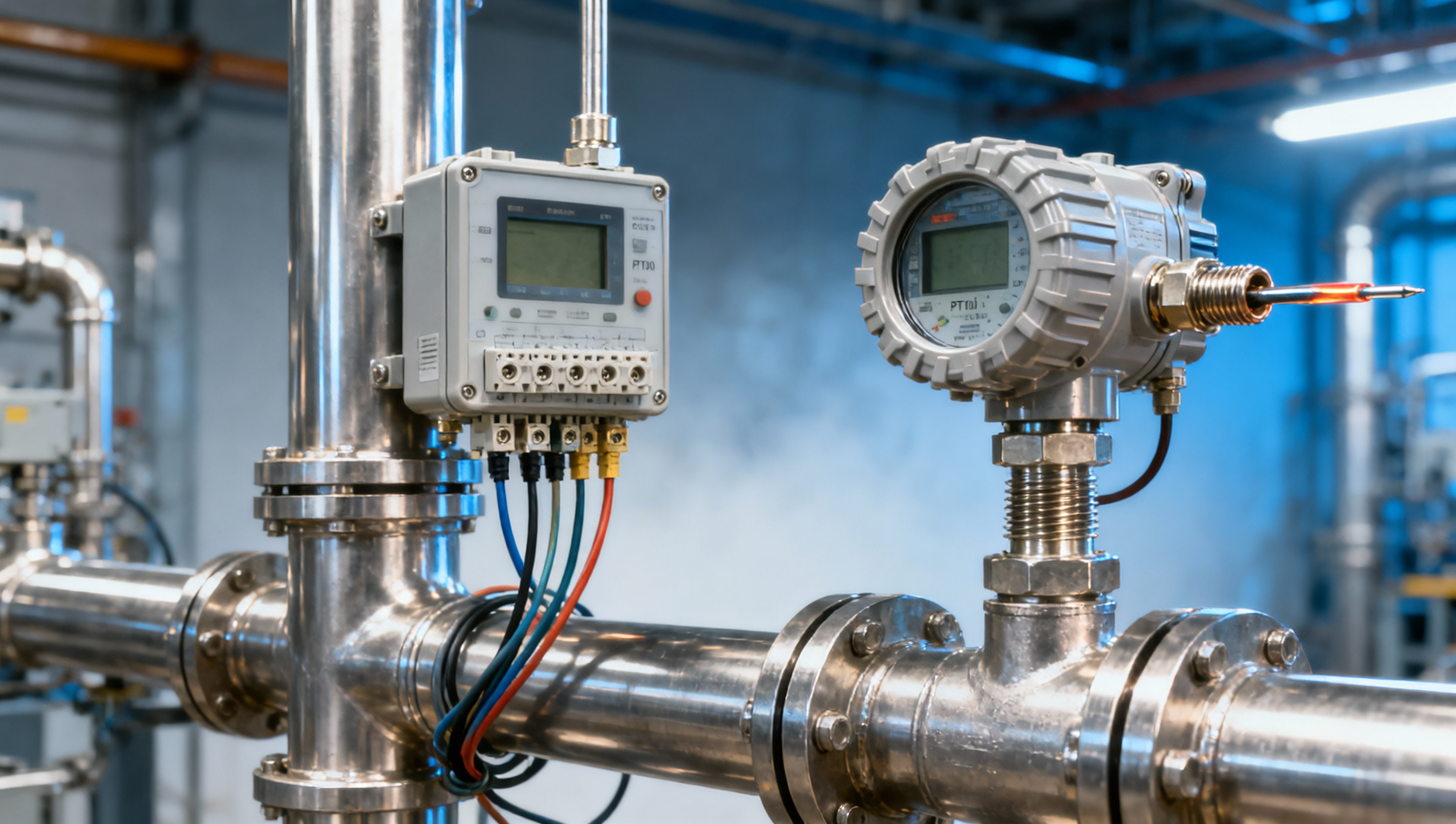
Temperature transmitters are vital for accurate process control, equipment protection, and energy efficiency across industrial environments. Whether you work with thermocouples wholesale, RTD PT100 sensors, bimetal thermometers, or advanced temperature transmitters, understanding the setup basics helps operators, buyers, and decision-makers improve measurement reliability, compliance, and long-term system performance.
In heavy industry, utilities, manufacturing, water treatment, HVAC infrastructure, and process plants, temperature data is rarely just a number on a display. It directly influences alarm logic, product quality, maintenance planning, and safe operating limits. A poorly configured temperature transmitter can create drift, false trips, slow response, or hidden compliance risks that become expensive over a 12–24 month operating cycle.
For research teams, plant operators, procurement specialists, and business decision-makers, setup basics matter for different reasons. Operators need stable readings and fast troubleshooting. Buyers need clarity on sensor compatibility, signal output, and enclosure requirements. Decision-makers need confidence that the selected transmitter will support uptime, audit readiness, and lifecycle cost control across multiple sites.
What a Temperature Transmitter Does and Why Setup Matters
A temperature transmitter converts a raw sensor signal into a standardized output, typically 4–20 mA, 0–10 V, or a digital protocol such as HART, Modbus, or fieldbus. In industrial systems, this conversion is essential because thermocouples and RTDs generate low-level signals that can degrade over long cable runs. The transmitter improves signal integrity, supports scaling, and enables integration with PLC, DCS, SCADA, and safety systems.
Setup matters because the transmitter must match the sensing element, wiring method, operating range, and process environment. A PT100 RTD configured as a 2-wire input instead of a 3-wire input can introduce avoidable resistance error. A thermocouple transmitter set to the wrong type, such as J instead of K, may produce large offset errors across a range like 200°C to 600°C. These are common field issues, not rare exceptions.
In many facilities, the real problem is not transmitter quality alone but inconsistent commissioning. One line may use head-mounted transmitters, another rail-mounted units, and a third remote enclosure with local indication. Without a standard setup procedure covering sensor type, range, output scaling, and ambient limits, plants often see 3 recurring problems: unstable readings, delayed fault detection, and replacement complexity during maintenance.
The table below outlines the main transmitter functions and the operational impact of incorrect setup choices in typical industrial environments.
The key takeaway is simple: even a high-quality temperature transmitter can underperform if setup decisions are not aligned with the actual process. Correct configuration reduces measurement error, shortens commissioning time, and improves consistency across new projects, retrofits, and replacement programs.
Where setup errors usually begin
Most setup issues begin at the handoff between design, procurement, and installation. Datasheets may specify a temperature range of -50°C to 400°C, but the actual process only operates between 60°C and 140°C. If the transmitter is left at the full sensor capability range, signal resolution may be less practical for tight process control. Narrower scaling often improves usable output for control loops.
A practical rule
A useful field rule is to configure the measurement span close to the normal operating window while preserving a safety margin of 10%–20% on both ends. This balance supports process visibility without sacrificing abnormal condition detection.
Core Setup Steps for RTD and Thermocouple Temperature Transmitters
A reliable setup process should be repeatable, documented, and simple enough to apply across multiple assets. In most industrial projects, commissioning teams benefit from a 5-step approach: confirm sensor type, verify wiring, define measurement range, configure output and fault behavior, and perform loop testing. Skipping any one of these steps can create problems that are difficult to trace later.
Step 1: Confirm the sensing element
For RTDs, confirm whether the sensor is PT100 or PT1000 and whether it uses 2-wire, 3-wire, or 4-wire construction. In industrial process applications, 3-wire PT100 is common because it offers a practical balance of cost and accuracy. For thermocouples, confirm the exact type, such as K, J, T, N, or S, and make sure extension wire material matches the thermocouple family.
Step 2: Check wiring and shielding
Incorrect polarity on a thermocouple input, loose terminal torque, or poor cable shielding can all distort the reading. In noisy environments with motors, VFDs, or high-current switchgear, proper grounding strategy becomes especially important. On long runs above 20–30 meters, signal routing and shield termination should be reviewed carefully to prevent interference and unstable output.
Step 3: Set range, damping, and output behavior
Set the transmitter range according to process need, not only sensor limit. For example, if a hot water loop normally operates from 40°C to 120°C, a range of 0°C to 150°C may be more useful than 0°C to 400°C. Damping values often fall between 1 and 8 seconds. Too little damping may produce noisy trends; too much may hide rapid process changes.
Step 4: Test loop integrity
After configuration, verify the full signal chain. Confirm the transmitter output using a calibrator, then compare what the PLC or DCS receives. A 4 mA low-end signal and 20 mA high-end signal should map correctly in the control system. If local display, remote indicator, and SCADA trending all show different values, the issue may be scaling mismatch rather than sensor error.
The checklist below summarizes a practical setup sequence used in many industrial installations.
- Verify sensor type, class, and wiring method against the datasheet and field tag.
- Inspect terminal labeling, polarity, and cable condition before power-up.
- Configure input type, engineering units, and operating span with a 10%–20% process margin.
- Set burnout direction, damping, and any digital communication parameters.
- Run loop test, compare displayed and control-system values, and record the final settings.
This structured approach reduces startup variability and supports faster maintenance later. For procurement teams managing multiple projects, standardizing these 5 steps also improves interchangeability between approved transmitter models.
Selecting the Right Transmitter Configuration for Industrial Use
Choosing the right temperature transmitter is not only about the sensor input. Buyers must also evaluate mounting style, enclosure rating, environmental exposure, communication needs, and maintenance access. A compact head-mounted transmitter may work well inside a standard thermowell assembly, while a field-mounted transmitter with display is often better for outdoor sites or remote assets where technicians need local visibility.
Industrial environments vary widely. Inside control cabinets, ambient temperature may remain below 50°C with limited moisture exposure. On outdoor pipe racks or utility skids, transmitters may face rain, dust, solar heat, vibration, and winter conditions from -20°C to 60°C or beyond. In those cases, enclosure integrity, cable gland quality, and corrosion resistance can be as important as nominal measurement accuracy.
Procurement teams should also consider lifecycle factors. If the site uses HART diagnostics across 200 to 500 loops, selecting a simple analog-only model may lower initial unit cost but increase diagnostic effort over time. Conversely, a digital-capable transmitter may reduce troubleshooting time during commissioning and support better asset management.
The comparison table below helps align transmitter configuration with common industrial requirements.
The practical conclusion is that configuration should follow the application, not habit. A technically acceptable transmitter can still become a poor asset choice if access, diagnostics, spare strategy, or environmental rating were not considered during procurement review.
Four purchasing checks before approval
- Confirm input compatibility with current and future sensor standards, especially PT100 and major thermocouple types.
- Review ambient operating range, ingress protection, and enclosure material for the actual installation zone.
- Check required output type, communication protocol, and safety or control-system integration limits.
- Assess calibration support, spare part availability, and replacement lead time, which often ranges from 2 to 8 weeks.
Common Setup Mistakes, Risk Points, and How to Prevent Them
Most temperature measurement problems in the field come from a small number of repeat mistakes. The first is mismatch between sensor and transmitter configuration. The second is poor installation practice, including bad wiring, inadequate thermal contact, or unsuitable thermowell selection. The third is missing documentation, which makes future recalibration or replacement more difficult than it should be.
Another common issue is assuming that all transmitters are interchangeable. Even when two units both accept PT100 input and provide 4–20 mA output, they may differ in sensor fault handling, isolation level, update speed, and configuration interface. In critical utilities or process safety functions, those differences can affect response time and alarm behavior within seconds.
Plants should also pay attention to installation geometry. If the sensor insertion length is too short, the transmitter may be configured correctly but still report biased process temperature because of heat loss to the pipe wall or ambient air. In many pipeline and tank applications, mechanical fit, thermowell design, and transmitter setup must be reviewed together rather than as separate tasks.
Frequent mistakes seen during commissioning
- Using the default factory range instead of configuring the actual process span.
- Connecting a 3-wire RTD as a 2-wire circuit and accepting the resulting offset.
- Installing thermocouple extension cable with the wrong polarity or wrong alloy family.
- Ignoring ambient temperature limits in outdoor junction heads and field enclosures.
- Failing to document damping, burnout direction, and control-system scaling after startup.
A prevention strategy should include 3 controls: pre-installation review, witnessed loop test, and final parameter record. Even a one-page setup sheet can reduce repeat troubleshooting significantly. For multi-site industrial groups, adopting one approved parameter template for each common application can improve consistency across 10, 50, or even 100 measurement points.
Risk-based prioritization
Where process temperature directly protects equipment, such as boilers, heat exchangers, furnaces, or bearing systems, prioritize tighter setup verification and shorter calibration intervals. A transmitter feeding a shutdown interlock deserves more attention than a non-critical local indication point.
Commissioning, Maintenance, and Procurement Best Practices
Successful temperature transmitter deployment does not end at first power-up. Plants that achieve stable performance usually combine disciplined commissioning with planned maintenance and informed procurement. Commissioning should include configuration capture, tag labeling, loop validation, and handover records. Maintenance should include periodic inspection, signal verification, and review of drift trends over time.
Calibration frequency depends on process criticality, sensor type, environmental severity, and internal quality requirements. In many industrial settings, a 6-month, 12-month, or 24-month interval is typical. Critical measurement points exposed to vibration, thermal cycling, or corrosive service may need shorter review periods. The goal is not excessive calibration, but risk-appropriate control.
Procurement teams can improve long-term results by evaluating total ownership factors rather than unit price alone. A lower-cost transmitter may appear attractive at purchase, but if it adds 2 extra maintenance visits per year or causes repeated troubleshooting, total cost rises quickly. Standardization, spare rationalization, and technical support availability often create better value than chasing the lowest immediate quote.
The table below summarizes practical decision criteria for teams buying or standardizing temperature transmitters across industrial assets.
The strategic lesson for industrial buyers is clear: setup quality, maintainability, and sourcing discipline are linked. Plants that treat temperature transmitters as managed assets rather than simple accessories usually see better measurement reliability and fewer avoidable shutdown events.
A simple maintenance framework
- Inspect terminals, seals, and enclosure condition every 6–12 months in harsh environments.
- Verify output against a reference point during scheduled shutdowns or process windows.
- Review drift history and replace suspect sensors before recurrent calibration failure affects production.
- Update configuration records after every replacement, not only after major turnarounds.
FAQ: Practical Questions Buyers and Operators Often Ask
How do I choose between an RTD transmitter and a thermocouple transmitter?
RTD-based measurement is often preferred when higher stability and tighter accuracy are needed in moderate ranges, such as -50°C to 250°C or up to around 400°C depending on assembly design. Thermocouples are usually selected for wider or higher temperature ranges, faster response in some applications, and harsher thermal conditions. The final choice should match process range, required accuracy, mechanical design, and replacement strategy.
What setup values should be documented after commissioning?
At minimum, document sensor type, wiring method, range, engineering units, damping value, output signal, burnout direction, tag number, installation location, and loop test results. If digital communication is used, also record polling address and any diagnostic settings. This information can save hours during future maintenance and is especially useful when plants manage more than 20 identical loops.
How long does replacement or procurement usually take?
For standard industrial transmitters, procurement may range from 2 to 6 weeks under normal supply conditions, while special enclosure, hazardous-area, or project-specific assemblies may take 6 to 10 weeks or more. To reduce downtime risk, many facilities stock critical spare units for high-priority assets such as boilers, thermal oil systems, and major rotating equipment.
What should procurement teams prioritize besides price?
Focus on 4 areas: application fit, compliance documentation, lead time, and supportability. A competitively priced transmitter is only a good purchase if it integrates cleanly with the site control system, survives the actual environment, and can be maintained without excessive custom effort.
Temperature transmitter setup basics are not just a commissioning detail. They shape signal quality, process safety, equipment protection, and long-term operating cost. From sensor matching and range configuration to maintenance planning and procurement review, every setup choice influences how reliably industrial systems perform over months and years.
For organizations sourcing thermocouples, RTD PT100 assemblies, bimetal thermometers, or advanced transmitters, a disciplined setup standard creates measurable value: fewer configuration errors, faster troubleshooting, and better consistency across sites. If you are evaluating temperature measurement solutions for a new project, retrofit, or sourcing program, contact Global Industrial Core to discuss application requirements, compare configurations, and get a tailored industrial solution roadmap.
Expert Insights

Chief Security Architect
Dr. Thorne specializes in the intersection of structural engineering and digital resilience. He has advised three G7 governments on industrial infrastructure security.
Related Analysis
Core Sector // 01
Security & Safety
- How to Choose a Total Station in 2026Author :Precision Metrology Expert

- Auto Level Instruments vs Rotary LasersAuthor :Precision Metrology Expert

- GNSS RTK Receiver: Who Needs ItAuthor :Precision Metrology Expert

- Wholesale Moisture Meters Buying GuideAuthor :Precision Metrology Expert

- Wood Moisture Tester for Daily ChecksAuthor :Precision Metrology Expert

- Concrete Test Hammer Accuracy TipsAuthor :Precision Metrology Expert

- Anemometers Wholesale for Field WorkAuthor :Precision Metrology Expert

- Lux Meters Bulk Buying MistakesAuthor :Precision Metrology Expert