Instruments & Measurement OEM options for custom calibration needs
Author
Date Published
Reading Time
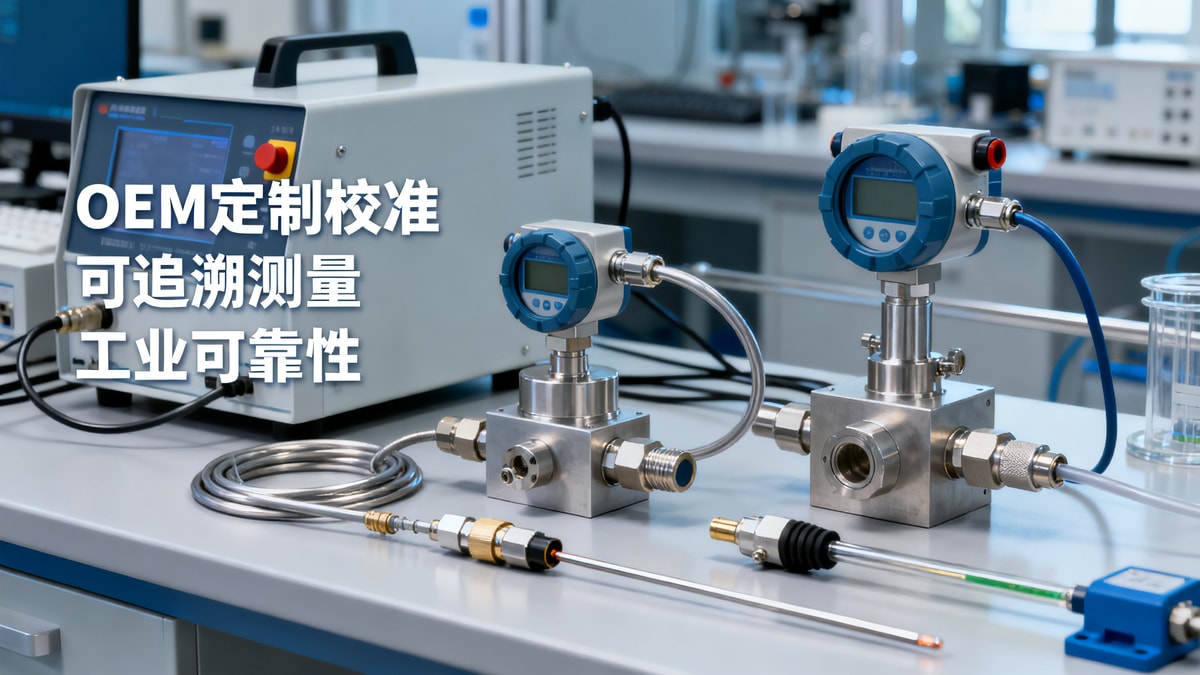
For technical evaluators managing precision, compliance, and uptime, Instruments & Measurement OEM solutions can make or break calibration performance. From custom sensor integration to traceable calibration workflows, the right OEM partner helps align specifications with demanding industrial environments. This article explores how to assess OEM options for custom calibration needs with greater accuracy, reliability, and long-term operational confidence.
In industrial settings, calibration is not a back-office task. It directly affects process stability, product conformity, safety performance, and maintenance cost. Whether the application involves pressure transmitters, temperature probes, flow instruments, analytical sensors, or multi-parameter test systems, technical evaluators need more than a catalog supplier. They need an Instruments & Measurement OEM partner that can adapt hardware, firmware, interfaces, and documentation to specific operating conditions.
For EPC teams, plant operators, and procurement leaders, custom calibration needs often emerge when standard devices cannot meet required tolerances, environmental ratings, communication protocols, or audit expectations. The evaluation process therefore must connect metrology requirements with production realities, field maintenance constraints, and lifecycle service availability over 3 to 10 years.
Why custom calibration requirements change OEM selection criteria
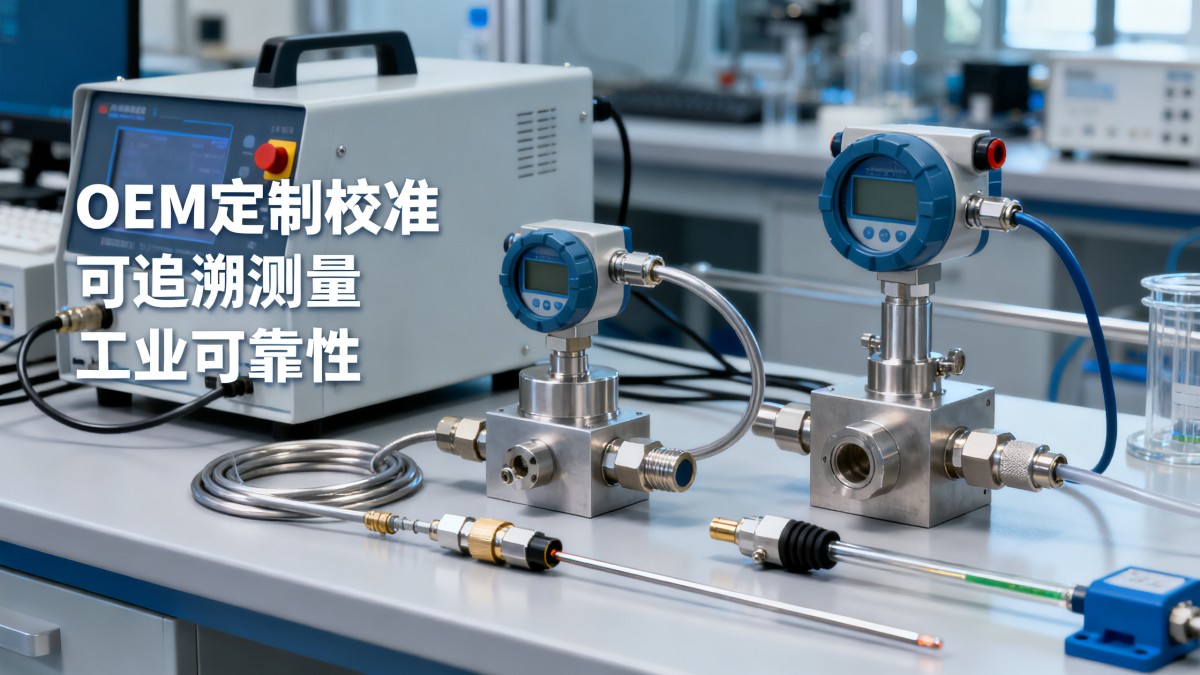
A standard instrument may perform well in a lab, yet fail to deliver stable calibration intervals in a refinery, water treatment plant, power substation, or high-dust manufacturing line. This is why Instruments & Measurement OEM evaluation should begin with use conditions rather than brochure specifications. Temperature swings of -20°C to 60°C, vibration, washdown exposure, electromagnetic interference, and continuous-duty cycles all influence calibration drift and validation frequency.
Technical evaluators usually assess four linked questions: what must be measured, how accurate the result must remain over time, how traceability is maintained, and how fast service recovery must occur. In many industrial programs, the acceptable uncertainty window is not just a number such as ±0.1% or ±0.25%. It also includes repeatability, long-term stability, and the time needed to restore a calibrated state after maintenance or component replacement.
Common triggers for OEM customization
Custom calibration projects are commonly triggered by 5 operational realities:
- Measurement ranges that fall outside common stock configurations, such as low-pressure differential sensing below 10 mbar or high-temperature monitoring above 400°C.
- Integration requirements for PLC, SCADA, DCS, or edge monitoring systems using 4–20 mA, Modbus, HART, RS-485, or Ethernet-based protocols.
- Compliance needs involving CE, UL, ISO-aligned quality systems, or customer-specific calibration records.
- Physical constraints such as compact enclosures, custom connectors, panel layouts, or hazardous-area mounting considerations.
- Service expectations including 24–72 hour response windows, field swap kits, or annual recalibration planning.
What technical evaluators should define before approaching suppliers
Before comparing OEM candidates, define a calibration requirement pack. In practice, this should include at least 8 items: target parameter, measuring range, accuracy class, environmental conditions, interface protocol, installation method, calibration interval, and documentation format. If two of these remain unclear, supplier quotations often become difficult to compare because one proposal may optimize upfront price while another builds in drift control, test fixtures, or better traceability.
The table below outlines how typical custom calibration factors affect OEM selection decisions.
The key conclusion is that custom calibration is rarely solved by accuracy alone. A strong Instruments & Measurement OEM partner must balance metrology performance with environmental resilience, integration effort, and recordkeeping discipline. When one of these elements is weak, lifecycle cost usually rises through extra recalibration, downtime, or failed audits.
How to evaluate Instruments & Measurement OEM capabilities in practice
A practical assessment framework helps technical evaluators compare OEM suppliers on equal terms. Rather than relying on sales claims, use a structured review covering engineering depth, customization flexibility, validation discipline, production consistency, and after-sales support. This is particularly important when project volumes range from 20 units for a pilot skid to 2,000 units for distributed plant deployment.
1. Engineering adaptability
Ask whether the OEM can modify sensing elements, signal conditioning, enclosure materials, cable assemblies, and calibration software without disrupting quality control. Some suppliers can customize labels and connectors but not core measurement architecture. Others can support deep design changes, but only with 6–12 week engineering lead times. Evaluators should distinguish light customization from true OEM development capability.
Key questions to verify
- Can the supplier support custom ranges, offsets, or compensation algorithms?
- How many design review stages are included before pilot production: 2, 3, or more?
- Can firmware and output scaling be locked to prevent field misconfiguration?
- Are drawings, wiring diagrams, and calibration sheets revised under document control?
2. Calibration infrastructure and traceability
The strength of an Instruments & Measurement OEM is often revealed by its calibration workflow. Technical evaluators should look for controlled procedures, reference equipment management, documented uncertainty budgets, and serial-number-based records. In many industrial audits, the issue is not whether a device was calibrated, but whether the calibration can be traced, reproduced, and matched to the shipped configuration within 5 to 10 minutes of document review.
The comparison matrix below can help teams score supplier maturity before issuing a final technical recommendation.
A technically attractive product becomes far more valuable when backed by a disciplined calibration chain. If an OEM cannot clearly explain how its reference standards are controlled, how certificates are generated, or how production drift is monitored, evaluators should treat that as a material risk rather than an administrative gap.
3. Lead time realism and scale-up control
Custom projects usually move through 3 stages: feasibility review, pilot sample, and production release. Typical timing may run 1–2 weeks for requirement confirmation, 2–6 weeks for pilot builds, and another 2–4 weeks for approval and manufacturing release. Technical evaluators should confirm what changes reset the schedule. A connector change may be minor, while a sensor element change or revised uncertainty target may require full retesting.
It is also important to ask about minimum order quantity, lot traceability, and change notification practices. For example, if the OEM changes a critical component supplier, will the buyer receive a formal notice 30 days in advance? That answer matters when calibration performance depends on sensor consistency or analog front-end stability.
Implementation risks, service planning, and decision checkpoints
Selecting an Instruments & Measurement OEM is only part of the job. The larger challenge is ensuring that the chosen configuration can be commissioned, maintained, and revalidated without operational friction. Technical evaluators should therefore include service logistics and change management in the approval process, especially for assets installed across multiple sites or regions.
Frequent failure points in custom calibration programs
Several issues appear repeatedly in industrial sourcing reviews. First, teams approve a technically precise sensor but overlook cable shielding, connector sealing, or mounting stress, which then shifts field readings. Second, calibration documentation arrives in a format that does not match plant quality systems. Third, replacement units are not pre-configured, so installation crews spend 30–90 extra minutes per device adjusting output scaling or confirming channel mapping.
Another common mistake is setting an annual calibration interval without checking actual process duty. In a stable indoor panel application, 12 months may be conservative. In a vibration-heavy, high-temperature environment, 6 months or earlier verification may be more realistic. A credible OEM should help define this interval based on application conditions, not just generic policy.
A 5-step evaluation and rollout path
- Document the measurement objective, tolerance, installation environment, and compliance requirements.
- Request technical clarification from 2–4 OEM suppliers using the same requirement matrix.
- Review pilot units for functional fit, calibration records, interface compatibility, and installation practicality.
- Define acceptance criteria for production release, including sample size, record format, and service response targets.
- Establish post-installation controls such as recalibration intervals, spare strategy, and revision management.
Decision checkpoints before final approval
- Does the OEM provide configuration consistency from pilot to production?
- Can service teams identify device status and certificate history by serial number?
- Are turnaround expectations for repair or recalibration clearly stated, such as 5 business days or 10 business days?
- Has the supplier explained which parameters are adjustable in the field and which are factory-locked?
- Is the total support model suitable for a 3-year, 5-year, or longer asset life plan?
When OEM partnership creates measurable value
The right partnership reduces more than procurement friction. It can shorten commissioning cycles, improve audit readiness, reduce repeat maintenance visits, and lower the risk of measurement-related shutdowns. In high-consequence sectors, even a small improvement in calibration stability or serviceability can justify a higher unit price when spread over hundreds of assets and multiple maintenance windows.
For organizations managing global or multi-site projects, the best Instruments & Measurement OEM partners are those that treat customization as a controlled engineering process rather than a one-off modification. That discipline becomes especially valuable when device fleets expand, documentation must stay consistent, and local teams need fast support without reinterpreting original technical assumptions.
Custom calibration success depends on matching measurement performance with real operating conditions, documentation control, and long-term service planning. Technical evaluators should prioritize OEM partners that can demonstrate clear calibration workflows, adaptable engineering support, realistic lead times, and reliable post-delivery service. When these factors are reviewed together, selection decisions become more defensible and operational risk becomes easier to manage.
If your team is comparing Instruments & Measurement OEM options for a new project or a retrofit program, Global Industrial Core can help you translate technical requirements into a sharper sourcing framework. Contact us to discuss your calibration objectives, request a tailored evaluation approach, or explore more industrial measurement solutions aligned with demanding compliance and uptime targets.
Technical Specifications
- Hidden Environment & Ecology cost after project approvalAuthor :Environmental Engineering Director
- When does an Environment & Ecology impact assessment need updating?Author :Environmental Engineering Director
- Security & Safety standards that affect product approval speedAuthor :Safety Compliance Lead
Expert Insights

Chief Security Architect
Dr. Thorne specializes in the intersection of structural engineering and digital resilience. He has advised three G7 governments on industrial infrastructure security.
Related Analysis
- May 07, 2026Hidden Environment & Ecology cost after project approvalAuthor :Environmental Engineering Director
- May 07, 2026When does an Environment & Ecology impact assessment need updating?Author :Environmental Engineering Director
- May 07, 2026Security & Safety standards that affect product approval speedAuthor :Safety Compliance Lead
Core Sector // 01
Security & Safety
- When is it time to switch Instruments & Measurement suppliers?Author :Precision Metrology Expert

- Instruments & Measurement OEM options for custom calibration needsAuthor :Precision Metrology Expert

- How accurate are modern Environment & Ecology monitoring systems?Author :Precision Metrology Expert

- INMETRO Updates Laser Distance Meter EMC Rules in BrazilAuthor :Precision Metrology Expert

- EU EN 61000-4-30:2026 Class A Enforcement Starts May 2026Author :Precision Metrology Expert

- INMETRO Updates Laser Distance Meter EMC Rules in BrazilAuthor :Precision Metrology Expert

- EU EN 61000-4-30:2026 Class A Enforcement Starts May 2026Author :Precision Metrology Expert

- EN 61000-4-30:2026 Enforced: Class A Harmonic Traceability Mandatory for EU PQ AnalyzersAuthor :Precision Metrology Expert