EU EN 61000-4-30:2026 Class A Enforcement Starts May 2026
Author
Date Published
Reading Time
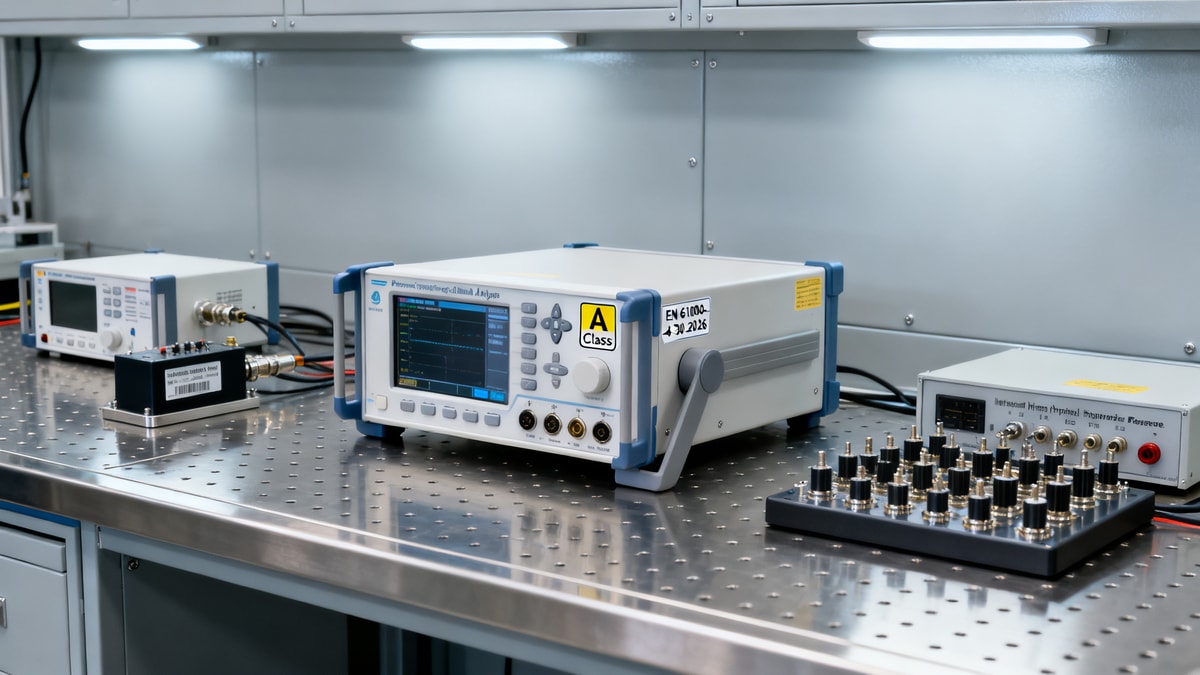
Effective 1 May 2026, the European Union will enforce the revised electromagnetic compatibility standard EN 61000-4-30:2026 for power quality (PQ) analyzers placed on the EU market. This update introduces mandatory Class A real-time harmonic traceability certification — a critical compliance milestone for manufacturers and exporters of PQ analyzers, particularly those based in China and other third countries supplying into the EU.
Event Overview
Starting 1 May 2026, EN 61000-4-30:2026 becomes fully mandatory for all power quality analyzers sold in the EU. The standard requires Class A certification, with specific verification of real-time harmonic measurement accuracy: amplitude error ≤ ±0.2% and phase error ≤ ±0.5° for harmonics from the 2nd to the 50th order. Publicly reported testing data from TÜV Rheinland and SGS indicate a current pass rate below 65% among leading Chinese manufacturers, and average certification lead times have extended to 10 weeks.
Which Subsectors Are Affected
Direct Exporters (EU-bound PQ Analyzer Manufacturers)
Manufacturers exporting PQ analyzers directly to the EU must now meet Class A requirements before placing products on the market. Non-compliant units cannot be CE-marked or legally distributed after the enforcement date. Impact includes delayed market access, increased pre-market testing costs, and potential inventory write-offs for legacy models lacking traceable harmonic algorithms.
OEM/ODM Suppliers to EU Brand Holders
Suppliers producing PQ analyzers under private labels or integrated solutions for EU-based brands face contractual and liability exposure. If their designs fail Class A validation, brand owners may terminate agreements or require full re-engineering — especially for firmware-level harmonic calculation modules and clock synchronization architecture.
Test Laboratories & Certification Service Providers
Laboratories accredited for EN 61000-4-30 testing are experiencing higher demand and longer queue times. The technical complexity of real-time harmonic traceability — including time-synchronized sampling, anti-aliasing filter validation, and uncertainty budgeting per IEC/ISO 17025 — is raising barriers to entry for new or smaller labs. Current bottlenecks affect not only throughput but also consistency across test reports.
Distribution & Import Agents in EU Member States
Importers and authorized representatives within the EU bear legal responsibility for conformity assessment under Regulation (EU) 2019/1020. They must verify that technical documentation includes validated Class A test reports, traceable calibration records for harmonic references, and evidence of real-time measurement capability — not just static or post-processed harmonic analysis.
What Enterprises and Practitioners Should Focus On Now
Monitor official updates from CENELEC and EU national market surveillance authorities
While EN 61000-4-30:2026 is published, transitional arrangements — such as grace periods for already-certified models or clarification on firmware version control — remain subject to national implementation guidance. Enterprises should track notifications via the Official Journal of the European Union and national metrology institutes.
Prioritize verification of real-time harmonic processing architecture
Analysis shows that most failed certifications stem from insufficient time-domain traceability in harmonic computation — e.g., reliance on FFT over non-overlapping windows, lack of synchronized GPS or IEEE 1588 timestamps, or unvalidated anti-aliasing filter group delay. Firms should audit firmware design documents and sampling hardware against Annex B of EN 61000-4-30:2026 before submission.
Secure lab capacity early and confirm scope of accreditation
Observably, only laboratories with ISO/IEC 17025 accreditation covering “real-time harmonic amplitude and phase measurement” — explicitly referencing EN 61000-4-30:2026 Class A — can issue valid reports. Pre-booking slots with TÜV Rheinland, SGS, or DEKRA is advisable, given current 10-week lead times and limited global capacity for traceable harmonic reference generation.
Distinguish between regulatory signal and operational readiness
From an industry perspective, the low pass rate reflects a gap between existing product capabilities and newly codified metrological rigor — not a sudden policy shift. Companies should treat this as a capability upgrade cycle rather than a one-off compliance deadline; internal R&D roadmaps should align firmware, hardware, and calibration workflows with long-term Class A sustainability.
Editorial Perspective / Industry Observation
This enforcement is better understood as a formalization of metrological expectations already emerging in high-end PQ applications — such as grid-code compliance monitoring and renewable integration studies — rather than an entirely new requirement. Analysis shows that the core technical demands (e.g., phase coherence across harmonic orders, time-stamped spectral stability) have been implicitly required by leading utilities since 2022. The 2026 mandate makes them explicit, auditable, and legally binding. It signals a broader trend: the convergence of EMC standards with metrological traceability frameworks, especially where measurement integrity directly impacts energy trading, tariff settlement, or grid stability decisions. Continuous attention is warranted because harmonized interpretation across EU member states remains pending — and divergence could affect cross-border acceptance of test reports.
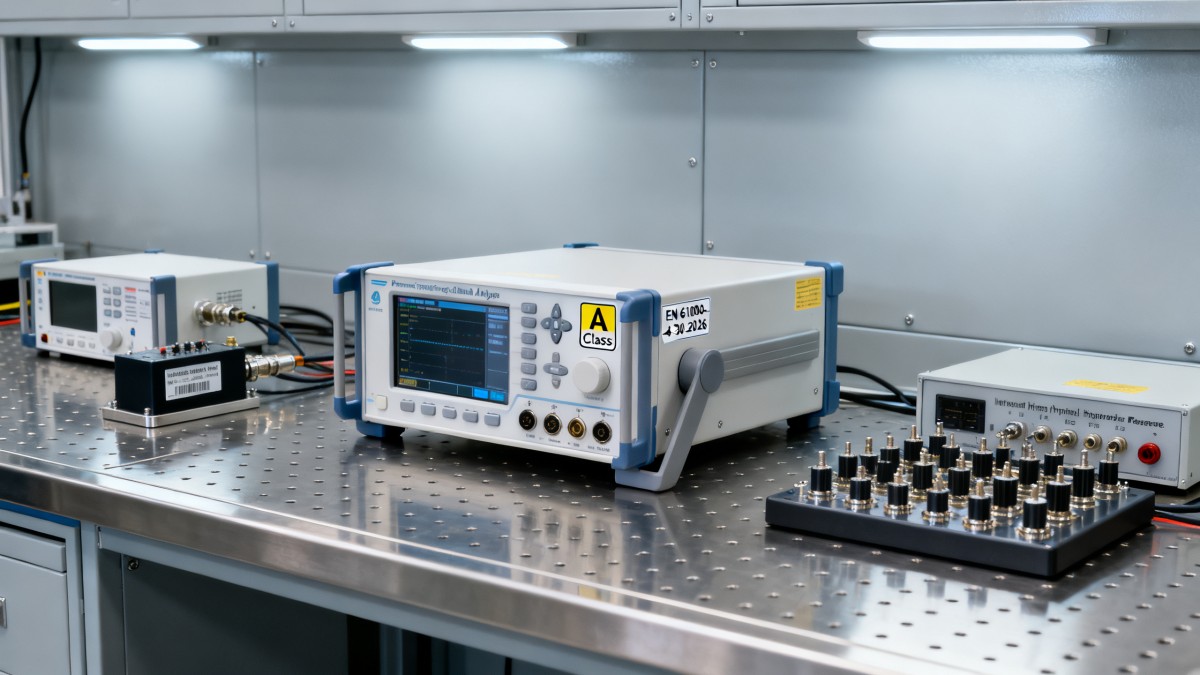
Conclusion: The EN 61000-4-30:2026 Class A enforcement marks a structural shift toward measurement-grade accountability for PQ analyzers in the EU — moving beyond functional performance to verifiable, real-time metrological traceability. It is neither a temporary hurdle nor a marketing differentiator, but a foundational requirement for market access. Currently, it is more accurately interpreted as a capability benchmark than a binary compliance gate: firms that treat it as a systems-integration challenge — spanning firmware, hardware timing, calibration infrastructure, and documentation — are better positioned to sustain compliance across future revisions and adjacent markets (e.g., UKCA, Australia’s NEM).
Source Information:
Primary source: EN 61000-4-30:2026 (CENELEC, published 2026); publicly reported pass-rate and lead-time data from TÜV Rheinland and SGS (as cited in manufacturer briefings, Q1 2026).
Note: National implementation timelines and transitional provisions remain under observation and may vary across EU member states.
Technical Specifications
- Global Industrial Air Filter Lead Times Extend to 24 WeeksAuthor :Environmental Engineering Director
- UL 62841-2-11:2026 Effective: AI Overload Prediction Required for Industrial ACBsAuthor :Grid Infrastructure Analyst
- Indonesia BPOM Fast-Tracks Chinese Dust PurifiersAuthor :Environmental Engineering Director
Expert Insights

Chief Security Architect
Dr. Thorne specializes in the intersection of structural engineering and digital resilience. He has advised three G7 governments on industrial infrastructure security.
Related Analysis
- May 07, 2026Global Industrial Air Filter Lead Times Extend to 24 WeeksAuthor :Environmental Engineering Director
- May 07, 2026UL 62841-2-11:2026 Effective: AI Overload Prediction Required for Industrial ACBsAuthor :Grid Infrastructure Analyst
- May 07, 2026Indonesia BPOM Fast-Tracks Chinese Dust PurifiersAuthor :Environmental Engineering Director
Core Sector // 01
Security & Safety
- INMETRO Updates Laser Distance Meter EMC Rules in BrazilAuthor :Precision Metrology Expert

- EU EN 61000-4-30:2026 Class A Enforcement Starts May 2026Author :Precision Metrology Expert

- EN 61000-4-30:2026 Enforced: Class A Harmonic Traceability Mandatory for EU PQ AnalyzersAuthor :Precision Metrology Expert

- INMETRO Launches Review of EMP Requirements for Industrial Laser Distance Meters in BrazilAuthor :Precision Metrology Expert

- EN 61000-4-30:2026 Class A Certification Mandatory for PQ Analyzers in EUAuthor :Precision Metrology Expert

- INMETRO to Mandate EMP Immunity for Industrial Laser Distance Meters in BrazilAuthor :Precision Metrology Expert

- Instruments & Measurement OEM choices that affect calibration accuracyAuthor :Precision Metrology Expert

- Which industrial standards manufacturer signals real quality controlAuthor :Precision Metrology Expert