INMETRO Updates Laser Distance Meter EMC Rules in Brazil
Author
Date Published
Reading Time
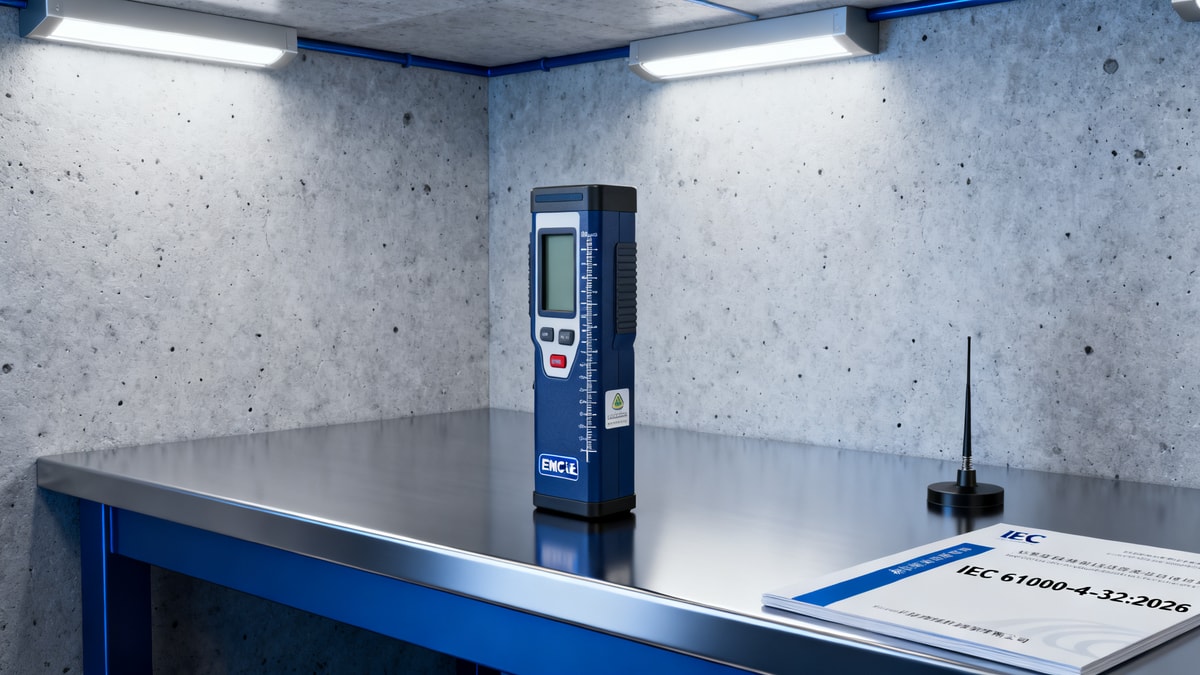
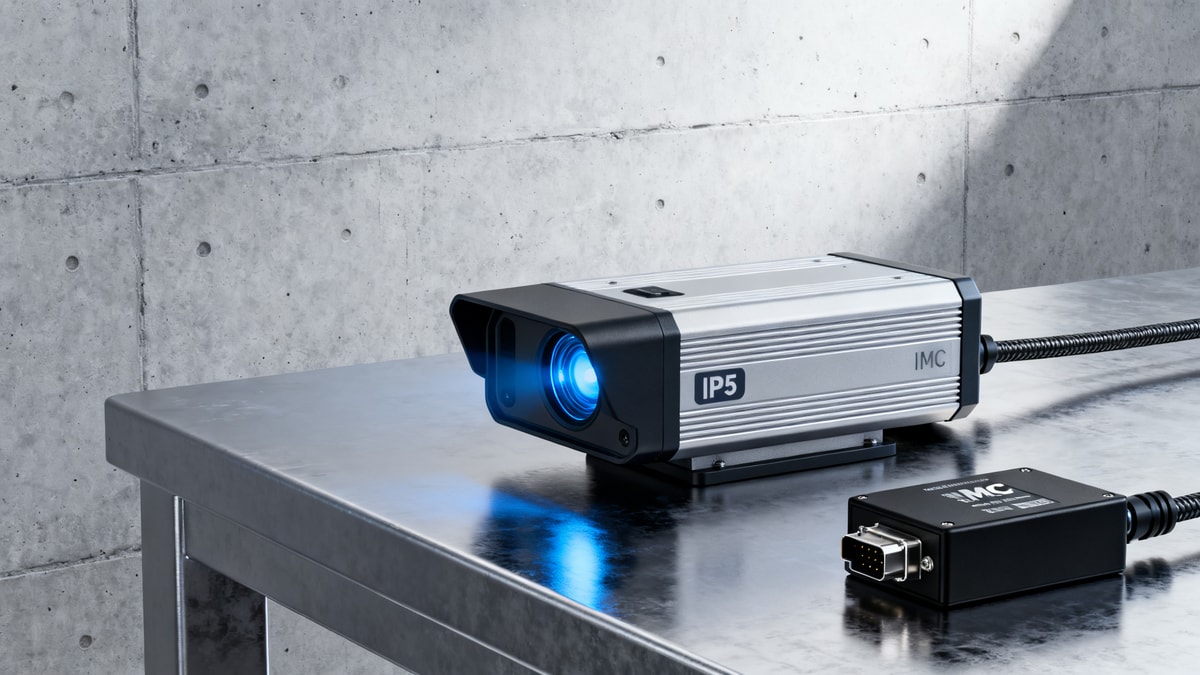
On May 3, 2026, Brazil’s National Institute of Metrology, Standardization and Industrial Quality (INMETRO) launched the revision process for Portaria No. 188/2026, proposing mandatory electromagnetic immunity (EMP) requirements for industrial laser distance meters aligned with IEC 61000-4-32:2026 Class 4 (peak field strength ≥20 kV/m). This update directly affects manufacturers, importers, and distributors of precision measurement equipment operating in or exporting to Brazil — particularly those serving construction, surveying, industrial automation, and infrastructure sectors.
Event Overview
INMETRO initiated the formal review of Portaria 188/2026 on May 3, 2026. The proposed amendment mandates that industrial laser distance meters meet electromagnetic immunity (EMP) performance at Class 4 level per IEC 61000-4-32:2026 — corresponding to a minimum peak electric field strength of 20 kV/m. The regulation is expected to enter into force in Q4 2026. Currently, importers may still clear customs using certificates issued under the previous standard; however, new orders must be tested and certified according to the updated requirement.
Industries Affected by the Update
Direct Trade Enterprises (Importers & Exporters)
Importers of laser distance meters into Brazil face immediate compliance planning pressure. Since new orders require testing against the revised standard, shipment scheduling, documentation, and customs clearance timelines will be impacted post-implementation. Delays may occur if legacy test reports are submitted for new consignments after Q4 2026.
Manufacturing Enterprises (OEMs & Contract Manufacturers)
Manufacturers supplying laser distance meters to the Brazilian market must verify whether their current designs meet IEC 61000-4-32:2026 Class 4. Unlike earlier editions, this edition introduces stricter radiated immunity test conditions — especially for high-field-strength exposure. Design validation, shielding optimization, and firmware resilience testing may need re-evaluation.
Supply Chain & Certification Service Providers
Certification bodies accredited for INMETRO conformity assessment will need to update their test protocols and laboratory capabilities to support IEC 61000-4-32:2026. Third-party labs offering pre-compliance testing may see increased demand for Class 4-level radiated immunity verification — particularly from exporters preparing ahead of Q4 2026.
What Enterprises Should Monitor and Do Now
Track official updates to Portaria 188/2026 during the public consultation phase
The revision remains in proposal stage. Stakeholders should monitor INMETRO’s official notices for draft publication, comment deadlines, and final approval timing — as minor adjustments to transition periods or scope definitions remain possible before enactment.
Distinguish between existing stock clearance and new order requirements
Current shipments backed by valid legacy certificates remain acceptable for import. However, any new production run intended for Brazil — regardless of manufacturing date — must undergo full EMP testing per IEC 61000-4-32:2026. Businesses should align procurement and order placement accordingly.
Verify laboratory accreditation status for IEC 61000-4-32:2026 Class 4 testing
Not all accredited labs currently support the full test setup required by IEC 61000-4-32:2026 (e.g., calibrated high-field-strength antennas, anechoic chamber validation up to 20 kV/m). Confirm lab capability early to avoid delays in certification cycles.
Editorial Perspective / Industry Observation
Observably, this revision signals Brazil’s continued alignment with evolving global EMC benchmarks — particularly for safety-critical portable instrumentation used in industrial environments. Analysis shows that raising the immunity threshold to Class 4 reflects growing concern over electromagnetic interference in dense urban infrastructure and near high-power RF sources (e.g., 5G base stations, industrial welders). While not yet in force, the proposal represents a firm regulatory signal rather than exploratory discussion: the reference to IEC 61000-4-32:2026 — a newly published international standard — indicates deliberate, forward-looking harmonization. From an industry perspective, it is more accurately understood as a preparatory milestone than an immediate compliance deadline — but one requiring technical readiness well before Q4 2026.
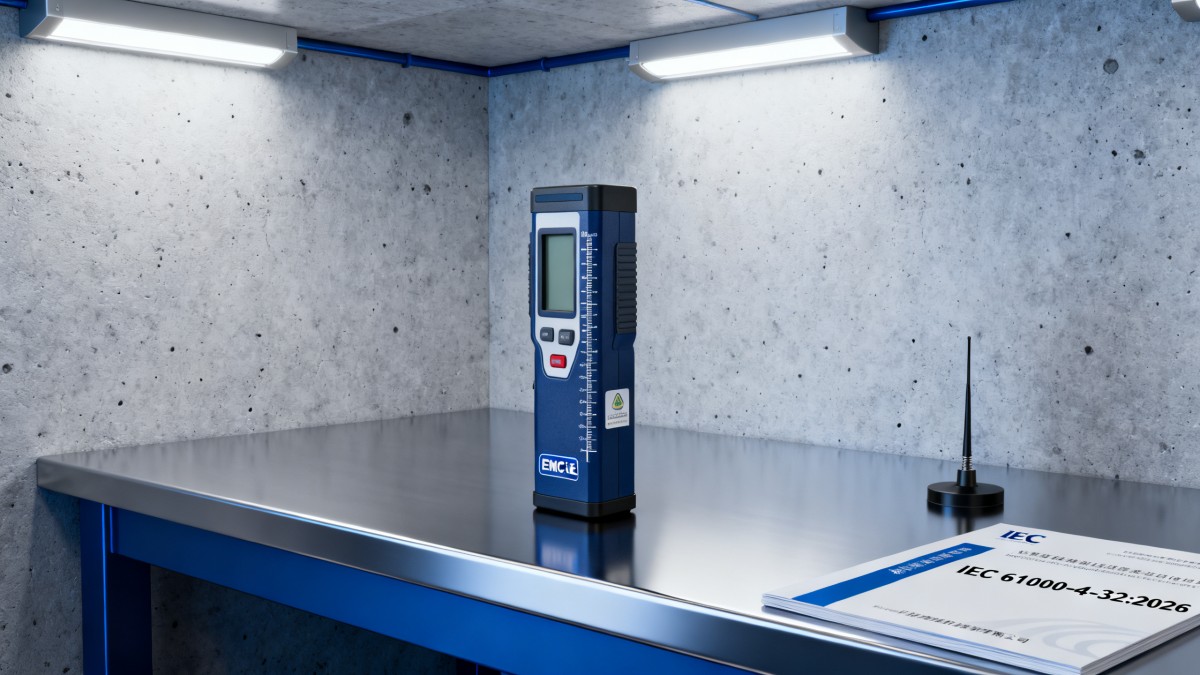
In summary, INMETRO’s proposed update marks a targeted tightening of EMC requirements for a specific class of measurement tools — not a broad-based regulatory overhaul. Its significance lies less in scope and more in precedence: it demonstrates how emerging IEC standards are being rapidly adopted into national conformity frameworks for niche but high-utility instrumentation. For affected stakeholders, the current recommendation is not reactive compliance, but proactive design and certification planning grounded in confirmed technical specifications.
Source: Official announcement by Instituto Nacional de Metrologia, Qualidade e Tecnologia (INMETRO), Portaria No. 188/2026 revision notice, dated May 3, 2026. Note: Final effective date and transitional provisions remain subject to official confirmation prior to Q4 2026 implementation.
Technical Specifications
- Global Industrial Air Filter Lead Times Extend to 24 WeeksAuthor :Environmental Engineering Director
- UL 62841-2-11:2026 Effective: AI Overload Prediction Required for Industrial ACBsAuthor :Grid Infrastructure Analyst
- Indonesia BPOM Fast-Tracks Chinese Dust PurifiersAuthor :Environmental Engineering Director
Expert Insights

Chief Security Architect
Dr. Thorne specializes in the intersection of structural engineering and digital resilience. He has advised three G7 governments on industrial infrastructure security.
Related Analysis
- May 07, 2026Global Industrial Air Filter Lead Times Extend to 24 WeeksAuthor :Environmental Engineering Director
- May 07, 2026UL 62841-2-11:2026 Effective: AI Overload Prediction Required for Industrial ACBsAuthor :Grid Infrastructure Analyst
- May 07, 2026Indonesia BPOM Fast-Tracks Chinese Dust PurifiersAuthor :Environmental Engineering Director
Core Sector // 01
Security & Safety
- INMETRO Updates Laser Distance Meter EMC Rules in BrazilAuthor :Precision Metrology Expert

- EU EN 61000-4-30:2026 Class A Enforcement Starts May 2026Author :Precision Metrology Expert

- EN 61000-4-30:2026 Enforced: Class A Harmonic Traceability Mandatory for EU PQ AnalyzersAuthor :Precision Metrology Expert

- INMETRO Launches Review of EMP Requirements for Industrial Laser Distance Meters in BrazilAuthor :Precision Metrology Expert

- EN 61000-4-30:2026 Class A Certification Mandatory for PQ Analyzers in EUAuthor :Precision Metrology Expert

- INMETRO to Mandate EMP Immunity for Industrial Laser Distance Meters in BrazilAuthor :Precision Metrology Expert

- Instruments & Measurement OEM choices that affect calibration accuracyAuthor :Precision Metrology Expert

- Which industrial standards manufacturer signals real quality controlAuthor :Precision Metrology Expert