TÜV Rheinland Updates EMC Guide for Industrial Optics Devices
Author
Date Published
Reading Time

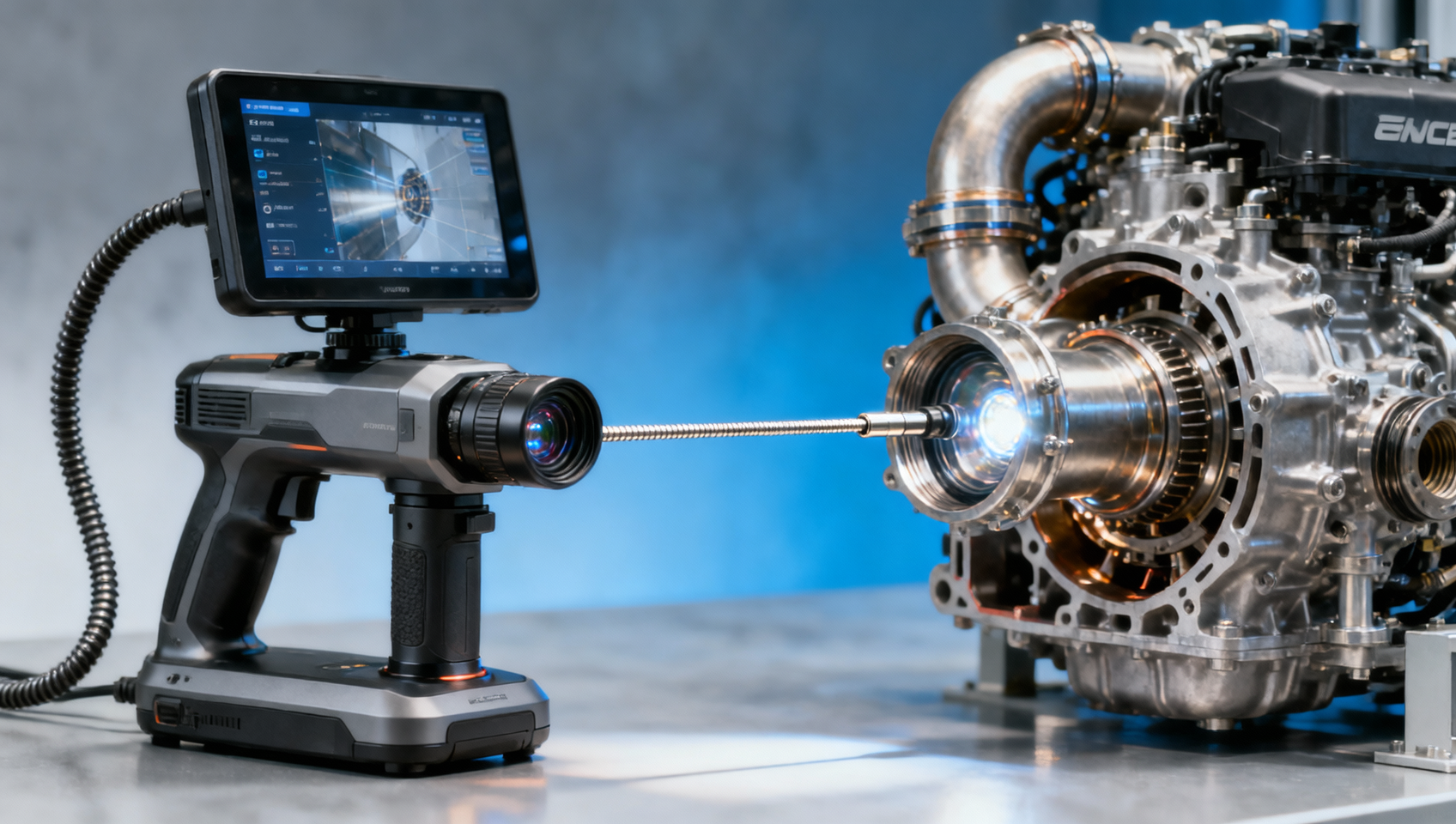
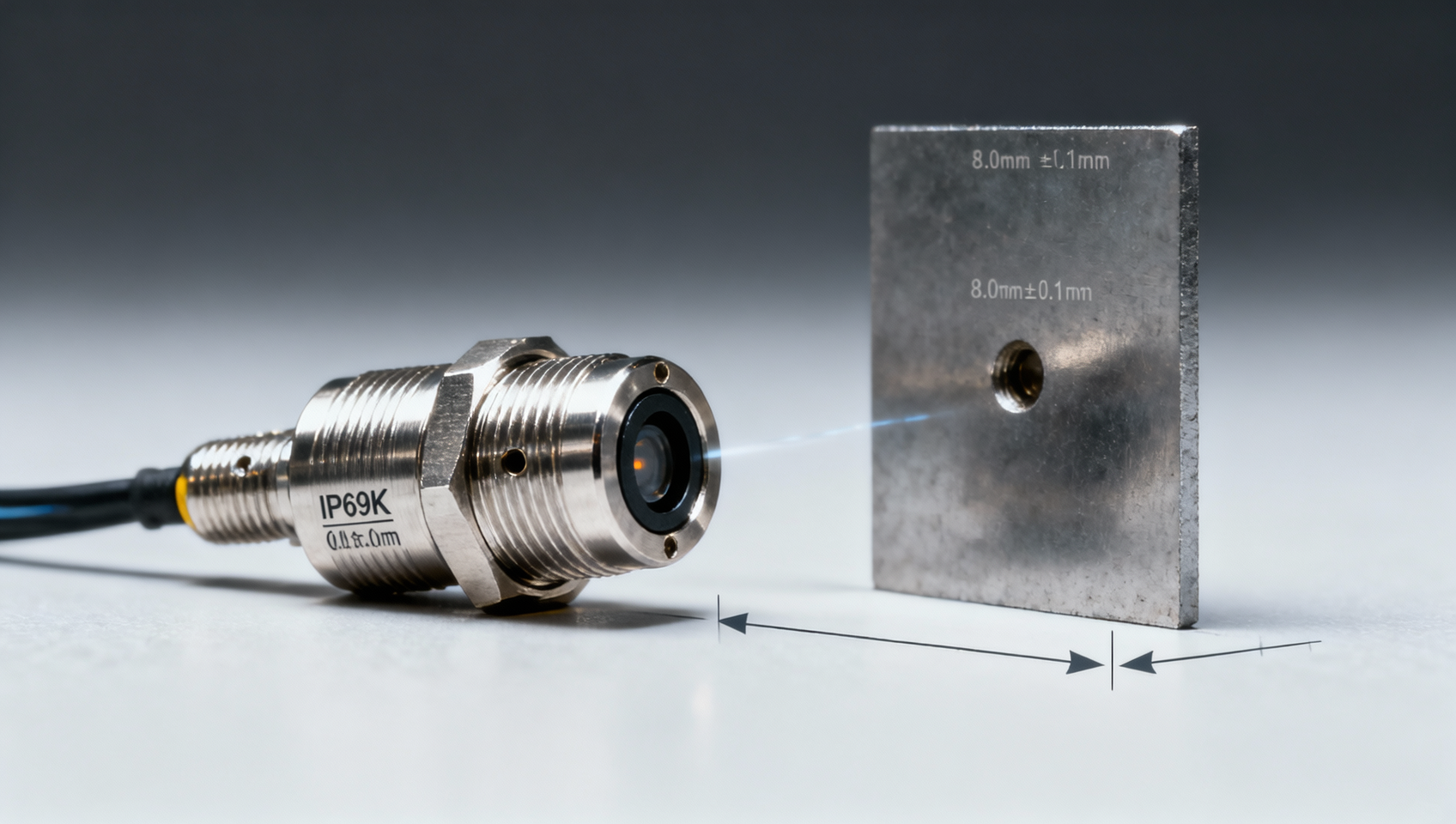
On April 22, 2026, German certification body TÜV Rheinland released an updated EMC technical guideline (Ref: TR-EMC-IND-OPT-2026), mandating new RF immunity testing for industrial optical inspection equipment entering the EU market — a development directly relevant to machine vision system integrators, sensor manufacturers, and exporters of optical measurement instruments.
Event Overview
On April 22, 2026, TÜV Rheinland published Technical Reference TR-EMC-IND-OPT-2026. It stipulates that, effective October 1, 2026, all Industrial Optics devices placed on the EU market — including machine vision cameras, laser displacement sensors, and spectrometers — must undergo radiated electromagnetic field immunity (RS) testing per IEC 61326-3-1:2026 as part of their EMC conformity assessment. Compliance is required to obtain or maintain CE marking.
Industries Affected
Machine Vision Equipment Manufacturers
These companies design and produce core components covered by the new requirement. Their products fall explicitly within the scope defined in TR-EMC-IND-OPT-2026. Impact manifests in revised type-testing protocols, potential redesign cycles, and extended time-to-market for new models targeting EU customers.
Laser Sensor & Spectrometer OEMs
Firms manufacturing laser-based displacement sensors or benchtop/portable spectrometers must now validate RS immunity under the updated standard. This affects both hardware layout (e.g., PCB grounding, enclosure shielding) and firmware-level noise resilience — not just compliance documentation.
Chinese Exporters of Optical Inspection Systems
Export-oriented manufacturers in China are explicitly named in the guideline as needing to upgrade shielding and filtering solutions. Failure to meet the new test requirement will result in inability to affix the CE mark — a direct barrier to placing products on the EU market after October 1, 2026.
Key Considerations and Recommended Actions
Monitor official updates from TÜV Rheinland and EU Notified Bodies
The guideline references IEC 61326-3-1:2026, which itself may be subject to national deviations or transitional arrangements within EU Member States. Companies should track any clarifications issued by TÜV Rheinland or other EU Notified Bodies before finalizing test plans.
Review product families with EU-bound shipments scheduled post-October 2026
Manufacturers should identify specific SKUs intended for EU delivery between October 1, 2026 and March 2027. These units require RS testing under the new reference; legacy test reports based on earlier editions of IEC 61326-3-1 will not suffice.
Distinguish between guideline issuance and enforcement timing
The guideline was issued on April 22, 2026, but the requirement takes effect on October 1, 2026. There is no grandfathering clause stated in the publicly available document. Current more appropriately understood as a six-month implementation window — not a provisional recommendation.
Initiate internal engineering review of shielding and filtering architecture
Based on the requirement’s emphasis on RF immunity, affected firms should audit existing mechanical enclosures, cable shielding strategies, power supply filtering, and I/O port transient protection. Early lab pre-scans (e.g., 30–1000 MHz RS sweeps) can help prioritize redesign efforts ahead of formal certification.
Editorial Perspective / Industry Observation
From an industry perspective, this update signals a tightening of EMC expectations for high-precision optical instrumentation — particularly where digital signal processing and low-light sensitivity increase susceptibility to RF interference. Analysis来看, it reflects growing recognition that industrial optics devices are no longer passive components but active electronic systems operating in increasingly dense RF environments (e.g., near robotics, wireless networks, or RF heating equipment). Observation来看, the timing aligns with broader EU efforts to harmonize immunity requirements across measurement and control equipment categories. It is better interpreted as an operational milestone than a policy shift — one that confirms existing trends toward stricter electromagnetic compatibility validation rather than introducing a novel regulatory concept.
Conclusion
This guideline revision does not introduce new legislation but enforces a recently updated international standard within a defined product scope and timeline. Its significance lies in its specificity: it names exact device types, cites a precise edition of IEC 61326-3-1, and sets a firm deadline. For stakeholders, it is best understood as a targeted technical compliance update — not a broad regulatory expansion — requiring focused engineering and certification action, rather than strategic repositioning.
Information Source
Primary source: TÜV Rheinland Technical Reference TR-EMC-IND-OPT-2026, published April 22, 2026. No further official interpretation or amendment has been issued as of publication date. Continued observation is recommended regarding national transposition status and Notified Body acceptance timelines.
Technical Specifications
- CIBF2026 Highlights Lithium Battery Recycling Equipment DemandAuthor :Environmental Engineering Director
- Canton Fair Phase II 2026 Industrial Components Zone Fully BookedAuthor :Heavy Industry Strategist
- TÜV Rheinland Updates EMC Guide for Industrial Optics DevicesAuthor :Precision Metrology Expert
Expert Insights

Chief Security Architect
Dr. Thorne specializes in the intersection of structural engineering and digital resilience. He has advised three G7 governments on industrial infrastructure security.
Related Analysis
- Apr 23, 2026CIBF2026 Highlights Lithium Battery Recycling Equipment DemandAuthor :Environmental Engineering Director
- Apr 23, 2026Canton Fair Phase II 2026 Industrial Components Zone Fully BookedAuthor :Heavy Industry Strategist
- Apr 23, 2026TÜV Rheinland Updates EMC Guide for Industrial Optics DevicesAuthor :Precision Metrology Expert
Core Sector // 01
Security & Safety
- TÜV Rheinland Updates EMC Guide for Industrial Optics DevicesAuthor :Precision Metrology Expert
![]()
- Industrial Endoscopes for Tight SpacesAuthor :Precision Metrology Expert

- Borescope Inspection Camera Buying TipsAuthor :Precision Metrology Expert

- Overhead crane pendant control latency isn’t just about cable length — EMI from nearby VFDs plays a bigger roleAuthor :Precision Metrology Expert

- Photoelectric sensors misfire near stainless steel surfaces — is your emitter alignment compensating for reflectivity?Author :Precision Metrology Expert

- Proximity sensors wholesale units vary widely in sensing distance consistency — temperature hysteresis explains whyAuthor :Precision Metrology Expert

- Convex safety mirrors indoors and outdoors need different lensesAuthor :Precision Metrology Expert

- JD, Meituan, Alibaba Accelerate Entry into Auto Sales, China's Smart Mobility Services Going Global May Drive Exports of Vehicle Hardware and System IntegrationAuthor :Precision Metrology Expert