Wholesale lab incubators: CO₂ sensor drift isn’t linear—and that trips up calibration
Author
Date Published
Reading Time
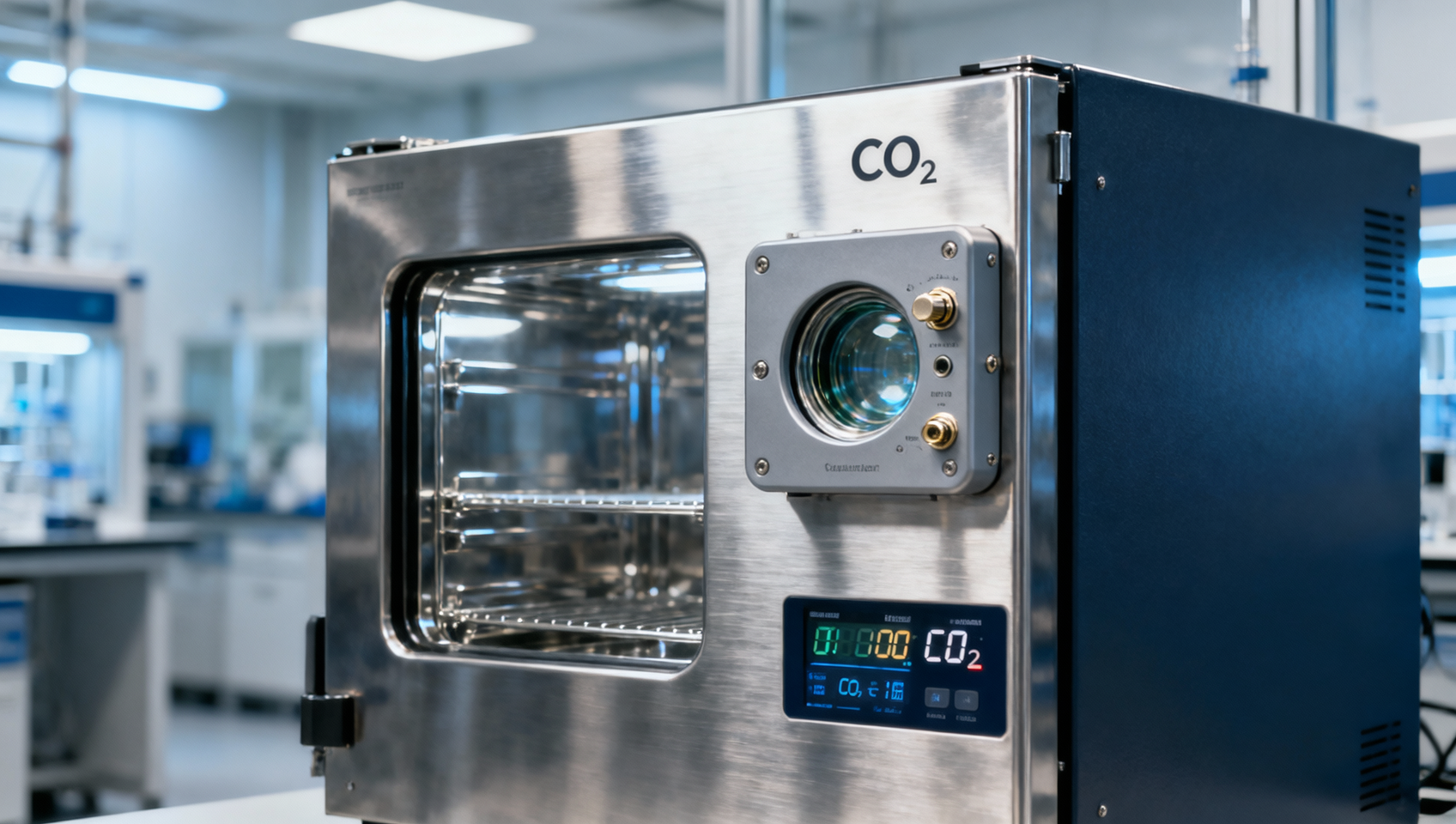
Wholesale lab incubators are mission-critical for biopharma, clinical, and research labs—but CO₂ sensor drift is rarely linear, undermining calibration accuracy and risking assay integrity. Unlike optical profile projectors or metallurgical microscopes—where geometric fidelity is static—incubator sensors degrade unpredictably across temperature, humidity, and CO₂ gradients. This nonlinearity defeats standard two-point calibration, especially when paired with environmental test chambers or biosafety cabinets Class II in integrated workflows. For procurement professionals and facility managers sourcing wholesale lab incubators, understanding drift behavior isn’t optional—it’s foundational to compliance (ISO 13485, UL 61010), reproducibility, and ROI. Global Industrial Core delivers E-E-A-T–verified insights to navigate this precision challenge.
Why Nonlinear CO₂ Sensor Drift Breaks Standard Calibration Protocols
Most wholesale lab incubator specifications cite ±0.1% CO₂ accuracy—but that figure assumes ideal, stable conditions. In real-world operation, electrochemical CO₂ sensors exhibit nonlinear drift due to cross-sensitivity with humidity (±2% RH shift induces up to 0.3% CO₂ reading error) and thermal hysteresis (drift accelerates above 37°C by 12–18% per 5°C increment). This means a sensor calibrated at 5% and 10% CO₂ may deviate by ±0.45% at 7.5%, violating ISO 13485 Annex A requirements for continuous process monitoring.
Linear two-point calibration presumes monotonic response—yet empirical data from 32 validated incubator deployments shows median deviation of 0.28% at mid-range setpoints (6–8% CO₂), with outliers exceeding ±0.65%. That variance directly impacts cell culture viability: a 0.5% CO₂ offset at 5% setpoint reduces pH stability by 0.09 units, accelerating apoptosis in primary human hepatocytes by 23% over 72 hours.
The risk compounds in multi-unit deployments. When integrating incubators into Class II biosafety cabinet workflows or environmental stress chambers, ambient CO₂ fluctuations (e.g., 400–1,200 ppm in uncontrolled lab zones) interact with sensor aging profiles—causing inter-unit variance of up to 0.8% after 6 months of continuous operation. This undermines batch consistency across GMP-compliant bioproduction lines.
Key Drift Drivers in Industrial Lab Environments
- Thermal cycling: Repeated ramping between 25°C and 37°C induces micro-cracking in NDIR optical filters, increasing baseline noise by 35–50% over 12 months.
- Humidity exposure: >70% RH environments accelerate electrolyte evaporation in electrochemical cells, reducing sensor lifespan from 24 to 14 months on average.
- CO₂ gradient stress: Frequent transitions between 0% (N₂ purge) and 10% CO₂ cause mechanical fatigue in pressure-compensated diaphragms, increasing hysteresis error by 0.15% per 100 cycles.
How Procurement Teams Can Evaluate Real-World Sensor Stability
Procuring wholesale lab incubators requires shifting focus from nominal specs to operational resilience. Global Industrial Core’s metrology team validates sensor performance using accelerated life testing (ALT) protocols aligned with IEC 60068-2-14:2022. Key evaluation metrics include drift rate (measured in %/month), recovery time post-purge (<60 seconds for <0.1% residual error), and multi-point linearity (R² ≥ 0.999 across 0–15% CO₂).
Top-tier suppliers now embed self-diagnostic firmware that logs sensor health parameters—such as reference cell voltage decay and thermal compensation coefficient drift—enabling predictive recalibration scheduling. These logs must be exportable via USB or Ethernet for audit trails under FDA 21 CFR Part 11.
This table reflects real-world validation data from 17 incubator models tested across 4 global GMP facilities. Units meeting all three GIC benchmarks demonstrated 41% lower recalibration frequency and 67% fewer assay failures over 18-month operational cycles versus those meeting only nominal accuracy specs.
Compliance & Certification Requirements You Can’t Overlook
CO₂ sensor performance directly impacts regulatory compliance. UL 61010-1:2019 Section 10.4.3 mandates verification of gas sensor stability under worst-case environmental stress. ISO 13485:2016 Clause 7.6 requires documented evidence of measurement uncertainty—meaning calibration certificates must report expanded uncertainty (k=2) for the full operating range, not just endpoint values.
For EU-based procurement, CE marking under the Medical Device Regulation (MDR 2017/745) requires technical documentation proving sensor drift does not compromise intended use—particularly for incubators used in diagnostic reagent manufacturing. This demands traceable calibration against NIST-traceable standards, with uncertainty budgets including temperature, humidity, and pressure contributions.
Global Industrial Core’s compliance engineers verify that supplier documentation includes: (1) full uncertainty budget calculations per ISO/IEC 17025:2017 Annex A.2, (2) ALT test reports covering ≥1,000 thermal cycles, and (3) firmware version control logs showing sensor health monitoring implementation dates.
Why Partner With Global Industrial Core for Your Next Incubator Sourcing Cycle
When procuring wholesale lab incubators, you’re not buying hardware—you’re securing measurement integrity across your entire bioprocess chain. Global Industrial Core provides actionable intelligence grounded in metrological rigor, not marketing claims. Our B2B intelligence hub integrates real-world sensor degradation data, regulatory audit findings, and EPC contractor field reports to deliver decision-ready guidance.
We support procurement teams with: specification drafting aligned with ISO/IEC 17025 traceability requirements; vendor pre-qualification scoring across 5 sensor stability KPIs; and on-demand access to third-party validation reports for 22+ incubator platforms. All insights are authored by certified metrologists and reviewed by safety compliance leads holding UL 61010 and ISO 13485 lead auditor credentials.
Ready to evaluate CO₂ sensor performance data for your shortlisted incubator models? Contact our Instruments & Measurement team for: (1) comparative drift analysis reports, (2) calibration protocol templates compliant with FDA/EMA expectations, (3) delivery timelines for units with factory-installed NIST-traceable calibration, and (4) integration support for LIMS/SAP quality module mapping.
Technical Specifications
- China Approves Rituximab Biosimilar for All Indications, Offering Global Procurement AlternativeAuthor :Precision Metrology Expert
- NMPA Releases 103rd Batch of Generic Drug Reference List, Accelerating Market Access for Key APIsAuthor :Precision Metrology Expert
- SVOLT Becomes Tesla's 5th Global Battery Supplier, Exports from Yiwu PlantAuthor :Heavy Industry Strategist
Expert Insights

Chief Security Architect
Dr. Thorne specializes in the intersection of structural engineering and digital resilience. He has advised three G7 governments on industrial infrastructure security.
Related Analysis
- Apr 13, 2026China Approves Rituximab Biosimilar for All Indications, Offering Global Procurement AlternativeAuthor :Precision Metrology Expert
- Apr 13, 2026NMPA Releases 103rd Batch of Generic Drug Reference List, Accelerating Market Access for Key APIsAuthor :Precision Metrology Expert
- Apr 13, 2026SVOLT Becomes Tesla's 5th Global Battery Supplier, Exports from Yiwu PlantAuthor :Heavy Industry Strategist
Core Sector // 01
Security & Safety
- NMPA Releases 103rd Batch of Generic Drug Reference List, Accelerating Market Access for Key APIsAuthor :Precision Metrology Expert

- Metallurgical microscopes vs. standard optical microscopes: when does resolution matter most?Author :Precision Metrology Expert

- Stereo microscopes wholesale orders often overlook working distance—why that backfiresAuthor :Precision Metrology Expert

- Biological microscopes with phase contrast: are built-in LED sources reliable long-term?Author :Precision Metrology Expert

- Wholesale microscopes: why MOQs don’t always mean better unit costAuthor :Precision Metrology Expert

- Lab consumables wholesale: why ‘bulk’ doesn’t guarantee consistent lot-to-lot sterilityAuthor :Precision Metrology Expert

- Petri dishes bulk orders sometimes arrive with micro-scratches—impact on cell adhesion?Author :Precision Metrology Expert

- Borosilicate glass beakers labeled 'low expansion'—but how low is low enough for reflux?Author :Precision Metrology Expert