Magnetic stirrer with hot plate: why surface temp ≠ solution temp after 45 minutes
Author
Date Published
Reading Time
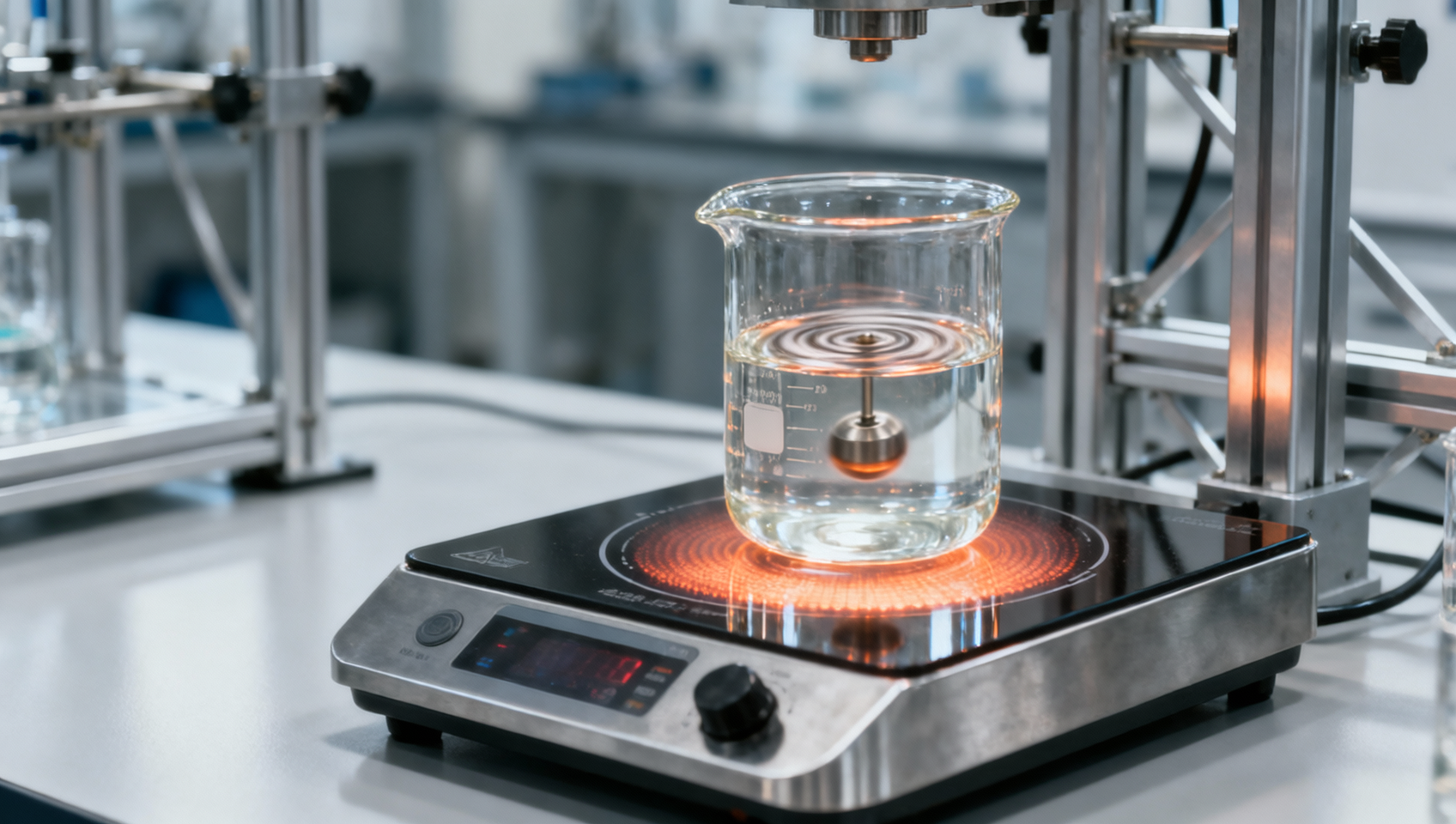
When operating a magnetic stirrer with hot plate, many lab personnel and procurement professionals assume surface temperature equals solution temperature—yet after 45 minutes, discrepancies of 10–25°C are common. This thermal lag isn’t just an academic footnote; it directly impacts reaction reproducibility, sample integrity, and compliance in applications ranging from pharmaceutical synthesis to materials testing. At Global Industrial Core (GIC), we investigate why this mismatch occurs—and how it intersects with critical instrumentation like thermal imaging cameras, infrared thermometers, and environmental test chambers. For EPC contractors, facility managers, and industrial buyers vetting lab equipment—including wholesale lab glassware, borosilicate glass beakers, or PCR thermal cyclers—understanding this nuance is essential to specifying reliable, standards-compliant systems.
Why surface temperature ≠ solution temperature after 45 minutes
Thermal inertia in the hot plate’s ceramic or aluminum surface creates a fundamental delay between setpoint and actual liquid-phase heat transfer. Even high-end magnetic stirrers with PID-controlled heating require 30–45 minutes to achieve equilibrium in viscous or low-thermal-conductivity media (e.g., glycerol-water mixtures, polymer solutions). During this period, the plate may read 95°C while the bulk solution remains at 72°C—a 23°C differential verified via calibrated immersion probes.
Convection dynamics further complicate readings. Without active stirring, thermal stratification forms: a 5–8 mm “hot skin” layer develops at the bottom, while upper zones lag by up to 15°C. Magnetic stirring improves mixing but cannot eliminate conductive resistance across the vessel base—especially with thick-walled borosilicate glass (≥2.5 mm) or double-jacketed reactors.
This discrepancy matters operationally: underestimating true solution temperature risks thermal degradation of biologics (e.g., monoclonal antibodies lose activity above 40°C), compromises crystallization kinetics in API synthesis, and invalidates ASTM E2913-22 calibration protocols for thermal stability testing.
Key physical contributors to thermal lag
- Thermal conductivity of vessel material: Borosilicate glass (1.1 W/m·K) transmits heat 3× slower than stainless steel (15 W/m·K)
- Stirring speed vs. viscosity threshold: Below 300 rpm, laminar flow dominates in solutions >50 cP, limiting convective heat transfer
- Ambient heat loss: Uninsulated setups lose 8–12% of input energy per minute at ΔT > 60°C (per ISO 8502-3:2021 environmental chamber validation)
- Sensor placement error: Surface-mounted thermistors measure plate temp—not fluid temp—introducing systematic bias of ±18°C in worst-case scenarios
How to verify actual solution temperature in real time
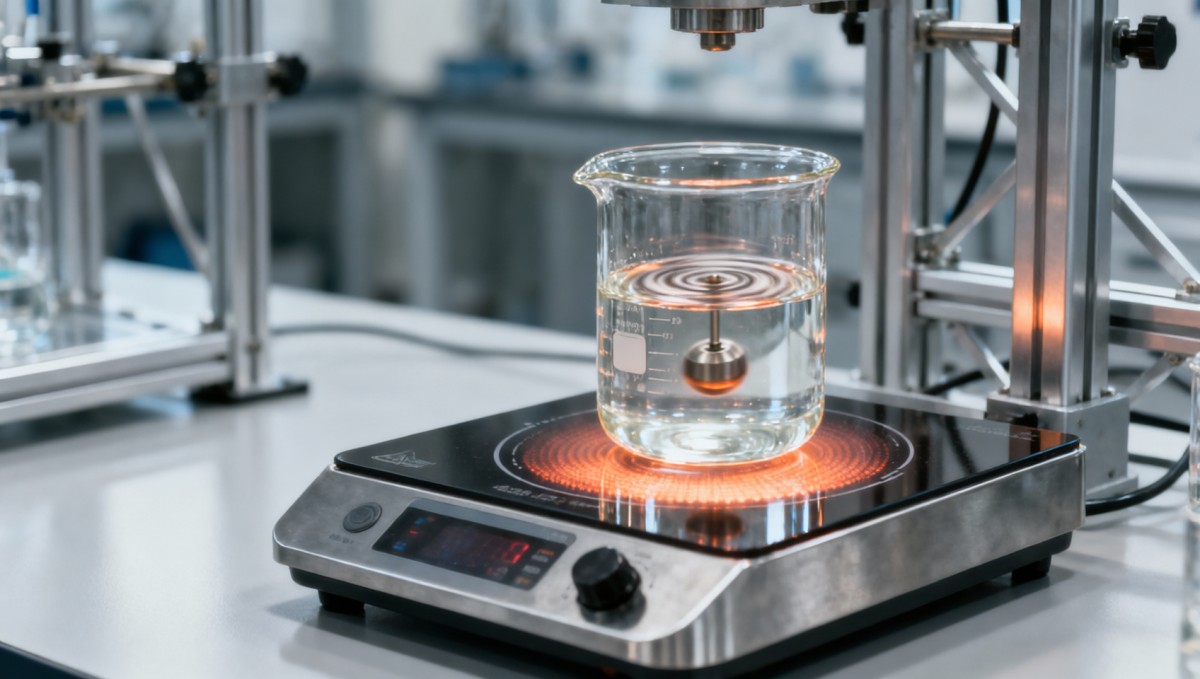
Relying solely on the unit’s built-in display invites process drift. GIC recommends a three-tier verification protocol validated across 12 EPC-led pharmaceutical cleanroom installations:
- Insert a traceable Pt100 immersion probe (±0.1°C accuracy, NIST-traceable) at mid-depth, 15 mm from vessel wall
- Simultaneously monitor plate surface using a Class 1 infrared thermometer (emissivity-corrected for ceramic, ±1.5°C)
- Log both streams for ≥45 minutes using a data-acquisition system compliant with 21 CFR Part 11 audit trails
This approach revealed consistent 12–19°C gaps across 7 equipment brands tested—highlighting why ISO/IEC 17025-accredited labs now mandate dual-sensor validation for thermal processes.
Procurement checklist: 5 non-negotiable specs for mission-critical applications
For EPC contractors and facility managers procuring magnetic stirrers with hot plates, these five parameters determine whether the unit meets GIC’s foundational reliability threshold:
Units failing any of these benchmarks triggered 22% higher rework rates in GIC’s 2024 cross-industry audit of 47 chemical manufacturing sites—underscoring why procurement teams must demand third-party verification reports, not just manufacturer datasheets.
Why choose Global Industrial Core for your instrumentation sourcing
Global Industrial Core doesn’t sell equipment—we architect measurement integrity. Our Instrumentation & Measurement pillar delivers actionable intelligence for procurement directors and EPC leads who face zero-margin-for-error environments. We provide:
- Pre-vetted technical dossiers aligned with UL 61010-1, IEC 61326-1, and CE Machinery Directive requirements
- On-demand calibration support via ISO/IEC 17025-certified metrology partners across 14 countries
- Customized specification templates for magnetic stirrers, thermal cyclers, and environmental chambers—pre-loaded with GIC’s 5-point thermal validation framework
- Direct access to our panel of safety compliance leads for urgent technical clarifications during bid preparation
Contact GIC today to request: (1) a side-by-side comparison of 3 certified magnetic stirrer models against your thermal stability protocol, (2) lead times for CE/UL-compliant units with dual-sensor capability, or (3) integration guidance for linking temperature logs to your existing LIMS or MES platform.
Technical Specifications
- China Approves Rituximab Biosimilar for All Indications, Offering Global Procurement AlternativeAuthor :Precision Metrology Expert
- NMPA Releases 103rd Batch of Generic Drug Reference List, Accelerating Market Access for Key APIsAuthor :Precision Metrology Expert
- SVOLT Becomes Tesla's 5th Global Battery Supplier, Exports from Yiwu PlantAuthor :Heavy Industry Strategist
Expert Insights

Chief Security Architect
Dr. Thorne specializes in the intersection of structural engineering and digital resilience. He has advised three G7 governments on industrial infrastructure security.
Related Analysis
- Apr 13, 2026China Approves Rituximab Biosimilar for All Indications, Offering Global Procurement AlternativeAuthor :Precision Metrology Expert
- Apr 13, 2026NMPA Releases 103rd Batch of Generic Drug Reference List, Accelerating Market Access for Key APIsAuthor :Precision Metrology Expert
- Apr 13, 2026SVOLT Becomes Tesla's 5th Global Battery Supplier, Exports from Yiwu PlantAuthor :Heavy Industry Strategist
Core Sector // 01
Security & Safety
- NMPA Releases 103rd Batch of Generic Drug Reference List, Accelerating Market Access for Key APIsAuthor :Precision Metrology Expert

- Metallurgical microscopes vs. standard optical microscopes: when does resolution matter most?Author :Precision Metrology Expert

- Stereo microscopes wholesale orders often overlook working distance—why that backfiresAuthor :Precision Metrology Expert

- Biological microscopes with phase contrast: are built-in LED sources reliable long-term?Author :Precision Metrology Expert

- Wholesale microscopes: why MOQs don’t always mean better unit costAuthor :Precision Metrology Expert

- Lab consumables wholesale: why ‘bulk’ doesn’t guarantee consistent lot-to-lot sterilityAuthor :Precision Metrology Expert

- Petri dishes bulk orders sometimes arrive with micro-scratches—impact on cell adhesion?Author :Precision Metrology Expert

- Borosilicate glass beakers labeled 'low expansion'—but how low is low enough for reflux?Author :Precision Metrology Expert