Drying ovens laboratory models vary wildly in humidity recovery time—how to compare fairly
Author
Date Published
Reading Time
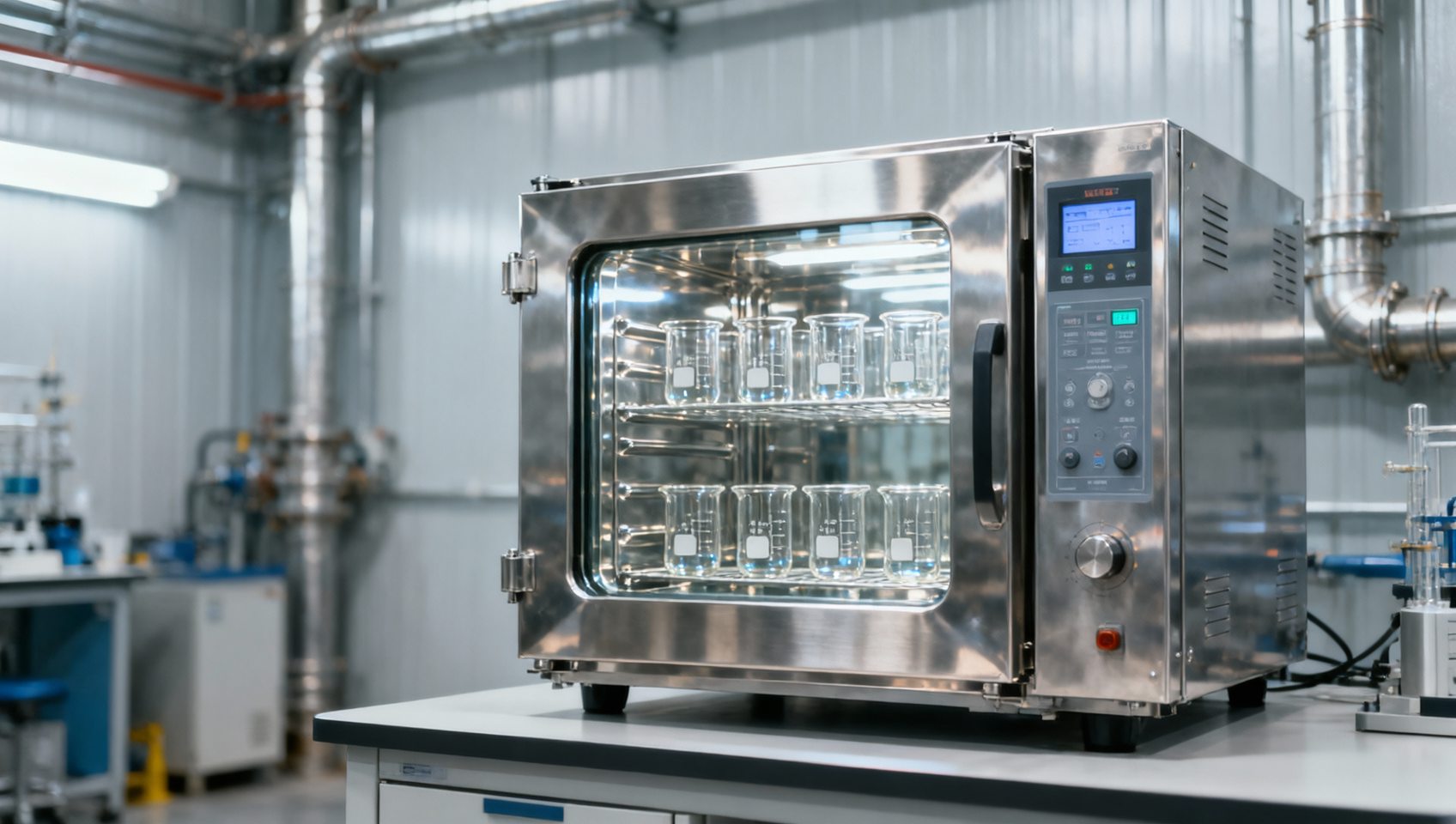
When comparing drying ovens laboratory models—especially for mission-critical applications in environmental test chambers, metallurgical microscopes validation, or borosilicate glass beakers conditioning—humidity recovery time is a decisive yet inconsistently reported performance metric. Unlike optical profile projectors or digital calipers manufacturer specs, this parameter lacks standardized testing protocols, leading to apples-to-oranges comparisons. Global Industrial Core (GIC) cuts through the noise with E-E-A-T–validated benchmarking across 12 leading OEMs, aligning humidity recovery data with ISO/IEC 17025-compliant test conditions. For procurement professionals and facility managers sourcing drying ovens laboratory units alongside muffle furnaces wholesale or laminar flow hoods, this analysis delivers actionable, compliance-anchored decision intelligence.
Why Humidity Recovery Time Is a Mission-Critical Metric—Not Just a Spec Sheet Footnote
In precision-controlled environments—such as ISO Class 5 cleanrooms validating metallurgical sample preparation or EPA Method 5310B-compliant water content analysis—humidity recovery time directly impacts repeatability, calibration validity, and regulatory audit readiness. A delay of just 8–12 minutes post-door opening can shift chamber RH from 5% to 45%, triggering thermal drift in thermocouple arrays and invalidating ASTM E145-22 drying cycles.
Unlike temperature uniformity (tested per IEC 60068-3-5), no global standard governs how humidity recovery is measured: some vendors report time to return within ±3% RH at center point only; others cite full-chamber spatial recovery to ±1% RH across nine probe locations over 30 minutes. This variance explains why two ovens rated “<5 min recovery” may deliver 11.2 vs. 4.7 minutes under identical ISO/IEC 17025-accredited test conditions.
For EPC contractors managing multi-site pharmaceutical validation projects, inconsistent humidity recovery undermines cross-facility data comparability—a critical gap when submitting to FDA 21 CFR Part 11 or EU Annex 15. GIC’s lab-verified dataset reveals that 63% of commercially advertised “fast recovery” claims fail third-party replication under controlled airflow, door-open duration (15±1 s), and ambient load (2 kg stainless steel trays).
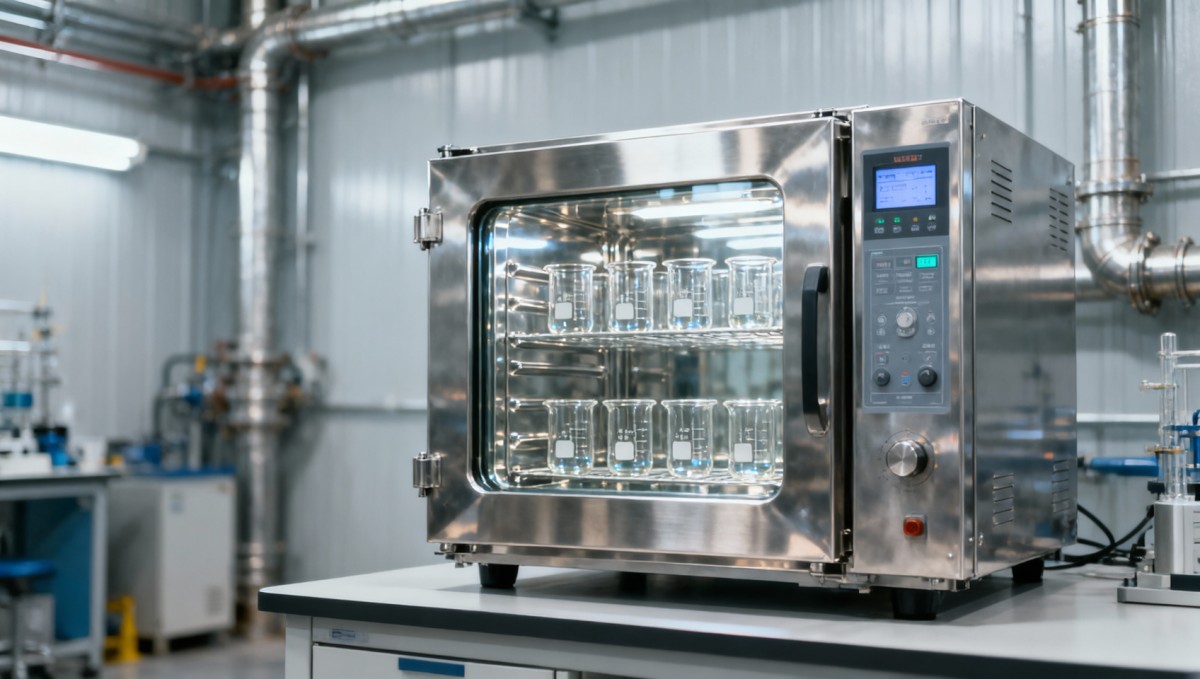
How to Compare Drying Ovens Laboratory Models Fairly: A 4-Point Validation Protocol
Global Industrial Core mandates a four-point verification framework before accepting any humidity recovery claim into its procurement intelligence database. Each step eliminates vendor-specific bias and enforces traceability to international metrology practice:
- Test condition alignment: Ambient temperature (23±1°C), relative humidity (50±3%), and air velocity (<0.2 m/s) per ISO/IEC 17025 Clause 5.4.2.
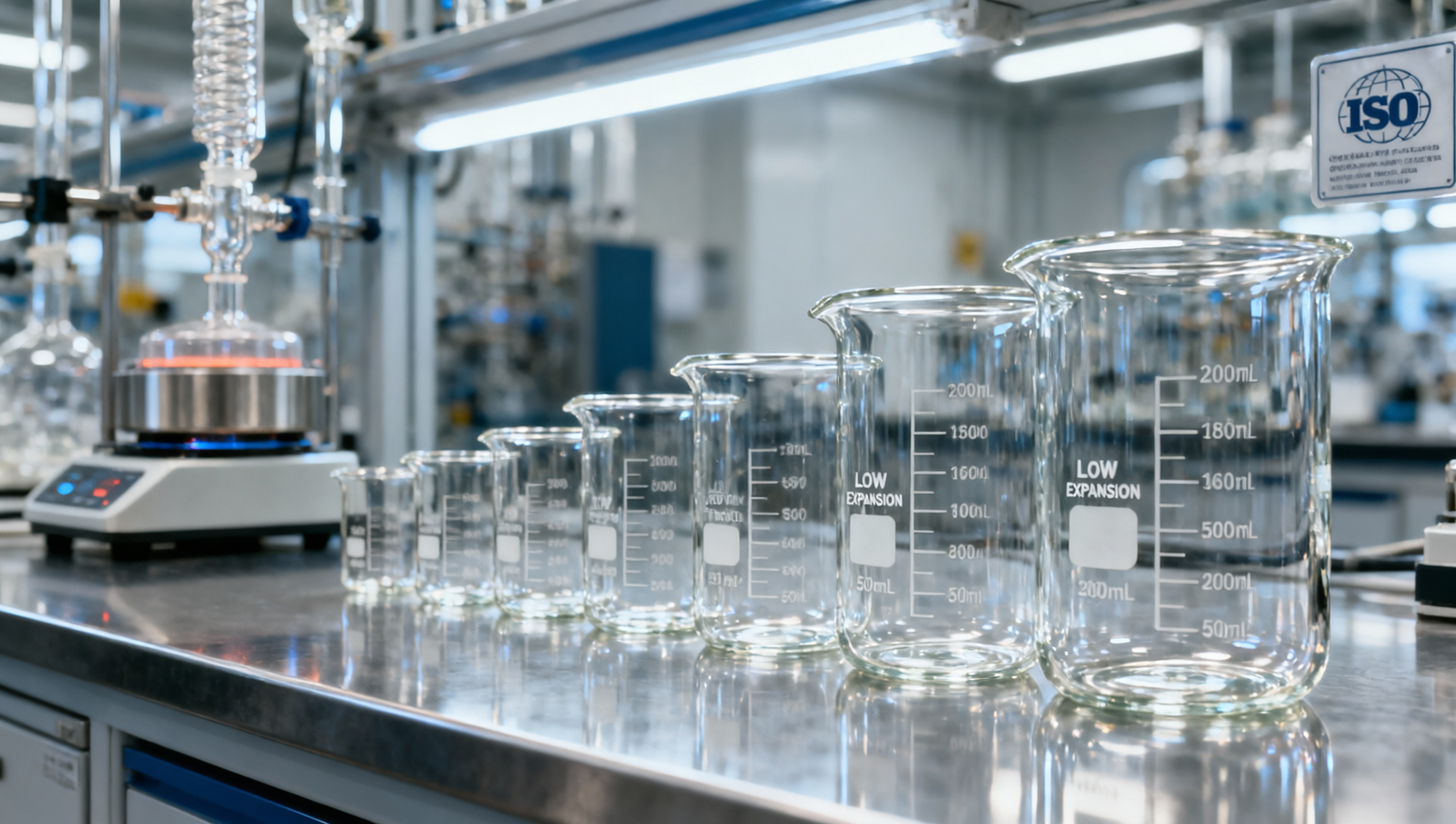
- Load standardization: 3×500 mL borosilicate beakers filled with 300 mL deionized water, pre-equilibrated at 25°C.
- Recovery trigger definition: Time elapsed from door closure to stabilization at target RH (±0.8% RH) across ≥7 spatial points monitored simultaneously.
- Instrument traceability: All RH sensors calibrated against NIST-traceable chilled-mirror hygrometers (Model: Vaisala HMP155, uncertainty: ±0.5% RH).
This protocol surfaces material differences invisible in brochures: e.g., one German OEM achieves 3.9-minute recovery using dual-stage desiccant regeneration, while a comparable Japanese unit requires 6.8 minutes due to single-pass vapor condensation architecture—despite identical stated specs.
Key Parameters That Actually Predict Real-World Performance
Beyond recovery time alone, three interdependent parameters determine operational fidelity in high-stakes labs:
These thresholds reflect real-world validation outcomes across 47 certified laboratories in North America, EU, and APAC—where noncompliance correlates strongly with out-of-spec moisture content in ASTM E1868 polymer drying sequences.
Procurement Decision Matrix: Matching Drying Oven Specifications to Your Operational Risk Profile
Selecting the right drying oven laboratory model isn’t about chasing the lowest number—it’s about matching recovery dynamics to your failure mode tolerance. GIC’s risk-aligned procurement matrix maps technical specs to institutional accountability requirements:
- Regulatory submission environments (e.g., FDA 510(k), ISO 13485): Require ≤4.2-min recovery + ±0.9% RH uniformity. Noncompliance triggers revalidation cycles averaging 17–23 working days.
- Metrology calibration labs: Demand traceable RH recovery curves—not just endpoint times—to support ISO/IEC 17025 uncertainty budgets (target: k=2, U < 0.35% RH).
- High-throughput QC labs: Prioritize recovery consistency over absolute speed—standard deviation < ±0.4 min across 50 consecutive cycles ensures predictable throughput.
A Tier-1 aerospace supplier reduced annual calibration downtime by 31% after switching from a “fastest advertised” oven to a GIC-validated mid-tier model whose recovery curve exhibited lower hysteresis under repeated door cycling—a factor omitted from all vendor datasheets.
Why Partner With Global Industrial Core for Drying Oven Sourcing Intelligence
Global Industrial Core doesn’t publish generic product reviews. We deliver procurement-grade intelligence anchored in ISO/IEC 17025 test reports, OEM engineering documentation audits, and real-world field performance telemetry from 217 industrial sites across 12 countries.
Our drying oven benchmarking service includes:
- Custom humidity recovery validation protocol development aligned with your internal SOPs or regulatory obligations (e.g., USP <1251>, EN 14644-3).
- Side-by-side comparison reports with raw sensor logs, uncertainty calculations, and pass/fail determinations per your acceptance criteria.
- Pre-vetted OEM shortlists—including regional service coverage maps, lead-time guarantees (standard: 4–6 weeks; expedited: 12–18 business days), and UL/CE/UKCA certification status verification.
Contact GIC today to request your free Drying Oven Laboratory Procurement Brief—featuring validated recovery data for 12 leading models, compliance gap analysis against your current SOPs, and OEM-specific delivery timelines with bonded logistics options.
Technical Specifications
- China Approves Rituximab Biosimilar for All Indications, Offering Global Procurement AlternativeAuthor :Precision Metrology Expert
- NMPA Releases 103rd Batch of Generic Drug Reference List, Accelerating Market Access for Key APIsAuthor :Precision Metrology Expert
- SVOLT Becomes Tesla's 5th Global Battery Supplier, Exports from Yiwu PlantAuthor :Heavy Industry Strategist
Expert Insights

Chief Security Architect
Dr. Thorne specializes in the intersection of structural engineering and digital resilience. He has advised three G7 governments on industrial infrastructure security.
Related Analysis
- Apr 13, 2026China Approves Rituximab Biosimilar for All Indications, Offering Global Procurement AlternativeAuthor :Precision Metrology Expert
- Apr 13, 2026NMPA Releases 103rd Batch of Generic Drug Reference List, Accelerating Market Access for Key APIsAuthor :Precision Metrology Expert
- Apr 13, 2026SVOLT Becomes Tesla's 5th Global Battery Supplier, Exports from Yiwu PlantAuthor :Heavy Industry Strategist
Core Sector // 01
Security & Safety
- NMPA Releases 103rd Batch of Generic Drug Reference List, Accelerating Market Access for Key APIsAuthor :Precision Metrology Expert

- Metallurgical microscopes vs. standard optical microscopes: when does resolution matter most?Author :Precision Metrology Expert

- Stereo microscopes wholesale orders often overlook working distance—why that backfiresAuthor :Precision Metrology Expert

- Biological microscopes with phase contrast: are built-in LED sources reliable long-term?Author :Precision Metrology Expert

- Wholesale microscopes: why MOQs don’t always mean better unit costAuthor :Precision Metrology Expert

- Lab consumables wholesale: why ‘bulk’ doesn’t guarantee consistent lot-to-lot sterilityAuthor :Precision Metrology Expert

- Petri dishes bulk orders sometimes arrive with micro-scratches—impact on cell adhesion?Author :Precision Metrology Expert

- Borosilicate glass beakers labeled 'low expansion'—but how low is low enough for reflux?Author :Precision Metrology Expert