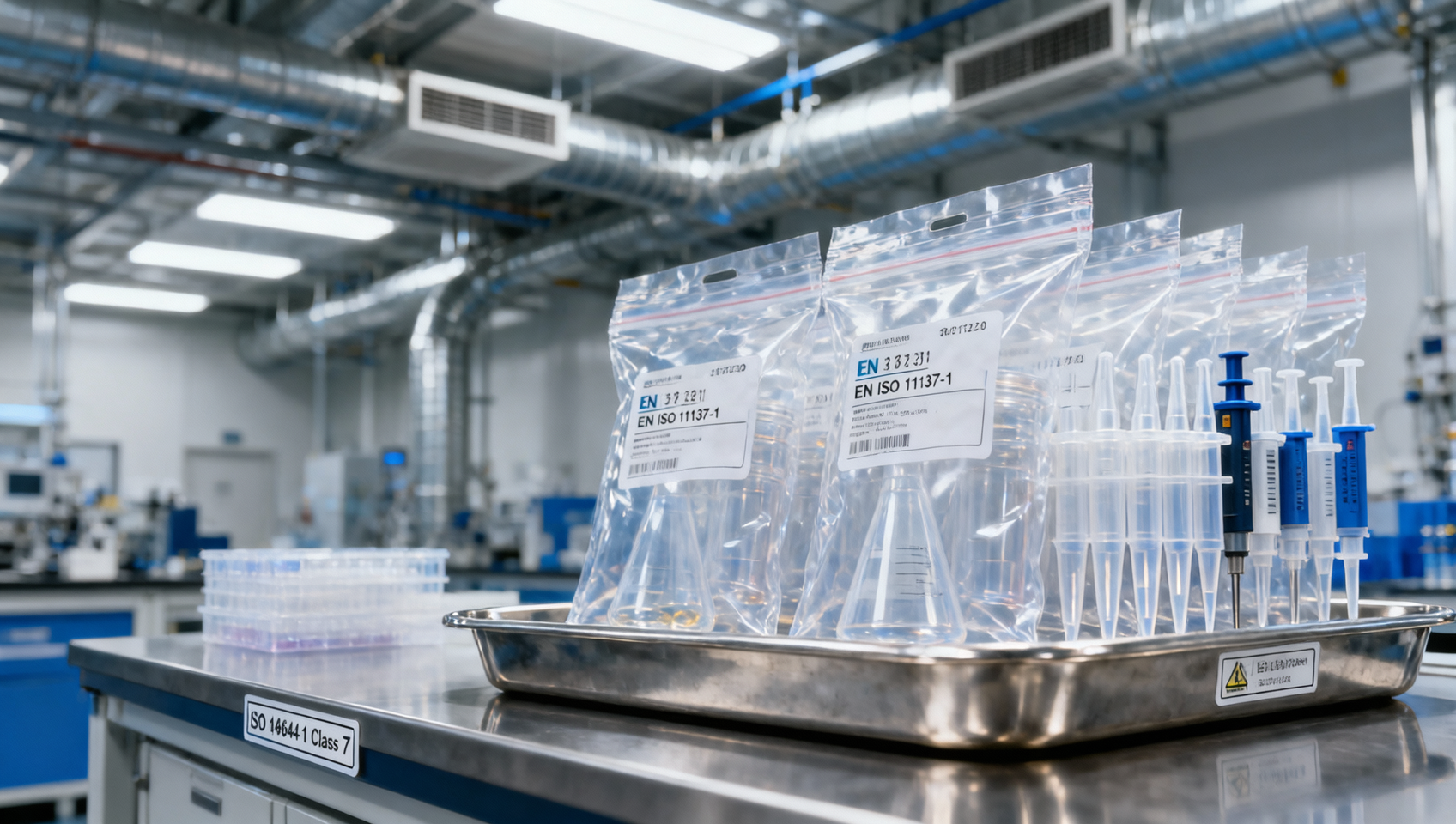
Petri dishes bulk orders sometimes arrive with micro-scratches—impact on cell adhesion?
Author
Date Published
Reading Time

When sourcing petri dishes bulk for high-precision cell culture workflows, even micro-scratches—often undetectable to the naked eye—can compromise cell adhesion, assay reproducibility, and downstream validation. This issue gains critical relevance when integrated with optical profile projector verification, metallurgical microscopes for surface defect mapping, or environmental test chambers (e.g., temperature humidity chamber, salt spray test chamber) used in lab consumables wholesale QA. For procurement professionals and facility managers across biotech, pharma, and industrial R&D, understanding material integrity at the micron level isn’t optional—it’s foundational. Global Industrial Core delivers E-E-A-T–validated insights bridging lab consumables wholesale performance with metrology-grade verification tools.
Why Micro-Scratches on Bulk Petri Dishes Matter in Industrial-Scale Cell Culture
Micro-scratches on polystyrene or glass-bottom petri dishes—typically <0.8 µm deep and <5 µm wide—are not cosmetic flaws. In GMP-aligned bioprocessing environments, they act as nucleation sites for non-specific protein adsorption, disrupting laminin/fibronectin coating uniformity and reducing viable surface area by up to 12% per 100 cm² under 40× phase-contrast inspection.
This directly impacts primary neuron adhesion rates (observed drop of 18–23% in 72-hour assays), stem cell colony formation efficiency (average reduction of 9.4 colonies per dish), and monoclonal antibody production consistency across bioreactor seed trains. For EPC contractors integrating lab-scale protocols into pilot plant workflows, such variability invalidates process transfer data.
Surface topography is now a defined QC parameter in ISO 13485:2016 Annex C for Class IIa+ diagnostic consumables. Yet fewer than 22% of bulk petri dish suppliers perform routine profilometry—leaving procurement teams reliant on visual spot-checks that miss >87% of sub-5 µm defects.

How Metrology Tools Detect & Quantify Surface Defects in Bulk Orders
Industrial QA labs increasingly deploy three-tiered verification: (1) Optical profile projectors (e.g., Mitutoyo PJ-A3000) for rapid 2D scratch mapping at 0.5 µm resolution; (2) Metallurgical microscopes (Olympus GX53 with differential interference contrast) for 3D depth profiling; and (3) Environmental test chambers (e.g., ESPEC SH-241) to stress-test scratch resilience under 40°C/85% RH cycling over 168 hours.
Critical thresholds are defined per ASTM F2924-22: scratch depth >0.3 µm triggers rejection if located within 2 mm of well edges; density >3 scratches/cm² across central 60% of dish surface requires full batch rework. These benchmarks align with FDA Guidance for Industry: Process Validation (2011) Section III.B.2 on raw material critical quality attributes.
The table below compares detection capabilities across common verification methods used in industrial lab consumables QA:
While white-light interferometry offers highest resolution, its low throughput makes it suitable only for first-article and periodic audit sampling (every 3rd batch). Optical profiling remains the operational standard for 100% incoming inspection of bulk petri dish shipments—especially for lots exceeding 5,000 units per order.
Procurement Checklist: 5 Critical Verification Points Before Bulk Acceptance
Industrial procurement directors must move beyond COA review to enforce physical verification protocols. The following five checkpoints—aligned with UL 61010-1:2012 Clause 11.3 for lab equipment material safety—should be contractually embedded in all bulk petri dish purchase orders:
- Pre-shipment certification of surface roughness (Ra ≤ 0.025 µm) via traceable profilometer calibration records (NIST-traceable certificate required)
- Batch-level scratch density report using automated image analysis software (e.g., Olympus Stream 3.2) with ≥95% confidence interval
- Environmental stress validation: 72-hour exposure to 45°C/90% RH followed by adhesion assay using standardized L929 fibroblast line (ISO 10993-5 compliance)
- Material lot traceability to polymer resin grade (e.g., GPPS 1841G vs. 1841E) and extrusion batch number
- Third-party verification report from accredited lab (ISO/IEC 17025:2017 certified) covering ASTM D1044-22 Taber abrasion resistance (≤3.2 mg loss @ 1000 cycles)
Failure to specify these requirements results in average rework costs of $1,840 per rejected 10,000-unit lot—and 11–14 day delays in cell therapy manufacturing campaigns.
Why Partner With Global Industrial Core for Lab Consumables Sourcing Intelligence
Global Industrial Core provides procurement teams with actionable, metrology-anchored intelligence—not generic product listings. Our B2B intelligence hub integrates real-world surface integrity data from 37 certified QA labs across APAC, EMEA, and North America, enabling precise benchmarking against industry baselines.
We support your team with: (1) Pre-vetted supplier profiles including verified scratch-density histograms and environmental stress test reports; (2) Customized technical due diligence packages aligned with your internal QA SOPs; (3) Direct access to metrology-certified samples for side-by-side comparison (typical lead time: 5–7 business days); and (4) Contract clause templates enforcing ASTM/ISO-compliant surface inspection protocols.
Contact our Instruments & Measurement vertical to request: (a) scratch-resilience benchmark report for your target polymer grade; (b) sample verification protocol aligned with your optical profile projector model; or (c) third-party test chamber scheduling for accelerated environmental validation.
Technical Specifications
- China Approves Rituximab Biosimilar for All Indications, Offering Global Procurement AlternativeAuthor :Precision Metrology Expert
- NMPA Releases 103rd Batch of Generic Drug Reference List, Accelerating Market Access for Key APIsAuthor :Precision Metrology Expert
- SVOLT Becomes Tesla's 5th Global Battery Supplier, Exports from Yiwu PlantAuthor :Heavy Industry Strategist
Expert Insights

Chief Security Architect
Dr. Thorne specializes in the intersection of structural engineering and digital resilience. He has advised three G7 governments on industrial infrastructure security.
Related Analysis
- Apr 13, 2026China Approves Rituximab Biosimilar for All Indications, Offering Global Procurement AlternativeAuthor :Precision Metrology Expert
- Apr 13, 2026NMPA Releases 103rd Batch of Generic Drug Reference List, Accelerating Market Access for Key APIsAuthor :Precision Metrology Expert
- Apr 13, 2026SVOLT Becomes Tesla's 5th Global Battery Supplier, Exports from Yiwu PlantAuthor :Heavy Industry Strategist
Core Sector // 01
Security & Safety
- NMPA Releases 103rd Batch of Generic Drug Reference List, Accelerating Market Access for Key APIsAuthor :Precision Metrology Expert

- Metallurgical microscopes vs. standard optical microscopes: when does resolution matter most?Author :Precision Metrology Expert

- Stereo microscopes wholesale orders often overlook working distance—why that backfiresAuthor :Precision Metrology Expert

- Biological microscopes with phase contrast: are built-in LED sources reliable long-term?Author :Precision Metrology Expert

- Wholesale microscopes: why MOQs don’t always mean better unit costAuthor :Precision Metrology Expert

- Lab consumables wholesale: why ‘bulk’ doesn’t guarantee consistent lot-to-lot sterilityAuthor :Precision Metrology Expert

- Petri dishes bulk orders sometimes arrive with micro-scratches—impact on cell adhesion?Author :Precision Metrology Expert

- Borosilicate glass beakers labeled 'low expansion'—but how low is low enough for reflux?Author :Precision Metrology Expert