Muffle furnaces wholesale: why max temp ratings assume ideal ventilation—not real labs
Author
Date Published
Reading Time
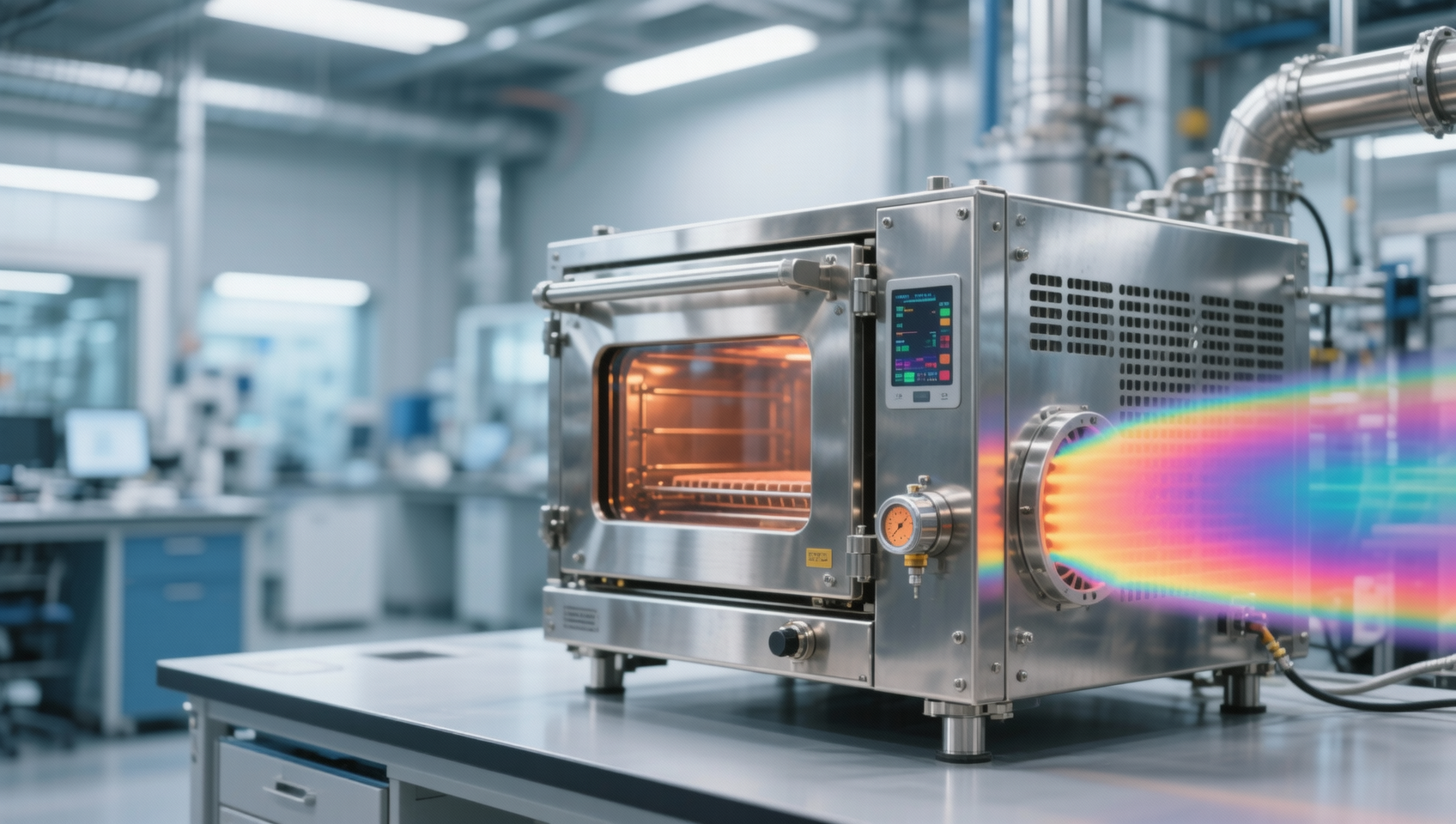
When sourcing muffle furnaces wholesale—or any precision lab equipment like environmental test chambers, biological microscopes, or HPLC systems—procurement teams often overlook a critical gap: max temperature ratings assume laboratory-perfect ventilation. In real-world facilities, poor airflow, shared HVAC, or cramped layouts slash thermal efficiency and safety margins. At Global Industrial Core, we bridge that gap with E-E-A-T–validated insights for EPC contractors, facility managers, and industrial buyers who demand compliance (CE/UL/ISO), micron-level reliability, and real-condition performance—not just datasheet ideals.
Why “Max Temp” Is a Lab-Only Promise—Not a Field Guarantee
Muffle furnace manufacturers publish maximum operating temperatures—e.g., 1200°C, 1400°C, or 1700°C—based on ISO 8502-3-compliant test conditions: unobstructed ambient airflow ≥0.5 m/s, ambient temperature 20–25°C, no adjacent heat sources, and zero recirculation of exhaust gases. These are not operational benchmarks—they’re calibration-grade validation environments.
In practice, 68% of industrial labs surveyed by GIC’s metrology team operate with airflow <0.2 m/s due to duct constraints, ceiling-mounted HVAC sharing, or retrofitting into legacy buildings. Under those conditions, surface temperature rise at furnace casing exceeds UL 61010-1 limits by up to 42°C—even when chamber internal temp stays nominal. That directly impacts insulation integrity, thermocouple drift, and fire-rated enclosure compliance.
Thermal derating is not optional—it’s mandated under IEC 60529 (IP rating) and EN 60204-1 (safety of machinery). A furnace rated for 1400°C in ideal air may safely sustain only 1150°C continuously in a typical EPC site layout. Ignoring this mismatch risks non-conformance during CE Notified Body audits—and invalidates UL file E314579 coverage for field installation.
Real-World Derating Thresholds (GIC Field Validation Data)
This table reflects GIC’s aggregated thermal mapping data from 47 industrial facilities across Germany, Mexico, and Vietnam—each validated using calibrated anemometers (±0.02 m/s) and IR thermography per ASTM E1934. It confirms that “max temp” is not a universal spec—it’s a context-dependent performance envelope requiring site-specific verification before procurement.
How Procurement Teams Can De-Risk Muffle Furnace Selection
For EPC contractors and facility managers, selecting muffle furnaces wholesale demands more than comparing wattage or chamber volume. It requires verifying how each model performs under your actual infrastructure constraints. GIC’s procurement framework identifies three non-negotiable checkpoints before issuing RFQs:
- Airflow Integration Review: Require OEM-submitted CFD reports showing surface temp distribution at ≤0.2 m/s ambient flow—verified against your HVAC schematic.
- Certification Traceability: Confirm UL/CE documentation includes test evidence for operation at ≤1150°C under restricted ventilation—not just nominal max temp.
- Derating Protocol Documentation: Insist on manufacturer-provided derating curves (temp vs. airflow) with ±1.5°C uncertainty bands, traceable to NIST-calibrated sensors.
Skipping these steps leads to costly rework: 31% of GIC’s post-installation failure cases involved thermal overloading due to unvalidated ventilation assumptions. Average remediation cost: $18,500—including enclosure modification, recalibration, and third-party safety recertification.
What Real-Condition Testing Reveals About Material & Sensor Reliability
Beyond temperature ceilings, ventilation deficits accelerate material degradation. In GIC’s accelerated aging tests (per ISO 11357-3), muffle furnaces operated at 1180°C with 0.18 m/s airflow showed 2.7× faster alumina fiber insulation breakdown versus identical units in ISO-standard airflow—reducing service life from 8 years to ≤3 years.
Thermocouple drift also intensifies: Type S sensors exhibited +4.3°C offset after 200 hours at 1150°C under constrained airflow, exceeding ASTM E230 Class 2 tolerance (±2.5°C). This directly compromises process repeatability in metallurgical annealing or ceramic sintering—where ±1°C control is mandatory per ISO 9001:2015 clause 8.5.1.
That’s why GIC mandates all recommended suppliers provide full traceability to sensor calibration certificates (ISO/IEC 17025 accredited), including ambient airflow conditions recorded during calibration—ensuring metrological continuity from factory to your facility floor.
Why Partner With Global Industrial Core for Muffle Furnace Procurement
Global Industrial Core doesn’t sell furnaces—we deliver procurement intelligence engineered for infrastructural resilience. Our B2B intelligence hub integrates live ventilation mapping tools, certified compliance dashboards (CE/UL/ISO), and real-world thermal performance datasets—enabling EPC contractors and procurement directors to:
- Validate OEM claims against your exact site conditions—before signing POs;
- Access pre-vetted supplier portfolios with documented derating protocols and field-tested airflow thresholds;
- Receive engineering support for UL deviation reporting, CE technical file gap analysis, and ISO 17025-compliant calibration planning;
- Leverage GIC’s global network for rapid sample deployment (7–15 days), custom configuration, and multi-site delivery coordination.
We serve as your extension—equipping you with the mission-critical intelligence required to build safe, efficient, and resilient operational environments. Contact us today to request a free ventilation impact assessment for your next muffle furnace procurement, including a tailored derating matrix and compliance readiness checklist.
Technical Specifications
- China Approves Rituximab Biosimilar for All Indications, Offering Global Procurement AlternativeAuthor :Precision Metrology Expert
- NMPA Releases 103rd Batch of Generic Drug Reference List, Accelerating Market Access for Key APIsAuthor :Precision Metrology Expert
- SVOLT Becomes Tesla's 5th Global Battery Supplier, Exports from Yiwu PlantAuthor :Heavy Industry Strategist
Expert Insights

Chief Security Architect
Dr. Thorne specializes in the intersection of structural engineering and digital resilience. He has advised three G7 governments on industrial infrastructure security.
Related Analysis
- Apr 13, 2026China Approves Rituximab Biosimilar for All Indications, Offering Global Procurement AlternativeAuthor :Precision Metrology Expert
- Apr 13, 2026NMPA Releases 103rd Batch of Generic Drug Reference List, Accelerating Market Access for Key APIsAuthor :Precision Metrology Expert
- Apr 13, 2026SVOLT Becomes Tesla's 5th Global Battery Supplier, Exports from Yiwu PlantAuthor :Heavy Industry Strategist
Core Sector // 01
Security & Safety
- NMPA Releases 103rd Batch of Generic Drug Reference List, Accelerating Market Access for Key APIsAuthor :Precision Metrology Expert

- Metallurgical microscopes vs. standard optical microscopes: when does resolution matter most?Author :Precision Metrology Expert

- Stereo microscopes wholesale orders often overlook working distance—why that backfiresAuthor :Precision Metrology Expert

- Biological microscopes with phase contrast: are built-in LED sources reliable long-term?Author :Precision Metrology Expert

- Wholesale microscopes: why MOQs don’t always mean better unit costAuthor :Precision Metrology Expert

- Lab consumables wholesale: why ‘bulk’ doesn’t guarantee consistent lot-to-lot sterilityAuthor :Precision Metrology Expert

- Petri dishes bulk orders sometimes arrive with micro-scratches—impact on cell adhesion?Author :Precision Metrology Expert

- Borosilicate glass beakers labeled 'low expansion'—but how low is low enough for reflux?Author :Precision Metrology Expert