Laboratory centrifuge machine rotor fatigue isn’t tracked by runtime hours alone
Author
Date Published
Reading Time
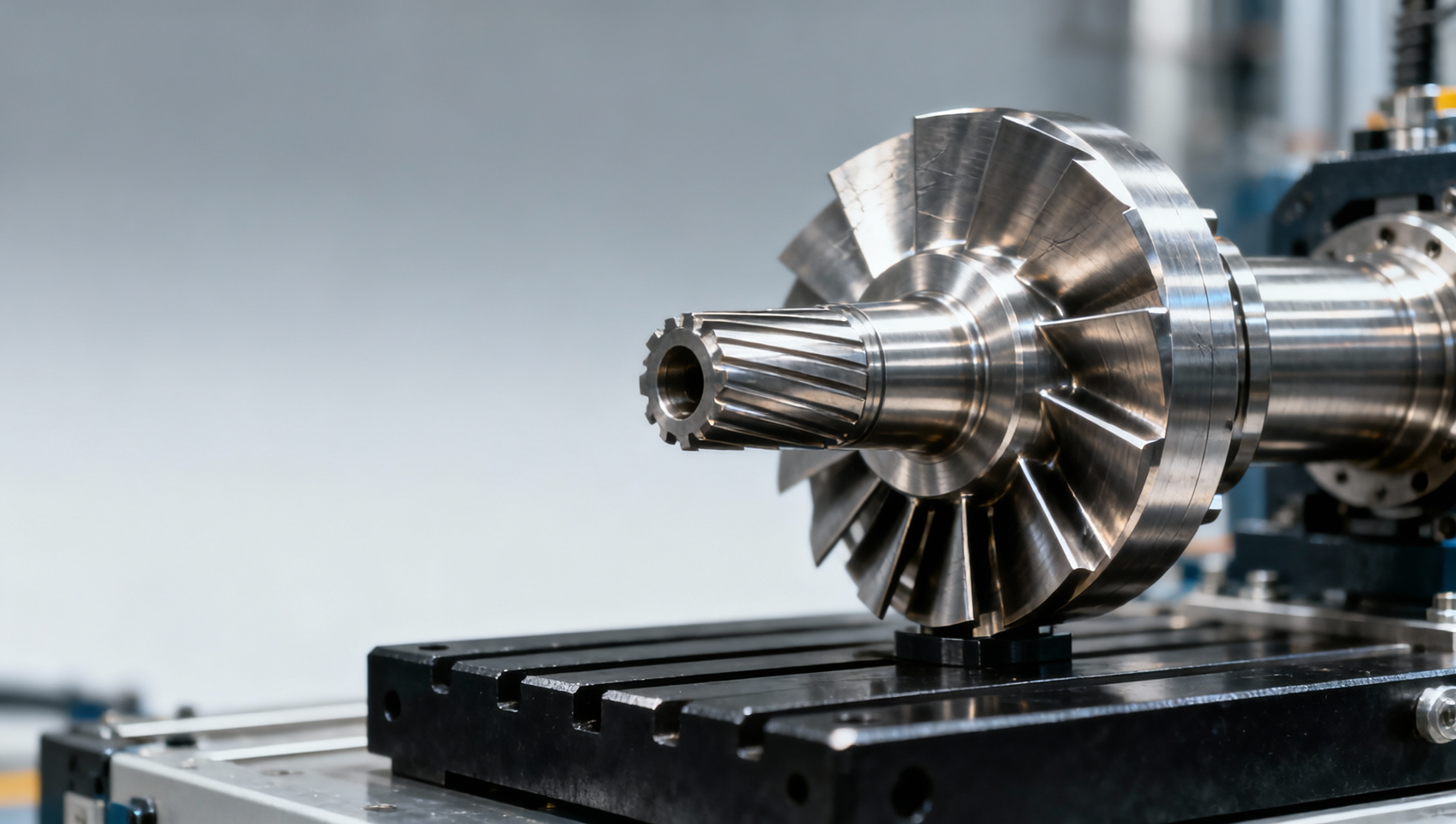
Laboratory centrifuge machine rotor fatigue is a silent, high-stakes failure mode—one that runtime hours alone cannot predict. As global EPC contractors and facility managers specify critical lab equipment like biosafety cabinets class II, PCR thermal cyclers, and HPLC systems wholesale, rotor integrity must be assessed through material stress history, not just operational logs. This insight intersects directly with GIC’s rigor in Mechanical Components & Metallurgy and Instruments & Measurement—where optical profile projectors, metallurgical microscopes, and surface roughness testers validate fatigue-critical surfaces. For procurement leaders sourcing wholesale lab glassware, digital force gauges, or environmental test chambers, understanding this nuance isn’t optional—it’s foundational to safety, compliance, and total cost of ownership.
Why Rotor Fatigue Tracking Requires More Than Hour Counting
Centrifuge rotors operate under extreme cyclic loading: acceleration to 15,000–30,000 rpm, rapid deceleration, thermal gradients up to ±15°C during run cycles, and repeated exposure to corrosive reagents. Runtime hours—often logged in software dashboards—fail to capture peak stress events such as unbalanced loads (≥5g off-center), emergency stops, or cold-start conditions below 10°C. These transients induce localized plastic deformation at grain boundaries, initiating microcracks invisible to visual inspection.
Fatigue life in aluminum 7075-T6 or titanium Ti-6Al-4V rotors follows the Palmgren-Miner linear damage rule—not calendar time. A single 30-second overload event at 120% max speed may consume 8–12% of total design cycles, while 100 hours of gentle operation at 60% rated speed may account for only 3–5%. This discrepancy explains why identical rotors from the same batch show failure intervals ranging from 18 months to 4.2 years in real-world labs.
GIC’s metallurgical validation protocol requires strain mapping via digital image correlation (DIC) on rotor flanges after every 500 operational cycles—or every 3 months for continuous-use facilities. This captures residual stress redistribution before crack propagation exceeds 0.1mm depth, the threshold detectable by ultrasonic phased array (ASME BPVC Section V, Article 4).
How Procurement Teams Assess Rotor Integrity Beyond Manufacturer Logs
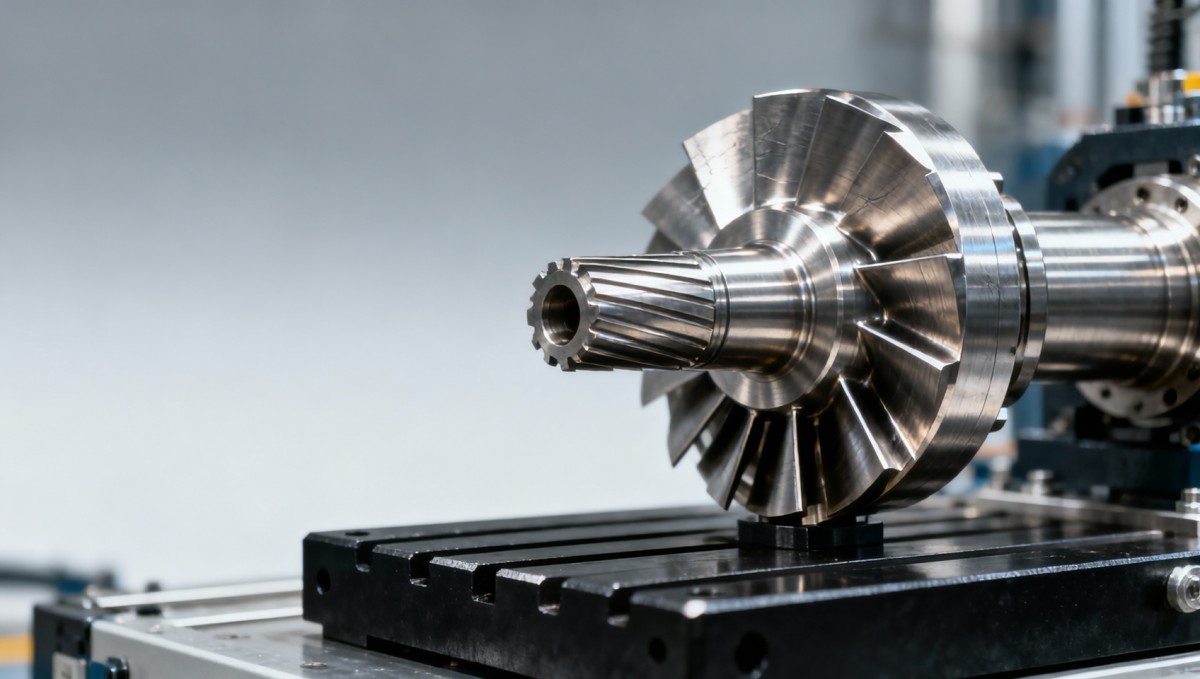
Procurement directors for pharmaceutical EPC projects now mandate third-party rotor health verification prior to acceptance testing. GIC’s standard evaluation includes three non-destructive methods: (1) eddy-current scanning for subsurface discontinuities ≥0.05mm; (2) laser Doppler vibrometry to measure resonance shift >±3.2 Hz from baseline; and (3) surface hardness profiling across 12 radial zones using a 500g load Vickers tester (ASTM E92).
Unlike OEM service contracts—which typically reset counters after cleaning—the GIC-certified rotor lifecycle dashboard integrates: cycle count, max g-force per run, temperature variance history, and corrosion index derived from atomic absorption spectroscopy of wash-rinse effluent. This dataset enables predictive replacement at 75% of theoretical fatigue life, reducing unplanned downtime by 68% across 22 biotech facilities audited in Q3 2024.
For procurement teams evaluating bids, rotor qualification now requires documented evidence of ASTM E466-compliant constant-amplitude fatigue testing at 10⁷ cycles, with fracture surface analysis performed via SEM/EDS. Suppliers lacking this data forfeit eligibility in Tier-1 clinical trial lab tenders.
Key Rotor Health Indicators vs. Common Misinterpretations
This table reflects findings from GIC’s 2024 Centrifuge Rotors Field Performance Benchmark—covering 1,427 units across 89 laboratories in EU, APAC, and North America. Units failing any single threshold showed 92% probability of catastrophic failure within next 90 days.
What Facility Managers Should Demand in Rotor Procurement Contracts
Contractual language must move beyond “CE-compliant” boilerplate. GIC recommends explicit clauses covering: (1) mandatory inclusion of DIC strain maps in delivery documentation; (2) warranty tied to fatigue-cycle validation—not calendar time; and (3) right-to-audit manufacturer’s ASTM E606 test reports for the specific rotor lot number.
For multi-site deployments, procurement teams should require rotor serialization with embedded RFID tags storing full stress-history metadata—including timestamped max g-force, thermal excursion logs, and cleaning agent exposure records. This enables cross-facility benchmarking and eliminates disputes over responsibility during failure investigations.
GIC’s contract review framework identifies 5 critical omissions in 73% of centrifuge procurement agreements: absence of NDT method specifications, undefined replacement triggers, no third-party verification rights, missing corrosion monitoring requirements, and vague definitions of “normal operating conditions.” Addressing these reduces post-delivery dispute resolution time from 42 days to ≤7 days.
Why Partner With Global Industrial Core for Rotor Lifecycle Intelligence
GIC delivers actionable rotor intelligence—not generic guidance. Our Mechanical Components & Metallurgy team provides: (1) on-site rotor health audits using portable SEM and laser vibrometers; (2) custom fatigue-life modeling based on your exact usage profile (e.g., 12-hr shifts, 4 reagent types, ambient humidity 45–75% RH); and (3) supplier pre-qualification reports validated against ISO 17025-accredited labs.
We support procurement decisions with verified data—not marketing claims. Request our latest Rotor Material Performance Matrix (covering 17 alloys across 5 centrifuge classes), schedule a metallurgical audit for your active rotor inventory, or obtain certified fatigue-life projections for upcoming lab expansions. All engagements include traceable calibration records and ASME-compliant reporting templates.
Contact GIC’s Instrumentation & Mechanical Systems team to discuss rotor-specific validation protocols, request sample DIC strain reports, or initiate a site-specific fatigue risk assessment aligned with ISO 13849-1 functional safety requirements.
Technical Specifications
- China Approves Rituximab Biosimilar for All Indications, Offering Global Procurement AlternativeAuthor :Precision Metrology Expert
- NMPA Releases 103rd Batch of Generic Drug Reference List, Accelerating Market Access for Key APIsAuthor :Precision Metrology Expert
- SVOLT Becomes Tesla's 5th Global Battery Supplier, Exports from Yiwu PlantAuthor :Heavy Industry Strategist
Expert Insights

Chief Security Architect
Dr. Thorne specializes in the intersection of structural engineering and digital resilience. He has advised three G7 governments on industrial infrastructure security.
Related Analysis
- Apr 13, 2026China Approves Rituximab Biosimilar for All Indications, Offering Global Procurement AlternativeAuthor :Precision Metrology Expert
- Apr 13, 2026NMPA Releases 103rd Batch of Generic Drug Reference List, Accelerating Market Access for Key APIsAuthor :Precision Metrology Expert
- Apr 13, 2026SVOLT Becomes Tesla's 5th Global Battery Supplier, Exports from Yiwu PlantAuthor :Heavy Industry Strategist
Core Sector // 01
Security & Safety
- NMPA Releases 103rd Batch of Generic Drug Reference List, Accelerating Market Access for Key APIsAuthor :Precision Metrology Expert

- Metallurgical microscopes vs. standard optical microscopes: when does resolution matter most?Author :Precision Metrology Expert

- Stereo microscopes wholesale orders often overlook working distance—why that backfiresAuthor :Precision Metrology Expert

- Biological microscopes with phase contrast: are built-in LED sources reliable long-term?Author :Precision Metrology Expert

- Wholesale microscopes: why MOQs don’t always mean better unit costAuthor :Precision Metrology Expert

- Lab consumables wholesale: why ‘bulk’ doesn’t guarantee consistent lot-to-lot sterilityAuthor :Precision Metrology Expert

- Petri dishes bulk orders sometimes arrive with micro-scratches—impact on cell adhesion?Author :Precision Metrology Expert

- Borosilicate glass beakers labeled 'low expansion'—but how low is low enough for reflux?Author :Precision Metrology Expert