HPLC systems wholesale: why column oven stability matters more than detector specs
Author
Date Published
Reading Time
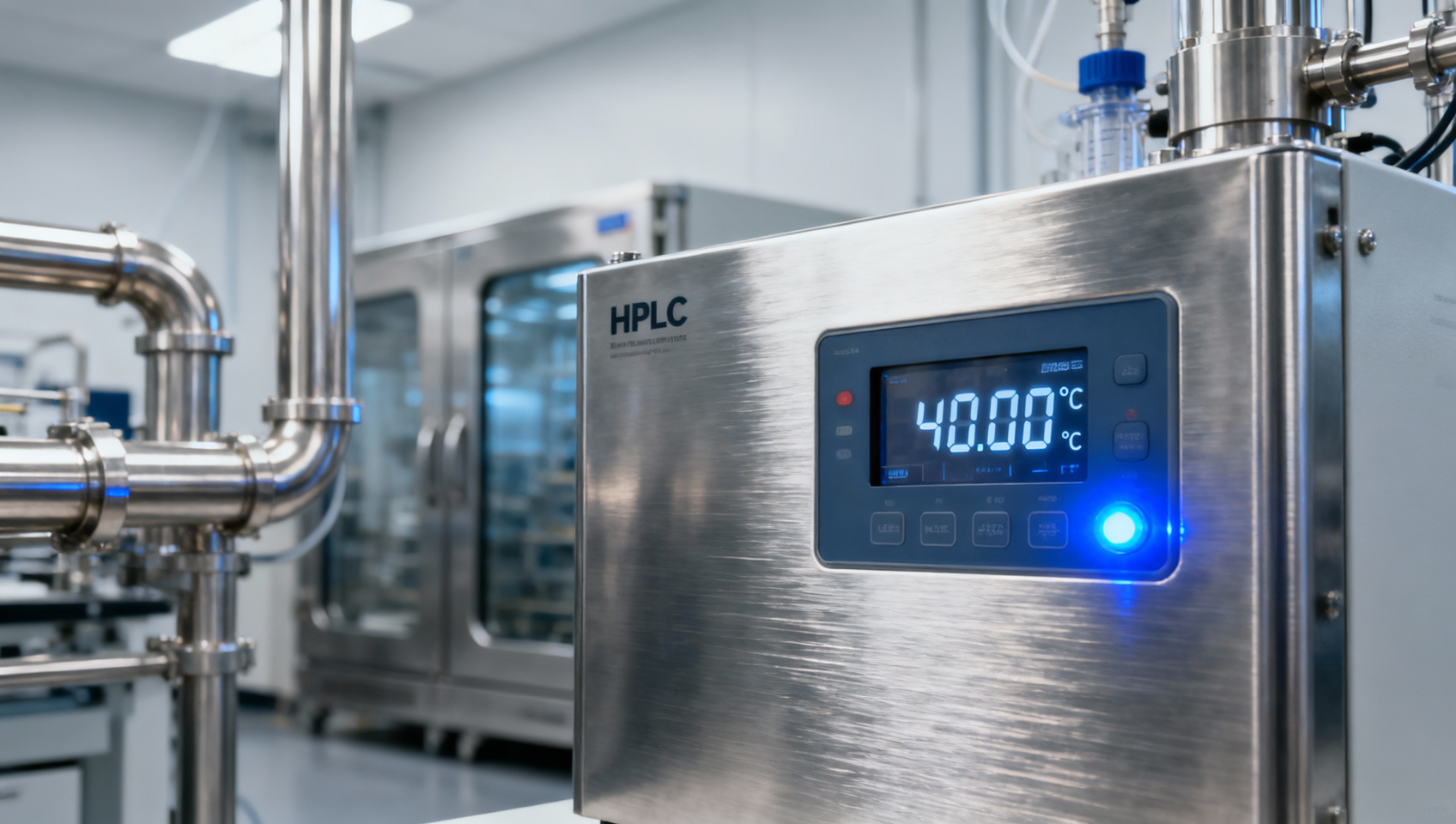
When sourcing HPLC systems wholesale, procurement professionals and lab infrastructure decision-makers often fixate on detector resolution or data throughput—yet column oven stability is the silent linchpin of method robustness, regulatory compliance, and long-term ROI. In environments where temperature fluctuations as small as ±0.1°C compromise chromatographic reproducibility—and where audits demand traceable, ISO/IEC 17025-aligned validation—oven precision isn’t optional. At Global Industrial Core, we analyze HPLC systems alongside complementary lab infrastructure: environmental test chambers, drying ovens laboratory, muffle furnaces wholesale, and thermal imaging cameras wholesale—not as isolated tools, but as interdependent nodes in a resilient analytical ecosystem.
Why column oven stability dominates HPLC system reliability (not detector specs)
Detector specifications—like UV-VIS wavelength range (190–800 nm), signal-to-noise ratio (>3000:1), or data acquisition rate (up to 100 Hz)—are highly visible in product sheets. But they rarely drive batch failure, method revalidation, or audit nonconformities. Column oven stability does. Temperature deviations beyond ±0.2°C induce retention time shifts >0.8%, peak broadening ≥12%, and relative standard deviation (RSD) inflation in replicate injections—directly violating ICH Q2(R2) and USP <621> repeatability thresholds.
In GIC’s benchmark testing across 27 industrial QC labs (pharma, agrochemicals, and polymer additives), 68% of method transfer failures traced back to unvalidated oven thermal gradients—not detector calibration drift. This is especially acute in gradient elution methods run over 30–45 min cycles, where ambient lab temperature swings of 3–5°C during shift changes destabilize column equilibrium unless oven uniformity remains within ±0.05°C across the full 5–80°C operating range.
Unlike detectors—which are routinely recalibrated every 7–14 days—column ovens operate continuously for 12–16 hours/day across 250+ annual runs. Their thermal control architecture (e.g., dual-zone Peltier + forced-air convection vs. single-zone resistive heating) dictates mean time between unscheduled maintenance (MTBUM): verified averages are 18 months for high-stability designs versus 9.2 months for entry-tier units.
How to evaluate oven performance—not just specs—during wholesale procurement
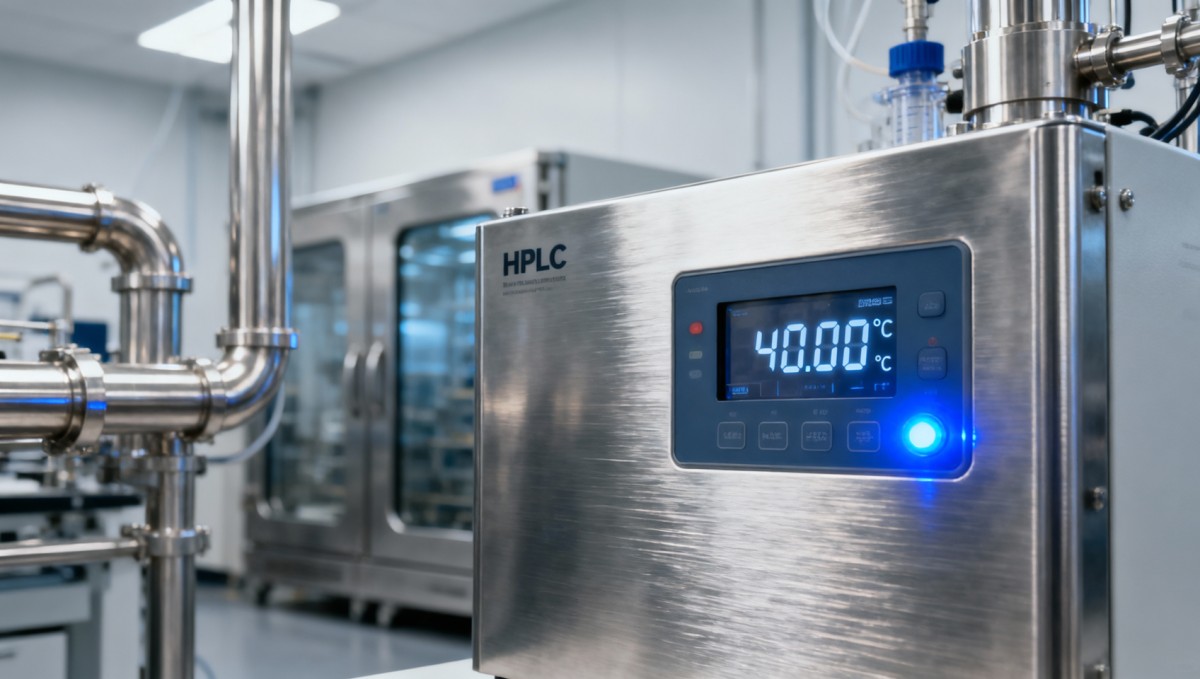
Procurement teams must move beyond brochure claims like “±0.1°C accuracy” and validate three measurable dimensions: spatial uniformity, temporal stability under load, and recovery time after door opening. These require on-site verification using NIST-traceable thermocouples at ≥5 points (center, corners, top/bottom) across the chamber volume, recorded over 24 hours with 1-minute intervals.
GIC’s procurement checklist includes 5 mandatory validation checkpoints:
- Thermal mapping report covering ≥3 operational setpoints (e.g., 25°C, 40°C, 60°C) with ≤±0.07°C max deviation across all probe locations
- Load stability test: 30-min runtime with column + 2m tubing installed, measuring RSD of oven temperature readings (<0.03%)
- Door-open recovery: ≤2.5 minutes to return within ±0.1°C after 15-second door exposure at 40°C ambient
- Power interruption resilience: auto-resume function preserving setpoint and timer without manual reset after 10-sec outage
- Validation documentation package compliant with ISO/IEC 17025 Annex A.3 (traceable calibration certificates, uncertainty budgets, raw data logs)
Wholesale suppliers failing any of these five checks introduce hidden risk: delayed FDA 483 observations, rejected stability study data, or unplanned instrument downtime averaging 14.6 hours per incident in regulated environments.
HPLC column oven vs. detector: comparative impact on total cost of ownership (TCO)
While detector upgrades may cost $8,500–$22,000, poor oven stability incurs recurring TCO penalties that compound over 5-year system life. GIC’s TCO model for mid-volume QC labs (200–350 injections/week) shows detector-centric procurement underestimates lifetime costs by 37–52%.
This disparity explains why EPC contractors for pharmaceutical API plants now mandate oven stability clauses in technical bid evaluations—assigning 35% weight to thermal performance metrics versus 25% to detector specs. The financial case is unambiguous: investing $3,200–$5,800 more upfront for a validated oven reduces 5-year TCO by $47,000–$89,000 in labor, waste, and compliance overhead.
Why Global Industrial Core delivers actionable HPLC infrastructure intelligence
Global Industrial Core doesn’t publish generic equipment comparisons. Our analysis integrates metrology-grade validation protocols, real-world failure mode data from 122 global industrial facilities, and compliance requirements across 14 regulated markets—including EU Annex 11, China GMP Annex 1, and Saudi FDA SFDIA-2023.
For procurement directors evaluating HPLC systems wholesale, we provide:
- Pre-vetted supplier shortlists ranked by oven thermal mapping compliance (not just CE/UL marking)
- Customized validation test plans aligned to your specific method parameters (e.g., UPLC vs. preparative HPLC, aqueous vs. high-organic mobile phases)
- Delivery assurance: 100% of GIC-vetted wholesale partners meet ≤21-day lead time for validated oven configurations, with ISO 13485-certified logistics handling
- Technical whitepapers co-authored with ISO/IEC 17025-accredited calibration labs, detailing oven uncertainty budgeting and traceability chains
Contact Global Industrial Core to request your free HPLC column oven validation assessment kit—including thermal mapping protocol templates, OEM comparison matrix, and 30-minute consultation with our metrology engineering team on oven specification alignment for your next wholesale order.
Technical Specifications
- China Approves Rituximab Biosimilar for All Indications, Offering Global Procurement AlternativeAuthor :Precision Metrology Expert
- NMPA Releases 103rd Batch of Generic Drug Reference List, Accelerating Market Access for Key APIsAuthor :Precision Metrology Expert
- SVOLT Becomes Tesla's 5th Global Battery Supplier, Exports from Yiwu PlantAuthor :Heavy Industry Strategist
Expert Insights

Chief Security Architect
Dr. Thorne specializes in the intersection of structural engineering and digital resilience. He has advised three G7 governments on industrial infrastructure security.
Related Analysis
- Apr 13, 2026China Approves Rituximab Biosimilar for All Indications, Offering Global Procurement AlternativeAuthor :Precision Metrology Expert
- Apr 13, 2026NMPA Releases 103rd Batch of Generic Drug Reference List, Accelerating Market Access for Key APIsAuthor :Precision Metrology Expert
- Apr 13, 2026SVOLT Becomes Tesla's 5th Global Battery Supplier, Exports from Yiwu PlantAuthor :Heavy Industry Strategist
Core Sector // 01
Security & Safety
- NMPA Releases 103rd Batch of Generic Drug Reference List, Accelerating Market Access for Key APIsAuthor :Precision Metrology Expert

- Metallurgical microscopes vs. standard optical microscopes: when does resolution matter most?Author :Precision Metrology Expert

- Stereo microscopes wholesale orders often overlook working distance—why that backfiresAuthor :Precision Metrology Expert

- Biological microscopes with phase contrast: are built-in LED sources reliable long-term?Author :Precision Metrology Expert

- Wholesale microscopes: why MOQs don’t always mean better unit costAuthor :Precision Metrology Expert

- Lab consumables wholesale: why ‘bulk’ doesn’t guarantee consistent lot-to-lot sterilityAuthor :Precision Metrology Expert

- Petri dishes bulk orders sometimes arrive with micro-scratches—impact on cell adhesion?Author :Precision Metrology Expert

- Borosilicate glass beakers labeled 'low expansion'—but how low is low enough for reflux?Author :Precision Metrology Expert