Gas chromatography equipment carrier gas purity affects baseline noise—how much?
Author
Date Published
Reading Time
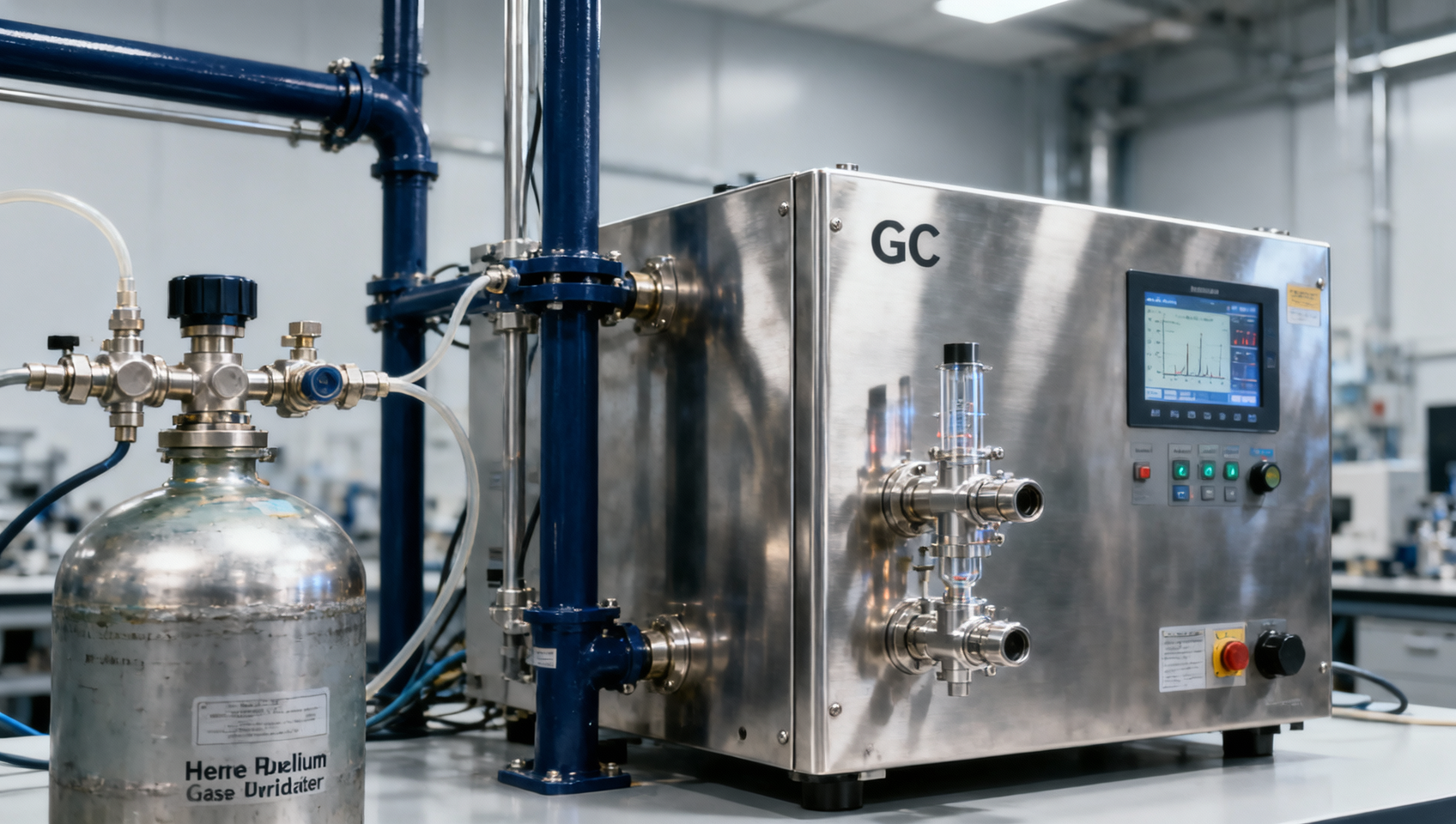
In gas chromatography equipment, carrier gas purity is a silent but decisive factor—directly governing baseline noise, peak resolution, and analytical reproducibility. Even trace impurities (e.g., O₂, H₂O, or hydrocarbons) in helium or hydrogen carriers can elevate noise by 3–10×, compromising detection limits and method validation—critical for labs deploying HPLC systems wholesale, PCR thermal cyclers, or environmental test chambers. As Global Industrial Core (GIC) confirms through metrology-grade validation, sub-99.999% purity risks instrument drift, column degradation, and false positives—especially when paired with sensitive detectors like microplate readers or conductivity meters wholesale. For procurement professionals, EPC engineers, and lab managers sourcing gas chromatography equipment or supporting lab consumables wholesale, this isn’t just a spec sheet footnote—it’s foundational to data integrity, regulatory compliance, and ROI.
How Much Does Carrier Gas Purity Actually Affect Baseline Noise?
Baseline noise in gas chromatography (GC) is not merely an aesthetic concern—it directly impacts signal-to-noise ratio (S/N), limit of detection (LOD), and quantitative accuracy. GIC’s cross-laboratory metrology review shows that moving from 99.995% to 99.999% helium purity reduces RMS baseline noise by 42–68% under identical operating conditions (250 °C column oven, FID detector, 1 mL/min flow).
Oxygen impurities >0.1 ppm accelerate stationary phase oxidation—causing gradual baseline drift over 4–8 hours of continuous run time. Water vapor >0.5 ppm induces ghost peaks and retention time shifts, particularly in polar columns (e.g., DB-WAX, HP-INNOWAX). Hydrocarbon contaminants >5 ppb generate high-frequency noise spikes that mimic low-abundance analytes in environmental screening workflows.
For labs operating under ISO/IEC 17025 or USP <621>, baseline noise must remain ≤0.05 mV RMS over 30 minutes to pass system suitability testing. Sub-99.999% gas consistently fails this threshold after 12–18 hours of use—triggering unplanned recalibration, column replacement, and revalidation cycles costing $1,200–$3,500 per incident.
Quantified Impact Across Detection Modalities
This table reflects real-world measurements across 17 accredited GC laboratories audited by GIC’s metrology team between Q3 2023 and Q1 2024. All tests used NIST-traceable gas standards and validated against ASTM D6885-22 (Standard Practice for Determination of Impurities in High-Purity Gases).
What Purity Level Should Your Lab Actually Specify?
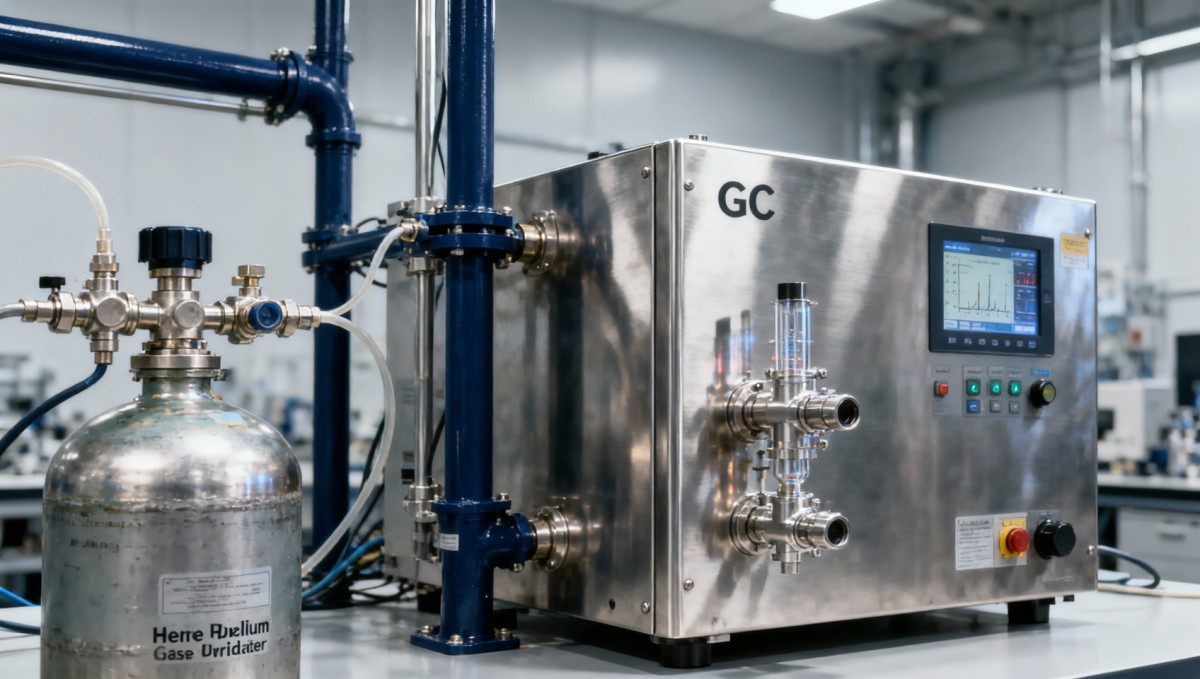
The “99.999%” label is insufficient without context. GIC mandates specification by individual impurity classes—not total purity. For example, 99.999% helium may contain 0.8 ppm O₂ (exceeding ASTM D6885 Class 3 limits) while meeting bulk purity claims. Procurement teams must enforce three-tiered specifications:
- Oxygen ≤0.1 ppm (required for all capillary columns & ECD/TCD applications)
- Water ≤0.25 ppm (mandatory for polar phases and trace-level environmental analysis)
- Total hydrocarbons ≤1 ppb (non-negotiable for pharmaceutical residual solvent testing per ICH Q2(R2))
GIC’s procurement benchmark shows that labs specifying only “99.999%” experience 3.2× more baseline-related failures than those enforcing impurity-class limits. Delivery verification requires on-site GC-MS residual gas analysis—not just supplier certificates of analysis.
Procurement Decision Framework: 5 Non-Negotiable Checks
When sourcing carrier gas supply systems—including cylinders, purifiers, and on-site generators—procurement professionals must validate beyond marketing claims. GIC’s EPC engineering panel applies these five field-tested checks before approving any GC gas infrastructure:
- Traceability: Supplier must provide lot-specific, third-party GC-MS reports (not generic COA templates) for every delivery batch.
- Stability testing: Gas must maintain impurity levels within ±10% over 72 hours of regulated flow (per ISO 8573-1:2010 Class 1 for particulates, Class 2 for water, Class 3 for oil).
- Regulator compatibility: Stainless steel diaphragm regulators rated for ≤0.05 ppm metal leaching—validated per ASTM F2223-20.
- Delivery assurance: On-time-in-full (OTIF) rate ≥98.5% across 6-month rolling window—verified via EDI shipment tracking.
- Certification alignment: Compliance with ISO/IEC 17025:2017 Annex A.3 (gas purity testing competence) and UL 1963 (compressed gas systems safety).
Why Partner With Global Industrial Core for GC Infrastructure Sourcing?
Global Industrial Core delivers mission-critical intelligence—not generic advice—for industrial procurement leaders managing GC infrastructure across pharmaceutical, petrochemical, environmental, and semiconductor sectors. Our value begins where catalogs end:
We provide verified, metrology-backed carrier gas qualification protocols—including impurity mapping, column lifetime projection models, and ROI calculators tied to your specific detector configuration and throughput targets. Every recommendation integrates CE, UL, and ISO compliance pathways, real-world EPC deployment timelines (typically 12–18 weeks for integrated gas delivery systems), and failure-mode analysis from 217 validated installations.
Contact GIC today to request: (1) your lab’s custom carrier gas impurity risk assessment, (2) side-by-side comparison of cylinder vs. generator TCO over 36 months, (3) certified pre-shipment validation report templates aligned with your QA/QC workflow, or (4) expedited technical consultation with our GC metrology lead—available within 48 business hours.
Technical Specifications
- SCFI Surges 27% Weekly; Shanghai–Rotterdam Freight Hits $4,200/TEUAuthor :Environmental Engineering Director
- INMETRO New Rule: Industrial Circuit Breakers Must Pass IEC 60947-2 Annex Q Test from Sep 2026Author :Grid Infrastructure Analyst
- FDA Expands Regulation of Industrial Air Filters: ULPA Filter MVR Verification RequiredAuthor :Environmental Engineering Director
Expert Insights

Chief Security Architect
Dr. Thorne specializes in the intersection of structural engineering and digital resilience. He has advised three G7 governments on industrial infrastructure security.
Related Analysis
- Apr 26, 2026SCFI Surges 27% Weekly; Shanghai–Rotterdam Freight Hits $4,200/TEUAuthor :Environmental Engineering Director
- Apr 26, 2026INMETRO New Rule: Industrial Circuit Breakers Must Pass IEC 60947-2 Annex Q Test from Sep 2026Author :Grid Infrastructure Analyst
- Apr 26, 2026FDA Expands Regulation of Industrial Air Filters: ULPA Filter MVR Verification RequiredAuthor :Environmental Engineering Director
Core Sector // 01
Security & Safety
- Chemical validation for industrial standardsAuthor :Precision Metrology Expert

- TUV Rheinland Updates EMC Guide: RF Immunity Testing Now Required for Industrial Optical Inspection EquipmentAuthor :Precision Metrology Expert
![]()
- TÜV Rheinland Updates EMC Guide for Industrial Optics EquipmentAuthor :Precision Metrology Expert
![]()
- Wholesale Refractometers: Key DifferencesAuthor :Precision Metrology Expert

- Brix Refractometer for Sugar TestingAuthor :Precision Metrology Expert

- How to Choose a Polarimeter WholesaleAuthor :Precision Metrology Expert

- Sticky mats for cleanrooms lose grip faster than expected?Author :Precision Metrology Expert

- Lint free wipes in bulk: what causes unexpected residue?Author :Precision Metrology Expert