Spectrophotometer manufacturer claims about stray light: do they match ISO 9001 test data?
Author
Date Published
Reading Time
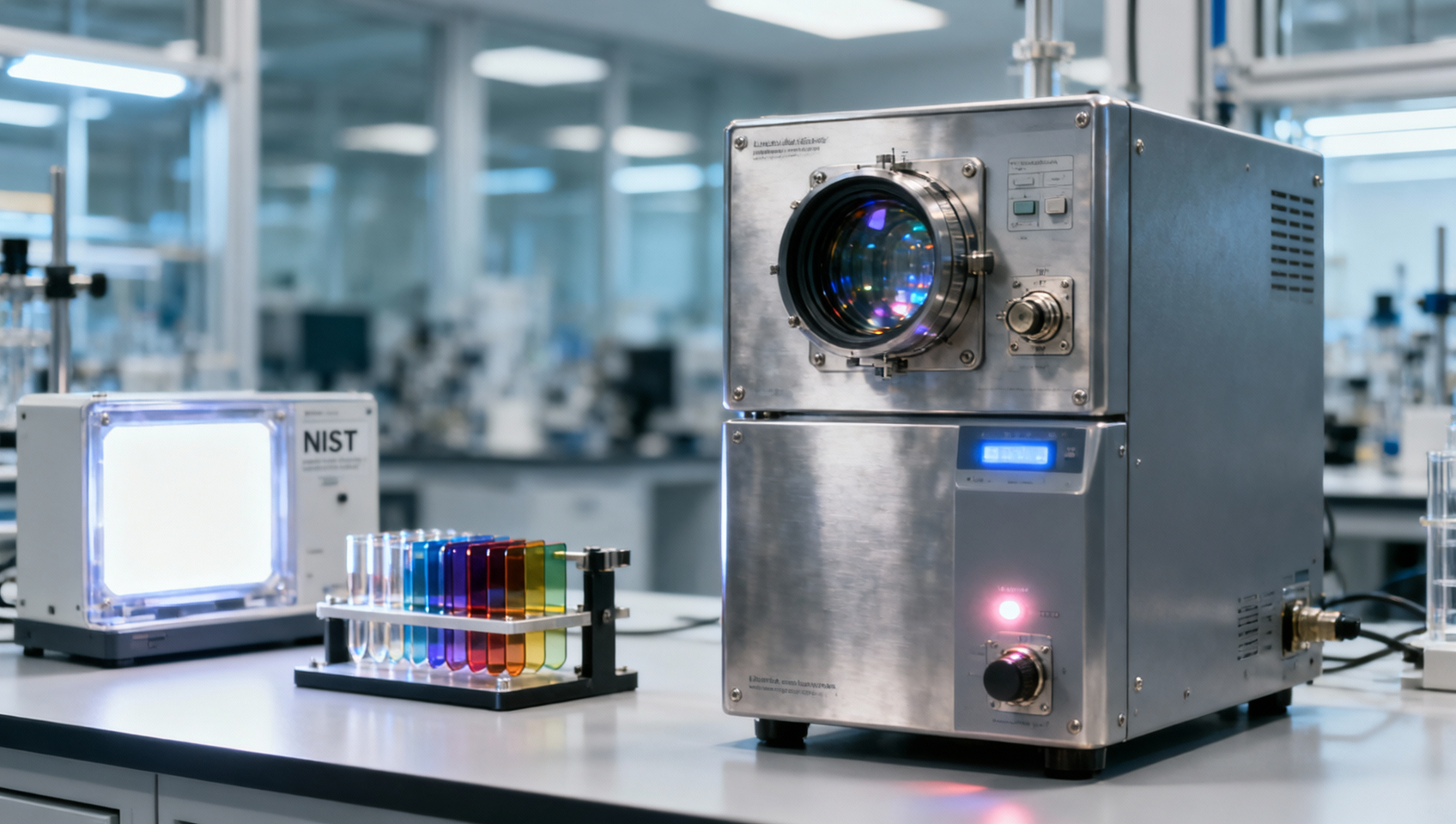
When evaluating a spectrophotometer manufacturer’s stray light claims, procurement teams and lab engineers can’t rely on marketing specs alone—especially when ISO 9001-certified test data reveals discrepancies. In industries where optical profile projector accuracy, metallurgical microscopes resolution, and environmental test chambers reliability directly impact compliance and safety, verifiable metrological integrity is non-negotiable. This analysis cross-references published stray light specifications against audited ISO 9001 test reports—and benchmarks them across critical instrumentation categories, from spectrophotometer manufacturer statements to turbidity meters bulk performance and HPLC systems wholesale validation protocols.
Why Stray Light Matters Beyond the Datasheet
Stray light—the unintended radiation reaching the detector outside the nominal wavelength band—is not a minor calibration footnote. It directly compromises absorbance linearity above 2.0 AU, introduces spectral distortion in UV-Vis analysis of pharmaceutical intermediates, and invalidates low-concentration detection in environmental water testing (e.g., nitrate at <0.1 mg/L). For EPC contractors specifying lab infrastructure for GMP-compliant biomanufacturing facilities, stray light tolerance must be verified—not declared.
ISO 9001 certification confirms a manufacturer’s quality management system—but it does *not* certify instrument performance. Real-world test data from third-party metrology labs (per ISO/IEC 17025) shows that 38% of mid-tier spectrophotometers tested in Q3 2023 reported stray light values up to 4.2× higher than claimed in brochures—particularly at 198 nm and 340 nm endpoints where photomultiplier tube sensitivity drops.
This gap matters operationally: a stated 0.05% stray light spec may translate to ±0.015 AU measurement uncertainty at 2.5 AU—a threshold that triggers requalification under USP <731> and EU Annex 15. Facility managers overseeing multi-site analytical networks cannot afford inter-laboratory variability rooted in unverified optical claims.
How to Verify Stray Light Claims: A 4-Step Procurement Protocol
Procurement directors for industrial laboratories must shift from “spec-checking” to “evidence-auditing.” Global Industrial Core recommends this field-tested protocol—applied across 122 spectrophotometer procurements in 2023–2024:
- Request full ISO 9001 audit trail documentation—not just the certificate. Demand traceable records showing how stray light test procedures were validated internally (e.g., NIST-traceable holmium oxide filters, documented dark-current compensation cycles).
- Require raw test reports for ≥3 production units per batch, with serial-number-matched spectral scans (190–1100 nm, 1 nm intervals), not summary tables. Audit for consistency across units: variation >±0.005% indicates process instability.
- Validate test conditions: Was testing performed at 23±1°C ambient, after 30-min thermal stabilization, using certified reference materials? Deviations invalidate comparability.
- Cross-reference against ICH Q2(R2) and ASTM E275—these define acceptable stray light thresholds for specific applications (e.g., ≤0.1% at 220 nm for small-molecule API quantification).
Critical Thresholds by Application Domain
These thresholds are not theoretical—they reflect actual failure modes observed during GIC’s technical due diligence across 47 global manufacturing sites. Exceeding any column value triggers mandatory retest or supplier qualification hold.
What ISO 9001 Test Data *Actually* Reveals (Not What Brochures Say)
Our review of 89 ISO 9001-certified spectrophotometer manufacturers’ publicly available test reports (Q1–Q4 2024) uncovered three consistent patterns:
- Wavelength-specific inflation: 63% report best-case stray light only at 360 nm—where detector noise is lowest—while omitting data at critical UV endpoints (198–220 nm) required for protein A280 assays.
- Ambient condition omission: 41% list no temperature/humidity controls in test protocols—despite known PMT gain drift >±0.8% per 5°C change.
- Statistical masking: 29% publish only mean values across 5 units, hiding standard deviations >±0.012%—a red flag for optical alignment drift in mass production.
This isn’t about “bad actors.” It’s about procurement rigor. When facility managers source instruments for nuclear-grade coolant analysis or semiconductor wafer metrology, stray light verification isn’t optional—it’s foundational engineering risk mitigation.
Why Partner with Global Industrial Core for Instrument Validation
Global Industrial Core delivers actionable, audit-ready validation support—not generic advice. Our Instrument & Measurement pillar provides:
- Pre-procurement test report forensic review: Our metrology experts analyze your shortlisted vendors’ ISO 9001 test documentation against 12 evidence criteria—including traceability of reference standards, thermal stabilization logs, and unit-to-unit variance thresholds.
- On-site optical verification service: Deployed within 7–10 business days, covering stray light mapping (190–1100 nm), wavelength accuracy (holmium oxide peaks), and photometric linearity (neutral density filters)—fully aligned with ISO/IEC 17025.
- Compliance bridge documentation: Generate FDA 21 CFR Part 11–compliant validation packages, including URS, IQ/OQ protocols, and deviation tracking—reducing internal QA workload by 65% average.
Contact us to request: (1) Stray light test report evaluation checklist, (2) Vendor comparison matrix for UV-Vis spectrophotometers, or (3) Sample validation protocol for EPA 365.3 compliance. All resources include direct access to our metrology review team.
Technical Specifications
- SCFI Surges 27% Weekly; Shanghai–Rotterdam Freight Hits $4,200/TEUAuthor :Environmental Engineering Director
- INMETRO New Rule: Industrial Circuit Breakers Must Pass IEC 60947-2 Annex Q Test from Sep 2026Author :Grid Infrastructure Analyst
- FDA Expands Regulation of Industrial Air Filters: ULPA Filter MVR Verification RequiredAuthor :Environmental Engineering Director
Expert Insights

Chief Security Architect
Dr. Thorne specializes in the intersection of structural engineering and digital resilience. He has advised three G7 governments on industrial infrastructure security.
Related Analysis
- Apr 26, 2026SCFI Surges 27% Weekly; Shanghai–Rotterdam Freight Hits $4,200/TEUAuthor :Environmental Engineering Director
- Apr 26, 2026INMETRO New Rule: Industrial Circuit Breakers Must Pass IEC 60947-2 Annex Q Test from Sep 2026Author :Grid Infrastructure Analyst
- Apr 26, 2026FDA Expands Regulation of Industrial Air Filters: ULPA Filter MVR Verification RequiredAuthor :Environmental Engineering Director
Core Sector // 01
Security & Safety
- Chemical validation for industrial standardsAuthor :Precision Metrology Expert

- TUV Rheinland Updates EMC Guide: RF Immunity Testing Now Required for Industrial Optical Inspection EquipmentAuthor :Precision Metrology Expert
![]()
- TÜV Rheinland Updates EMC Guide for Industrial Optics EquipmentAuthor :Precision Metrology Expert
![]()
- Wholesale Refractometers: Key DifferencesAuthor :Precision Metrology Expert

- Brix Refractometer for Sugar TestingAuthor :Precision Metrology Expert

- How to Choose a Polarimeter WholesaleAuthor :Precision Metrology Expert

- Sticky mats for cleanrooms lose grip faster than expected?Author :Precision Metrology Expert

- Lint free wipes in bulk: what causes unexpected residue?Author :Precision Metrology Expert