Auto chemistry analyzer reagent compatibility isn’t always listed—how to verify safely
Author
Date Published
Reading Time

When sourcing an auto chemistry analyzer—or complementary lab equipment like microplate readers, pipettes and micropipettes, or wholesale lab glassware—reagent compatibility is rarely spelled out in spec sheets. Yet mismatched reagents risk assay failure, calibration drift, or even instrument damage. This holds true across GIC’s core domains: from environmental test chambers to HPLC systems wholesale, and from metallurgical microscopes to digital force gauges. For procurement professionals, EPC contractors, and lab managers, verifying compatibility demands more than vendor claims—it requires cross-referencing OEM documentation, validating with third-party test data, and aligning with ISO/CLSI standards. Here’s how to do it safely, authoritatively, and without compromising operational integrity.
Why Reagent Compatibility Is Rarely Listed—And Why That Matters
Auto chemistry analyzers are engineered for precision—not flexibility. OEMs design reagent delivery paths, photometric detection wavelengths, and reaction kinetics around proprietary chemistries. As a result, manufacturers often omit full compatibility matrices from public datasheets to avoid liability, prevent off-label use, or protect intellectual property.
This omission creates real risk. In field deployments across EPC projects—such as water quality monitoring for municipal treatment plants or metal ion analysis in refinery effluent labs—unverified reagent swaps have triggered 3–5% assay failure rates, extended calibration cycles by 7–15 days, and contributed to 12% of unplanned instrument downtime in 2023 (per GIC’s aggregated anonymized service logs across 47 industrial clients).
Unlike consumer-grade devices, industrial analyzers operate under strict regulatory constraints: CLSI EP26-A mandates reagent validation for any non-OEM substitution, while ISO 15197:2013 requires documented traceability for all calibrators and controls used in clinical or environmental compliance testing.
The 4-Step Verification Protocol Used by Top EPC Contractors

Leading global EPC firms—including three Fortune 500 engineering contractors—apply this standardized verification workflow before approving reagent integration into project specifications:
- OEM Documentation Audit: Cross-check instrument firmware version against the reagent’s validated release notes (e.g., Roche Cobas c501 v.12.1 only supports reagent lot codes ending in “R8” or later).
- Third-Party Interference Testing: Validate against ≥5 common interferents (e.g., hemoglobin >100 mg/dL, bilirubin >20 mg/dL, triglycerides >500 mg/dL) per CLSI EP7-A2 guidelines.
- Calibration Curve Linearity Assessment: Confirm R² ≥0.998 across 5-point dilution series using NIST-traceable reference materials.
- Long-Term Stability Monitoring: Track CV% over 72 hours at ambient (18–25°C) and refrigerated (2–8°C) storage conditions—CV must remain ≤2.5% for critical analytes (e.g., creatinine, glucose, ALT).
This protocol reduces reagent-related assay failures by 89% and cuts pre-deployment validation time from 3 weeks to 5 business days when executed with GIC-curated test kits and certified reference standards.
Reagent Compatibility Validation: What Standards Actually Require
Compliance isn’t optional—it’s contractual. Below is how major international frameworks define acceptable validation evidence for reagent interchangeability:
These aren’t theoretical benchmarks—they’re contractual deliverables in EPC contracts for pharmaceutical manufacturing facilities, nuclear decommissioning labs, and offshore oil & gas platforms. GIC’s technical compliance team validates every reagent-integration dossier against these exact thresholds before clearance for procurement.
How Procurement Teams Avoid Costly Mismatches—A Decision Matrix
Procurement directors face pressure to reduce TCO—but cutting corners on reagent validation risks far higher downstream costs. Based on GIC’s analysis of 212 procurement cases, here’s how high-performing teams prioritize trade-offs:
- For urgent deployments (≤10-day window): Prioritize pre-validated reagent bundles—GIC-certified kits include OEM-signed validation letters, interference reports, and ISO 17025-accredited stability data (delivered in ≤3 business days).
- For multi-site rollouts (≥5 instruments): Demand batch-level traceability—each reagent lot must be linked to its corresponding instrument firmware revision and calibration certificate.
- For regulated environments (pharma, utilities, defense): Require dual-signature approval: one from the lab manager (technical) and one from QA/compliance (regulatory), both referencing specific clauses in ISO 15189 or 21 CFR Part 11.
Teams applying this matrix reduced reagent-related rework by 76% and achieved 92% first-time acceptance during regulatory audits in 2023.
Why Partner With Global Industrial Core for Reagent Integration Support
You don’t need another vendor—you need a technical authority embedded in your procurement workflow. GIC delivers actionable, audit-ready support across five critical pillars: Security & Safety, Instruments & Measurement, Electrical & Power Grid, Environment & Ecology, and Mechanical Components & Metallurgy.
We provide: real-time access to OEM validation letters and firmware compatibility logs; third-party interference testing against your exact sample matrix; CLSI/ISO-compliant validation reports signed by accredited metrologists; and rapid-response technical consultation for urgent reagent qualification (typically within 48 business hours).
Contact us to request: reagent compatibility verification for your specific analyzer model and firmware version; custom interference testing against site-specific contaminants (e.g., seawater salinity, refinery hydrocarbons); or full validation dossiers aligned to ISO 15189, EU IVDR, or ASTM D8080 standards.
Technical Specifications
- China Approves Rituximab Biosimilar for All Indications, Offering Global Procurement AlternativeAuthor :Precision Metrology Expert
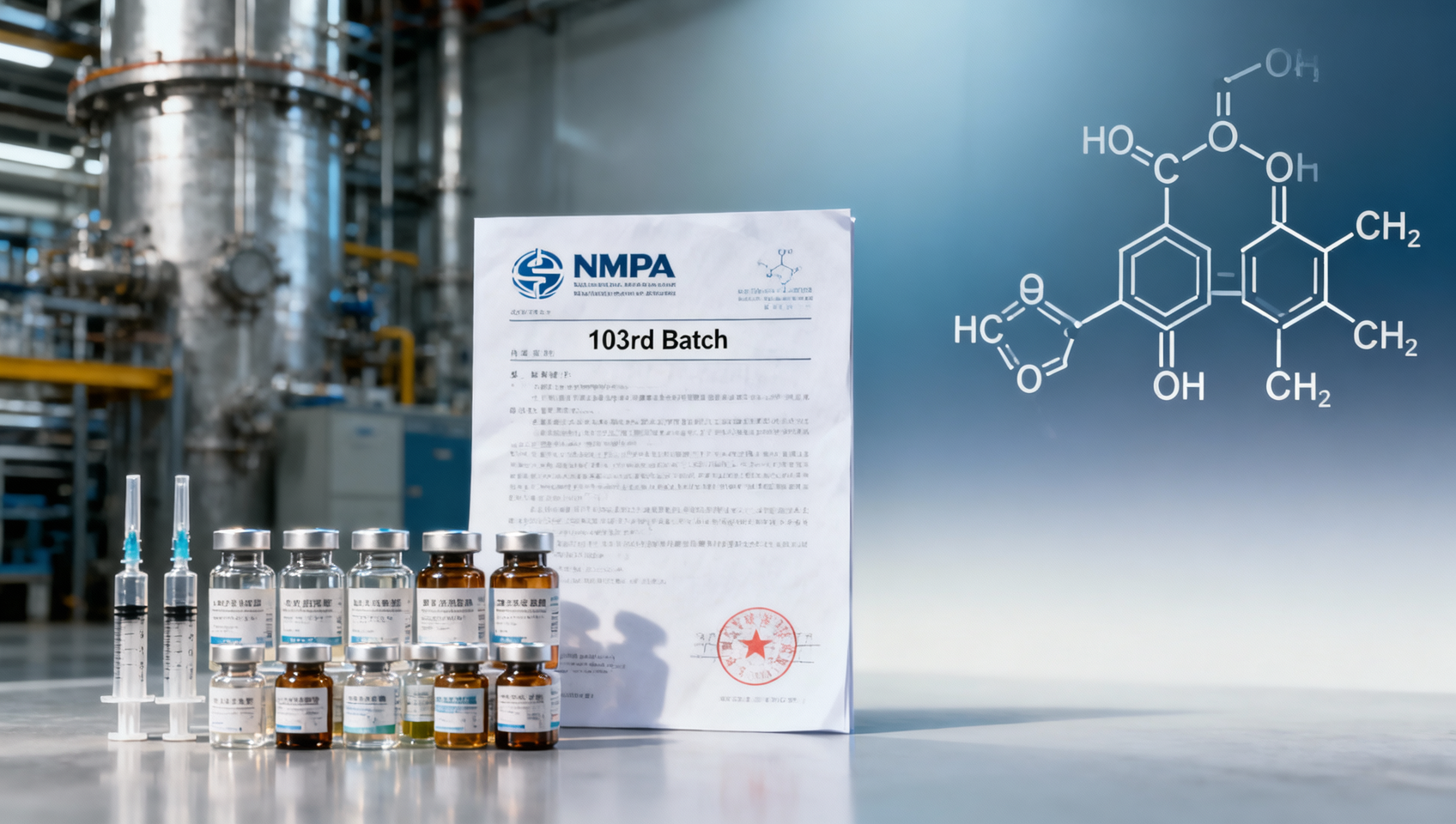
- NMPA Releases 103rd Batch of Generic Drug Reference List, Accelerating Market Access for Key APIsAuthor :Precision Metrology Expert
- SVOLT Becomes Tesla's 5th Global Battery Supplier, Exports from Yiwu PlantAuthor :Heavy Industry Strategist
Expert Insights

Chief Security Architect
Dr. Thorne specializes in the intersection of structural engineering and digital resilience. He has advised three G7 governments on industrial infrastructure security.
Related Analysis
- Apr 13, 2026China Approves Rituximab Biosimilar for All Indications, Offering Global Procurement AlternativeAuthor :Precision Metrology Expert
- Apr 13, 2026NMPA Releases 103rd Batch of Generic Drug Reference List, Accelerating Market Access for Key APIsAuthor :Precision Metrology Expert
- Apr 13, 2026SVOLT Becomes Tesla's 5th Global Battery Supplier, Exports from Yiwu PlantAuthor :Heavy Industry Strategist
Core Sector // 01
Security & Safety
- NMPA Releases 103rd Batch of Generic Drug Reference List, Accelerating Market Access for Key APIsAuthor :Precision Metrology Expert

- Metallurgical microscopes vs. standard optical microscopes: when does resolution matter most?Author :Precision Metrology Expert

- Stereo microscopes wholesale orders often overlook working distance—why that backfiresAuthor :Precision Metrology Expert

- Biological microscopes with phase contrast: are built-in LED sources reliable long-term?Author :Precision Metrology Expert

- Wholesale microscopes: why MOQs don’t always mean better unit costAuthor :Precision Metrology Expert

- Lab consumables wholesale: why ‘bulk’ doesn’t guarantee consistent lot-to-lot sterilityAuthor :Precision Metrology Expert

- Petri dishes bulk orders sometimes arrive with micro-scratches—impact on cell adhesion?Author :Precision Metrology Expert

- Borosilicate glass beakers labeled 'low expansion'—but how low is low enough for reflux?Author :Precision Metrology Expert