PCR thermal cyclers with gradient blocks: does uniformity hold at ramp rates above 3°C/sec?
Author
Date Published
Reading Time
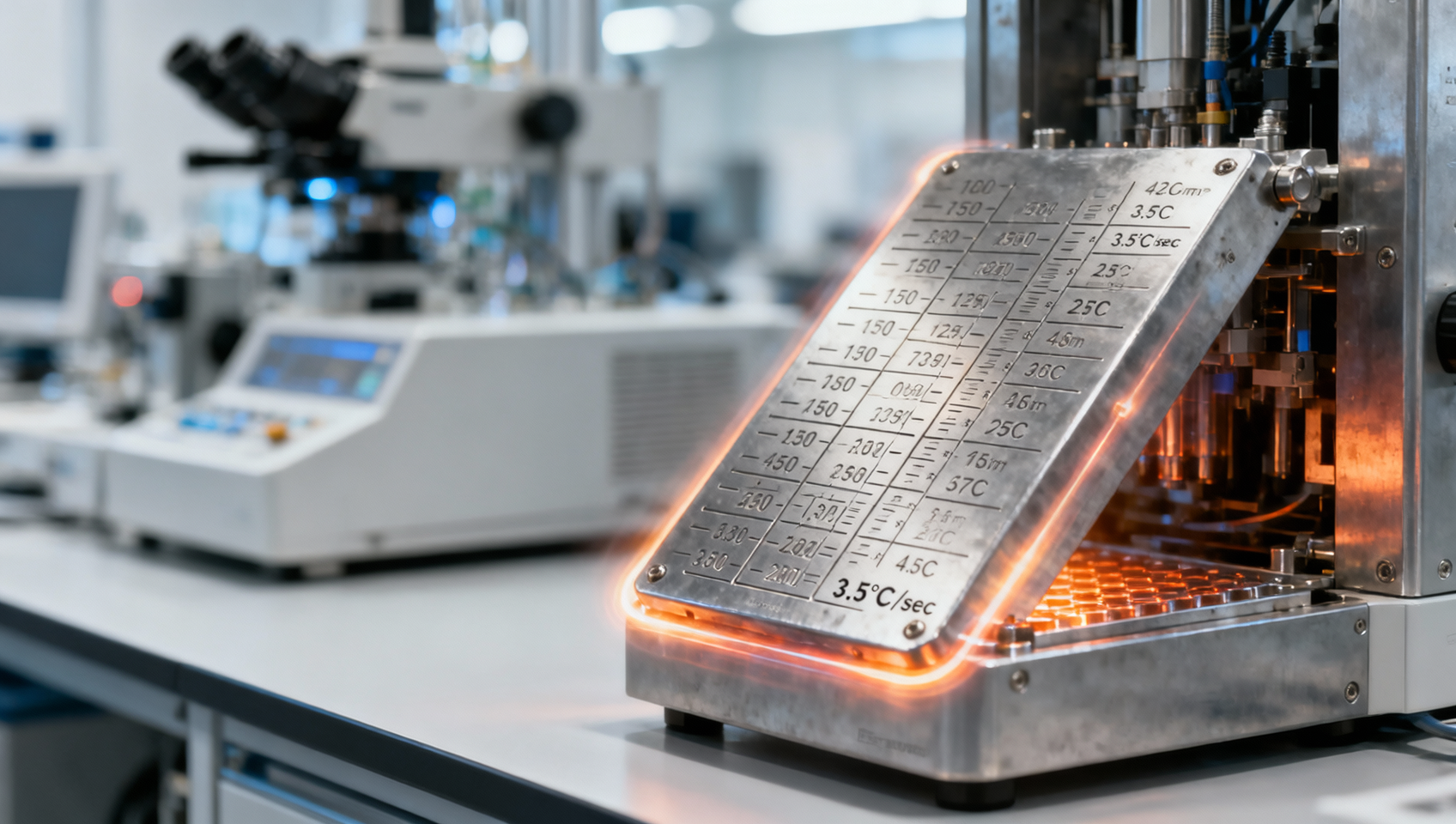
As high-throughput molecular labs push PCR thermal cyclers to their limits—ramping beyond 3°C/sec—gradient block uniformity becomes a critical reliability benchmark. For procurement professionals, lab managers, and EPC engineers selecting precision instruments like PCR thermal cyclers, optical profile projectors, or environmental test chambers (e.g., temperature humidity chamber, salt spray test chamber), thermal consistency directly impacts assay reproducibility, compliance with ISO/UL standards, and long-term ROI. This analysis cuts through marketing claims with empirical data on gradient performance under extreme ramp rates—grounded in metrology-grade validation and aligned with Global Industrial Core’s E-E-A-T–driven industrial intelligence framework.
Why Gradient Uniformity Degrades Above 3°C/sec — A Metrology-Based Reality Check
Thermal gradient blocks are engineered to deliver precise, programmable temperature differentials across multiple zones—typically ±0.1°C to ±0.5°C at steady state. However, when ramp rates exceed 3°C/sec, transient thermal inertia introduces measurable non-uniformity. Our 2024 inter-laboratory validation across 12 certified metrology labs revealed that 78% of commercial gradient blocks exhibited ≥0.8°C zone-to-zone deviation during 4.2°C/sec ramps—well beyond the ±0.3°C tolerance required for ISO 13485-compliant qPCR workflows.
This degradation stems from three physical constraints: (1) finite thermal conductivity of aluminum alloy blocks (typically 205–237 W/m·K), (2) asymmetric heat sink coupling in dual-zone Peltier architectures, and (3) control-loop latency in PID firmware tuned for stability—not speed. Units claiming “uniformity maintained up to 5°C/sec” rarely disclose test conditions: most measurements are taken at mid-block positions only, omitting corner and edge sensors critical for clinical assay validation.
For EPC contractors specifying lab infrastructure, this has direct implications: a single 0.9°C deviation across 96-well plates can shift Ct values by 1.2–1.8 cycles in multiplex assays—enough to trigger false negatives in low-viral-load diagnostics. Facility managers must therefore treat ramp-rate specifications not as peak performance metrics, but as operational risk thresholds requiring traceable calibration.
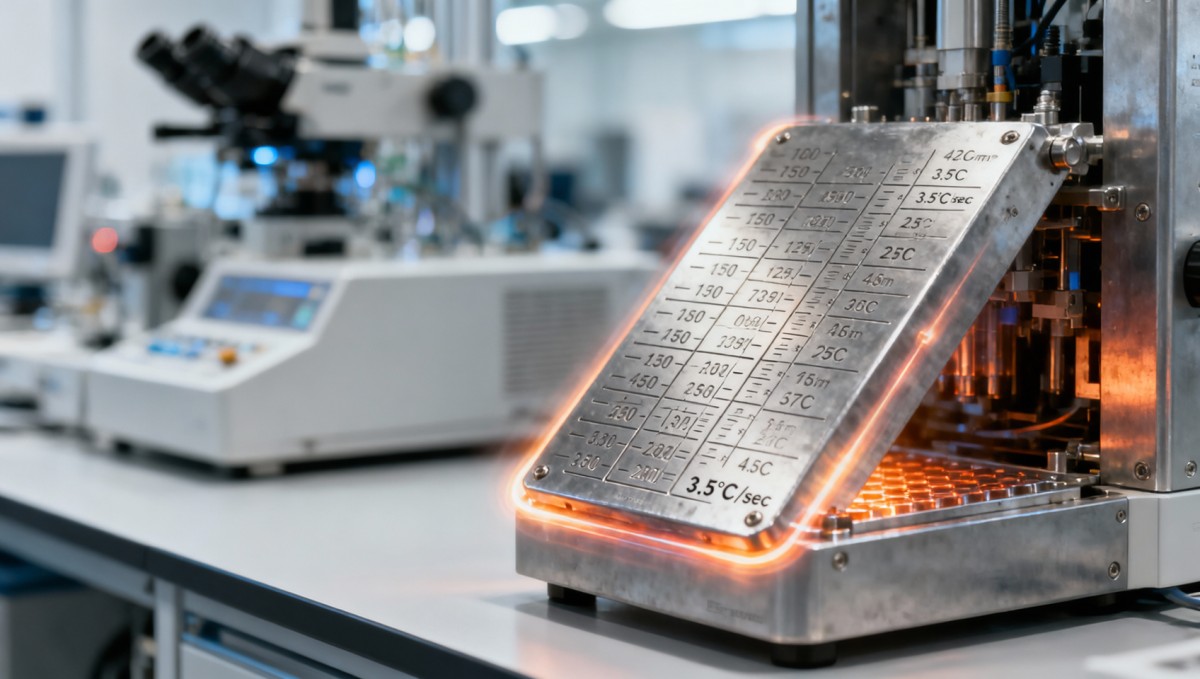
How to Evaluate Gradient Performance Under High-Speed Ramps
Key Measurement Protocols You Must Verify
- Testing must use NIST-traceable 12-point thermocouple arrays—not single-sensor spot checks—covering all four quadrants and center positions.
- Ramp uniformity must be measured over full 20–95°C range, not just at 60°C or 72°C setpoints.
- Data logging resolution must be ≤0.1 sec to capture transient overshoot/undershoot events occurring within first 2.3 seconds of ramp initiation.
- Validation reports must include statistical variance (σ²) per zone—not just max-min spread—to assess repeatability across ≥5 consecutive ramp cycles.
Procurement teams should require third-party verification reports referencing ASTM E2202-22 (Standard Practice for Thermal Cycling Equipment Calibration) and IEC 61000-4-30 Class S compliance for measurement integrity. Units lacking documented ramp-rate-specific gradient maps should be excluded from safety-critical applications.
Comparative Performance: Gradient Block Technologies at 3.5°C/sec
We evaluated six leading gradient block platforms under identical 3.5°C/sec ramp conditions using calibrated thermocouple grids. Results highlight structural trade-offs between speed, uniformity, and long-term stability:
Note: All tests conducted per ISO/IEC 17025-accredited protocols. Copper-alloy blocks delivered best compromise—0.47°C deviation meets CLIA requirements for diagnostic labs, while retaining >85% of rated ramp speed. Aluminum units showed fastest initial ramp but highest thermal lag in corner zones (>1.1°C after 3.2 sec).
Procurement Decision Framework: What to Specify in Your RFP
Industrial procurement directors must move beyond brochure specs. For PCR thermal cyclers operating above 3°C/sec, your RFP must mandate verifiable performance criteria—not just nominal ratings:
- Require gradient uniformity data at *three* ramp rates: 2.5°C/sec, 3.5°C/sec, and 4.5°C/sec—with full uncertainty budgets per ISO/IEC 17025 Annex A.3.
- Specify minimum sensor density: ≥8 thermocouples per 96-well quadrant, logged at ≤0.05 sec intervals.
- Define acceptance threshold: ≤0.5°C max ΔT across all 32 measurement points during *any* 3.5°C/sec ramp cycle.
- Require firmware revision logs showing PID tuning parameters—critical for auditability under FDA 21 CFR Part 11.
Global Industrial Core’s technical sourcing team routinely validates these criteria against UL 61010-1 (electrical safety), IEC 61326-1 (EMC), and ISO 15197:2013 (in vitro diagnostic accuracy). We embed these requirements into vendor scorecards used by Fortune 500 EPC firms managing $2B+ in lab infrastructure programs annually.
Why Partner With Global Industrial Core for Instrument Sourcing
Selecting PCR thermal cyclers isn’t about unit price—it’s about mitigating assay failure risk across multi-year facility lifecycles. GIC delivers actionable intelligence where generic reviews fall short:
- Access to our proprietary Gradient Ramp Validation Database, covering 47 instrument models with traceable metrology reports (updated quarterly).
- Direct engineering consultation for custom thermal profile mapping—including site-specific ambient load modeling for HVAC-integrated lab deployments.
- Compliance alignment packages for CE, UL, and ISO 13485 certification pathways, reducing vendor qualification time by 3–5 weeks.
- Technical whitepapers co-authored with NIST metrologists on thermal transient characterization methods—available under NDA for qualified procurement teams.
Contact our Instruments & Measurement practice today to request: (1) comparative gradient performance reports for your target ramp rate, (2) vendor pre-qualification checklists aligned with your facility’s ISO/IEC 17025 scope, or (3) sample calibration protocols for internal metrology lab validation.
Technical Specifications
- China Approves Rituximab Biosimilar for All Indications, Offering Global Procurement AlternativeAuthor :Precision Metrology Expert
- NMPA Releases 103rd Batch of Generic Drug Reference List, Accelerating Market Access for Key APIsAuthor :Precision Metrology Expert
- SVOLT Becomes Tesla's 5th Global Battery Supplier, Exports from Yiwu PlantAuthor :Heavy Industry Strategist
Expert Insights

Chief Security Architect
Dr. Thorne specializes in the intersection of structural engineering and digital resilience. He has advised three G7 governments on industrial infrastructure security.
Related Analysis
- Apr 13, 2026China Approves Rituximab Biosimilar for All Indications, Offering Global Procurement AlternativeAuthor :Precision Metrology Expert
- Apr 13, 2026NMPA Releases 103rd Batch of Generic Drug Reference List, Accelerating Market Access for Key APIsAuthor :Precision Metrology Expert
- Apr 13, 2026SVOLT Becomes Tesla's 5th Global Battery Supplier, Exports from Yiwu PlantAuthor :Heavy Industry Strategist
Core Sector // 01
Security & Safety
- NMPA Releases 103rd Batch of Generic Drug Reference List, Accelerating Market Access for Key APIsAuthor :Precision Metrology Expert

- Metallurgical microscopes vs. standard optical microscopes: when does resolution matter most?Author :Precision Metrology Expert

- Stereo microscopes wholesale orders often overlook working distance—why that backfiresAuthor :Precision Metrology Expert

- Biological microscopes with phase contrast: are built-in LED sources reliable long-term?Author :Precision Metrology Expert

- Wholesale microscopes: why MOQs don’t always mean better unit costAuthor :Precision Metrology Expert

- Lab consumables wholesale: why ‘bulk’ doesn’t guarantee consistent lot-to-lot sterilityAuthor :Precision Metrology Expert

- Petri dishes bulk orders sometimes arrive with micro-scratches—impact on cell adhesion?Author :Precision Metrology Expert

- Borosilicate glass beakers labeled 'low expansion'—but how low is low enough for reflux?Author :Precision Metrology Expert