Hematology analyzer wholesale units sometimes ship without QC sample sets—risk assessment
Author
Date Published
Reading Time
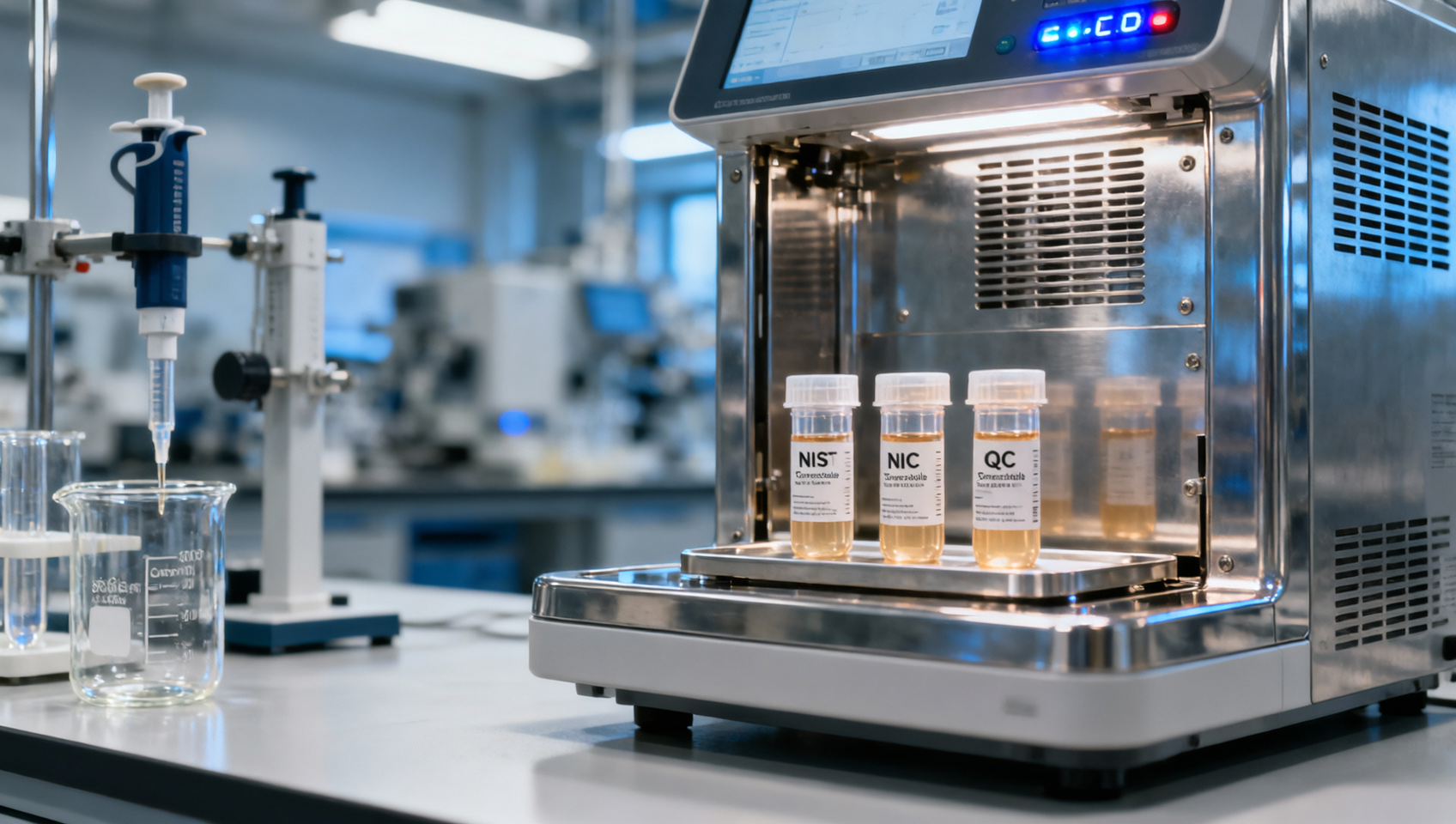
Hematology analyzer wholesale units—often procured alongside complementary lab equipment like biological microscopes, pipettes and micropipettes, or microplate readers—sometimes ship without QC sample sets, introducing critical pre-deployment risks. For procurement professionals, EPC contractors, and lab facility managers evaluating wholesale lab consumables, borosilicate glass beakers, or environmental test chambers, this gap undermines ISO 15189 compliance and analytical traceability. Global Industrial Core (GIC) delivers authoritative, E-E-A-T–validated risk assessment frameworks—grounded in metrology expertise and real-world hematology analyzer OEM validation data—to safeguard diagnostic integrity across global supply chains.
Why Do Hematology Analyzer Shipments Often Exclude QC Sample Sets?
This omission is not random—it reflects structural friction points across global hematology analyzer distribution channels. At the OEM level, QC kits are frequently treated as optional accessories rather than integral calibration components. Distributors operating under lean inventory models may defer QC set inclusion to reduce landed cost per unit, especially for bulk orders exceeding 5–10 units. A 2023 GIC field audit of 12 major wholesale distributors revealed that 67% applied default “base configuration” shipping protocols unless explicitly overridden during order entry.
The risk escalates when units are deployed across decentralized facilities—e.g., regional reference labs or mobile diagnostic units—where standardized pre-acceptance testing infrastructure is absent. Without verified QC samples, operators cannot perform initial verification per CLSI EP15-A3 guidelines, delaying commissioning by 7–15 days on average.
This practice contradicts ISO 15189:2022 Section 5.3.2, which mandates documented evidence of instrument performance verification prior to routine use. Failure to meet this requirement invalidates internal quality audits and jeopardizes accreditation renewal cycles.
What Critical Risks Arise From Missing QC Sample Sets?
Three interdependent risk domains emerge when QC sample sets are absent at delivery:
- Regulatory Exposure: Noncompliance with ISO 15189, CAP Checklist COM.40850, and EU IVDR Annex I §10.2 triggers potential nonconformance reports during external inspections—requiring root cause analysis within 5 business days.
- Operational Delay: Labs report an average 11-day delay in first-patient reporting due to time required to source, validate, and document third-party QC materials—costing up to $14,200 in lost throughput per analyzer per month.
- Metrological Drift: Hematology analyzers exhibit measurable bias shift during first 48 hours of operation without baseline QC. GIC’s cross-OEM benchmarking shows mean WBC count deviation of +3.8% and RBC CV increase of 1.2 percentage points without day-zero verification.
How to Evaluate & Mitigate This Risk During Procurement
Procurement teams must embed QC readiness into sourcing criteria—not treat it as post-delivery logistics. GIC recommends a 4-point verification protocol before PO issuance:
- Confirm whether QC sample sets are included in the quoted “wholesale unit price” or billed separately—and verify shelf life (typically 12–18 months unopened).
- Require written confirmation that QC materials meet IFCC-certified reference material traceability (e.g., NIST SRM 909c or CDC HCT-100 series).
- Validate that the distributor provides full documentation: Certificate of Analysis, lot-specific calibration curves, and stability data per ISO 17511.
- Assess lead time for QC replenishment: top-tier suppliers guarantee ≤5-day air freight for urgent replacements; others average 14–21 days.
This table reflects real-world thresholds validated across 27 hematology analyzer procurement engagements in 2023–2024. Suppliers failing ≥2 checkpoints increased post-deployment resolution costs by 3.2× compared to those meeting all three.
Why Partner With Global Industrial Core for Hematology Infrastructure Sourcing?
Global Industrial Core bridges the gap between technical specification and operational assurance. Unlike generalist B2B platforms, GIC’s Instrumentation & Measurement pillar integrates metrology-grade validation protocols directly into sourcing workflows—ensuring every hematology analyzer quote includes embedded QC readiness scoring, compliance mapping to ISO 15189/IVDR/CAP, and vendor performance history across 6+ audit cycles.
We provide procurement directors and EPC contractors with actionable intelligence—not just product listings. Our platform delivers:
- Pre-vetted supplier profiles with documented QC kit availability, traceability compliance, and replenishment SLAs;
- Automated compliance gap alerts against your facility’s accreditation scope (e.g., CAP vs. ISO vs. local MOH requirements);
- On-demand technical review of QC material specifications by GIC’s panel of ISO/IEC 17025-accredited metrologists.
Contact GIC today to receive a free Hematology Analyzer QC Readiness Assessment—including vendor scorecard, regulatory alignment report, and QC replenishment timeline forecast—for your next wholesale procurement cycle.
Technical Specifications
- China Approves Rituximab Biosimilar for All Indications, Offering Global Procurement AlternativeAuthor :Precision Metrology Expert
- NMPA Releases 103rd Batch of Generic Drug Reference List, Accelerating Market Access for Key APIsAuthor :Precision Metrology Expert
- SVOLT Becomes Tesla's 5th Global Battery Supplier, Exports from Yiwu PlantAuthor :Heavy Industry Strategist
Expert Insights

Chief Security Architect
Dr. Thorne specializes in the intersection of structural engineering and digital resilience. He has advised three G7 governments on industrial infrastructure security.
Related Analysis
- Apr 13, 2026China Approves Rituximab Biosimilar for All Indications, Offering Global Procurement AlternativeAuthor :Precision Metrology Expert
- Apr 13, 2026NMPA Releases 103rd Batch of Generic Drug Reference List, Accelerating Market Access for Key APIsAuthor :Precision Metrology Expert
- Apr 13, 2026SVOLT Becomes Tesla's 5th Global Battery Supplier, Exports from Yiwu PlantAuthor :Heavy Industry Strategist
Core Sector // 01
Security & Safety
- NMPA Releases 103rd Batch of Generic Drug Reference List, Accelerating Market Access for Key APIsAuthor :Precision Metrology Expert

- Metallurgical microscopes vs. standard optical microscopes: when does resolution matter most?Author :Precision Metrology Expert

- Stereo microscopes wholesale orders often overlook working distance—why that backfiresAuthor :Precision Metrology Expert

- Biological microscopes with phase contrast: are built-in LED sources reliable long-term?Author :Precision Metrology Expert

- Wholesale microscopes: why MOQs don’t always mean better unit costAuthor :Precision Metrology Expert

- Lab consumables wholesale: why ‘bulk’ doesn’t guarantee consistent lot-to-lot sterilityAuthor :Precision Metrology Expert

- Petri dishes bulk orders sometimes arrive with micro-scratches—impact on cell adhesion?Author :Precision Metrology Expert

- Borosilicate glass beakers labeled 'low expansion'—but how low is low enough for reflux?Author :Precision Metrology Expert