When do Environment & Ecology consulting services pay off?
Author
Date Published
Reading Time
For business decision-makers, the payoff from Environment & Ecology consulting services usually begins the moment environmental risk starts affecting project speed, compliance cost, asset value, or stakeholder trust. In practical terms, these services are worth the investment when a company faces permitting delays, rising waste and energy costs, exposure to environmental liabilities, ESG pressure from investors or customers, or expansion into markets with stricter regulatory expectations.
For most industrial and infrastructure-focused businesses, the question is not whether environmental consulting has value in theory. The real question is when the value becomes measurable. In many cases, the return appears through avoided fines, faster approvals, lower remediation costs, better resource efficiency, stronger tender positioning, and fewer operational disruptions.
For enterprise decision-makers, that means environmental consulting should not be treated only as a compliance expense. It often pays off most when used early enough to influence planning, procurement, operations, and risk management. The later a business reacts to environmental issues, the more expensive those issues tend to become.
When do Environment & Ecology consulting services deliver the highest return?
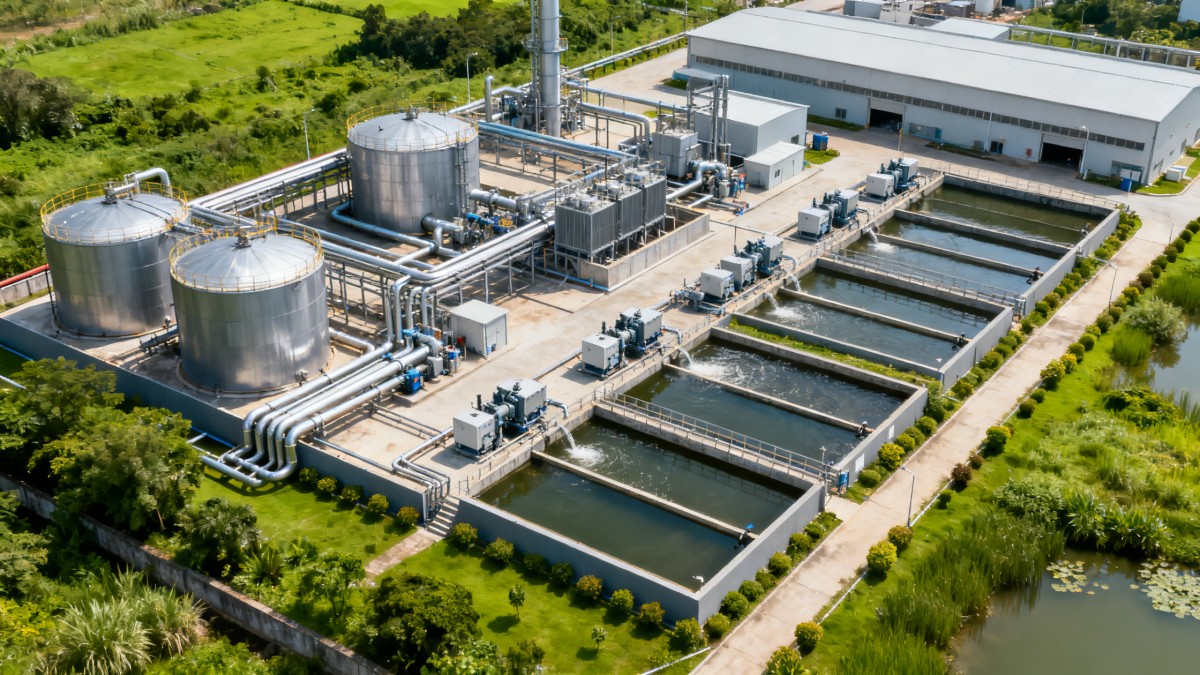
The highest return usually comes when consulting support is brought in before a problem becomes a crisis. If your business is already facing a notice of violation, a community complaint, or a stalled permit, consultants can still help. But the strongest business case emerges when they are involved early in site selection, facility design, process optimization, environmental baseline assessment, supplier review, or expansion planning.
For industrial operators, consulting services tend to pay off in five clear scenarios. First, when regulations are becoming more complex across jurisdictions. Second, when environmental issues can delay major capital projects. Third, when waste, water, emissions, or energy inefficiencies are creating hidden cost. Fourth, when customers, lenders, insurers, or investors are demanding stronger environmental performance. Fifth, when legacy liabilities could affect mergers, acquisitions, land use, or long-term asset value.
In other words, the payoff is strongest when environmental performance is tied to business continuity. If a delayed permit can hold back revenue, if a contamination issue can reduce a site's value, or if poor environmental management can block access to contracts, then professional consulting is no longer optional overhead. It becomes a strategic control function.
What business problems are decision-makers really trying to solve?
Business leaders searching for answers about Environment & Ecology consulting services are rarely looking for abstract sustainability advice. They are trying to solve practical problems: How do we reduce regulatory exposure? How do we avoid project delays? How do we keep costs predictable? How do we meet customer and investor expectations without overbuilding programs that do not generate value?
They also want clarity on timing. Many executives suspect environmental issues matter, but they are unsure when to invest. Spend too early without focus, and the initiative looks like unnecessary overhead. Spend too late, and the company may face a much larger bill through compliance penalties, redesign work, cleanup obligations, legal disputes, insurance complications, or reputational damage.
This is why the most useful consulting work is decision-oriented. It should identify where risk is material, where cost reduction is realistic, and where environmental improvements can support growth. Good advisors do not just produce reports. They help leaders prioritize the few issues that materially affect profitability, resilience, and strategic flexibility.
How do these services create measurable financial value?
The financial return from environmental and ecology consulting is often easier to see through avoided cost than through direct revenue alone. Avoided cost includes fines, litigation, cleanup escalation, permit delay, construction rework, inefficient resource use, excessive waste handling, insurance claims, and asset devaluation. In capital-intensive industries, preventing one major environmental misstep can justify years of consulting spend.
There is also a direct operational value. Consultants can identify inefficient water use, waste streams that could be reduced at source, discharge treatment systems that are oversized or underperforming, and process changes that lower energy or material intensity. These are not only environmental gains. They can improve margin, reduce volatility, and support more predictable operations.
Another source of return is speed. In large industrial projects, time is expensive. Delays related to environmental review, ecological impact concerns, or incomplete documentation can affect mobilization schedules, financing windows, contractor costs, and customer commitments. A consultant who helps secure permits faster or reduces re-submission cycles may create value far beyond their fee.
Finally, there is strategic upside. Strong environmental performance can improve access to high-value tenders, especially where multinational buyers, infrastructure programs, or public procurement frameworks require credible sustainability and compliance credentials. In that setting, consulting support helps translate environmental capability into commercial competitiveness.
What are the clearest signs that your company should engage a consultant now?
If your company is experiencing any of the following, the business case is likely already present. One sign is repeated uncertainty around permits, inspections, or changing regulations. Another is a pattern of environmental incidents, near misses, complaints, or corrective actions. A third is rising operating cost linked to waste, water, emissions control, or remediation.
Additional signs include expansion into unfamiliar geographies, acquisition of industrial land or legacy facilities, customer requests for stronger ESG disclosures, or board-level concern about climate and environmental exposure. Even if no formal violation exists today, these indicators suggest that unmanaged environmental complexity is beginning to affect decision quality and cost control.
Consulting services also pay off when internal teams are overloaded. Many companies have capable EHS staff, but those teams are often focused on day-to-day compliance, incident response, and routine reporting. External specialists become valuable when the issue requires advanced ecological assessment, contamination modeling, lifecycle strategy, permitting expertise, stakeholder engagement, or independent due diligence.
Which services tend to produce the fastest payoff?
Not all consulting work creates value on the same timeline. Some services produce relatively fast returns, especially those tied to known pain points. Environmental compliance audits can quickly identify gaps before regulators do. Waste minimization studies often reveal immediate reduction opportunities. Water and energy efficiency assessments can produce near-term operating savings. Permitting support can reduce schedule risk on active projects.
Environmental due diligence for acquisitions is another high-value area. When companies acquire sites, facilities, or industrial businesses without fully understanding contamination history or ecological constraints, they may inherit liabilities that far exceed the deal discount. In this context, consulting does not merely optimize performance. It protects transaction value.
Site assessment and remediation planning can also pay off quickly when land redevelopment, refinancing, or asset sale depends on environmental clarity. Similarly, biodiversity and habitat impact reviews become commercially important when infrastructure expansion intersects with protected areas, local stakeholder sensitivity, or permit thresholds.
Longer-term services such as climate resilience planning, decarbonization strategy, and ecological restoration may have a slower financial curve, but they can still be highly valuable where brand positioning, investor scrutiny, or long-life infrastructure planning are involved.
How should executives evaluate return on investment?
Executives should not evaluate Environment & Ecology consulting services using a single generic ROI formula. The right approach is to compare consulting cost against the specific business exposure being managed. For one company, the return may be avoided permit delay. For another, it may be reduced waste disposal cost. For a third, it may be successful lender approval or smoother market entry.
A practical evaluation framework includes five questions. What risk is being reduced? What operating cost can be improved? What revenue, project timeline, or commercial opportunity depends on the outcome? What liability could grow if nothing is done? And what internal capability gap is the consultant filling?
Quantification should combine hard and soft value. Hard value includes cost savings, fine avoidance, reduced sampling or treatment costs, lower downtime, and faster approvals. Soft value includes stronger stakeholder trust, better board visibility, improved tender credibility, and greater strategic confidence during expansion or investment decisions. Soft value is harder to price, but in industrial sectors it often influences major commercial outcomes.
Decision-makers should also ask how quickly recommendations can be implemented. A technically sound report with no operational path to action will not pay off. The most valuable consulting engagements produce prioritized actions, timelines, ownership, and measurable indicators.
Why timing matters more than many companies expect
One of the biggest mistakes companies make is waiting until environmental pressure becomes visible and urgent. By that point, the range of solutions is narrower and more expensive. Design changes after engineering freeze cost more than design changes during concept development. Remediation after contamination spreads costs more than early containment. Rebuilding community trust after a public issue is harder than preventing the issue in the first place.
Early consulting involvement improves option value. It gives leadership more room to compare alternatives, sequence capital spend, coordinate with procurement, and align environmental priorities with business goals. This is especially important in heavy industry, utilities, manufacturing, logistics, and infrastructure projects where environmental decisions interact with land use, engineering design, permitting, and supply chain planning.
The timing issue also matters in board governance. Environmental obligations are increasingly linked to enterprise risk management rather than being treated as isolated technical matters. Companies that build an early, informed view of their exposure tend to make better capital allocation decisions and face fewer surprises later.
How to choose a consulting partner that will actually create value
Not every consultancy will produce the same outcome. Decision-makers should look beyond general sustainability language and assess whether the advisor understands industrial operations, local and international regulatory frameworks, and the commercial realities of project delivery. The best partners connect environmental science with engineering feasibility and business priorities.
Ask for evidence in areas that match your situation: permitting success, remediation planning, due diligence, ecological assessment, water management, waste reduction, emissions control, or ESG program design. Industry-specific experience matters because environmental issues in manufacturing, mining, energy, chemicals, logistics, and construction differ significantly in risk profile and operational context.
It is also worth evaluating how the consultancy communicates. Senior leaders need concise risk framing, clear options, and decision-ready recommendations. Operations teams need implementable steps. Procurement teams need scope clarity. Legal and compliance teams need defensible documentation. A strong consulting partner can serve all of these needs without turning the engagement into an academic exercise.
Finally, make sure success criteria are defined up front. If the goal is permit acceleration, liability reduction, waste savings, or ESG readiness for a customer audit, that should be explicit from the beginning. Value is easier to capture when everyone agrees on the business outcome being pursued.
When these services do not pay off
Environment & Ecology consulting does not pay off when the scope is vague, disconnected from business priorities, or used only to create paperwork. It also underperforms when leadership wants reassurance rather than honest diagnosis. If the organization is unwilling to act on findings, even a high-quality assessment will deliver limited value.
Another weak scenario is hiring external support for work that a capable internal team can already do, without any complexity or independence requirement. Consulting should add expertise, speed, credibility, or capacity. If it adds none of these, the return will be low.
The lesson is simple: these services create the best results when tied to a material business decision, a measurable risk, or a clear operational improvement target.
Conclusion: the payoff begins when environmental performance affects business performance
For decision-makers, the answer to “When do Environment & Ecology consulting services pay off?” is straightforward: they pay off when environmental issues start influencing compliance, project timelines, operating cost, transaction risk, market access, or long-term asset resilience. In many industrial settings, that threshold arrives earlier than companies expect.
The strongest returns come from acting before environmental challenges become expensive disruptions. Used well, consulting support helps leaders reduce uncertainty, protect capital, improve efficiency, and strengthen strategic positioning. That is why the most effective companies no longer treat environmental consulting as a narrow regulatory expense. They treat it as a business tool for building safer, more efficient, and more resilient growth.
Technical Specifications
- Hidden Environment & Ecology cost after project approvalAuthor :Environmental Engineering Director
- When does an Environment & Ecology impact assessment need updating?Author :Environmental Engineering Director
- Security & Safety standards that affect product approval speedAuthor :Safety Compliance Lead
Expert Insights

Chief Security Architect
Dr. Thorne specializes in the intersection of structural engineering and digital resilience. He has advised three G7 governments on industrial infrastructure security.
Related Analysis
- May 07, 2026Hidden Environment & Ecology cost after project approvalAuthor :Environmental Engineering Director
- May 07, 2026When does an Environment & Ecology impact assessment need updating?Author :Environmental Engineering Director
- May 07, 2026Security & Safety standards that affect product approval speedAuthor :Safety Compliance Lead
Core Sector // 01
Security & Safety
- When does an Environment & Ecology impact assessment need updating?Author :Environmental Engineering Director

- What overseas buyers check first in an Environment & Ecology exporterAuthor :Environmental Engineering Director

- When do Environment & Ecology consulting services pay off?Author :Environmental Engineering Director

- What drives Environment & Ecology cost in industrial projects?Author :Environmental Engineering Director

- Vietnam MOIT: Industrial Water Monitors Must Adopt MQTT v5.0 + SM4 by Jun 30, 2026Author :Environmental Engineering Director

- Vietnam MOIT: Industrial Water Monitors Must Adopt MQTT v5.0 + SM4 by Jun 30, 2026Author :Environmental Engineering Director

- Vietnam MOIT: Industrial Water Monitors Must Adopt MQTT v5.0 + SM4 by Jun 30, 2026Author :Environmental Engineering Director

- Vietnam MOIT Waives SM4 Encryption Upgrade Fee for Chinese Water MonitorsAuthor :Environmental Engineering Director