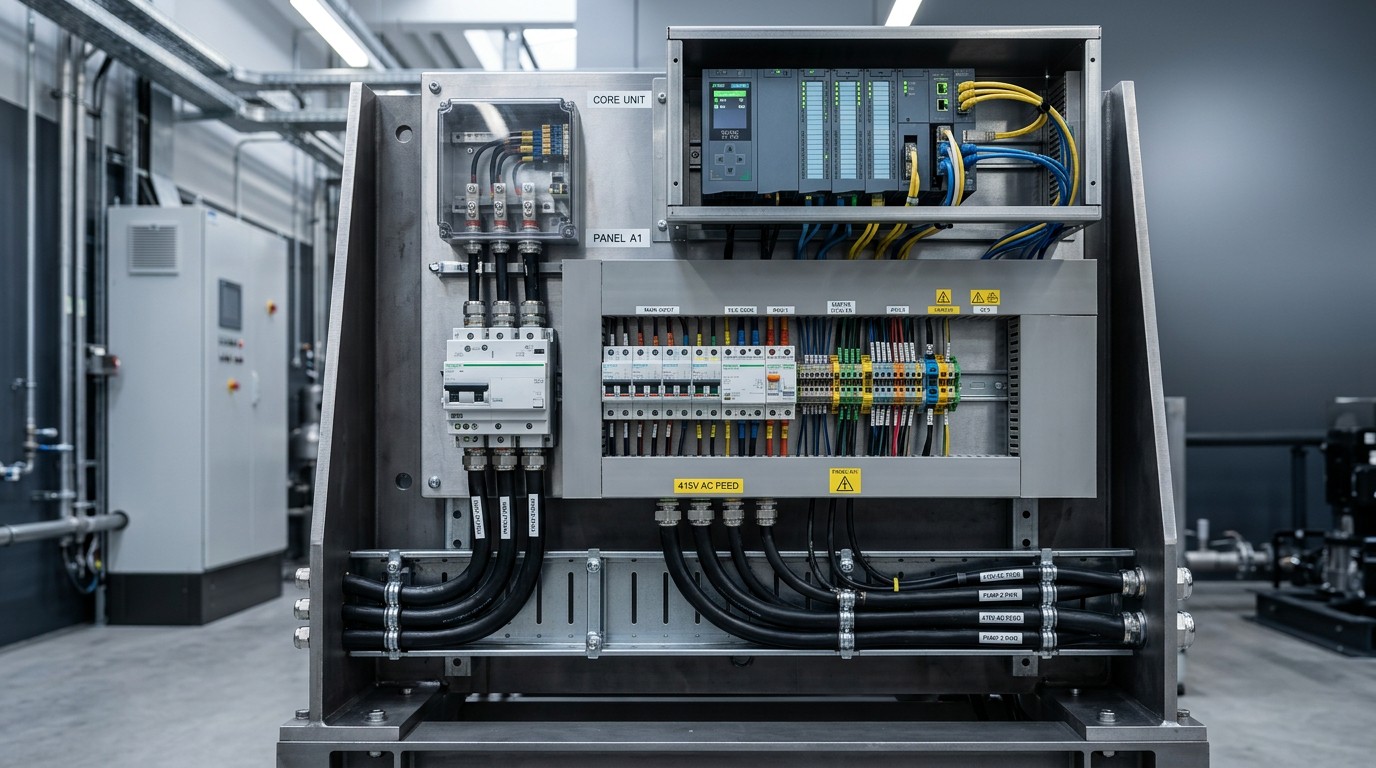
SASO AI Water Quality Rule Effective July 2026 for Industrial Systems
Author
Date Published
Reading Time
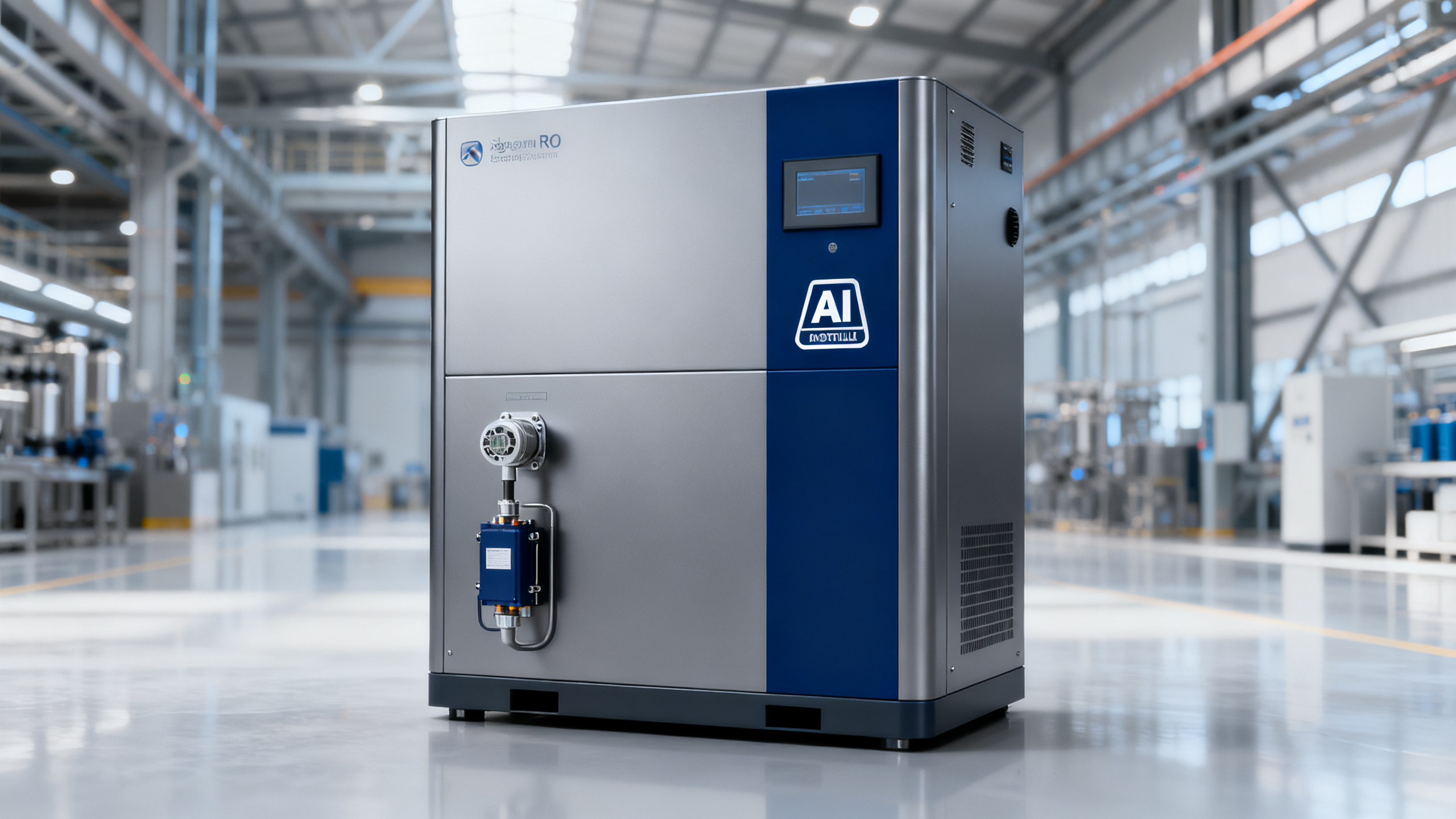
Saudi Arabia’s Standards Organization (SASO) has issued a new mandatory technical regulation—SASO IEC 62443-4-2:2026 Annex C—set to take effect on 1 July 2026. This requirement directly affects exporters of industrial water treatment equipment to Saudi Arabia, including manufacturers and suppliers of reverse osmosis (RO) systems, wastewater reuse units, and cooling water treatment packages. It signals a significant shift toward AI-integrated compliance in Middle Eastern infrastructure procurement.
Event Overview
On 28 April 2026, SASO formally published SASO IEC 62443-4-2:2026 Annex C. The regulation mandates that, from 1 July 2026 onward, all imported industrial water treatment equipment—including RO systems, greywater reuse units, and integrated cooling water treatment systems—must be pre-installed with an AI-based dynamic water quality prediction module. This module must be certified by TÜV Rheinland and capable of forecasting at least six parameters (pH, turbidity, residual chlorine, COD, among others) over a rolling 72-hour horizon.
Which Subsectors Are Affected
Direct Exporters (China-based Equipment Manufacturers)
These companies face immediate product redesign requirements. Integration of embedded AI prediction logic—and associated firmware validation—alters hardware architecture, software certification pathways, and time-to-market timelines. Compliance is not optional for market access; non-compliant units will be rejected at Saudi customs or during SASO conformity assessment.
Embedded Software & AI Module Suppliers
Vendors providing off-the-shelf AI inference engines or edge-ready water quality models must now align their offerings with TÜV Rheinland’s certification framework for industrial control systems. Their modules must support real-time sensor data ingestion, model retraining traceability, and audit-ready logging—all prerequisites under Annex C.
Third-Party Certification & Testing Service Providers
Laboratories and conformity assessment bodies active in China or GCC markets must expand capacity for AI module evaluation under IEC 62443-4-2. Demand is expected to rise for joint testing of hardware-software integration, cybersecurity hardening of AI inference pipelines, and runtime verification of prediction accuracy against ground-truth lab measurements.
Supply Chain & Logistics Intermediaries
Firms managing documentation, customs clearance, and post-shipment technical verification for water treatment exports must update internal checklists to include proof of TÜV Rheinland AI module certification, firmware version logs, and system-level cybersecurity declarations per SASO IEC 62443-4-2.
What Relevant Companies or Practitioners Should Focus On Now
Monitor official SASO implementation guidance and TÜV Rheinland’s certification scope updates
While the regulation is published, SASO has not yet released detailed interpretation notes or transitional arrangements. Exporters should track SASO’s official portal and TÜV Rheinland’s dedicated GCC regulatory bulletins for clarifications on grandfathering, phased enforcement, or acceptable alternative certifications.
Prioritize product families with highest Saudi import volume for early AI module integration
Analysis shows RO systems and packaged cooling water units account for over 65% of Chinese industrial water equipment exports to Saudi Arabia (based on 2023–2025 HS code 8421.21/8421.91 trade data). Focusing AI retrofitting efforts here delivers fastest return on compliance investment and reduces exposure to shipment delays.
Distinguish between regulatory signal and operational readiness
Observably, this rule reflects SASO’s broader digitalization strategy—not just a one-off safety mandate. However, actual enforcement capacity (e.g., AI module inspection depth at ports) remains unconfirmed. Companies should treat the regulation as binding but verify field-level execution protocols before committing to full-scale production changes.
Initiate cross-functional alignment across R&D, QA, and export compliance teams
Current more suitable preparation includes drafting internal AI module specification sheets aligned with Annex C’s functional and cybersecurity clauses; initiating pre-assessment discussions with TÜV Rheinland; and updating bill-of-materials templates to flag AI-related firmware, secure boot components, and cryptographic key management subsystems.
Editorial Perspective / Industry Observation
This regulation is best understood not as an isolated compliance hurdle, but as an early marker of AI-as-infrastructure in Gulf industrial policy. From an industry perspective, it confirms that predictive capability—verified by internationally recognized cyber-physical standards—is becoming a baseline technical expectation, not an optional upgrade. Analysis shows similar clauses are under review in UAE’s ESMA and Oman’s DMSA draft water sector regulations, suggesting regional harmonization may follow. However, it remains uncertain whether SASO intends Annex C to serve primarily as a market access gate—or as a catalyst for domestic AI model development partnerships with foreign vendors. That distinction will shape long-term engagement strategies.
In summary, SASO’s AI water quality mandate marks a structural inflection point—not merely a certification update—for exporters serving Saudi industrial water markets. Its significance lies less in immediate enforcement scale and more in its precedent-setting role: embedding AI functionality as a non-negotiable, certified component within physical process equipment. For now, the most pragmatic stance is cautious implementation—grounded in verified requirements, not speculation.
Source: SASO official publication notice dated 28 April 2026 (SASO IEC 62443-4-2:2026 Annex C); TÜV Rheinland public certification framework documentation (v2.1, March 2026).
Note: SASO’s implementation guidelines, enforcement timelines beyond 1 July 2026, and recognition of alternative certification bodies remain under observation.
Technical Specifications
- 6th National Auto Standards Committee Launched, Impacts Optical Test Equipment ExportAuthor :Precision Metrology Expert
- Copper Price Surge Impacts Industrial Components BOM CostsAuthor :Grid Infrastructure Analyst
- EU CE Update: ULPA Filters Require MVR Testing from Jan 2027Author :Environmental Engineering Director
Expert Insights

Chief Security Architect
Dr. Thorne specializes in the intersection of structural engineering and digital resilience. He has advised three G7 governments on industrial infrastructure security.
Related Analysis
- Apr 29, 20266th National Auto Standards Committee Launched, Impacts Optical Test Equipment ExportAuthor :Precision Metrology Expert
- Apr 29, 2026Copper Price Surge Impacts Industrial Components BOM CostsAuthor :Grid Infrastructure Analyst
- Apr 29, 2026EU CE Update: ULPA Filters Require MVR Testing from Jan 2027Author :Environmental Engineering Director
Core Sector // 01
Security & Safety
- SASO AI Water Quality Rule Effective July 2026 for Industrial SystemsAuthor :Environmental Engineering Director

- SASO AI Water Quality Rule Effective July 2026Author :Environmental Engineering Director
![]()
- SCFI Surges 27% Weekly; Shanghai–Rotterdam Freight Hits $4,200/TEUAuthor :Environmental Engineering Director
![]()
- SASO Mandates AI-Based Water Quality Prediction for Industrial Systems in Saudi ArabiaAuthor :Environmental Engineering Director
![]()
- China Leads First ISO Standard for Zero-Carbon CitiesAuthor :Environmental Engineering Director
![]()
- EU CBAM Carbon Tariff Effective for Water Treatment Equipment from Apr 24, 2026Author :Environmental Engineering Director
![]()
- Solving scaling issues in facility managementAuthor :Environmental Engineering Director

- Check Valves Swing Type: Where Do They Work BestAuthor :Environmental Engineering Director
![]()