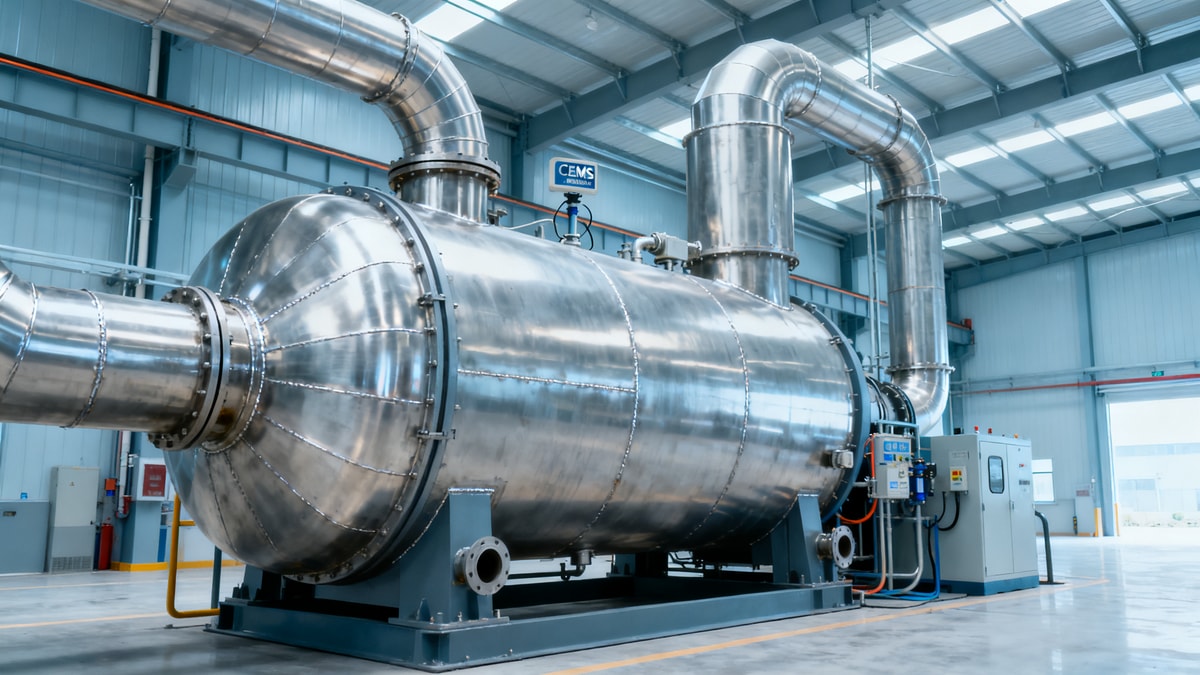
INMETRO Launches Remote Certification for Waste Incinerators in Brazil
Author
Date Published
Reading Time
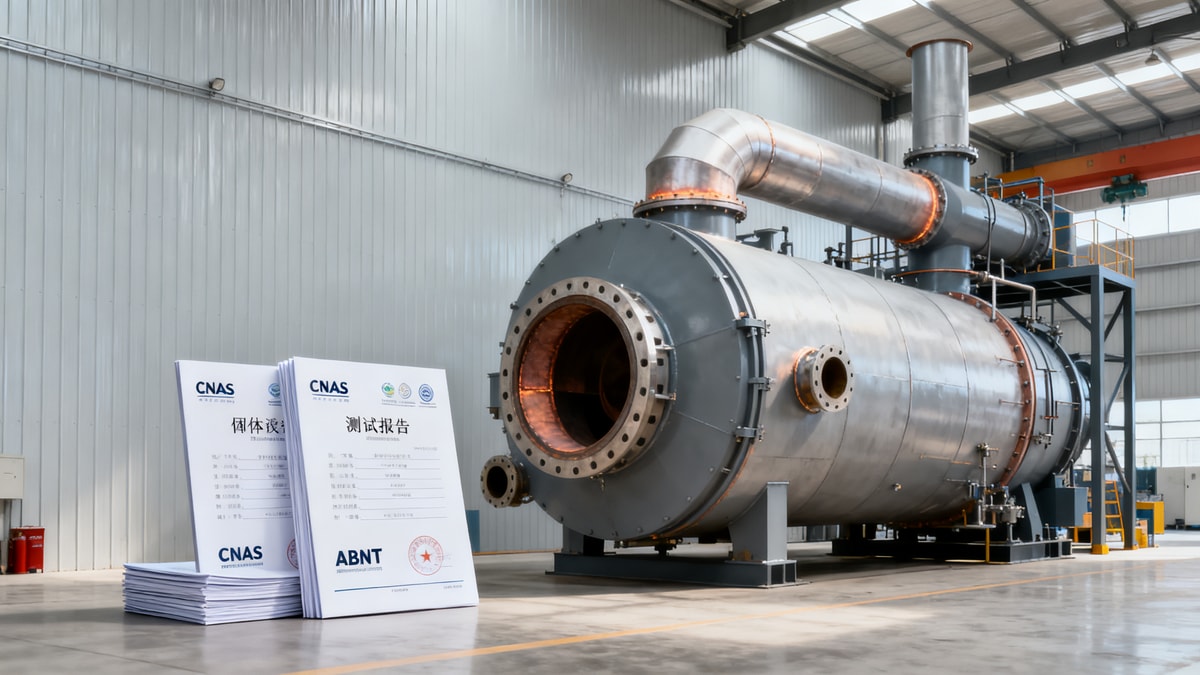
On April 30, 2026, Brazil’s National Institute of Metrology, Standardization and Industrial Quality (INMETRO) initiated a pilot program for remote type-approval of industrial solid waste incinerators — a development with direct implications for Chinese manufacturers of environmental equipment, third-party testing service providers, and exporters engaged in the Latin American clean-tech market.
Event Overview
Effective April 30, 2026, INMETRO announced the launch of a remote conformity assessment pilot for industrial solid waste incinerators. For the first time, INMETRO explicitly accepts vibration and noise test reports issued by CNAS-accredited laboratories in China, conducted per ISO 10816-3, as well as dioxin and NOx emission test reports carried out per ABNT NBR 15619. The pilot reduces the average certification timeline for such equipment exported from China to Brazil from 180 days to within 45 days.
Industries Affected by This Change
Environmental Equipment Manufacturers (China-based)
Manufacturers producing solid waste incineration systems face reduced technical barriers to market entry in Brazil. The recognition of CNAS-issued test data eliminates the need for redundant on-site testing or retesting at Brazilian labs — directly impacting product time-to-market and certification cost structures.
Third-Party Testing Laboratories (CNAS-accredited)
Laboratories accredited by China’s National Accreditation Service for Conformity Assessment (CNAS) gain formal recognition for specific environmental performance tests under INMETRO’s regulatory framework. This expands the scope of internationally accepted services they can offer to clients targeting Brazilian compliance.
Export Trading Companies & Distributors (China–Brazil)
Trading entities facilitating equipment exports must now verify whether their suppliers’ test documentation aligns precisely with INMETRO’s newly specified standards (ISO 10816-3 and ABNT NBR 15619). Mismatches — e.g., outdated versions of standards, incomplete test parameters, or non-CNAS lab origins — may invalidate remote approval eligibility.
After-Sales & Technical Support Providers
Remote certification does not waive requirements for post-installation verification or operational compliance monitoring. Service providers supporting commissioning, maintenance, or emissions auditing in Brazil should anticipate tighter alignment between pre-certification test conditions and real-world operating parameters — especially for vibration, noise, and flue gas composition.
What Relevant Enterprises or Practitioners Should Focus On Now
Monitor official INMETRO guidance updates
While the pilot has launched, full procedural details — including document submission formats, digital signature requirements, and audit escalation paths — remain pending. Stakeholders should track INMETRO’s official portal and authorized certification bodies for published checklists or FAQs.
Validate test report scope against ABNT NBR 15619 and ISO 10816-3 editions
ABNT NBR 15619 has multiple revisions; only the version referenced in INMETRO’s notice is accepted. Similarly, ISO 10816-3 (2017 or later) must be explicitly cited in vibration/noise reports. Reports referencing earlier editions or generic “ISO 10816” without part designation are unlikely to qualify.
Distinguish pilot status from permanent policy
This is a time-bound pilot, not a finalized regulation. Its extension beyond initial evaluation will depend on outcomes such as fraud prevention effectiveness, data integrity verification methods, and stakeholder feedback. Business planning should treat current timelines (45-day target) as provisional until formalized in normative documents.
Prepare cross-border technical documentation workflows
Companies should review internal processes for generating bilingual (Portuguese–English or Portuguese–Chinese) test summaries, certified translations of CNAS accreditation certificates, and traceable chain-of-custody records for samples tested. Early alignment with Brazilian-certified translators or local representatives can prevent delays during submission.
Editorial Perspective / Industry Observation
Observably, this move signals INMETRO’s strategic shift toward digitalized, evidence-based conformity assessment — particularly for capital-intensive environmental infrastructure. Analysis shows it reflects broader global trends where regulators accept foreign-accredited data when aligned with mutual recognition principles, but only for narrowly defined scopes and validated methodologies. It is currently best understood as a targeted signal — not yet a systemic reform — indicating willingness to streamline access for technically compliant Chinese exporters, contingent upon sustained data reliability and interoperability between CNAS and ABNT frameworks. Continued observation is warranted on whether similar remote acceptance extends to other equipment categories (e.g., wastewater treatment units) or additional Chinese standards.
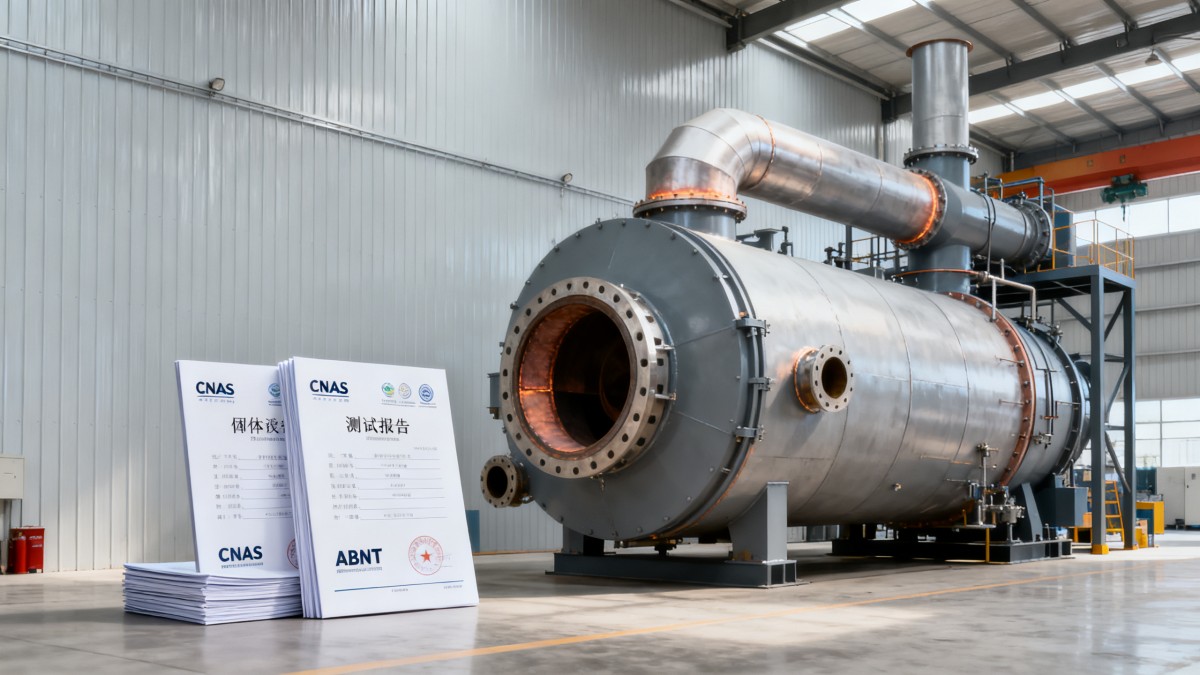
In summary, INMETRO’s remote incinerator certification pilot introduces a measurable efficiency gain for select Chinese environmental equipment exporters — but one tightly bounded by technical specificity, procedural discipline, and pilot-phase uncertainty. It is not a blanket simplification, nor a de facto equivalence of CNAS and INMETRO accreditation; rather, it is a conditional, standards-referenced pathway requiring precise execution at the documentation level. Current understanding should emphasize procedural fidelity over broad regulatory change.
Source: Official announcement by INMETRO (April 30, 2026). Note: Extension of the pilot beyond its initial phase, inclusion of additional test parameters, or expansion to other equipment types remains subject to future INMETRO communication and is not confirmed at this time.
Technical Specifications
- Indonesia Opens Bearing & Seal Manufacturing to 100% FDIAuthor :Heavy Industry Strategist
- SASO Extends AI Water Module Cybersecurity Deadline to Oct 2026Author :Environmental Engineering Director
- Copper Price Surges 4.1% to Record High in 2026; Impacts BOM Costs for Cable & Transformer MakersAuthor :Grid Infrastructure Analyst
Expert Insights

Chief Security Architect
Dr. Thorne specializes in the intersection of structural engineering and digital resilience. He has advised three G7 governments on industrial infrastructure security.
Related Analysis
- May 02, 2026Indonesia Opens Bearing & Seal Manufacturing to 100% FDIAuthor :Heavy Industry Strategist
- May 02, 2026SASO Extends AI Water Module Cybersecurity Deadline to Oct 2026Author :Environmental Engineering Director
- May 02, 2026Copper Price Surges 4.1% to Record High in 2026; Impacts BOM Costs for Cable & Transformer MakersAuthor :Grid Infrastructure Analyst
Core Sector // 01
Security & Safety
- INMETRO Launches Remote Certification for Waste Incinerators in BrazilAuthor :Environmental Engineering Director

- INMETRO Launches Remote Certification Pilot for Waste IncineratorsAuthor :Environmental Engineering Director

- INMETRO Launches Remote Audit Pilot for Waste Incinerators in BrazilAuthor :Environmental Engineering Director

- RCEP Mandates ISO 14067 Carbon Footprint Interface for Waste IncineratorsAuthor :Environmental Engineering Director

- RCEP-ASEAN Mandates ISO 14067 Carbon Interface for Waste IncineratorsAuthor :Environmental Engineering Director
![]()
- RCEP ASEAN Mandates ISO 14067 Carbon Interface for Waste IncineratorsAuthor :Environmental Engineering Director
![]()
- RCEP Industrial Waste Equipment Mutual Recognition Takes EffectAuthor :Environmental Engineering Director
![]()
- Industrial sludge in environmental engineeringAuthor :Environmental Engineering Director