INMETRO Launches Remote Audit Pilot for Waste Incinerators in Brazil
Author
Date Published
Reading Time
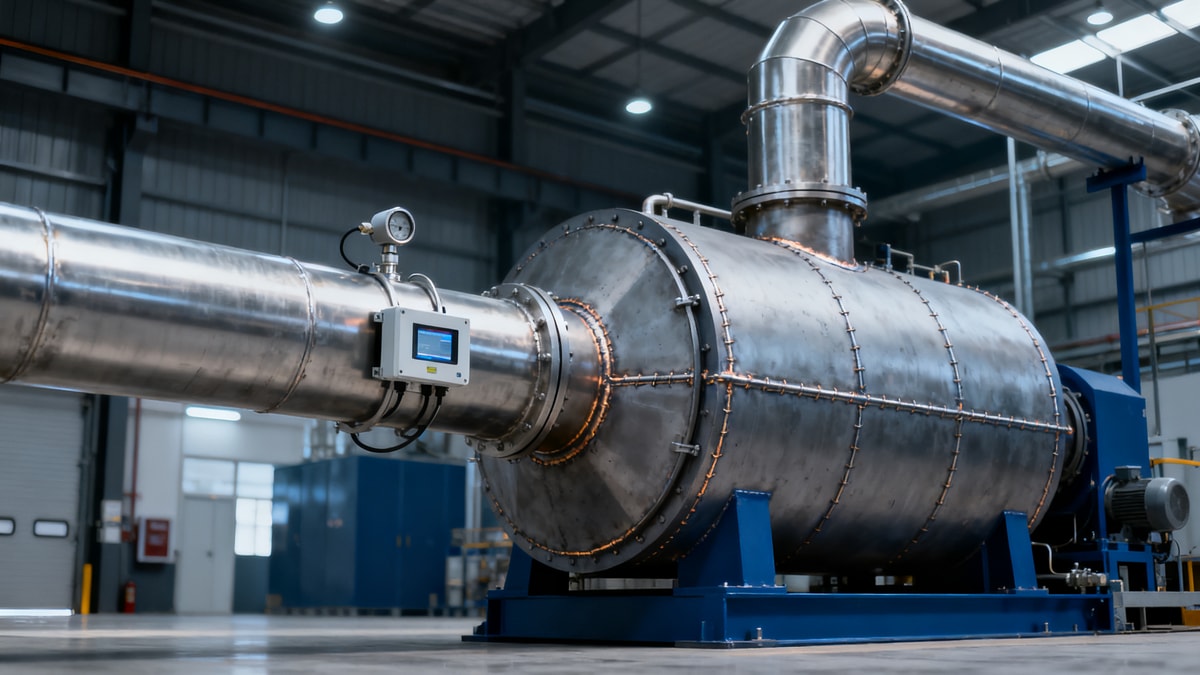
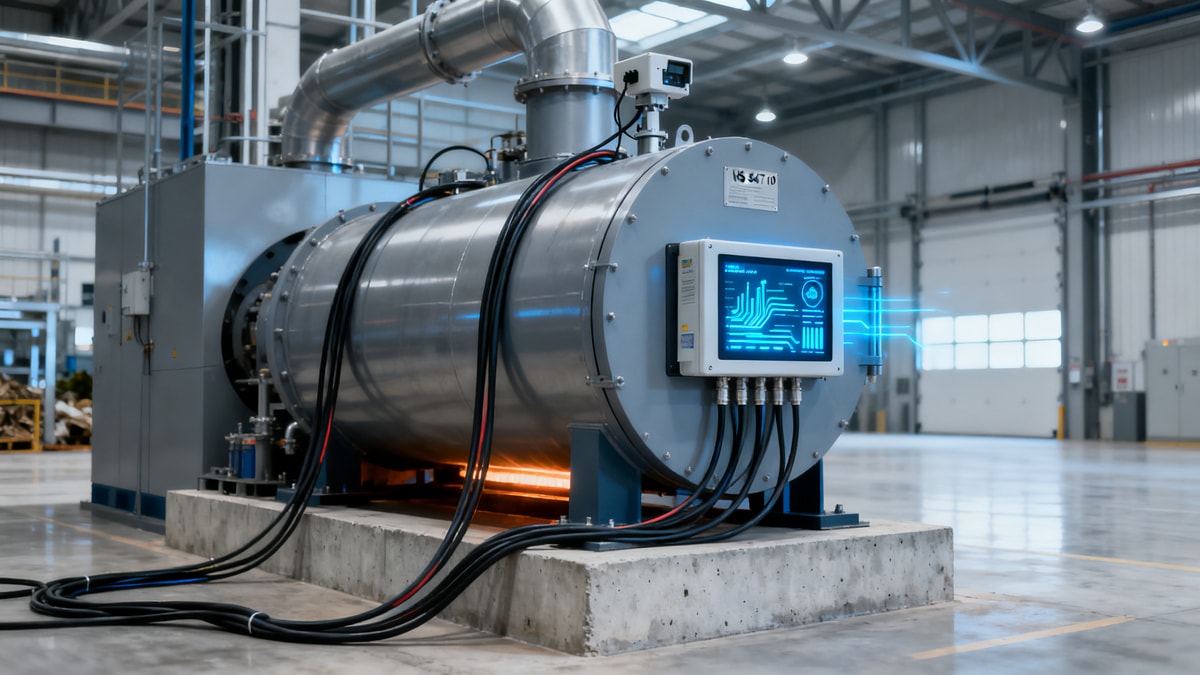
On May 1, 2026, the Brazilian National Institute of Metrology, Standardization and Industrial Quality (INMETRO) launched a four-month pilot program allowing smoke emission test reports — specifically for dioxins and heavy metals — issued by China National Accreditation Service (CNAS)-accredited laboratories to substitute for on-site sampling during certification of industrial solid waste incineration equipment. This development directly affects manufacturers, exporters, and certification service providers engaged in waste-to-energy equipment trade between China and Brazil.
Event Overview
On April 29, 2026, INMETRO announced that, from May to August 2026, it would accept dioxin and heavy metal emission test reports from CNAS-accredited laboratories for the conformity assessment of industrial solid waste incineration furnaces. To be valid, such reports must include an ISO/IEC 17025-compliant data traceability code. The pilot is intended to reduce certification lead time for Chinese-made incineration equipment exported to Brazil by approximately 40 days.
Industries Affected
Waste Incineration Equipment Manufacturers (China-based)
Manufacturers producing industrial solid waste incinerators for export to Brazil will experience shorter certification timelines, provided their emission test reports meet INMETRO’s new requirements. The impact lies primarily in reduced time-to-market and lower logistical costs associated with physical sample transport and on-site testing coordination.
Exporters and Trade Service Providers
Companies facilitating cross-border certification, including local representatives, conformity assessment consultants, and INMETRO-authorized certifiers in China or Brazil, must now verify report compliance with the traceability code requirement. Non-compliant reports will not be accepted, potentially causing delays if verification occurs late in the process.
Testing Laboratories (CNAS-accredited, China)
CNAS-accredited labs issuing emission test reports for incineration equipment must ensure each report embeds a verifiable ISO/IEC 17025 data traceability code. Labs without established digital traceability systems may face operational adjustments to meet this condition.
What Relevant Enterprises or Practitioners Should Monitor and Do Now
Track official INMETRO guidance updates beyond the pilot period
The pilot runs only through August 2026. Stakeholders should monitor INMETRO’s official communications for confirmation of extension, formalization into regulation, or scope changes — especially regarding whether other pollutants or equipment categories may be included later.
Verify laboratory reporting capability before initiating certification
Before submitting applications, exporters and manufacturers should confirm with their chosen CNAS lab that dioxin and heavy metal test reports include the required ISO/IEC 17025 data traceability code — not merely accreditation status. A report bearing CNAS logo alone does not guarantee eligibility.
Distinguish between policy signal and operational readiness
This is a time-limited pilot, not a permanent regulatory change. While it signals INMETRO’s openness to remote technical assessment, it does not yet indicate broader acceptance of foreign lab data across other product categories or environmental parameters.
Prepare documentation workflows for traceability code integration
Manufacturers and certification agents should align internal documentation systems to capture, store, and present traceability codes alongside test reports — ensuring seamless submission during INMETRO’s review phase.
Editorial Perspective / Industry Observation
Observably, this pilot reflects a pragmatic step toward streamlining technical barriers in bilateral environmental equipment trade, rather than a broad harmonization of standards. Analysis shows it prioritizes procedural efficiency over substantive alignment: the underlying test methods, limit values, and reporting formats remain unchanged — only the evidence submission mechanism is adapted. From an industry perspective, it is best understood as a targeted administrative relief measure, not a de facto mutual recognition agreement. Continued attention is warranted because its outcome may inform similar pilots for other pollution control equipment or emerging markets seeking to balance regulatory rigor with import facilitation.
In summary, INMETRO’s pilot introduces a narrow but operationally meaningful adjustment to the certification pathway for industrial waste incinerators entering Brazil. Its significance lies less in regulatory transformation and more in demonstrating how technical trust — anchored in verifiable data infrastructure — can temporarily bridge procedural gaps. Currently, it is more accurately interpreted as a time-bound procedural accommodation than a structural shift in market access rules.
Source: Official announcement by INMETRO, dated April 29, 2026; implementation effective May 1, 2026.
Note: Extension beyond August 2026, expansion to additional pollutants or equipment types, and formal regulatory codification remain unconfirmed and are under observation.
Technical Specifications
Expert Insights

Chief Security Architect
Dr. Thorne specializes in the intersection of structural engineering and digital resilience. He has advised three G7 governments on industrial infrastructure security.
Related Analysis
- Apr 30, 2026Egypt SMIIC Mandates Arabic Energy Labels for Industrial PumpsAuthor :Heavy Industry Strategist
- Apr 30, 2026TÜV SÜD Launches China Industrial Optics Fast TrackAuthor :Precision Metrology Expert
- Apr 30, 2026LME Nickel Surges 5.2% on April 29, 2026: Impact on Stainless Bearings & SealsAuthor :Heavy Industry Strategist
Core Sector // 01
Security & Safety
- INMETRO Launches Remote Audit Pilot for Waste Incinerators in BrazilAuthor :Environmental Engineering Director

- RCEP Mandates ISO 14067 Carbon Footprint Interface for Waste IncineratorsAuthor :Environmental Engineering Director

- RCEP-ASEAN Mandates ISO 14067 Carbon Interface for Waste IncineratorsAuthor :Environmental Engineering Director
![]()
- RCEP ASEAN Mandates ISO 14067 Carbon Interface for Waste IncineratorsAuthor :Environmental Engineering Director
![]()
- RCEP Industrial Waste Equipment Mutual Recognition Takes EffectAuthor :Environmental Engineering Director
![]()
- Industrial sludge in environmental engineeringAuthor :Environmental Engineering Director

- RCEP Industrial Waste Equipment Mutual Recognition LaunchedAuthor :Environmental Engineering Director
![]()
- CIBF2026 Highlights Lithium Battery Recycling Equipment DemandAuthor :Environmental Engineering Director
![]()