What to Check Before Buying MCCB
Author
Date Published
Reading Time
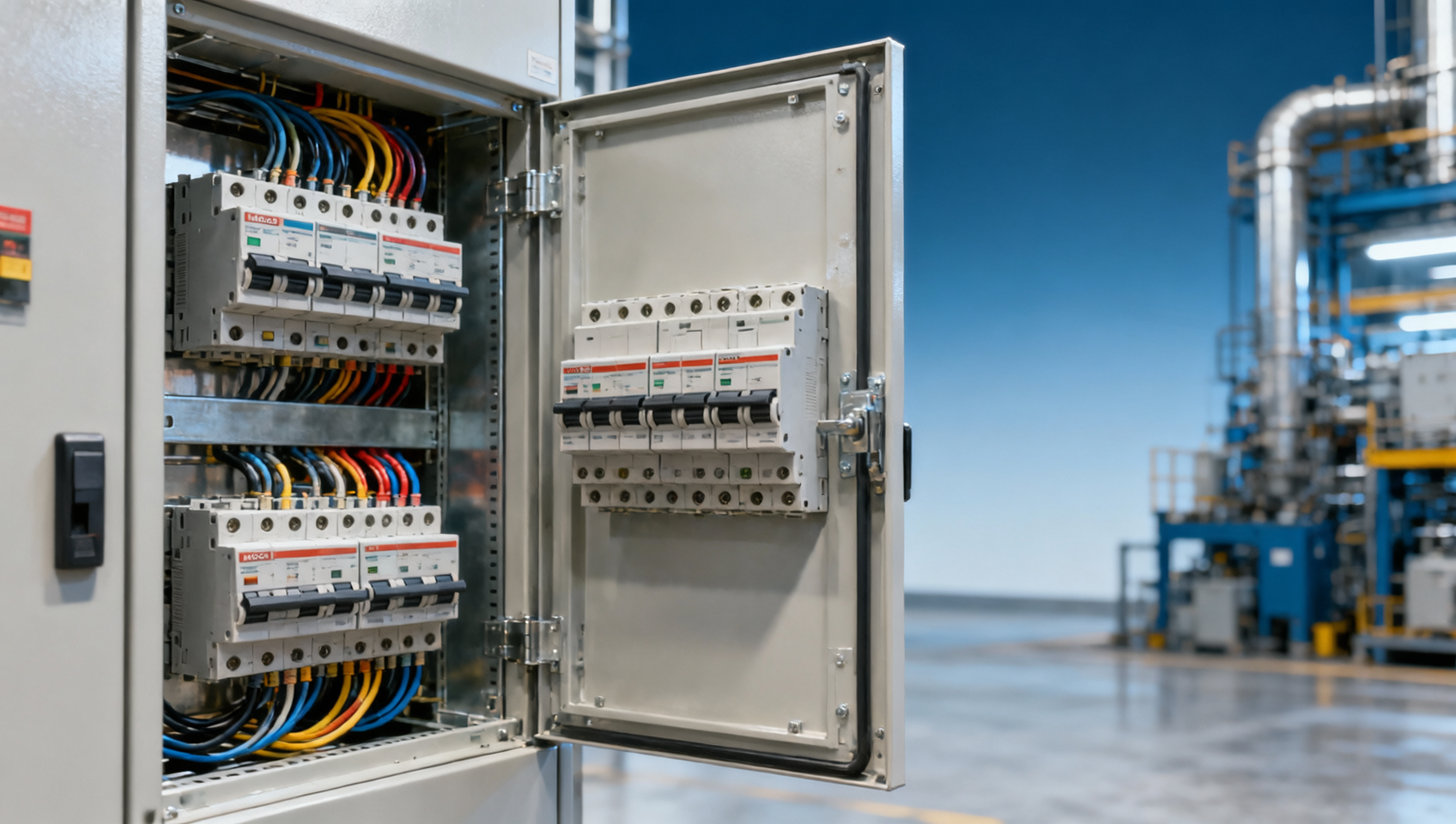
Before buying a molded case circuit breaker MCCB, it is essential to evaluate load capacity, breaking capacity, protection settings, compliance standards, and application environment. Whether you also compare a miniature circuit breaker MCB, air circuit breaker ACB, or earth leakage circuit breaker, understanding these factors helps procurement teams, operators, and decision-makers choose safer, more reliable low voltage protection solutions for industrial systems.
In industrial facilities, an MCCB is not just a catalog item. It is a protective device that directly affects uptime, personnel safety, asset protection, and maintenance planning. A mismatch between breaker characteristics and real operating conditions can lead to nuisance tripping, poor fault isolation, overheated cables, damaged motors, or non-compliant installations.
For EPC contractors, plant engineers, procurement teams, and operations managers, the buying process should go beyond current rating alone. A sound selection review usually covers at least 6 checkpoints: load profile, fault level, trip unit configuration, coordination with upstream and downstream devices, enclosure and environmental suitability, and documentary compliance. The sections below break these checkpoints into practical buying criteria.
Start with the Electrical Load and System Configuration
The first question before buying an MCCB is simple: what exactly will it protect? In low voltage distribution, the same 250A breaker may behave very differently when installed on a feeder, motor branch, capacitor bank, or mixed industrial load. Procurement errors often begin when teams buy on nominal ampere rating without reviewing the actual duty of the circuit.
Load current should be checked against continuous demand, startup inrush, diversity factor, and future expansion. For example, a feeder running at 160A continuously may require a breaker frame that supports 125% design margin, especially where ambient temperature is above 40°C or the panel has limited ventilation. If motors start across the line, inrush can briefly reach 6 to 12 times full-load current, which changes the trip setting strategy.
System voltage and pole configuration also matter. A breaker selected for 415V three-phase service is not automatically suitable for 690V duty, DC service, or a 4-pole neutral-protection arrangement. In industrial power systems, the wrong voltage application can reduce performance or void intended protection behavior during fault interruption.
Another often missed issue is system growth. If the present load is 180A but the project roadmap shows a 20% to 30% capacity increase within 12 to 24 months, a narrowly sized MCCB may force early replacement. This increases downtime and panel rework costs. Selection should reflect current operation and planned load additions.
Key load-side checks before model comparison
- Verify rated operational current, peak demand, and average continuous load over a typical 8-hour to 24-hour production cycle.
- Identify whether the protected circuit is for feeder, motor, generator output, capacitor bank, HVAC, pump, or mixed loads.
- Confirm voltage class, frequency, number of poles, earthing arrangement, and whether neutral switching is required.
- Allow a practical margin for derating due to enclosure heat, altitude, and expected system expansion.
The table below provides a practical way to align load type with buying considerations. It is especially useful when comparing several MCCB options from different suppliers during technical evaluation.
The main takeaway is that current rating alone is not enough. A correct MCCB purchase starts by matching the breaker to the circuit role, expected inrush, and future system demand. That is the foundation for every other technical decision.
Check Breaking Capacity, Short-Circuit Level, and Coordination
If load sizing is the first filter, breaking capacity is the non-negotiable safety filter. The MCCB must be able to interrupt the maximum prospective short-circuit current at the point of installation. In practical procurement terms, teams should compare the available fault level in kA with the breaker's rated ultimate breaking capacity and service breaking capacity at the actual system voltage.
A common industrial mistake is selecting a breaker because its ampere rating fits the load, while ignoring fault current. For instance, a panel with 25kA available fault current should not be fitted with a breaker rated below that application requirement. In many installations, available fault current at the main incomer can be significantly higher than at downstream sub-distribution points, so breaker selection must be location-specific.
Coordination is the next issue. If an upstream MCCB trips before a downstream protective device during a localized fault, an entire line or process area may go offline. This matters in manufacturing lines, pumping stations, utilities, and building services where one unnecessary trip can stop multiple loads at once. Selective coordination and cascading arrangements should therefore be checked during technical review, not after commissioning.
When comparing MCCB with MCB and ACB, the distinction is usually tied to current range and fault duty. MCBs are often chosen for final circuits with lower current ratings. MCCBs are widely used for feeders and sub-main protection. ACBs are more common in main low voltage switchboards where ratings may reach 800A, 1600A, 3200A, or higher, and where advanced protection and maintenance access are required.
What procurement and engineering teams should verify
- Calculate or confirm the prospective short-circuit current at the exact installation point.
- Check rated breaking capacity at the operating voltage, not only at a headline maximum value.
- Review service continuity needs and whether selective coordination is required between at least 2 or 3 levels of protection.
- Assess backup protection or cascading compatibility where space or cost limits the use of higher-rated devices.
The comparison table below helps distinguish where MCB, MCCB, and ACB usually fit in industrial low voltage design. Actual product ranges vary by manufacturer, but the table reflects common application logic used by engineers and buyers.
For buyers, the conclusion is clear: never approve an MCCB purely from a quotation line that shows poles, ampere rating, and price. Breaking capacity and coordination determine whether the device can protect the installation safely under real fault conditions.
Evaluate Trip Unit Features and Protection Settings
Modern MCCB selection is increasingly defined by the trip unit. Two breakers with the same frame size can offer very different protection value depending on whether they use fixed thermal-magnetic settings, adjustable thermal-magnetic protection, or electronic trip units with multiple functions. For many industrial systems, this is where technical suitability and lifecycle value are won or lost.
At a minimum, buyers should review long-time overload protection, short-time delay if available, instantaneous trip threshold, and ground fault or earth leakage protection where needed. A plant with variable process loads may benefit from adjustable settings that reduce nuisance trips. By contrast, a simple, stable feeder may not justify a more advanced trip package if the risk profile is low.
This is also the stage where confusion between MCCB and earth leakage protection often occurs. Not every MCCB includes residual current protection. If personnel protection, leakage monitoring, or specific earth fault sensitivity is required, the buyer must confirm whether an add-on module, dedicated earth leakage circuit breaker, or a separate protective device is necessary. Assuming it is included can create a costly safety gap.
Electronic trip units may offer measurement, alarm contacts, event indication, communication, and maintenance data. These features are valuable in large industrial facilities, especially where facility managers want trend visibility, remote status, or faster fault diagnosis. However, teams should not over-specify. The right question is whether the added functions reduce downtime, maintenance effort, or operational risk over a 3-year to 10-year service horizon.
Protection features worth checking during specification review
Basic protection layer
- Long-time overload protection matched to cable and load current.
- Instantaneous short-circuit trip suitable for expected fault current and inrush behavior.
- Trip curve stability under ambient temperatures such as 40°C to 50°C in enclosed panels.
Advanced protection and operational layer
- Short-time delay and coordination support for multi-level distribution systems.
- Ground fault or residual current options based on site safety policy and earthing system.
- Auxiliary contacts, shunt trip, undervoltage release, and communication modules if remote control is required.
In short, trip unit review should reflect the process criticality of the facility. A utility room, packaging line, water treatment skid, and main sub-distribution board do not need identical protection complexity. The best buying decision is the one that protects the installation accurately without paying for functions that will never be used.
Confirm Compliance, Installation Conditions, and Mechanical Fit
Even a technically correct MCCB can become a poor purchase if it fails compliance review or does not fit the real installation environment. Industrial procurement teams should verify applicable standards, available test documents, and installation constraints before issuing a purchase order. This step is especially important for cross-border projects, OEM panels, and EPC packages with strict submittal requirements.
Typical document checks include rated voltage, current, breaking capacity, utilization category where relevant, and conformity to project-required standards such as IEC-based, UL-based, CE-marked, or site-specific specifications. If the project serves export markets or multinational operators, one missing document can delay approvals by 1 to 3 weeks and affect panel delivery schedules.
Environmental conditions must also be reviewed. Ambient temperature, humidity, dust, corrosive atmosphere, altitude, and vibration can all affect breaker performance or enclosure design. For example, a breaker installed in a coastal utility area, steel plant, chemical processing zone, or dusty cement environment may require a better-protected enclosure, more frequent inspection intervals, or accessory sealing considerations.
Mechanical fit is another practical checkpoint. Buyers should confirm mounting orientation if restricted, panel door cutout needs, terminal type, busbar compatibility, cable lug space, and clearance for handle operation. In retrofit work, the dimensional difference between two similar current ratings can still trigger panel modification, downtime, and re-certification costs.
Compliance and site review matrix
The following matrix can be used as a pre-purchase checklist during technical clarification. It is practical for both new projects and replacement programs.
The broader lesson is that MCCB buying is not only an electrical calculation. It is also a documentation, installation, and reliability decision. Early review of compliance and fit can prevent procurement delays, site modifications, and avoidable change orders.
Procurement Risks, Lifecycle Cost, and a Practical Buying Workflow
Industrial buyers often focus on unit price first, but the lowest upfront price is not always the lowest ownership cost. An MCCB that is difficult to source, lacks accessory availability, or does not align with existing maintenance practices can increase lifecycle cost through downtime, spare part duplication, and delayed troubleshooting. In facilities with 24/7 operation, even a few hours of lost production may outweigh the initial purchase saving.
Lead time should be reviewed during sourcing. Depending on frame size, accessory package, and market availability, standard low voltage breakers may ship in a few days, while project-specific configurations can take 2 to 6 weeks or longer. If the project involves shutdown windows, replacement schedules, or phased commissioning, lead time must be aligned with installation planning.
Spare strategy is another decision point. Plants running multiple similar feeders may standardize on 2 or 3 breaker frame families to simplify stock and maintenance. That can shorten repair response and reduce training complexity. On the other hand, over-diversifying brands and accessory types often creates hidden cost and slower recovery after a fault event.
A disciplined procurement workflow reduces risk. It helps information researchers gather comparable technical data, allows operators to flag usability concerns, and gives decision-makers a basis for approving total value rather than only the purchase price. This is especially relevant in sectors where power continuity supports safety systems, pumping, HVAC, processing, warehousing, and critical utilities.
A 5-step MCCB buying workflow
- Define the circuit duty: load type, current, voltage, fault level, and operating environment.
- Screen technical options: frame size, breaking capacity, trip unit, accessories, and compliance documents.
- Check integration: panel fit, cable termination, coordination study, and replacement compatibility.
- Review commercial terms: lead time, spare parts, after-sales support, and warranty conditions.
- Approve installation and maintenance plan: settings verification, testing, labeling, and inspection interval.
Common buying mistakes to avoid
- Choosing only by ampere rating without checking fault current in kA.
- Assuming earth leakage protection is included when it is not.
- Ignoring ambient temperature derating in enclosed switchboards.
- Buying a non-standard accessory configuration that is difficult to replace later.
A well-bought MCCB protects more than a circuit. It protects schedule, maintenance efficiency, and operational continuity. For organizations managing industrial infrastructure at scale, disciplined selection is part of risk management, not just purchasing.
FAQ for Buyers, Engineers, and Operators
How do I know whether I need an MCCB instead of an MCB?
In general, MCBs are used for smaller final circuits, while MCCBs are preferred when current levels, fault duty, adjustability, or feeder protection requirements increase. If the circuit serves industrial feeders, motors, or sub-main boards in the range of roughly 63A to 1600A, an MCCB is often the more practical choice. Final selection should still be based on fault level, protection flexibility, and coordination needs.
Should I always choose the highest breaking capacity available?
Not always. The breaker must safely exceed or match the prospective short-circuit current at the installation point, but specifying a much higher rating than needed can increase cost without delivering proportional value. The better approach is to match the kA rating to the site calculation, coordination plan, and future expansion margin. For many facilities, a technically correct rating is better than a blindly oversized one.
What should operators ask for before commissioning a new MCCB?
Operators should request at least 4 items: approved settings, as-built single-line reference, accessory function confirmation, and maintenance guidance. If the breaker has an adjustable or electronic trip unit, settings should be verified against the design study before energization. This reduces nuisance tripping and helps maintenance teams diagnose faults more quickly.
How often should MCCBs be inspected in industrial use?
Inspection frequency depends on environment and criticality. In clean indoor panels, many facilities review breakers annually during preventive maintenance. In dusty, hot, or corrosive environments, visual checks and thermal review may be scheduled every 3 to 6 months. Critical feeders may also require periodic testing during shutdowns. Site procedures, manufacturer guidance, and safety policy should define the final interval.
Buying the right MCCB requires a balanced review of load characteristics, breaking capacity, trip settings, compliance, installation conditions, and lifecycle support. For industrial procurement and engineering teams, the best decision is rarely the fastest quote comparison. It is the option that fits the electrical duty, supports safe operation, integrates cleanly into the panel, and remains serviceable over time.
If you are evaluating low voltage protection devices for industrial projects, retrofits, or sourcing programs, a structured technical review can prevent costly oversights. Contact us to discuss your application, request a tailored selection framework, or explore more solutions for reliable circuit protection in demanding industrial environments.
Technical Specifications
- RCEP Launches Industrial Waste Equipment Mutual RecognitionAuthor :Environmental Engineering Director
- IEC 61850-90-15:2026 Released — Time Stamp Precision Upgrade Impacts Power Equipment ExportsAuthor :Grid Infrastructure Analyst
- Copper Price Surge Impacts BOM Costs for Industrial Breakers & TransformersAuthor :Grid Infrastructure Analyst
Expert Insights

Chief Security Architect
Dr. Thorne specializes in the intersection of structural engineering and digital resilience. He has advised three G7 governments on industrial infrastructure security.
Related Analysis
- Apr 22, 2026RCEP Launches Industrial Waste Equipment Mutual RecognitionAuthor :Environmental Engineering Director
- Apr 22, 2026IEC 61850-90-15:2026 Released — Time Stamp Precision Upgrade Impacts Power Equipment ExportsAuthor :Grid Infrastructure Analyst
- Apr 22, 2026Copper Price Surge Impacts BOM Costs for Industrial Breakers & TransformersAuthor :Grid Infrastructure Analyst
Core Sector // 01
Security & Safety
- Copper Price Surge Impacts BOM Costs for Industrial Breakers & TransformersAuthor :Grid Infrastructure Analyst
![]()
- What to Check Before Buying MCCBAuthor :Grid Infrastructure Analyst

- Miniature Circuit Breaker MCB MistakesAuthor :Grid Infrastructure Analyst

- MCCB vs MCB: Which One Fits BetterAuthor :Grid Infrastructure Analyst

- How to Size an Air Circuit Breaker ACBAuthor :Grid Infrastructure Analyst

- Residual Current Device RCD Selection TipsAuthor :Grid Infrastructure Analyst

- Earth Leakage Circuit Breaker vs RCDAuthor :Grid Infrastructure Analyst

- Why Magnetic Contactors Fail EarlyAuthor :Grid Infrastructure Analyst