Vietnam Requires VILAS-Certified Reports for Industrial Bearing Imports
Author
Date Published
Reading Time
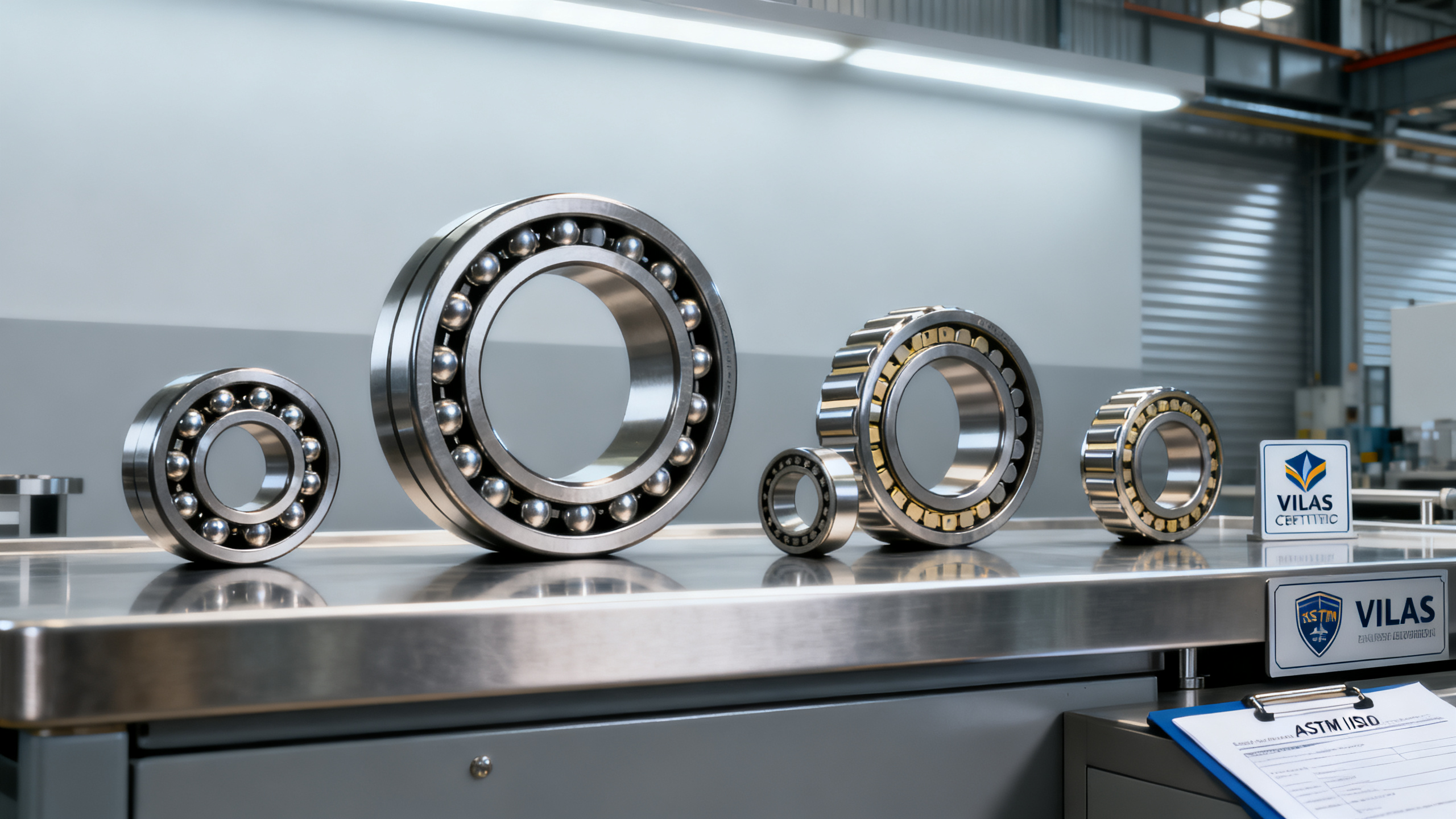
Effective June 1, 2026, Vietnam’s Ministry of Industry and Trade (MOIT) will require all imported industrial bearings—including deep-groove ball, tapered roller, and spherical roller types—to be accompanied by material composition and heat treatment verification reports issued by VILAS-accredited laboratories. This regulatory update directly affects bearing exporters, component suppliers, and logistics providers serving the Vietnamese market.
Event Overview
On April 28, 2026, MOIT issued Notification No. 12/2026/TT-BCT, amending import requirements for industrial bearings. The regulation mandates that, starting June 1, 2026, customs declarations for covered bearings must include two technical documents: (1) a material composition analysis report compliant with ASTM E407 or E1299, and (2) a heat treatment process validation report covering hardness gradient per ISO 6508-1 and microstructural rating. Both reports must be issued by laboratories accredited under the Vietnam National Accreditation System (VILAS).
Industries Affected
Direct Exporters (e.g., Chinese Bearing Manufacturers)
Exporters supplying industrial bearings to Vietnam will face new pre-shipment compliance obligations. The requirement adds a mandatory third-party testing step before customs clearance—potentially delaying shipments if reports are incomplete, misaligned with standards, or issued by non-VILAS-accredited labs.
Raw Material & Forging Suppliers
Suppliers providing steel billets, forged rings, or heat-treated blanks to bearing manufacturers may see increased demand for traceable, certified material data. While not directly regulated, their documentation (e.g., mill test reports) may now serve as upstream inputs for VILAS lab verification—raising expectations for batch-level consistency and reporting granularity.
OEMs & Contract Manufacturers
Companies assembling or rebranding bearings for export to Vietnam must ensure full traceability across sub-tier processes—especially heat treatment parameters (e.g., austenitizing temperature, quenching medium, tempering cycle). Deviations from documented thermal history could invalidate the required VILAS report.
Customs Agents & Trade Compliance Service Providers
Service providers handling Vietnamese import declarations must verify report authenticity, accreditation status of issuing labs, and technical alignment with ASTM/ISO criteria. Incomplete or non-compliant submissions may trigger customs holds or rejection—not just for individual consignments but potentially across related SKUs.
What Relevant Enterprises Should Monitor and Do Now
Confirm VILAS-Accredited Lab Capacity and Lead Times
Analysis shows that only a limited number of labs in China—and fewer still with active VILAS recognition for both ASTM E407/E1299 and ISO 6508-1 + microstructure evaluation—are currently operational. Exporters should map available labs, validate their scope of accreditation (not just general VILAS status), and assess average turnaround time for dual-report packages.
Review Product Groupings Against MOIT’s Covered Categories
Observably, the regulation applies specifically to deep-groove ball, tapered roller, and spherical roller bearings—excluding thrust, needle roller, or plain bearings unless later added. Companies should audit current export SKUs against this list and isolate those requiring immediate compliance preparation.
Distinguish Between Policy Publication and Operational Enforcement
From industry perspective, MOIT’s notification is legally effective June 1, 2026—but actual enforcement rigor (e.g., random vs. 100% document checks, tolerance for minor deviations) remains unconfirmed. Stakeholders should treat the rule as binding while monitoring early implementation patterns via Vietnamese customs brokers and local trade associations.
Update Internal Documentation Protocols Ahead of Deadline
Current more suitable action is to align internal quality records—especially heat treatment logs and raw material certificates—with the reporting structure expected by VILAS labs (e.g., batch ID linkage, hardness measurement locations, etching/evaluation methodology). Proactive alignment reduces rework risk when engaging external labs.
Editorial Perspective / Industry Observation
This requirement is better understood as a procedural tightening rather than a market access barrier—at least initially. Analysis shows it reflects MOIT’s broader shift toward technical conformity verification for mid-to-high-value mechanical components, not a targeted trade measure. Observably, similar documentation demands have preceded mandatory certification schemes in other ASEAN markets; this may signal Vietnam’s incremental alignment with regional product safety infrastructure. From industry angle, the immediate significance lies less in restriction and more in supply chain visibility: it forces exporters to formalize and validate previously internal process controls—making traceability a de facto entry condition.
Conclusion: This regulation does not alter Vietnam’s market openness for industrial bearings, but it does redefine the minimum evidentiary threshold for market entry. It is more accurately interpreted as an operational compliance milestone than a strategic policy shift—requiring focused readiness in testing coordination, documentation discipline, and cross-border technical communication—not broad strategic recalibration.
Source: Vietnam Ministry of Industry and Trade (MOIT), Notification No. 12/2026/TT-BCT, issued April 28, 2026. Ongoing implementation details—including updated VILAS lab lists and customs guidance—are pending official publication and remain under observation.
Technical Specifications
- 6th National Auto Standards Committee Launched, Impacts Optical Test Equipment ExportAuthor :Precision Metrology Expert
- Copper Price Surge Impacts Industrial Components BOM CostsAuthor :Grid Infrastructure Analyst
- EU CE Update: ULPA Filters Require MVR Testing from Jan 2027Author :Environmental Engineering Director
Expert Insights

Chief Security Architect
Dr. Thorne specializes in the intersection of structural engineering and digital resilience. He has advised three G7 governments on industrial infrastructure security.
Related Analysis
- Apr 29, 20266th National Auto Standards Committee Launched, Impacts Optical Test Equipment ExportAuthor :Precision Metrology Expert
- Apr 29, 2026Copper Price Surge Impacts Industrial Components BOM CostsAuthor :Grid Infrastructure Analyst
- Apr 29, 2026EU CE Update: ULPA Filters Require MVR Testing from Jan 2027Author :Environmental Engineering Director
Core Sector // 01
Security & Safety
- Vietnam Requires VILAS-Certified Reports for Industrial Bearing ImportsAuthor :Heavy Industry Strategist

- Vietnam Requires VILAS Reports for Imported Industrial BearingsAuthor :Heavy Industry Strategist
![]()
- 2026 Shanghai International Bearing Expo ConfirmedAuthor :Heavy Industry Strategist
![]()
- Fastener Expo Shanghai 2026: 1400+ Suppliers, B2B Matching for Int'l BuyersAuthor :Heavy Industry Strategist
![]()
- Why high-load bearings fail in mechanical engineeringAuthor :Heavy Industry Strategist

- Deep Groove Ball Bearings Noise Often Starts with InstallationAuthor :Heavy Industry Strategist

- Tapered Roller Bearings Wholesale: Where Price Gaps Come FromAuthor :Heavy Industry Strategist

- Cylindrical Roller Bearings and Heat Build-Up Under LoadAuthor :Heavy Industry Strategist