Tapered Roller Bearings Wholesale: Where Price Gaps Come From
Author
Date Published
Reading Time
Why do quotes for tapered roller bearings wholesale vary so widely across suppliers? In most cases, the difference is not random and it is not explained by brand name alone. A lower quote may reflect reduced steel quality, looser dimensional tolerance, weaker heat treatment control, limited inspection, or less dependable packaging and logistics. A higher quote may include certified materials, tighter precision classes, traceability, longer service life, and lower failure risk in the field. For procurement teams, operators, and decision-makers, the real question is not “Who is cheapest?” but “What exactly am I paying for, and what risk am I accepting?”
For buyers also comparing cylindrical roller bearings, deep groove ball bearings, or angular contact ball bearings, the same rule applies: unit price only becomes meaningful when matched to operating load, speed, alignment conditions, maintenance intervals, and total cost of ownership. In wholesale sourcing, price gaps usually come from a combination of product specification, manufacturing capability, quality assurance, and commercial terms.
What usually causes the biggest price gaps in tapered roller bearings wholesale?
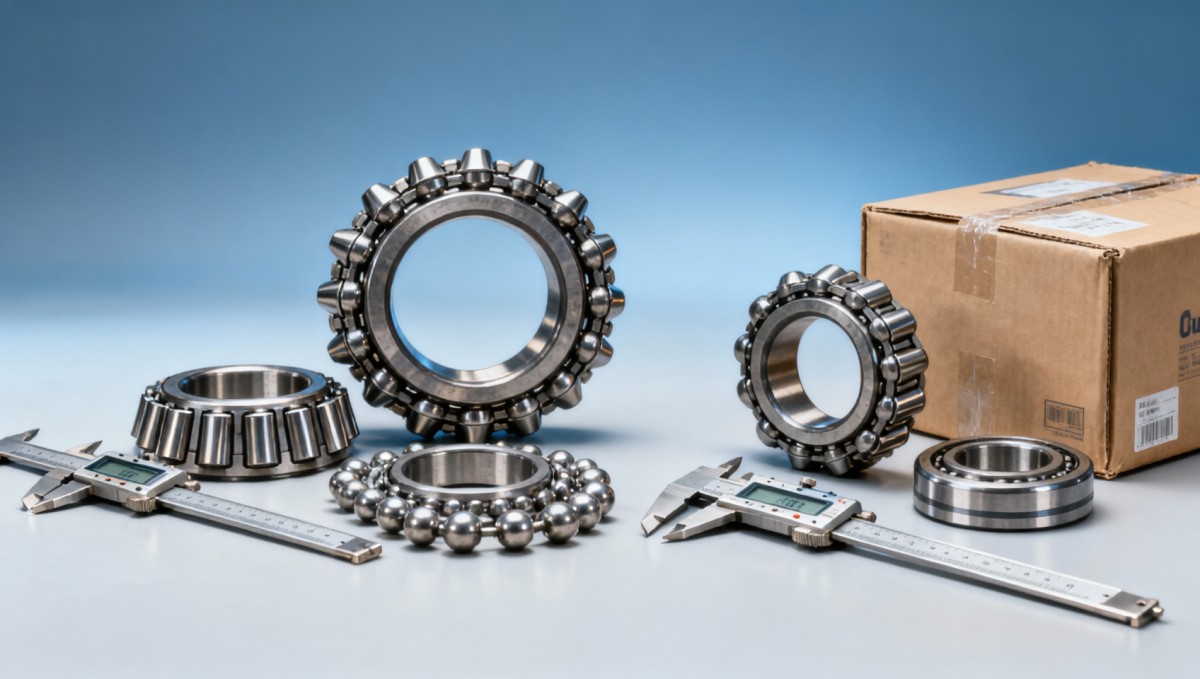
The largest differences in tapered roller bearings wholesale pricing typically come from six practical factors:
- Raw material grade: Cleaner bearing steel with controlled composition and lower inclusion levels costs more but improves fatigue life.
- Precision class and tolerance control: Tighter tolerances require better grinding, measurement systems, and process consistency.
- Heat treatment quality: Hardness uniformity, case depth control, and microstructure stability directly affect durability.
- Inspection and testing standards: Noise, vibration, runout, metallographic checks, and life testing add real cost.
- Brand, traceability, and certification: Established suppliers often include stronger documentation, batch control, and compliance support.
- Supply chain and service terms: Inventory availability, packaging, export handling, warranty, and technical support affect quotation levels.
This is why two bearings that appear similar on a datasheet can perform very differently in actual service. The lower quote may still be acceptable for light-duty, non-critical applications. But in heavy loads, shock loads, contaminated environments, or continuous-duty equipment, those hidden differences become expensive very quickly.
Why the same bearing size can have very different real-world value
Many buyers assume that if bore size, outside diameter, and width match, the bearings are interchangeable in value. That is rarely true. Tapered roller bearings are especially sensitive to contact geometry, raceway finish, roller profile accuracy, and internal clearance control. Small deviations can change heat generation, load distribution, and service life.
For example, one wholesale supplier may quote a standard bearing intended for moderate industrial duty, while another quotes a version built for higher axial loads, better rotational stability, or stricter runout requirements. On paper, both products may fit the same housing. In operation, one may last 3 to 5 times longer.
This is also relevant when buyers compare tapered roller bearings with cylindrical roller bearings, deep groove ball bearings, or angular contact ball bearings. Different bearing types solve different load and speed problems, so price comparisons only make sense after confirming the application. If the selected bearing type itself is not ideal, even a premium-priced unit may deliver poor value.
How material quality affects wholesale bearing prices
Steel quality is one of the most common reasons for quotation gaps. Higher-grade bearing steel typically offers:
- Better fatigue resistance
- Lower risk of early spalling
- Improved dimensional stability after heat treatment
- More consistent performance under heavy or cyclical loads
Lower-cost products may use less consistent raw material sourcing or weaker inclusion control. That does not always lead to immediate failure, but it increases variability. For procurement professionals, this matters because variability creates hidden costs: more incoming inspections, more maintenance uncertainty, and more operational risk.
When reviewing quotes, ask suppliers about steel source, material certificates, and batch traceability. If they cannot clearly explain their raw material control, the low price may be compensating for elevated reliability risk.
How precision class, machining, and heat treatment change cost
Precision is not just a technical label. It directly affects noise, friction, vibration, mounting consistency, and wear behavior. Bearings produced to tighter tolerances require more advanced grinding equipment, more measurement checkpoints, and better process discipline. That naturally raises manufacturing cost.
Heat treatment is equally important. In tapered roller bearings, poorly controlled hardening or tempering can cause premature cracking, unstable hardness, or deformation under load. Strong suppliers invest in controlled furnaces, process monitoring, and metallographic verification. These controls are often invisible in a simple quote comparison, but they are critical to actual bearing life.
If your equipment runs in high-speed, high-load, or continuous-duty conditions, paying more for precision and heat treatment consistency often reduces lifecycle cost. If the application is light-duty and easy to service, a lower-cost option may be acceptable. The right decision depends on the operational consequence of failure.
Testing, certification, and documentation are often built into the price
Another major reason for tapered roller bearings wholesale price gaps is the level of quality assurance included. Some suppliers provide only basic dimensional inspection. Others include:
- Hardness testing
- Roundness and runout inspection
- Noise and vibration checks
- Metallographic analysis
- Life testing or endurance validation
- Material certificates and full lot traceability
For industrial buyers, especially EPC contractors and plant procurement teams, documentation is not optional. In regulated or critical environments, the ability to verify compliance, origin, and inspection history can be just as important as the product itself. Suppliers who offer strong documentation and certification support usually quote higher, but they also reduce project approval delays and downstream disputes.
What commercial factors raise or lower wholesale quotes
Not every price gap comes from product quality alone. Commercial structure matters too. A quotation may change due to:
- Order volume: Larger production runs usually reduce unit cost.
- Inventory position: Ex-stock items may be cheaper than custom or short-lead-time production.
- Packaging requirements: Export-grade corrosion protection and branded packaging add cost.
- Incoterms and freight: EXW, FOB, CIF, and DDP pricing are not directly comparable without adjustment.
- Payment terms: Credit, deposits, and currency exposure can affect the final quote.
- After-sales support: Technical response time, claims handling, and warranty terms all have value.
This is where many buyers make mistakes. They compare one supplier’s bare product price with another supplier’s fully landed, documented, and supported package. That creates a false impression of price inflation when the offer scope is actually different.
How buyers should compare suppliers without being misled by unit price
The most effective way to evaluate tapered roller bearings wholesale offers is to use a structured comparison sheet. Include these checkpoints:
- Application fit: Confirm load, speed, temperature, contamination level, and mounting conditions.
- Exact specification: Verify dimensions, internal design, tolerance class, clearance, cage type, and lubrication assumptions.
- Material and heat treatment: Request material grade details and hardness range.
- Inspection scope: Ask what tests are standard and what can be documented.
- Certificates and traceability: Check whether lot records and compliance documents are available.
- Lead time and continuity: Assess whether the supplier can support repeat orders consistently.
- Total landed cost: Include freight, duties, packaging, inspection, and expected service life.
- Failure consequence: Evaluate maintenance cost, downtime risk, and safety impact if the bearing underperforms.
This approach helps both technical users and business decision-makers. Operators can focus on reliability and installation performance, while procurement and management can make better decisions about cost, continuity, and risk exposure.
When a lower bearing quote is reasonable—and when it is dangerous
A lower-priced supplier is not automatically a bad choice. In non-critical equipment, low-speed service, or applications with easy replacement access, a cost-efficient bearing may offer perfectly acceptable value. The key is matching the product to the risk level.
A low quote becomes dangerous when:
- The application involves heavy radial or axial load
- Unexpected downtime is expensive
- The bearing is difficult to replace
- Equipment safety depends on bearing stability
- The operating environment is dirty, hot, or highly variable
- Procurement needs repeatable quality across multiple lots
In these situations, the cheapest quote can create the highest total cost. One early failure can erase all initial savings through labor, downtime, damaged shafts or housings, emergency shipping, and production interruption.
Questions procurement teams should ask before placing a wholesale order
To reduce sourcing risk, ask suppliers these practical questions:
- What steel grade and source do you use for this bearing?
- What tolerance or precision class does this quote cover?
- What heat treatment controls are used?
- What inspections are included as standard?
- Can you provide material certificates and batch traceability?
- What is the expected lead time for repeat orders?
- Is this quotation equivalent in packaging, Incoterms, and warranty to competing offers?
- Can you provide references or performance history in similar applications?
Suppliers with mature systems usually answer clearly and quickly. Vague answers often signal inconsistent manufacturing control or limited documentation capability.
Conclusion: the real source of price gaps is risk, not just cost
In tapered roller bearings wholesale, price gaps usually come from differences in material quality, precision level, heat treatment, testing, traceability, and supply reliability. The visible number on the quote is only one part of the decision. What matters more is how that bearing will perform in your operating conditions and what failure would cost your business.
For information researchers, the main takeaway is that bearing pricing reflects specification depth and risk control. For operators, the issue is service life and dependable performance. For procurement teams, it is total landed cost and supplier consistency. For business decision-makers, it is avoiding downtime, compliance issues, and hidden lifecycle expense.
The best buying decision is not the lowest quote or the highest quote. It is the offer that gives the right level of performance, documentation, and supply assurance for the actual application.
Technical Specifications
Expert Insights

Chief Security Architect
Dr. Thorne specializes in the intersection of structural engineering and digital resilience. He has advised three G7 governments on industrial infrastructure security.
Related Analysis
- Apr 23, 2026Deep Groove Ball Bearings Noise Often Starts with InstallationAuthor :Heavy Industry Strategist
- Apr 23, 2026Tapered Roller Bearings Wholesale: Where Price Gaps Come FromAuthor :Heavy Industry Strategist
- Apr 23, 2026Cylindrical Roller Bearings and Heat Build-Up Under LoadAuthor :Heavy Industry Strategist
Core Sector // 01
Security & Safety
- Deep Groove Ball Bearings Noise Often Starts with InstallationAuthor :Heavy Industry Strategist

- Tapered Roller Bearings Wholesale: Where Price Gaps Come FromAuthor :Heavy Industry Strategist

- Cylindrical Roller Bearings and Heat Build-Up Under LoadAuthor :Heavy Industry Strategist

- Pillow Block Bearings UCP Size Mismatch Causes More DowntimeAuthor :Heavy Industry Strategist

- Thrust Ball Bearings vs Radial Loads: Where Problems StartAuthor :Heavy Industry Strategist

- When Angular Contact Ball Bearings Are the Wrong ChoiceAuthor :Heavy Industry Strategist

- Needle Roller Bearings Wholesale Without Quality DriftAuthor :Heavy Industry Strategist

- Rod End Bearings Wholesale: What Changes at Higher Volumes?Author :Heavy Industry Strategist