Deep Groove Ball Bearings Noise Often Starts with Installation
Author
Date Published
Reading Time
Deep groove ball bearings noise often begins long before failure—during installation. For researchers, operators, buyers, and decision-makers comparing angular contact ball bearings, thrust ball bearings, cylindrical roller bearings, or tapered roller bearings wholesale options, understanding mounting errors is essential. This guide explains how improper fitting, lubrication, and alignment create noise, reduce service life, and influence sourcing decisions across industrial bearing applications.
In industrial environments, bearing noise is rarely just an acoustic issue. It is often the first visible sign of hidden mounting stress, contamination, incorrect fits, or lubrication mistakes that later develop into vibration, heat rise, and premature shutdowns. For plants running motors, pumps, conveyors, fans, gearboxes, and precision assemblies, a noisy bearing can shorten maintenance intervals from 12 months to 3–6 months if root causes are not addressed early.
For procurement teams and technical evaluators, the issue also affects supplier qualification. A bearing that meets dimensional requirements on paper can still perform poorly if installation guidance, fit tolerance support, packaging cleanliness, and lubricant compatibility are overlooked. That is why installation knowledge belongs not only to maintenance staff, but also to sourcing, QA, and operations leadership.
Why Installation Is the First Noise Trigger in Deep Groove Ball Bearings
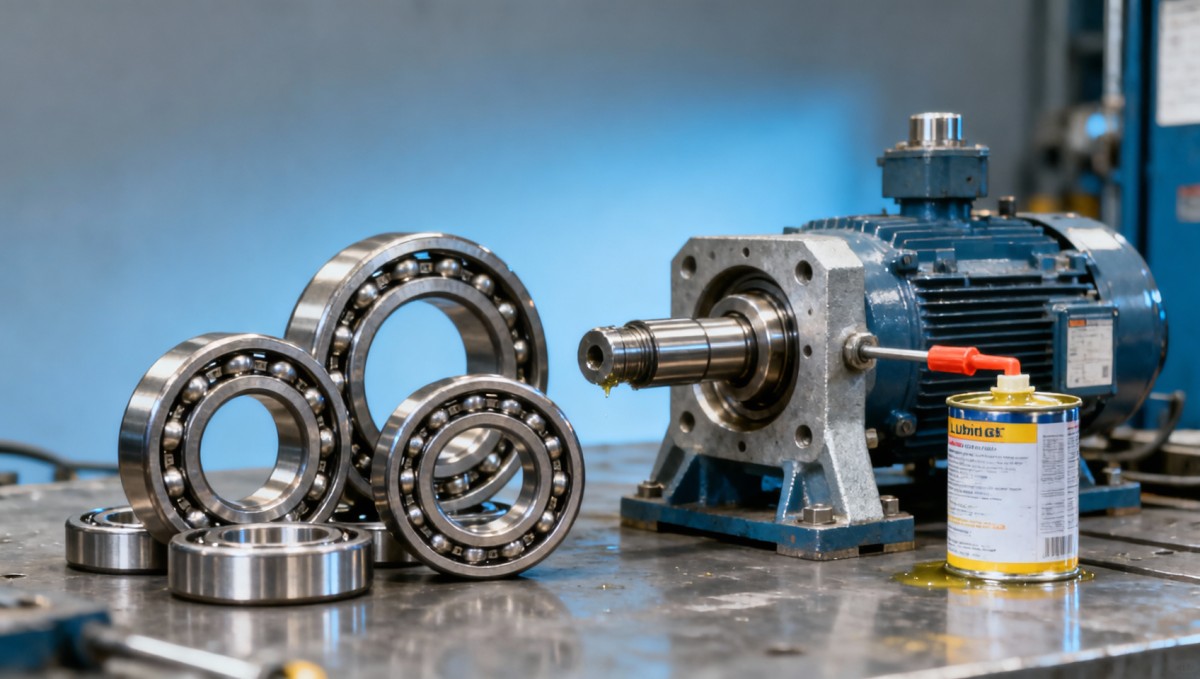
Deep groove ball bearings are widely selected because they support radial loads, moderate axial loads, and high-speed operation in a compact structure. Yet this versatility also makes them sensitive to mounting conditions. Even when raceway geometry and internal clearance are correct, installation force applied to the wrong ring can create micro-brinelling, denting, or preload changes within minutes.
In many industrial workshops, bearing installation still relies on general mechanical practice rather than application-specific procedure. Common errors include hammering the outer ring during shaft mounting, heating the bearing above 120°C, mixing lubricants with different thickener systems, or installing in dusty conditions. Any one of these can increase running noise within the first 8–24 operating hours.
Noise may present as humming, clicking, scraping, or irregular high-frequency vibration. Each sound profile suggests a different root cause. Humming often relates to fit stress or insufficient lubrication film. Clicking can indicate contamination or localized indentation. Scraping points more often to misalignment, seal interference, or cage distortion. For operators, early sound classification helps prevent unnecessary replacement of otherwise usable components.
For buyers comparing deep groove ball bearings with angular contact or cylindrical roller bearings, installation sensitivity should be part of the total cost assessment. A lower unit price may lead to higher lifecycle cost if bearings require tighter mounting discipline, more frequent relubrication, or additional training for field teams. In industrial procurement, avoiding one unplanned stoppage can outweigh a 5%–12% unit cost difference.
Common installation-related noise mechanisms
- Excessive interference fit that reduces internal clearance and raises rolling friction.
- Improper pressing force transferred through balls instead of the fitted ring.
- Contamination particles between 10 and 50 microns trapped during mounting.
- Misalignment between shaft and housing beyond practical assembly tolerance.
- Lubricant overfill, where grease occupies more than 30%–50% of free internal space in high-speed use.
Typical symptoms and likely causes
The table below helps maintenance and sourcing teams connect audible symptoms with probable installation faults. This is useful during incoming inspection, commissioning, and supplier feedback reviews.
The key takeaway is that audible noise usually traces back to one or more controllable assembly variables. This makes installation process control a practical cost-saving lever, not just a maintenance concern.
The Three Installation Errors That Most Often Create Early Bearing Noise
Across mixed industrial applications, three installation errors account for a large share of early noise complaints: wrong fitting method, lubrication mismanagement, and poor alignment control. These issues are especially common where bearings are installed across multiple sites or by subcontract teams with uneven tooling standards.
The first problem is force transmission through rolling elements. If a bearing is mounted onto a shaft, force must be applied to the inner ring. If it is mounted into a housing, force must be applied to the outer ring. When installers press across the balls, even a short impact can leave tiny indentations that become rhythmic noise during every rotation. At 1,500 RPM, the defect frequency becomes quickly noticeable.
The second problem is lubrication error. Grease selection must match speed, load, operating temperature, and seal design. In many facilities, one general-purpose grease is used for motors, pumps, and conveyors alike. That approach may be convenient, but it raises risk. NLGI grade, base oil viscosity, and thickener compatibility all influence acoustic behavior. Overgreasing can be just as harmful as undergreasing, particularly in high-speed electric motor service.
The third problem is alignment. Deep groove ball bearings tolerate less mounting distortion than many teams assume. Shaft shoulder squareness, housing bore condition, and axial seating all matter. A small angular deviation can create uneven load distribution, increasing both noise and heat. In systems with belts, couplings, or thermal expansion, alignment should be checked after initial installation and again after 24–72 hours of operation.
H4-level checklist for shop-floor control
Before mounting
- Verify shaft and housing dimensions against the specified tolerance class.
- Inspect shoulders, chamfers, and seating surfaces for burrs or scoring.
- Keep bearings sealed in packaging until immediate use to reduce contamination exposure.
During mounting
- Use induction heating or controlled mechanical pressing, not uncontrolled hammering.
- Maintain heating generally within 80°C–110°C unless product guidance states otherwise.
- Apply force only to the ring with the interference fit.
After mounting
- Check rotational smoothness by hand before startup.
- Monitor temperature and noise during the first 30–60 minutes of operation.
- Record lubricant type, quantity, and installation date for maintenance traceability.
For procurement managers, these process points should be reflected in vendor documentation requirements. If a supplier cannot provide fit recommendations, lubricant guidance, storage conditions, and mounting notes, the purchasing risk is higher even when the catalog looks complete.
How Deep Groove Ball Bearings Compare with Other Bearing Types in Noise-Sensitive Applications
When noise is a critical concern, it is important to compare deep groove ball bearings with other common bearing families. Not every application should default to the same design. Load direction, stiffness, shaft speed, installation complexity, and housing precision all affect which bearing type produces the most stable acoustic result over time.
Deep groove ball bearings are typically preferred for general-purpose motors, fans, compact pumps, and medium-speed gear-driven equipment because they offer low friction and simple arrangement. However, if axial load is dominant, thrust ball bearings may fit better. If radial loads are heavy and shock is frequent, cylindrical roller bearings or tapered roller bearings may provide improved load handling, though often with more demanding alignment or preload requirements.
From a sourcing perspective, bearing substitution should never be based only on size interchangeability. Noise behavior changes with contact geometry, internal clearance, cage design, and lubrication regime. A plant purchasing wholesale alternatives for multiple production lines should standardize not only part numbers, but also installation methods, tools, and acceptance criteria.
Practical comparison for industrial selection
The following table provides a simplified selection view for research, usage, and procurement teams evaluating bearing families in noise-sensitive or reliability-focused applications.
This comparison shows that deep groove ball bearings are not uniquely “noisy”; they are simply more likely to reveal installation errors early because of their speed capability and lower tolerance for dirt, denting, and poor lubrication practice.
Selection questions for buyers and engineers
- Is the application primarily radial load, axial load, or combined load?
- What is the actual speed range: below 1,000 RPM, 1,000–3,000 RPM, or above 3,000 RPM?
- Will installation be centralized in one controlled workshop or distributed across field teams?
- Is noise an operator comfort issue, a quality issue, or an early warning signal for uptime control?
Procurement and Quality Control: What Buyers Should Verify Before Ordering Wholesale Bearings
For industrial procurement, bearing noise risk should be managed before goods arrive on site. That means RFQs and supplier evaluation forms need to go beyond dimensions and price. Teams should ask about packaging cleanliness, preservative oil type, storage shelf life, internal clearance options, cage material, lubrication recommendations, and handling guidance for installation teams.
A practical sourcing process usually includes at least 4 checkpoints: technical specification review, sample verification, packaging and traceability check, and commissioning feedback. In larger EPC or multi-site industrial projects, adding one installation guidance review before mass delivery can reduce field complaints significantly. This is especially useful when operating conditions span clean indoor lines and dusty outdoor assets in the same procurement batch.
Buyers should also consider total logistics and storage conditions. Bearings stored for 6–12 months in uncontrolled humidity, or opened repeatedly during stock checks, face higher contamination and corrosion risk. Noise complaints that appear after startup may actually originate in warehouse handling rather than manufacturing defects. A disciplined chain of custody matters.
For decision-makers, the most effective supplier is often not the lowest bidder, but the one able to support fit selection, lubricant matching, damage analysis, and replacement planning. In high-value industrial assets, reliability support can reduce rework labor, spare stock waste, and downtime exposure across the entire bearing program.
Pre-purchase evaluation matrix
The table below can be adapted into a purchasing checklist for wholesale or project-based bearing sourcing.
A structured evaluation matrix improves consistency across research teams, operators, and commercial buyers. It also creates better supplier accountability when post-installation noise issues need formal review.
Field Practices, Maintenance Follow-Up, and FAQ for Reducing Bearing Noise
Even a correctly selected and properly installed deep groove ball bearing needs disciplined follow-up. The first inspection window is usually the most valuable. During the first startup cycle, teams should monitor sound, housing temperature, grease leakage, and vibration trend. If temperature stabilizes within an expected range after the first 1–2 hours and no abnormal sound develops, installation quality is generally acceptable.
Maintenance teams should avoid immediate overcorrection when new grease-packed bearings run slightly louder at startup. Some bearings experience a short running-in phase while grease redistributes. However, if noise rises instead of stabilizing, or if temperature continues climbing after the initial period, the assembly should be stopped and reviewed. Delaying intervention by even one shift can convert a minor issue into raceway damage.
For multi-site industrial organizations, one of the most effective improvements is standardization. The same bearing can perform very differently across plants if one site uses induction heaters, clean benches, and fit gauges while another uses open-floor manual installation. Standard operating procedures, installer training, and acceptance records often deliver greater reliability gains than changing bearing brand alone.
Recommended follow-up routine
- At startup: listen for irregular clicking, scraping, or sharp tonal noise during the first 10 minutes.
- After 1–2 hours: check whether temperature trend is stabilizing rather than continuously rising.
- After 24–72 hours: verify alignment, fastener condition, and lubricant leakage in loaded operation.
- At routine maintenance: compare vibration and acoustic condition against baseline records every 1–3 months, depending on duty cycle.
FAQ
How can I tell whether bearing noise is from installation or from a manufacturing issue?
If noise appears immediately after mounting or within the first 24 hours, installation causes are more likely. Look for fit stress, contamination, misalignment, or grease error first. Manufacturing-related issues are possible, but they should be confirmed only after installation conditions, handling records, and surrounding component accuracy have been checked.
Is more grease better for quieter operation?
No. Excess grease can increase churning, temperature, and high-frequency noise. In many applications, overfilling is a common source of early acoustic complaints. The correct quantity depends on speed, housing design, and operating temperature rather than a “more is safer” assumption.
When should buyers choose another bearing type instead of deep groove ball bearings?
If the application has high axial load, heavy shock load, or requires a controlled preload arrangement, another type may be more appropriate. Angular contact, cylindrical roller, or tapered roller bearings may perform better in those conditions, provided installation capability and alignment control are also adequate.
What documents should procurement teams request from suppliers?
At minimum, request dimensional and tolerance data, internal clearance options, storage guidance, lubricant recommendations, packaging details, and installation instructions. For project procurement, it is also useful to ask about expected lead times, traceability format, and technical support response process.
Deep groove ball bearings remain one of the most efficient and widely used solutions in modern industry, but noise problems often begin at the moment of installation rather than at the end of service life. Correct fitting force, clean handling, proper lubrication, and alignment control can protect runtime, lower replacement frequency, and improve procurement outcomes across motors, pumps, fans, conveyors, and gearbox systems.
For researchers, operators, buyers, and industrial decision-makers, the most reliable approach is to connect technical selection with real installation practice. If you are evaluating wholesale bearing options, reviewing noise complaints, or building a more controlled sourcing standard, now is the time to align specification, mounting procedure, and supplier support. Contact GIC to discuss application details, compare bearing solutions, or request a tailored industrial sourcing framework.
Technical Specifications
Expert Insights

Chief Security Architect
Dr. Thorne specializes in the intersection of structural engineering and digital resilience. He has advised three G7 governments on industrial infrastructure security.
Related Analysis
- Apr 23, 2026Deep Groove Ball Bearings Noise Often Starts with InstallationAuthor :Heavy Industry Strategist
- Apr 23, 2026Tapered Roller Bearings Wholesale: Where Price Gaps Come FromAuthor :Heavy Industry Strategist
- Apr 23, 2026Cylindrical Roller Bearings and Heat Build-Up Under LoadAuthor :Heavy Industry Strategist
Core Sector // 01
Security & Safety
- Deep Groove Ball Bearings Noise Often Starts with InstallationAuthor :Heavy Industry Strategist

- Tapered Roller Bearings Wholesale: Where Price Gaps Come FromAuthor :Heavy Industry Strategist

- Cylindrical Roller Bearings and Heat Build-Up Under LoadAuthor :Heavy Industry Strategist

- Pillow Block Bearings UCP Size Mismatch Causes More DowntimeAuthor :Heavy Industry Strategist

- Thrust Ball Bearings vs Radial Loads: Where Problems StartAuthor :Heavy Industry Strategist

- When Angular Contact Ball Bearings Are the Wrong ChoiceAuthor :Heavy Industry Strategist

- Needle Roller Bearings Wholesale Without Quality DriftAuthor :Heavy Industry Strategist

- Rod End Bearings Wholesale: What Changes at Higher Volumes?Author :Heavy Industry Strategist