Slewing Ring Bearings Fail Early for These Common Reasons
Author
Date Published
Reading Time
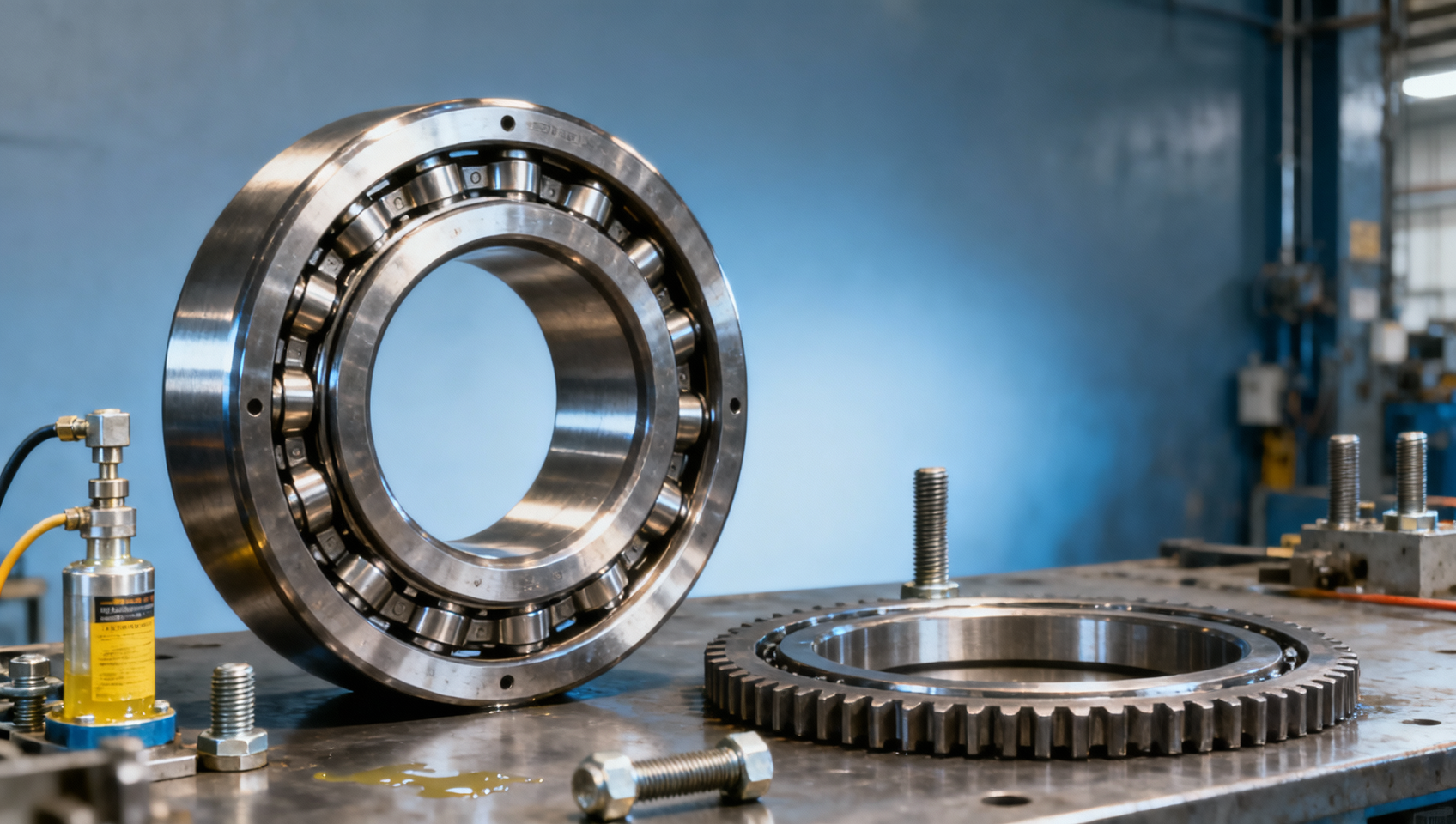
Slewing ring bearings rarely fail “without warning.” In most cases, early failure traces back to a short list of preventable causes: lubrication errors, contamination, mounting inaccuracies, overload, and poor operating discipline. For maintenance teams, procurement specialists, and industrial decision-makers, the practical takeaway is clear: bearing life is shaped as much by selection, installation, and service conditions as by the bearing itself. If you are comparing slewing ring bearings with other rolling element options such as angular contact ball bearings, thrust ball bearings, cylindrical roller bearings, or deep groove ball bearings, understanding these failure mechanisms helps you reduce downtime, avoid repeat purchases, and specify components with more confidence.
Why do slewing ring bearings fail early in real industrial service?
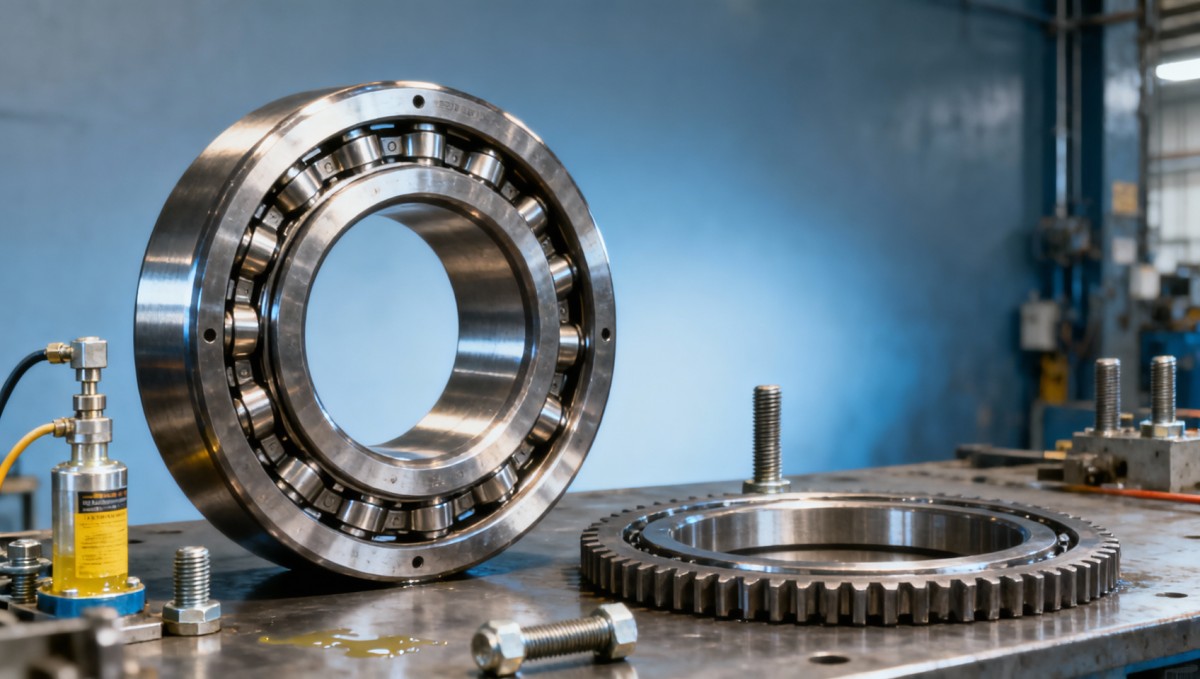
The core search intent behind this topic is usually practical, not academic. Readers want to know why a slewing ring bearing that should last for years begins showing play, noise, vibration, seal damage, grease leakage, uneven rotation, or outright tooth and raceway damage far earlier than expected. They also want to know whether the root cause is product quality, application mismatch, maintenance failure, or installation error.
For most industrial users, the answer is rarely a single defect. Early failure often results from an interaction of conditions:
- Insufficient or incorrect lubrication leading to metal-to-metal contact and accelerated wear
- Ingress of dust, water, slurry, or process contaminants damaging raceways and rolling elements
- Improper installation or mounting surface inaccuracies creating localized stress concentrations
- Overloading, shock loading, or underestimated moment loads beyond design assumptions
- Poor alignment and structural deflection causing uneven load distribution
- Inadequate bolt tightening or weak adjacent structures compromising the entire bearing system
- Unsuitable bearing selection for speed, duty cycle, environment, or load profile
This matters because slewing ring bearings are not standalone components in the same way many smaller bearings are. Their performance depends heavily on the connected structure, gear mesh conditions, mounting flatness, lubrication plan, and real operating loads. In other words, a good bearing can still fail early in a poor system.
Poor lubrication is still the most common and most preventable cause
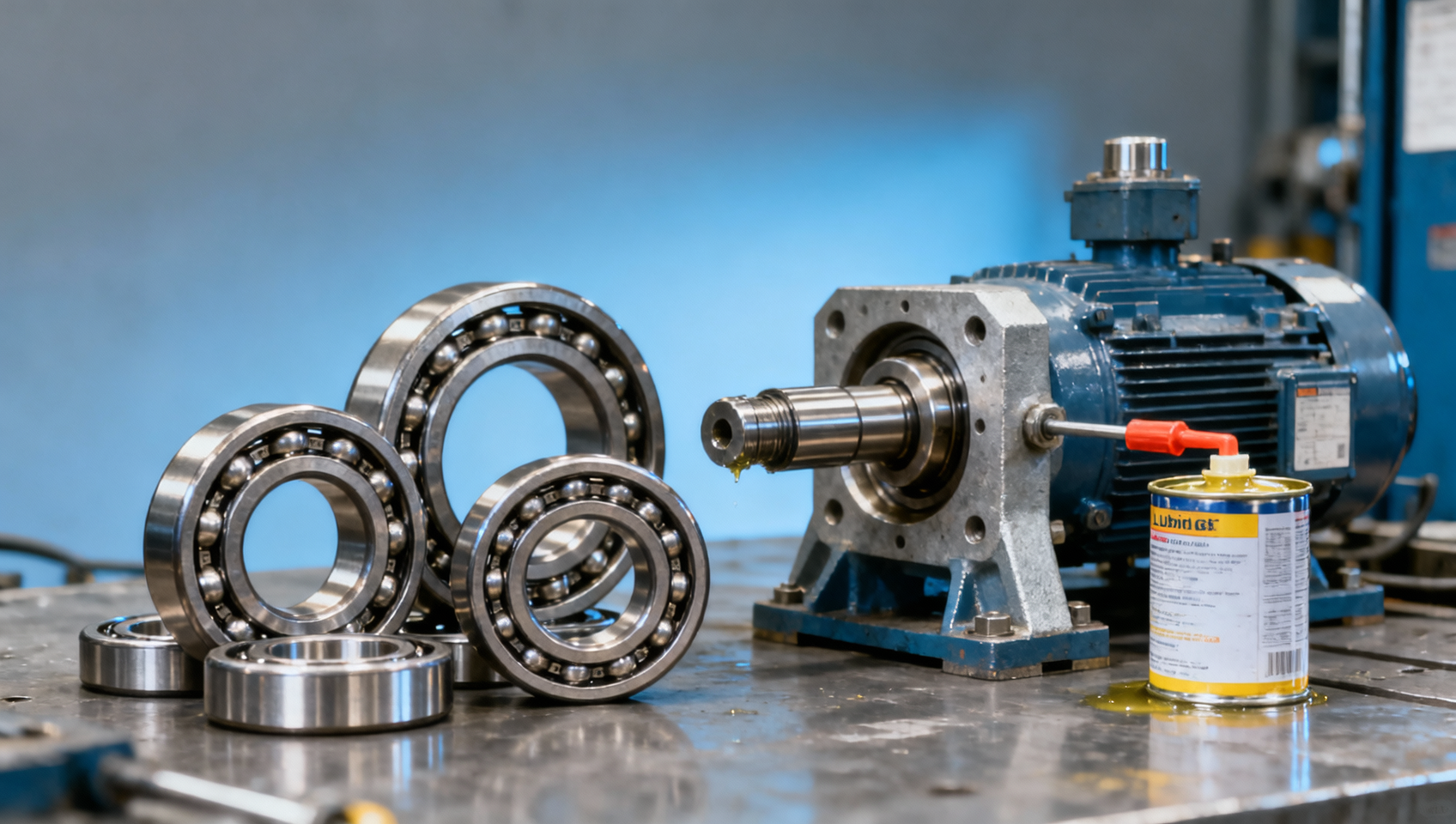
If one issue deserves top priority, it is lubrication. In heavy-duty slewing applications, lubrication does more than reduce friction. It helps separate contact surfaces, carry away heat, limit corrosion, flush wear particles, and protect against moisture and contamination. When grease quantity, relubrication interval, or grease type is wrong, wear accelerates quickly.
Common lubrication-related mistakes include:
- Using grease that is incompatible with the operating temperature or load
- Relubricating too infrequently in dusty, wet, or high-duty environments
- Applying grease unevenly so some raceway zones remain under-lubricated
- Mixing incompatible greases during maintenance
- Ignoring lubrication of both the raceway and gear teeth where applicable
Operators often assume a bearing is “sealed enough” to tolerate extended service intervals. In reality, slewing ring bearings in cranes, excavators, aerial platforms, wind systems, rotating platforms, and process equipment may require disciplined relubrication based on real conditions rather than generic calendar schedules.
What buyers and maintenance teams should check:
- Was the lubricant selected for actual ambient and operating temperatures?
- Is the grease suitable for shock load, oscillating motion, and low-speed heavy contact?
- Is there a documented relubrication interval by duty cycle, not guesswork?
- Are technicians rotating the bearing during greasing to distribute lubricant properly?
Compared with deep groove ball bearings or some cylindrical roller bearings in enclosed housings, slewing bearings are often more exposed to variable loads and harsh environments, which makes lubrication quality even more critical.
Contamination destroys bearing life faster than many teams expect
Contamination is a major reason a slewing ring bearing that looks acceptable on paper fails in the field. Fine dust, abrasive particles, moisture, salt spray, process chemicals, and washdown ingress can damage seals, degrade grease, and create abrasive wear inside the raceway.
Typical signs of contamination-related failure include:
- Discolored or gritty grease during inspection
- Corrosion marks or pitting on raceways
- Seal tears, hardening, or displacement
- Uneven torque during rotation
- Premature vibration and noise
In applications such as mining, construction, port handling, wastewater treatment, forestry, and outdoor rotating equipment, contamination control should be treated as a design-level issue, not just a maintenance task.
Practical actions that reduce contamination risk:
- Specify seal materials that match the environment
- Inspect seal condition during every planned shutdown
- Use protective covers or shields where exposure is high
- Store replacement bearings correctly before installation
- Prevent pressure washing directly at seals unless approved by the manufacturer
For procurement teams, this is also a sourcing issue. A lower-cost bearing with weaker sealing performance may create a much higher total cost of ownership if the operating environment is dirty or wet.
Improper installation and mounting errors create hidden stress from day one
Many early failures begin before the machine is even commissioned. Slewing ring bearings are highly sensitive to mounting surface flatness, bolt condition, tightening pattern, torque accuracy, and support structure stiffness. If the bearing is installed on a distorted or insufficiently rigid surface, loads are no longer distributed as intended.
Common installation problems include:
- Mounting on surfaces that exceed flatness tolerance
- Using damaged, reused, or incorrect-grade fasteners
- Uneven bolt tightening or failure to follow sequence requirements
- Not checking runout, gear backlash, or rotational smoothness after installation
- Welding near the bearing without proper precautions
This is a key difference between slewing ring bearings and smaller standard bearing arrangements. With a deep groove ball bearing or angular contact ball bearing mounted in a more contained assembly, installation errors may be easier to control. With slewing bearings, the machine structure itself becomes part of the bearing system.
What installation teams should verify:
- Mounting surface tolerances match manufacturer recommendations
- Bolt holes, contact faces, and fasteners are clean and undamaged
- Bolt torque is applied using calibrated tools and the correct pattern
- The “soft zone” or marked reference area is positioned appropriately if specified
- Post-installation rotation and backlash checks are documented
For plant managers and decision-makers, insisting on installation QA documentation is often one of the cheapest ways to protect bearing life.
Overload and application mismatch are frequent root causes of repeat failures
Another common reason slewing ring bearings fail early is that the selected bearing does not truly match the application. Static load may have been considered, but dynamic loading, overturning moment, intermittent shock, start-stop cycles, wind loads, off-center loading, and structural vibration may have been underestimated.
This happens often when buyers substitute components based mainly on dimensions or price. A bearing that fits physically may still be wrong for the duty profile.
Typical application mismatch issues include:
- Bearing capacity selected too close to nominal operating load
- Ignoring combined axial, radial, and tilting moment loads
- Underestimating shock factors in mobile or intermittent equipment
- Choosing the wrong internal design for rotation speed or stiffness needs
- Using an unsuitable alternative to a slewing bearing based on incomplete comparison
When comparing bearing types, buyers should remember that angular contact ball bearings, thrust ball bearings, cylindrical roller bearings, and deep groove ball bearings each serve different load patterns and system layouts. A slewing ring bearing is typically chosen because it can manage large diameter geometry, combined loads, and overturning moments in a compact integrated form. If those system-level demands are real, substituting a different bearing type without redesign can create chronic reliability problems.
Questions procurement and engineering teams should ask suppliers:
- What load assumptions were used in the bearing recommendation?
- Has overturning moment been fully accounted for?
- What service factor is recommended for this duty cycle?
- Is the bearing intended for oscillation, intermittent rotation, or continuous rotation?
- What bolt, gear, lubrication, and mounting conditions are required to achieve rated life?
Misalignment, structural deflection, and adjacent component issues are often overlooked
In many failure investigations, the bearing is blamed first even though the deeper problem lies in the surrounding machine structure. Frame deflection, support ring weakness, poor machining, gear mesh issues, or shaft and drive alignment problems can introduce uneven loads that shorten bearing life dramatically.
Common examples include:
- A rotating platform that flexes under load, distorting the bearing seat
- Drive pinion misalignment causing abnormal tooth loading
- Foundation settling or support movement affecting flatness over time
- Uneven external loading during operation due to process conditions
This is why repeat bearing replacement without a system review often fails. If the machine’s support structure or load path is the real issue, installing a new bearing only restarts the failure cycle.
For decision-makers, this is an important cost-control point. The cheapest response to failure is not always another replacement order. Sometimes the better investment is a short structural assessment, alignment review, or operating condition audit.
How to diagnose early failure before ordering another bearing
Before replacing a failed slewing ring bearing, teams should gather evidence that helps identify the true cause. Otherwise, the same failure mode may return.
A practical diagnosis workflow includes:
- Review operating symptoms: noise, torque increase, backlash change, vibration, grease leakage, temperature rise
- Inspect lubrication condition: grease color, contamination, dryness, metal particles, purge patterns
- Check seals and external contamination sources
- Measure mounting condition: flatness, bolt preload condition, structure stiffness where possible
- Compare actual loads and duty cycle to the original specification
- Inspect raceways, rolling elements, and gear teeth for wear pattern clues
- Review maintenance history: grease type, service interval, installation records, overload events
The wear pattern often reveals the failure mechanism. Localized damage may suggest mounting distortion or concentrated loading. Widespread abrasive wear points to contamination. Smearing, discoloration, or scoring may indicate lubrication failure. Broken bolts or uneven contact patterns may indicate structural or installation issues.
What smart buyers should look for when sourcing slewing ring bearings
For procurement teams and industrial buyers, avoiding early failure starts before the purchase order is issued. Price matters, but specification discipline matters more.
Look beyond unit cost and confirm:
- Documented load ratings and application suitability
- Compliance with relevant quality and manufacturing standards
- Material and heat treatment consistency
- Seal quality and environmental suitability
- Clear lubrication recommendations
- Bolt and mounting requirements
- Traceability, inspection records, and technical support availability
For B2B buyers serving EPC projects, heavy equipment fleets, utilities, or process facilities, the commercial risk of a poor bearing decision includes more than replacement cost. It can include project delays, safety incidents, lost production, crane or platform unavailability, and contractual penalties.
That is why total lifecycle thinking is critical. The right sourcing decision combines bearing design fit, supplier credibility, installation support, maintenance requirements, and expected operating conditions.
How to extend slewing ring bearing life in demanding applications
If your goal is maximum uptime, focus on the controllable factors that produce the biggest reliability gains:
- Select the bearing for real combined loads, not idealized values
- Match grease and seal design to the actual environment
- Control contamination through shielding, inspection, and disciplined maintenance
- Verify mounting surface tolerances and structural rigidity
- Use correct bolts, torque procedures, and installation checks
- Monitor backlash, noise, vibration, and grease condition regularly
- Investigate abnormal loading and operator misuse early
These actions are especially important in applications where downtime is expensive and access is difficult. In such cases, preventing one early failure can save far more than the original bearing purchase value.
Early slewing ring bearing failure is usually not random. It is most often the result of lubrication mistakes, contamination, installation errors, overload, misalignment, or a mismatch between the bearing and the application. For operators, this means maintenance discipline and installation quality matter. For buyers, it means technical fit and supplier transparency matter more than simple price comparison. For business leaders, it means bearing reliability should be treated as a system-level performance issue with direct impact on uptime, safety, and lifecycle cost. The best results come from combining correct specification, proper mounting, contamination control, and condition-based maintenance before minor damage becomes an expensive shutdown.
Technical Specifications
Expert Insights

Chief Security Architect
Dr. Thorne specializes in the intersection of structural engineering and digital resilience. He has advised three G7 governments on industrial infrastructure security.
Related Analysis
- Apr 23, 2026Deep Groove Ball Bearings Noise Often Starts with InstallationAuthor :Heavy Industry Strategist
- Apr 23, 2026Tapered Roller Bearings Wholesale: Where Price Gaps Come FromAuthor :Heavy Industry Strategist
- Apr 23, 2026Cylindrical Roller Bearings and Heat Build-Up Under LoadAuthor :Heavy Industry Strategist
Core Sector // 01
Security & Safety
- Deep Groove Ball Bearings Noise Often Starts with InstallationAuthor :Heavy Industry Strategist

- Tapered Roller Bearings Wholesale: Where Price Gaps Come FromAuthor :Heavy Industry Strategist

- Cylindrical Roller Bearings and Heat Build-Up Under LoadAuthor :Heavy Industry Strategist

- Pillow Block Bearings UCP Size Mismatch Causes More DowntimeAuthor :Heavy Industry Strategist

- Thrust Ball Bearings vs Radial Loads: Where Problems StartAuthor :Heavy Industry Strategist

- When Angular Contact Ball Bearings Are the Wrong ChoiceAuthor :Heavy Industry Strategist

- Needle Roller Bearings Wholesale Without Quality DriftAuthor :Heavy Industry Strategist

- Rod End Bearings Wholesale: What Changes at Higher Volumes?Author :Heavy Industry Strategist