Rod End Bearings Wholesale: What Changes at Higher Volumes?
Author
Date Published
Reading Time
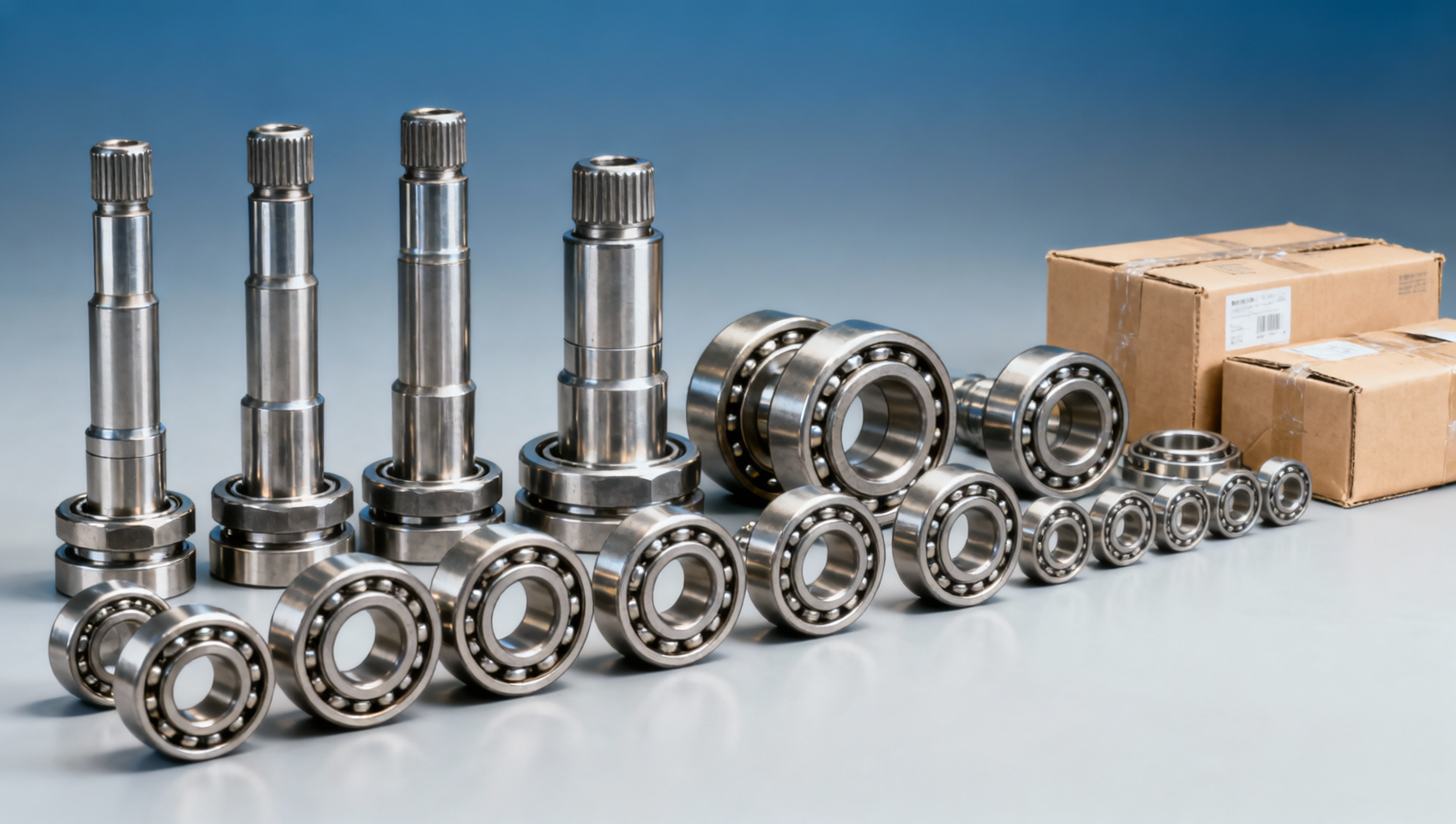
For buyers evaluating rod end bearings wholesale, the biggest change at higher volumes is not just a lower unit price. Large-volume purchasing affects quality consistency, traceability, packaging standards, production scheduling, inspection workload, logistics risk, and supplier coordination across related bearing categories. For procurement teams, operators, and business decision-makers, the right wholesale strategy is the one that protects reliability and total supply performance—not simply the lowest quote.
When order quantities increase, small issues become expensive quickly. A minor dimensional variation, weak plating consistency, missing certificates, or unclear packaging rules may be manageable in a trial batch, but they can create downtime, claims, delays, and internal rework in a bulk order. That is why wholesale buying decisions for rod end bearings should be based on process control, technical alignment, and supply capability as much as on pricing.
What really changes when rod end bearings are purchased at wholesale volume?
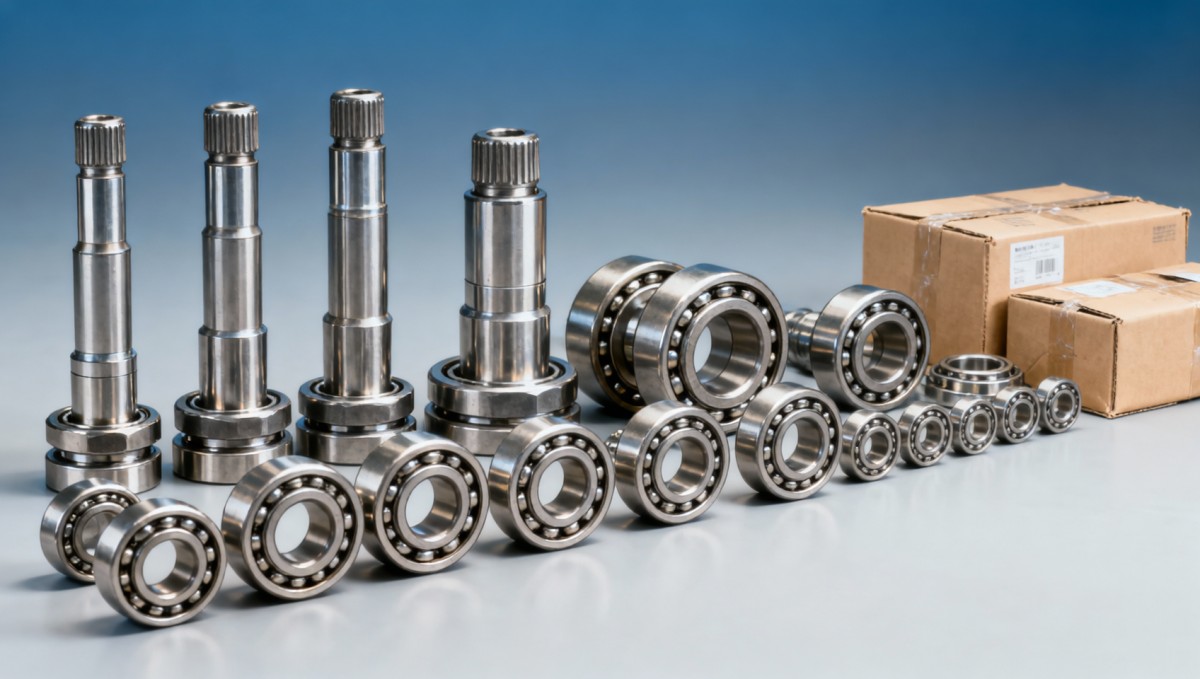
At low or sample quantities, buyers often focus on fit, initial quality, and quoted lead time. At wholesale volume, the purchase becomes a supply chain and risk management exercise. The practical changes usually include:
- Batch consistency becomes critical: one acceptable sample does not guarantee stable production quality across thousands of units.
- Inspection requirements increase: more incoming checks, more documentation review, and often stricter AQL or custom QC protocols.
- Lead time behaves differently: stock-based delivery may no longer apply, and production slot allocation starts to matter.
- Packaging has operational impact: bulk handling, rust prevention, labeling, and warehouse efficiency become more important.
- Traceability matters more: lot coding, material certificates, and process records are often necessary for industrial buyers.
- Supplier coordination broadens: buyers often want combined sourcing with deep groove ball bearings, angular contact ball bearings, and tapered roller bearings wholesale to simplify procurement.
In short, high-volume purchasing changes the question from “Is this rod end bearing acceptable?” to “Can this supplier deliver stable, compliant, repeatable performance at scale?”
What procurement teams should check before scaling a rod end bearings wholesale order
For procurement professionals, the most valuable step is to move from quote comparison to capability verification. Before increasing order volume, buyers should confirm the following areas:
1. Technical specification stability
Make sure the supplier is working from a controlled specification, not just a product name or general drawing. Rod end bearings can vary by thread standard, housing material, ball material, liner design, lubrication requirement, radial clearance, sealing approach, and corrosion protection. At volume, vague specs create recurring disputes.
2. Material and process control
Ask how the supplier controls forging, machining, heat treatment, plating, and surface finishing. If rod end bearings are being used in demanding equipment, consistency in hardness, dimensional tolerance, and surface integrity matters more than catalog appearance.
3. Certification and documentation readiness
Industrial buyers should verify what certificates are available as standard and what must be requested in advance. Common needs may include material certificates, dimensional inspection reports, RoHS or REACH declarations where relevant, and internal traceability records. If your business serves regulated sectors or export markets, document control can be a deciding factor.
4. Production capacity by realistic cycle time
A supplier may offer attractive pricing for large quantities but still depend on unstable subcontracting or overloaded production lines. Ask for realistic monthly capacity, normal lead time, peak lead time, and whether critical processes are done in-house or outsourced.
5. Nonconformance handling process
At wholesale scale, the supplier’s corrective action process becomes highly important. Buyers should understand how claims are handled, how replacement batches are prioritized, and how root-cause analysis is documented.
Why unit price matters less than total procurement cost at higher volumes
Many buyers enter rod end bearings wholesale negotiations expecting volume discounts to be the main benefit. Discounts do matter, but total procurement cost usually has greater strategic impact. A cheaper unit price can be offset by hidden costs such as:
- Higher incoming inspection workload
- More installation failures or field complaints
- Production stoppages due to inconsistent dimensions
- Corrosion or contamination caused by weak packaging
- Extra freight from split shipments or urgent replenishment
- Administrative cost from poor documentation or invoice mismatch
For enterprise decision-makers, this is where supplier selection becomes a business value decision rather than a simple purchasing exercise. A slightly higher-cost supplier that provides stable quality, predictable lead times, and better documentation often produces lower total cost of ownership.
How quality risks increase as order volume rises
Higher order volumes amplify both visible and hidden quality risks. In rod end bearings wholesale programs, the most common problem is not always catastrophic failure. More often, it is inconsistency: some lots install smoothly, while others create friction, alignment issues, premature wear, or maintenance complaints.
Key risk areas include:
- Dimensional drift between lots
- Thread accuracy variation
- Housing or race surface finish inconsistency
- Heat treatment deviation affecting service life
- Improper lubrication or contamination before packing
- Rust protection that performs poorly during long transit or storage
This is especially important for buyers serving global projects, EPC contractors, and industrial maintenance operations where delayed installation can trigger larger project impacts. Bulk purchasing should therefore include a quality assurance plan, not just a purchase order.
What operators and end users should ask before approving a bulk order
Operators and maintenance teams are often the first to notice whether a rod end bearing performs consistently in the field. Their input can prevent expensive procurement mistakes. Before approving a high-volume purchase, they should ask:
- Will the bearing operate under shock, vibration, contamination, or misalignment?
- Are lubrication intervals realistic for actual site conditions?
- Is the selected material suitable for corrosive or wet environments?
- Does the bearing need a maintenance-free liner or a relubrication design?
- Will packaging protect the product through warehouse storage before use?
When users and procurement teams align early, the wholesale order is more likely to match operating reality rather than just catalog data.
How combined sourcing with other bearing types can improve wholesale efficiency
Many industrial buyers do not purchase rod end bearings in isolation. They may also need deep groove ball bearings, angular contact ball bearings, and tapered roller bearings wholesale for the same equipment base, maintenance program, or project package. Combining these categories under fewer qualified suppliers can create real benefits:
- Reduced supplier management complexity
- Better freight consolidation
- Improved payment and contract leverage
- More consistent documentation standards
- Simplified replenishment planning across bearing families
However, buyers should not assume that a supplier strong in one bearing category is equally strong in all of them. Rod end bearings have their own application and manufacturing considerations. The best wholesale strategy is often category consolidation with technical verification by product line.
Questions decision-makers should use to evaluate a rod end bearing wholesale supplier
Senior buyers and business leaders need a short list of practical evaluation questions. These questions usually reveal more than a polished quotation sheet:
- Can the supplier demonstrate consistent quality over multiple production lots?
- What documentation and traceability are standard for wholesale orders?
- How are capacity and lead times managed during demand spikes?
- What percentage of production is subcontracted?
- How are packaging, labeling, and palletization defined for export shipments?
- Can the supplier support mixed orders across rod end bearings and other bearing categories?
- What is the escalation process if quality or delivery issues occur?
These questions help shift supplier selection toward operational resilience, which is what matters most once purchase volumes rise.
Best practice: move from transactional buying to controlled wholesale programs
If your organization is increasing purchases of rod end bearings wholesale, the most effective approach is to build a controlled supply program. That typically includes:
- Locked technical specifications and approved drawings
- Sample approval tied to production lot standards
- Defined inspection criteria and reporting requirements
- Agreed packaging, labeling, and traceability rules
- Forecast sharing or scheduled release planning
- Performance review based on quality, delivery, and responsiveness
This approach is especially useful for companies buying across multiple bearing products, including deep groove ball bearings, angular contact ball bearings, and tapered roller bearings wholesale, where standardization can improve both control and efficiency.
Conclusion: higher volumes demand better control, not just better pricing
Rod end bearings wholesale becomes a different kind of buying decision as volumes increase. The real changes are found in quality consistency, traceability, packaging, inspection workload, lead time reliability, and supplier coordination—not only in the price per piece. For procurement teams, operators, and decision-makers, the best results come from treating bulk orders as a managed industrial supply program.
If a supplier can deliver repeatable quality, clear documentation, stable lead times, and coordinated support across related bearing categories, higher-volume purchasing can improve both cost efficiency and operational reliability. If not, the apparent savings of wholesale buying can disappear quickly. The right question is not “How much cheaper is the bulk order?” but “How much more secure and scalable is the supply?”
Technical Specifications
Expert Insights

Chief Security Architect
Dr. Thorne specializes in the intersection of structural engineering and digital resilience. He has advised three G7 governments on industrial infrastructure security.
Related Analysis
- Apr 23, 2026Deep Groove Ball Bearings Noise Often Starts with InstallationAuthor :Heavy Industry Strategist
- Apr 23, 2026Tapered Roller Bearings Wholesale: Where Price Gaps Come FromAuthor :Heavy Industry Strategist
- Apr 23, 2026Cylindrical Roller Bearings and Heat Build-Up Under LoadAuthor :Heavy Industry Strategist
Core Sector // 01
Security & Safety
- Deep Groove Ball Bearings Noise Often Starts with InstallationAuthor :Heavy Industry Strategist

- Tapered Roller Bearings Wholesale: Where Price Gaps Come FromAuthor :Heavy Industry Strategist

- Cylindrical Roller Bearings and Heat Build-Up Under LoadAuthor :Heavy Industry Strategist

- Pillow Block Bearings UCP Size Mismatch Causes More DowntimeAuthor :Heavy Industry Strategist

- Thrust Ball Bearings vs Radial Loads: Where Problems StartAuthor :Heavy Industry Strategist

- When Angular Contact Ball Bearings Are the Wrong ChoiceAuthor :Heavy Industry Strategist

- Needle Roller Bearings Wholesale Without Quality DriftAuthor :Heavy Industry Strategist

- Rod End Bearings Wholesale: What Changes at Higher Volumes?Author :Heavy Industry Strategist