Thrust Ball Bearings vs Radial Loads: Where Problems Start
Author
Date Published
Reading Time
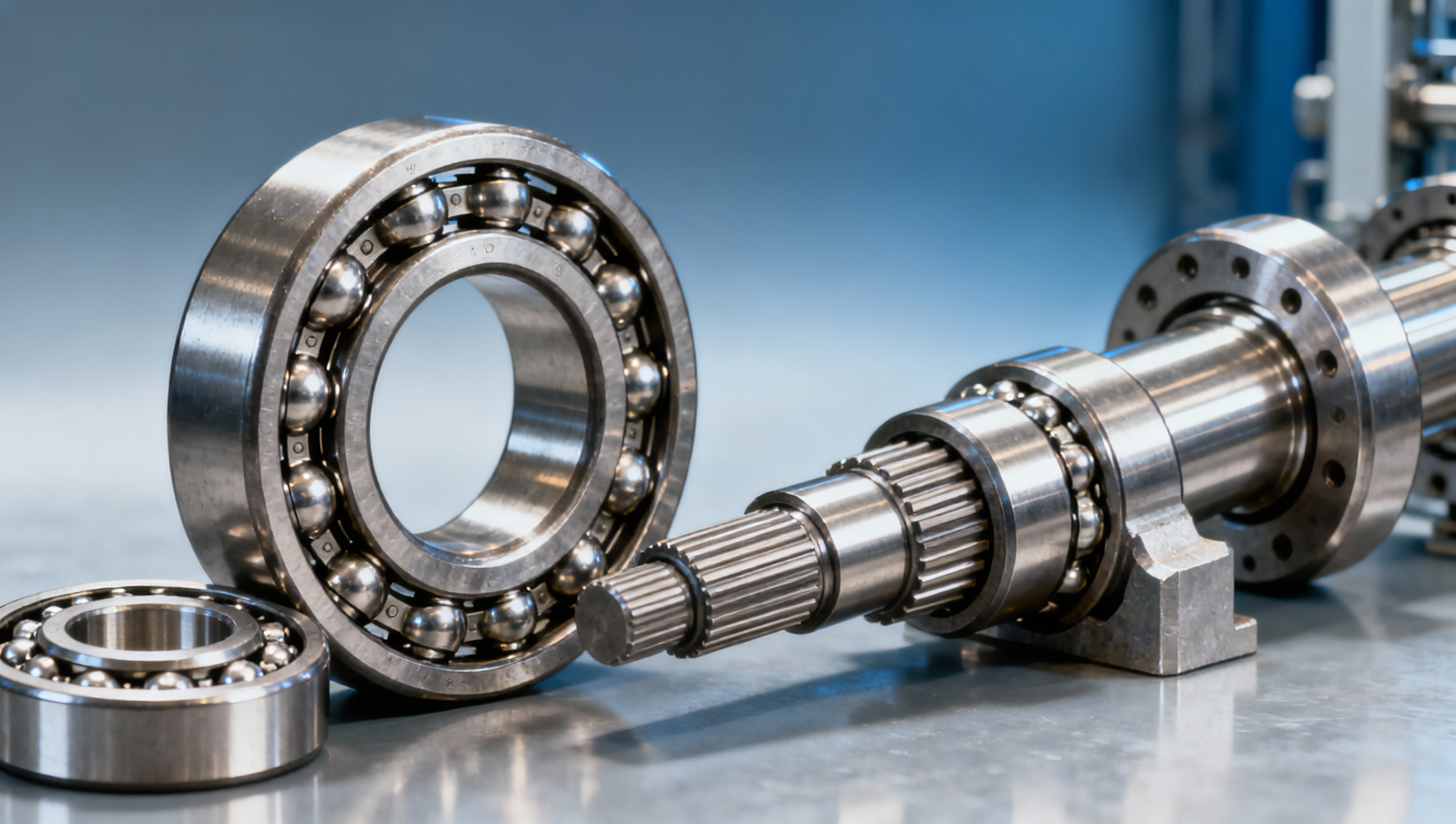
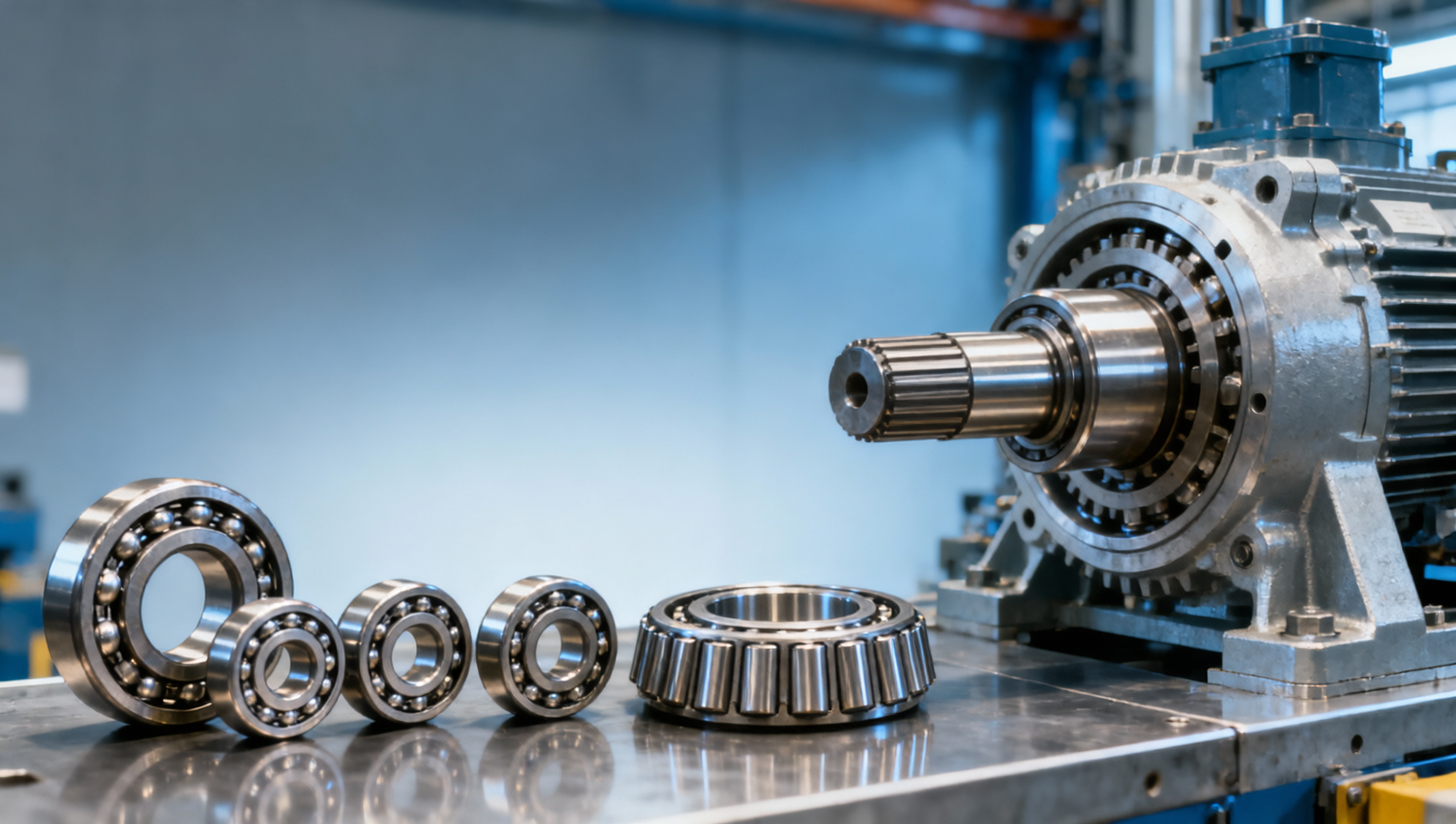
Thrust ball bearings are not designed to carry meaningful radial load. That is the short answer most buyers, operators, and maintenance teams need first. Once radial force becomes more than incidental, problems usually begin with uneven contact, heat, vibration, raceway damage, cage stress, and rapidly shortened service life. In practical terms, if your application has combined loads, shaft misalignment, shock, or uncertain operating conditions, a thrust ball bearing is often the wrong choice. In those cases, angular contact ball bearings, deep groove ball bearings, tapered roller bearings, or cylindrical roller bearings may be more appropriate depending on load direction, speed, rigidity, and cost targets.
For industrial procurement and equipment decision-making, this is not just a bearing theory issue. It affects downtime, safety margins, maintenance intervals, warranty claims, and replacement frequency. The key question is not simply “Can a thrust ball bearing fit?” but “Will it survive the real load case in service?”
What users are really trying to know when they compare thrust ball bearings with radial load conditions
Most readers searching this topic are not looking for a textbook definition. They want a clear decision: when does a thrust ball bearing become a bad choice, and what should replace it?
That search intent usually falls into four practical needs:
- Troubleshooting: A machine is already showing heat, noise, wobble, or premature bearing failure.
- Selection: A buyer or engineer is comparing bearing types for a new design or wholesale sourcing plan.
- Risk reduction: A plant team wants to avoid repeat shutdowns caused by incorrect bearing application.
- Procurement validation: A purchasing team needs to confirm whether a lower-cost bearing option is actually suitable.
The most useful answer for these readers is simple: thrust ball bearings are for axial loads, not radial loads. If radial force is present continuously, or even intermittently at a meaningful level, reliability starts to drop fast.
Why radial loads create problems in thrust ball bearings
Thrust ball bearings are built so the rolling elements and raceways carry force along the shaft axis. Their internal geometry is optimized for axial load transmission. When radial load enters the system, the load path no longer matches the bearing design.
This mismatch creates several issues:
- Abnormal contact stress: Balls contact the raceways in unintended zones, increasing local stress.
- Skidding and sliding: Instead of rolling cleanly, elements may slide, generating heat and wear.
- Cage overload: The cage can experience forces it was not designed to stabilize.
- Edge loading: Slight misalignment combined with radial force can push stress to raceway edges.
- Lubrication breakdown: Higher friction and poor contact patterns degrade the lubricant film.
In clean catalog language, many thrust ball bearings can tolerate only very slight radial influence, usually only as incidental or transient conditions. In real operating environments, “slight” is often exceeded by shaft deflection, installation error, vibration, belt pull, thermal movement, or process upset.
Where failure usually starts in real applications
For operators and maintenance teams, failure rarely appears all at once. It usually begins with small, easy-to-miss symptoms that later become expensive events.
Common starting points include:
- Temperature rise: Friction increases as rolling action becomes unstable.
- Noise and vibration: Load distribution becomes uneven and the bearing no longer runs smoothly.
- Early raceway marks: False brinelling, smearing, or localized spalling may appear.
- Cage wear or fracture: Particularly under speed plus side-load conditions.
- Axial accuracy loss: The assembly begins to lose positional stability.
- Shortened grease life: Lubricant oxidizes or migrates faster under excess heat.
In industrial settings, these symptoms often show up in vertical shafts, turntables, screw mechanisms, pump assemblies, gearboxes with incorrect retrofits, and equipment where the original axial-only assumption no longer matches current operating conditions.
How much radial load is too much?
This is the question buyers most often want answered with a single number, but there is no safe universal percentage that applies to every thrust ball bearing. The limit depends on bearing design, size, speed, preload, lubrication, shaft rigidity, housing accuracy, and the severity of shock or misalignment.
What matters in practice is this:
- If radial load is continuous, a standard thrust ball bearing is typically the wrong choice.
- If radial load is unpredictable, selection risk is high and application review is necessary.
- If combined loads exist by design, use a bearing type meant for combined loading.
- If shaft or housing alignment is difficult to control, failure risk increases even faster.
For procurement teams, this means supplier claims such as “suitable under light side load” should never be accepted without application data, load calculations, speed range, and installation conditions. A low unit price does not offset repeated shutdowns or warranty disputes.
Which bearing types are better when radial load is present?
If the application includes radial load, the right replacement depends on whether the machine also carries axial load, how much stiffness is required, and how fast the assembly runs.
Angular contact ball bearings
A strong option for combined axial and radial loads, especially where speed and precision matter. They are commonly selected for machine tools, pumps, motors, and other assemblies needing balanced performance.
Deep groove ball bearings
Suitable mainly for radial loads but also capable of carrying moderate axial loads in both directions. They are widely used because they are versatile, cost-effective, and available globally in many wholesale channels.
Cylindrical roller bearings
Best where high radial load capacity is the main requirement. They offer rigidity and can perform well in heavy-duty applications, though axial load capability depends on design style.
Tapered roller bearings
Designed for combined loads and especially valuable where high radial force and meaningful axial force occur together. They are common in gearboxes, wheel ends, conveyors, and industrial power transmission systems.
A simple selection view:
- Axial only: Thrust ball bearing may fit.
- Mostly radial with some axial: Deep groove ball bearing may fit.
- Combined loads with speed/precision: Angular contact ball bearing may fit.
- Heavy radial load: Cylindrical roller bearing may fit.
- Heavy combined load: Tapered roller bearing may fit.
What buyers and engineers should check before approving a bearing choice
To avoid misapplication, teams should verify more than catalog dimensions. The right review process should include:
- Actual load direction: Is the load truly axial, or is there side force from belts, gears, imbalance, or process pressure?
- Load variability: Does startup, stopping, shock, or product variation create temporary radial load spikes?
- Speed: Some bearing alternatives perform differently at higher RPM.
- Alignment quality: How well can the shaft and housing maintain geometry in operation?
- Lubrication method: Grease and oil behavior can change significantly under unintended load paths.
- Temperature and contamination: Harsh environments reduce tolerance for application mistakes.
- Compliance and traceability: For critical infrastructure, documentation and quality control matter as much as mechanical fit.
For enterprise decision-makers, this review supports better total cost control. The cost of selecting a proper bearing type is usually far lower than the cost of unplanned maintenance, line stoppage, inventory waste, and safety exposure.
Operational warning signs that suggest a thrust ball bearing is seeing radial load
Operators can often catch the problem before catastrophic failure if they know what to watch for. Key warning signs include:
- Bearing housing running hotter than historical baseline
- New vibration patterns or roughness during acceleration
- Noise that changes with shaft position or side force
- Grease discoloration, leakage, or shortened relubrication interval
- Uneven wear patterns during inspection
- Recurring failure despite replacing with the same bearing model
If these signs appear, replacing the bearing with the same thrust ball bearing without reviewing the load case usually repeats the failure. The root issue is often application mismatch, not product defect alone.
How smarter sourcing reduces downtime and procurement mistakes
When evaluating wholesale bearing options, the cheapest available part is not always the lowest-risk choice. Smart sourcing means matching bearing architecture to service conditions and verifying supplier capability.
Ask suppliers and manufacturers for:
- Load rating data tied to the exact bearing series
- Application guidance for combined or incidental radial loads
- Material and heat-treatment information
- Cage design details
- Lubrication recommendations by speed and temperature
- Quality certifications and dimensional control records
- Failure analysis support for critical installations
This is especially important for EPC contractors, plant operators, and industrial procurement teams managing global supply chains. A bearing that technically fits but does not match the real duty cycle creates hidden lifecycle cost.
Bottom line: where problems start and how to avoid them
Problems start the moment a thrust ball bearing is asked to carry radial load beyond a negligible incidental level. From there, stress distribution worsens, heat rises, lubrication suffers, and failure can escalate quickly. For any application with meaningful side load, combined load, misalignment risk, or shock, a thrust ball bearing should be questioned early.
The practical decision is straightforward:
- Use thrust ball bearings when the load is genuinely axial and operating conditions are controlled.
- Use angular contact ball bearings, deep groove ball bearings, cylindrical roller bearings, or tapered roller bearings when the real duty includes radial load or combined loading.
For buyers, operators, and decision-makers, the value lies in matching the bearing to the true operating condition, not the idealized design assumption. That is how you reduce downtime, improve reliability, and avoid costly procurement errors.
Technical Specifications
Expert Insights

Chief Security Architect
Dr. Thorne specializes in the intersection of structural engineering and digital resilience. He has advised three G7 governments on industrial infrastructure security.
Related Analysis
- Apr 23, 2026Deep Groove Ball Bearings Noise Often Starts with InstallationAuthor :Heavy Industry Strategist
- Apr 23, 2026Tapered Roller Bearings Wholesale: Where Price Gaps Come FromAuthor :Heavy Industry Strategist
- Apr 23, 2026Cylindrical Roller Bearings and Heat Build-Up Under LoadAuthor :Heavy Industry Strategist
Core Sector // 01
Security & Safety
- Deep Groove Ball Bearings Noise Often Starts with InstallationAuthor :Heavy Industry Strategist

- Tapered Roller Bearings Wholesale: Where Price Gaps Come FromAuthor :Heavy Industry Strategist

- Cylindrical Roller Bearings and Heat Build-Up Under LoadAuthor :Heavy Industry Strategist

- Pillow Block Bearings UCP Size Mismatch Causes More DowntimeAuthor :Heavy Industry Strategist

- Thrust Ball Bearings vs Radial Loads: Where Problems StartAuthor :Heavy Industry Strategist

- When Angular Contact Ball Bearings Are the Wrong ChoiceAuthor :Heavy Industry Strategist

- Needle Roller Bearings Wholesale Without Quality DriftAuthor :Heavy Industry Strategist

- Rod End Bearings Wholesale: What Changes at Higher Volumes?Author :Heavy Industry Strategist