How to Evaluate Safety Signs Wholesale Suppliers for Compliance, Durability, and MOQ
Author
Date Published
Reading Time
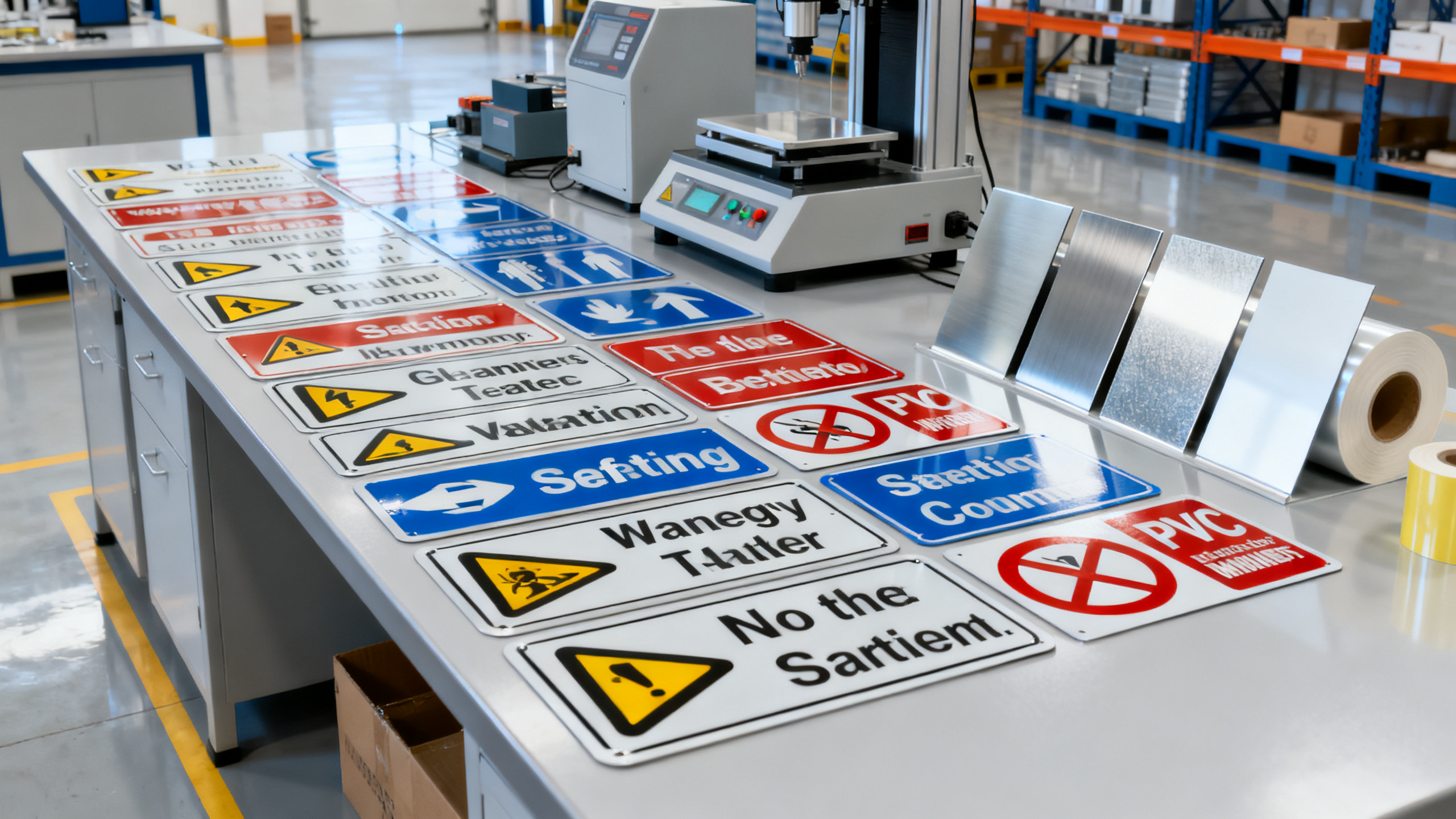
How to Evaluate Safety Signs Wholesale Suppliers for Compliance, Durability, and MOQ
Choosing the right safety signs wholesale supplier is more than a pricing decision. It affects compliance, durability, and purchasing efficiency across every site.
When signage fails inspection or degrades too fast, replacement costs rise quickly. Delays, safety incidents, and audit findings can follow just as fast.
That is why evaluating safety signs wholesale partners needs a structured process. The best supplier is not always the one with the lowest quote.
A reliable partner should prove product compliance, material performance, and workable MOQ terms. These three factors shape long-term procurement value.
Start with Compliance, Not Price
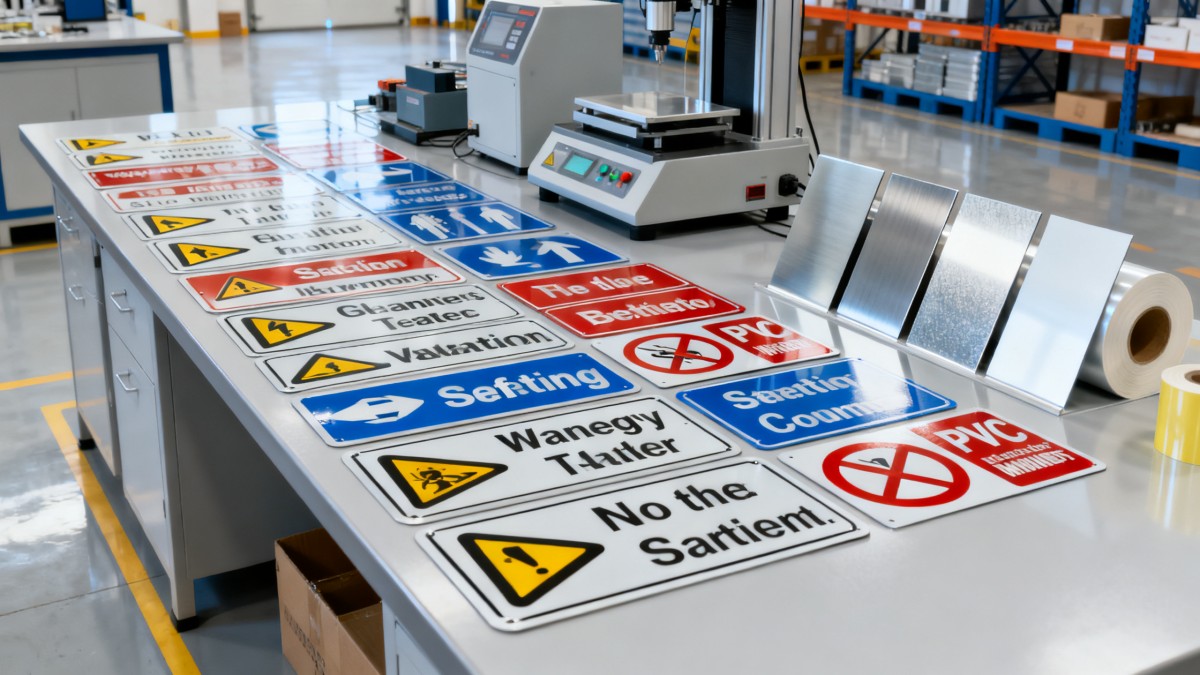
For safety signs wholesale sourcing, compliance should be the first filter. If a sign fails regulatory requirements, a low unit price becomes irrelevant.
Check whether the supplier understands the destination market. Safety sign rules differ by region, application, and facility type.
Ask for documented alignment with standards such as ISO 7010, ANSI Z535, OSHA references, CE, or other local regulations where relevant.
More importantly, verify whether certifications apply to the actual product line. Generic certificates do not guarantee that the supplied signs meet the required standard.
Documents worth requesting
- Product specification sheets with material, size, and print details
- Test reports for reflectivity, weather resistance, or chemical resistance
- Factory quality certifications such as ISO 9001
- Artwork approval process for regulatory symbols and wording
- Batch traceability records for repeat orders
In practice, strong safety signs wholesale suppliers answer these questions quickly. Weak suppliers tend to stay vague or send unrelated documents.
Evaluate Durability by Real Use Conditions
Durability is where many sourcing mistakes appear. A sign may look acceptable in a sample pack but fail after a few months on site.
For safety signs wholesale orders, durability depends on material, ink, adhesive, coating, and installation environment. Each one matters.
Indoor warehouses, outdoor construction zones, chemical plants, and food facilities all create different performance demands. One material will not suit every location.
Key material questions to ask
- Is the sign made from PVC, aluminum, acrylic, or self-adhesive vinyl?
- Is it UV resistant for prolonged outdoor exposure?
- Can it tolerate moisture, cleaning agents, oil, or acids?
- Will the adhesive hold on rough, dusty, or painted surfaces?
- Does the print resist fading, scratching, and peeling?
A practical supplier should match materials to applications instead of pushing one default option. That is often a clear sign of technical maturity.
If possible, request accelerated aging data or case references from similar industries. Real performance history reduces guesswork during supplier selection.
Use sample testing before full commitment
Before placing large safety signs wholesale orders, run a controlled sample test. This step often saves more than any price negotiation.
Test signs under sunlight, washdown, abrasion, or temperature swings. Then compare color retention, edge lifting, readability, and installation ease.
MOQ Should Fit Inventory Reality
MOQ is not just a negotiation point. It influences cash flow, warehouse space, and the risk of obsolete stock.
Many safety signs wholesale suppliers offer attractive pricing at high volumes. The problem starts when demand is fragmented across many sign types.
A facility may need hundreds of signs overall, but only small quantities per message, size, or language version. That changes the MOQ calculation.
What to review in MOQ terms
- MOQ per design, not just per total order
- MOQ for custom colors, symbols, or multilingual text
- Mix-and-match flexibility across related SKUs
- Reorder minimums after first production run
- Storage support or call-off shipment options
Good safety signs wholesale partners usually provide more than one MOQ model. They may combine standard items with custom lines to improve purchasing efficiency.
This matters even more when sites are expanding in phases. Buying too much too early can create hidden costs that do not appear in the quotation.
Compare Suppliers with a Practical Scorecard
A simple scorecard helps keep safety signs wholesale decisions objective. It also makes internal approval easier when several stakeholders are involved.
Weight the scorecard based on project risk. For regulated or hazardous environments, compliance and durability should carry more points than price alone.
Look Beyond Unit Cost
The cheapest safety signs wholesale quote may not be the lowest-cost option over time. Total cost should guide the final comparison.
Include replacement frequency, installation labor, freight, emergency reorders, and non-compliance exposure. These items can outweigh a small difference in unit price.
This is especially true for multi-site rollouts. Inconsistent signs from weak suppliers create correction work across audits, training, and facility maintenance.
Warning signs during supplier review
- Pricing is clear, but compliance evidence is incomplete
- Samples look good, but no durability data is available
- MOQ terms change late in the discussion
- Artwork approval lacks version control
- Lead times depend on unstable subcontractors
When several warning signs appear together, the supplier may create more operational risk than commercial value.
Questions to Ask Before Approving a Supplier
A short supplier interview can reveal gaps that quotations miss. These questions work well during final safety signs wholesale evaluation.
- Which standards do your safety signs wholesale products follow by market?
- Which materials do you recommend for outdoor, chemical, or washdown areas?
- Can you provide test reports for fading, adhesion, and impact resistance?
- What is the MOQ by design, size, and custom language version?
- How do you manage repeat orders and artwork consistency?
- What happens if delivered signs fail inspection or field performance checks?
The quality of answers often matters as much as the answers themselves. Clear, specific responses usually indicate a stronger operating system.
Make the Final Decision with Fewer Surprises
The most effective safety signs wholesale strategy balances compliance confidence, field durability, and MOQ practicality. All three need to work together.
A supplier that passes only one area is rarely the best long-term partner. Low cost without compliance is risky, and strong quality without MOQ flexibility can strain budgets.
Start with document review, move to sample testing, then compare total cost using a scorecard. That sequence usually leads to better sourcing outcomes.
When the next safety signs wholesale request comes in, use this framework to shortlist suppliers faster, negotiate smarter, and reduce downstream risk before purchase approval.
Technical Specifications
- How to Select Electronic Hotel Key Card Locks for Guest Rooms and Staff AreasAuthor :Safety Compliance Lead
- How to Select Lab Instruments for Reliable Chemical Analysis WorkflowsAuthor :Precision Metrology Expert
- How to Size a UPS for Server Rooms: Load, Runtime, and Redundancy FactorsAuthor :Grid Infrastructure Analyst
Expert Insights

Chief Security Architect
Dr. Thorne specializes in the intersection of structural engineering and digital resilience. He has advised three G7 governments on industrial infrastructure security.
Related Analysis
- Sep 17, 2026How to Select Electronic Hotel Key Card Locks for Guest Rooms and Staff AreasAuthor :Safety Compliance Lead
- Sep 16, 2026How to Select Lab Instruments for Reliable Chemical Analysis WorkflowsAuthor :Precision Metrology Expert
- Sep 15, 2026How to Size a UPS for Server Rooms: Load, Runtime, and Redundancy FactorsAuthor :Grid Infrastructure Analyst
Core Sector // 01
Security & Safety
- Can One Supplier Provide Both IEC- and ATEX-Certified Safety Equipment?Author :Safety Compliance Lead

- Are Dual IEC and NEC Safety Certifications Worth the Cost?Author :Safety Compliance Lead

- What Is the Difference Between Class I and Class II PPE?Author :Safety Compliance Lead

- Which Oil and Gas Safety Standards Should Contractors Meet Before Site Mobilization?Author :Safety Compliance Lead

- EU REACH Adds PFAS Cap for PPE WorkwearAuthor :Safety Compliance Lead

- How to Evaluate a Chemical Resistant Suit Supplier for Industrial Safety ProcurementAuthor :Safety Compliance Lead

- EU REACH Sets 50 ppb PFAS Cap for PPE WorkwearAuthor :Safety Compliance Lead

- EU Tightens PFOA Limit for PPE and Industrial Filter MediaAuthor :Safety Compliance Lead