Access Management Systems Explained: Key Functions, User Roles, and Deployment Scenarios
Author
Date Published
Reading Time

Access management systems now sit at the center of physical security strategy. They do far more than open doors. They help control movement, support compliance, protect critical assets, and reduce operational disruption across offices, plants, laboratories, campuses, and utility sites.
That shift matters because facilities have become more connected, more regulated, and harder to manage with manual controls. In environments where safety, uptime, and traceability are non-negotiable, access decisions affect both security and operational continuity.
For organizations following the industrial intelligence approach associated with Global Industrial Core, access management systems are best understood as part of a wider resilience framework. They intersect with safety rules, electrical infrastructure, monitoring systems, and audit requirements.
What access management systems actually do

At the most basic level, access management systems decide who can enter, where, when, and under what conditions. That sounds simple, but modern deployments usually combine software, credentials, controllers, readers, locks, sensors, and reporting tools.
A well-designed system creates a controlled chain between identity and permission. It links a person, role, or device to approved spaces and time windows, then records each event for later review.
This is why access management systems are often grouped with broader security platforms. They commonly connect to video surveillance, alarm monitoring, visitor management, fire and life safety logic, and building management systems.
In industrial and commercial settings, that integration is where much of the value appears. A door event can trigger a camera view, an unauthorized entry can launch an alert, and a lockdown rule can activate across multiple zones.
Core functions that define system value
Not every platform offers the same depth, but most access management systems are evaluated around a common group of functions.
- Credential management for cards, mobile IDs, PINs, biometrics, or multi-factor combinations.
- Role-based permissions that map access rights to job function, contractor status, or shift assignment.
- Door, gate, cabinet, server room, and perimeter control through networked hardware.
- Real-time monitoring of entry attempts, forced doors, held-open doors, and emergency overrides.
- Event logs and audit trails that support investigations, compliance reviews, and internal controls.
- Integration with alarms, CCTV, identity databases, HR platforms, and visitor workflows.
The strongest systems also support policy automation. Access can expire automatically, permissions can change when employment status changes, and high-risk areas can require stricter authentication.
Why the topic is receiving more attention
Physical security is no longer isolated from business risk. Unauthorized access now carries consequences that extend into safety incidents, production delays, data exposure, insurance disputes, and regulatory scrutiny.
Several trends explain the growing focus on access management systems. One is the expansion of mixed-use facilities, where employees, contractors, vendors, visitors, and service teams move through the same site.
Another is the rise of critical infrastructure protection requirements. Sites supporting power distribution, water treatment, transport, energy storage, and industrial processing need documented control over restricted areas.
There is also a practical shift in procurement thinking. Buyers increasingly look beyond hardware cost and ask whether a platform can scale, integrate, and remain supportable over a long facility lifecycle.
That perspective aligns with GIC’s editorial emphasis on reliability, standards, and operational resilience. In this context, access management systems are not peripheral tools. They are part of the infrastructure foundation.
The user roles behind daily operation
Understanding user roles helps explain how access management systems function in practice. A single platform may serve many operational needs, but each role interacts with the system differently.
These roles often overlap. In smaller facilities, one team may handle administration, monitoring, and badge issuance. In larger networks, governance becomes more segmented and more formal.
Why role design matters
Poor role definition weakens the entire platform. Too many admin privileges create security gaps. Too few permissions slow operations. Clear separation of duties usually improves both accountability and system hygiene.
Where access management systems are deployed
Deployment scenarios vary widely, which is why product comparisons can be misleading without context. A system suited for a small office may be inappropriate for a refinery, logistics terminal, or regulated laboratory.
In corporate offices, access management systems usually prioritize employee flow, visitor handling, and after-hours control. In education and healthcare, they also support emergency procedures and area-specific restrictions.
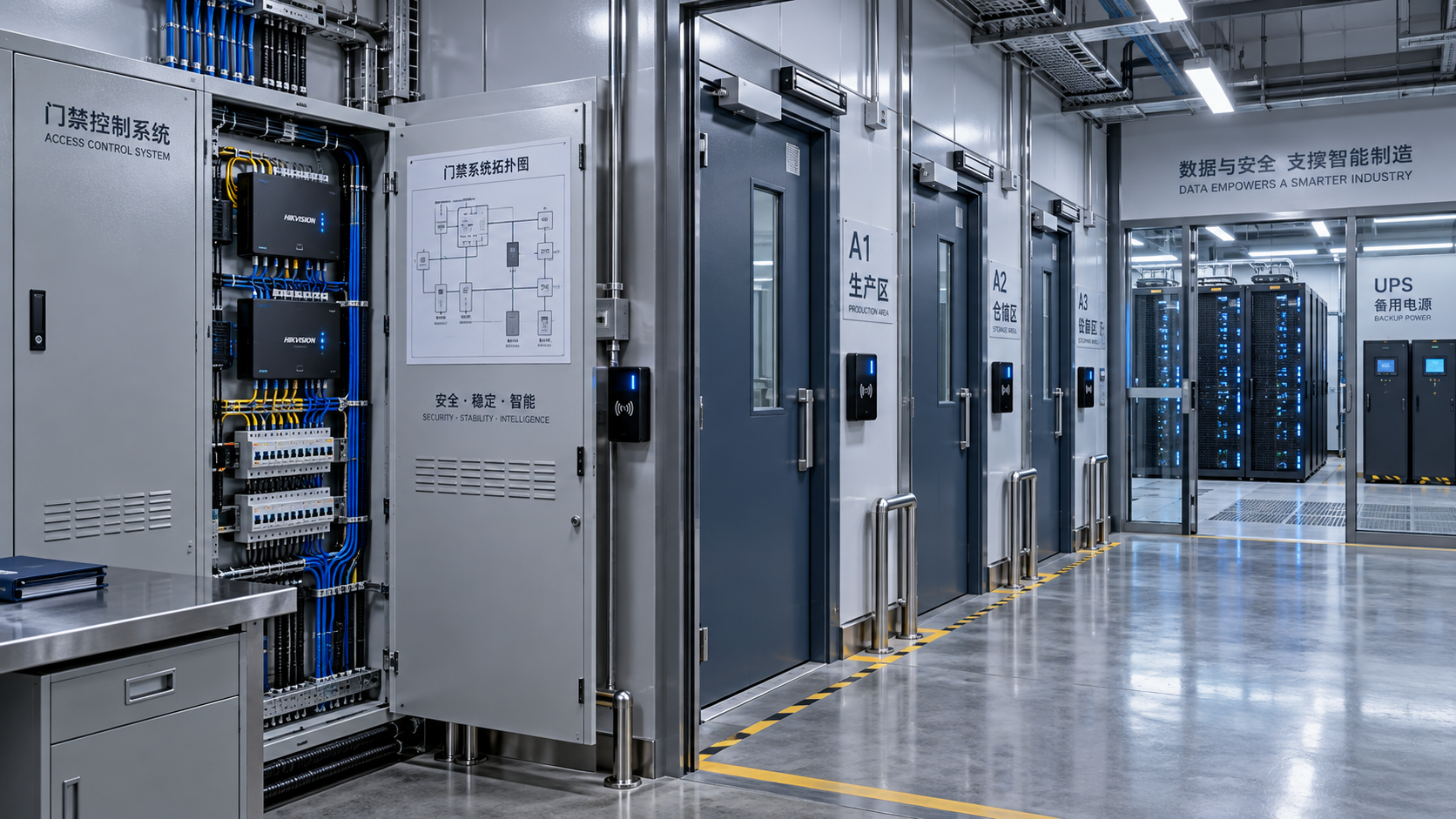
Industrial sites introduce a different profile. Access may need to align with permit-to-work processes, hazardous zone restrictions, contractor validation, or shift-based authorizations tied to safety training records.
Utilities and critical infrastructure sites often require stronger perimeter logic, remote site management, and more durable hardware. Environmental exposure, power fluctuation, and communications resilience become central selection factors.
Data centers and technical rooms add another layer. Here, access management systems support chain-of-custody controls, cabinet-level auditing, and integration with cybersecurity governance.
Scenario-specific priorities
- Multi-site enterprises focus on centralized visibility and consistent policy enforcement.
- Industrial operations focus on reliability, environmental resistance, and safety-linked permissions.
- Public-facing facilities focus on throughput, visitor control, and incident response speed.
- High-security zones focus on layered authentication and dense event recording.
How to evaluate systems beyond the brochure
Many access management systems look similar at first glance. The real differences appear in architecture, maintainability, integration depth, and field performance under pressure.
A useful evaluation starts with the operating environment. Is the site centralized or distributed? Is connectivity stable? Are there legacy controllers, fire systems, or surveillance platforms that must remain in service?
Then move to governance questions. How are identities created? Who approves exceptions? How quickly must access change after a role change, incident, or contract termination?
It is also worth checking whether the system supports recognized standards and documentation practices. In infrastructure-heavy sectors, CE, UL, ISO alignment, testing records, and support commitments matter as much as interface design.
For this reason, GIC-style evaluation tends to favor evidence over claims. Hardware durability, software update policy, audit export capability, redundancy design, and service coverage are all practical decision points.
Questions that sharpen selection
- Can the platform scale from one site to many without rebuilding core policy logic?
- Does it support temporary users, contractors, and changing access schedules cleanly?
- How well does it operate during network loss, power events, or controller failure?
- Are event logs detailed enough for compliance reviews and forensic analysis?
- Can it integrate with existing cameras, alarm panels, HR data, and identity records?
What good implementation looks like
Successful deployment usually depends less on flashy features and more on disciplined planning. Access management systems perform best when site zoning, user categories, exception rules, and emergency logic are mapped early.
This includes physical details that are easy to underestimate. Door hardware compatibility, controller placement, cabling routes, backup power, and environmental protection can shape long-term reliability.
The software side matters just as much. Permission groups should reflect real operating patterns. Audit retention should match policy needs. Reporting should support both quick response and later investigation.
Training is another common divide between acceptable and strong outcomes. Operators need more than login credentials. They need clear procedures for alarm handling, credential revocation, visitor escalation, and exception approval.
When these pieces align, access management systems become measurable business infrastructure. They reduce unauthorized entry, improve accountability, and support safer daily operations without slowing legitimate movement.
A practical next step
A useful next move is to document the facility types, risk zones, credential groups, and compliance demands that actually exist across the estate. That creates a clearer basis for comparing access management systems on operational fit.
From there, compare platforms by lifecycle factors, not only by entry features. Integration depth, standards alignment, audit quality, hardware resilience, and service support usually determine whether the system remains effective after deployment.
For organizations operating in complex industrial or infrastructure settings, the better question is not simply which system opens doors. It is which access management systems strengthen safety, continuity, and control across the full operating environment.
Technical Specifications
- Air Handling Unit Supplier Checklist: Performance Data, Lead Times, and SupportAuthor :Environmental Engineering Director
- Buying Fiberglass Water Tanks Wholesale: Compare Quotes and Delivery CostsAuthor :Environmental Engineering Director
- Choosing an XLPE Power Cable Supplier: Test Reports, Traceability, and Lead TimesAuthor :Grid Infrastructure Analyst
Expert Insights

Chief Security Architect
Dr. Thorne specializes in the intersection of structural engineering and digital resilience. He has advised three G7 governments on industrial infrastructure security.
Related Analysis
- Oct 19, 2026Air Handling Unit Supplier Checklist: Performance Data, Lead Times, and SupportAuthor :Environmental Engineering Director
- Oct 18, 2026Buying Fiberglass Water Tanks Wholesale: Compare Quotes and Delivery CostsAuthor :Environmental Engineering Director
- Oct 17, 2026Choosing an XLPE Power Cable Supplier: Test Reports, Traceability, and Lead TimesAuthor :Grid Infrastructure Analyst
Core Sector // 01
Security & Safety
- How to Build an Equipment Budget for EPC Projects Without Underestimating Lifecycle CostsAuthor :Safety Compliance Lead

- Selecting EPC Procurement Support Tools to Reduce Vendor and Delivery DelaysAuthor :Safety Compliance Lead

- How to Select an Access Control Management System for Multi-Site FacilitiesAuthor :Safety Compliance Lead

- How to Select Electronic Hotel Key Card Locks for Guest Rooms and Staff AreasAuthor :Safety Compliance Lead

- How to Evaluate a Hotel Key Card Lock Supplier for Multi-Property RolloutsAuthor :Safety Compliance Lead

- Pre-Contract Audit Checklist for Verified Production Safety and Environmental ComplianceAuthor :Safety Compliance Lead

- How Can Distributors Build Procurement-Oriented Industrial Content That Drives RFQs?Author :Safety Compliance Lead

- EU Mandates EN 50131-1:2026 for Security SystemsAuthor :Safety Compliance Lead