Indonesia BPOM Launches Fast-Track for Industrial Dust Purifiers
Author
Date Published
Reading Time
Indonesia’s National Agency of Drug and Food Control (BPOM) launched a dedicated approval fast-track channel for industrial dust purifiers on May 7, 2026 — specifically targeting equipment used in pharmaceutical, food, and electronics cleanroom environments. The initiative reduces the required bioaerosol field sampling and laboratory testing timeline from 7 to 5 working days and accepts equivalent test reports issued by CNAS-accredited laboratories. This change directly affects exporters of air purifiers and dust control systems — particularly those based in China — by accelerating market access into Indonesia.
Event Overview
On May 7, 2026, the Indonesian Food and Drug Authority (BPOM) officially activated a specialized regulatory pathway for industrial dust purification devices. Under this arrangement, bioaerosol testing — a mandatory requirement for devices deployed in controlled environments such as pharmaceutical manufacturing, food processing, and semiconductor cleanrooms — is now completed within five working days. BPOM also explicitly recognizes bioaerosol test reports from laboratories accredited by China’s National Accreditation Service for Conformity Assessment (CNAS), provided they meet methodological equivalency standards.
Industries Affected
Direct Exporters (e.g., Chinese Air Purifier & Dust Equipment Manufacturers)
These companies supply dust purification systems to Indonesian end-users or local distributors. The shortened bioaerosol assessment window lowers time-to-market for new models or certifications. Impact manifests primarily in faster regulatory clearance cycles, reduced inventory holding time for pre-approved stock, and improved responsiveness to tender timelines in regulated sectors.
Supply Chain & Certification Service Providers
Firms offering regulatory support, testing coordination, or documentation preparation for export clients are affected because BPOM’s updated policy changes the scope and timing of required deliverables. For example, the acceptance of CNAS-recognized reports shifts demand toward locally coordinated lab partnerships that maintain CNAS traceability — rather than mandating exclusive use of Indonesian labs.
Cleanroom-Integrated Equipment Integrators
Companies embedding dust purification modules into larger cleanroom HVAC or facility management systems must now align technical documentation and validation protocols with BPOM’s revised bioaerosol evidence requirements. Their impact lies in streamlined subsystem certification — especially when sourcing core filtration units from overseas suppliers eligible under the fast-track.
What Relevant Companies or Practitioners Should Focus On
Monitor official BPOM implementation guidance
While the 5-day timeline and CNAS report acceptance are confirmed, BPOM has not yet published detailed procedural documents (e.g., application forms, eligibility criteria for device classification, or list of accepted CNAS test methods). Stakeholders should track BPOM’s official portal and authorized notification channels for updates.
Verify CNAS lab scope alignment before submission
Not all CNAS-accredited labs hold accreditation for the specific bioaerosol sampling and analysis methods required by BPOM (e.g., ISO 14698-1/2 or equivalent). Exporters must confirm that their chosen lab’s CNAS scope explicitly covers viable/non-viable particle enumeration, microbial identification, and environmental sampling protocols acceptable under BPOM’s current interpretation.
Distinguish between policy signal and operational readiness
The fast-track is active as of May 7, 2026, but actual processing speed depends on BPOM’s internal capacity and case volume. Early applicants may experience variability. Firms should treat the 5-day target as a formal service level commitment — not an immediate guarantee — and retain buffer time in launch planning.
Prepare documentation packages aligned with cleanroom-use claims
BPOM’s fast-track applies only to devices intended for pharmaceutical, food, or electronics cleanroom applications. Marketing materials, technical specifications, and risk assessments submitted with applications must clearly articulate functional suitability for these settings — including airflow uniformity, filter class (e.g., ULPA/H14), and containment integrity data — to avoid reclassification delays.
Editorial Perspective / Industry Observation
Observably, this fast-track reflects BPOM’s broader effort to harmonize technical evaluation requirements with internationally recognized laboratory infrastructures — notably China’s CNAS system — without compromising local public health safeguards. Analysis shows it functions less as a full deregulation and more as a procedural optimization: the regulatory bar remains unchanged, but the path to demonstrating compliance is now narrower and more predictable for qualified applicants. From an industry perspective, this move signals growing recognition of cross-border conformity assessment infrastructure — yet its scalability beyond bioaerosol testing remains unconfirmed. Continued observation is warranted on whether similar streamlining extends to other critical parameters (e.g., chemical emissions, ozone generation, or electromagnetic compatibility) in future BPOM updates.
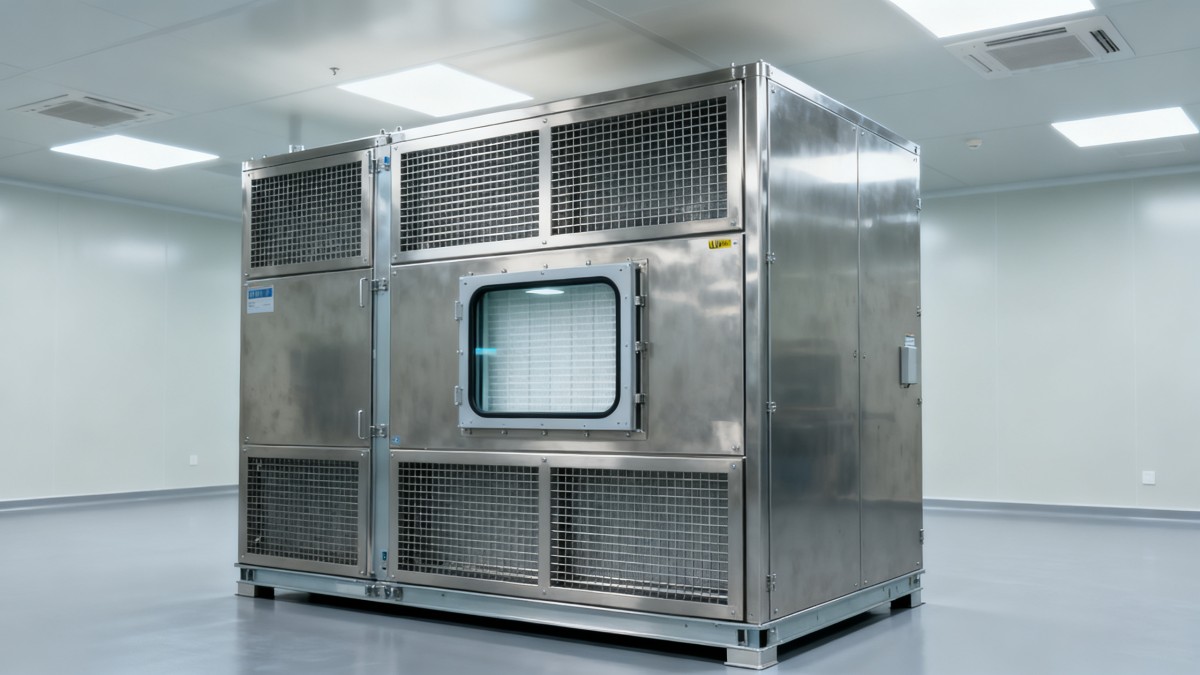
Indonesia’s BPOM announced the fast-track on its official website and via press release dated May 7, 2026. No third-party sources or supplementary regulatory texts have been verified at time of publication. The scope of accepted CNAS test methods and any potential phase-in periods for full implementation remain pending official clarification.
This update signifies a procedural improvement — not a structural shift — in Indonesia’s market access framework for industrial air quality equipment. It is best understood as a targeted efficiency gain for exporters already operating within established technical and quality frameworks, rather than a broad opening for non-compliant or minimally validated products.
Source: BPOM Official Announcement (May 7, 2026); BPOM Regulatory Circular No. HK.01.07.2.26.05.001 (pending public issuance). Note: Full procedural guidelines and eligible test method lists are still under observation.
Technical Specifications
- How to Select an Emissions Monitoring System Analyzer for Compliance ReportingAuthor :Precision Metrology Expert
- How to Select an Access Control Management System for Multi-Site FacilitiesAuthor :Safety Compliance Lead
- Portable Gas Monitor Calibration: How Often Is It Needed for Safe Confined-Space Work?Author :Precision Metrology Expert
Expert Insights

Chief Security Architect
Dr. Thorne specializes in the intersection of structural engineering and digital resilience. He has advised three G7 governments on industrial infrastructure security.
Related Analysis
- Sep 21, 2026How to Select an Emissions Monitoring System Analyzer for Compliance ReportingAuthor :Precision Metrology Expert
- Sep 20, 2026How to Select an Access Control Management System for Multi-Site FacilitiesAuthor :Safety Compliance Lead
- Sep 19, 2026Portable Gas Monitor Calibration: How Often Is It Needed for Safe Confined-Space Work?Author :Precision Metrology Expert
Core Sector // 01
Security & Safety
- Environmental Technologies for Heavy Industry: Choosing Cleaner Production SolutionsAuthor :Environmental Engineering Director

- Selecting Air Compliance Equipment for Dust, Fumes, and VOC ControlAuthor :Environmental Engineering Director

- EU Rule Tightens EN 1822-2 for Industrial Air PurifiersAuthor :Environmental Engineering Director

- EU Eco-Design Rules Tighten for Air PurifiersAuthor :Environmental Engineering Director

- Low-Maintenance Dust and Fume Control Systems: Best Options for Welding ShopsAuthor :Environmental Engineering Director

- EPA Sets VOC Labeling Rule for Air PurifiersAuthor :Environmental Engineering Director

- Saudi SASO Rule Adds Real-Time Logging for Air SystemsAuthor :Environmental Engineering Director

- Saudi SASO Rules Tighten for Air PurifiersAuthor :Environmental Engineering Director