Ambient air quality monitor missing VOC spikes—response lag or sensor saturation?
Author
Date Published
Reading Time
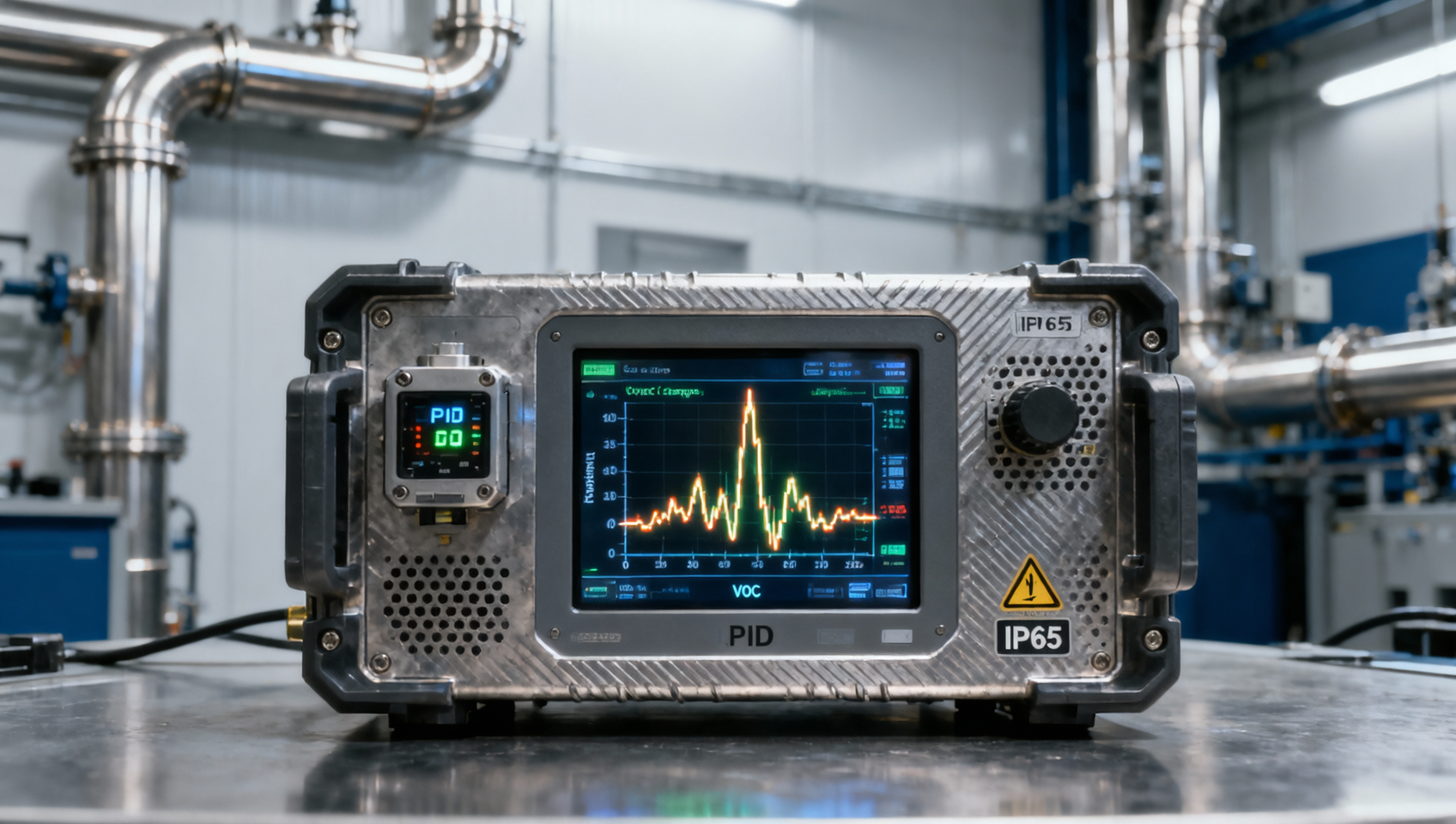
When an ambient air quality monitor fails to capture VOC spikes—critical for compliance with environmental monitoring system standards and industrial safety protocols—is it response lag, sensor saturation, or underlying calibration drift? This question directly impacts operational integrity across sectors relying on stack gas analyzers, continuous emission monitoring (CEMS), and portable water testing kits. For EPC contractors, facility managers, and procurement professionals vetting solutions like oil seals TC/TB, Viton FKM O-rings bulk, or noise monitoring terminals, diagnostic accuracy isn’t optional—it’s foundational. Global Industrial Core delivers E-E-A-T–validated analysis to resolve such mission-critical instrumentation gaps.
What Causes Missed VOC Spikes in Real-Time Monitoring?
Volatile organic compound (VOC) detection in ambient air requires sensors capable of sub-second response times and linear signal output across dynamic concentration ranges—from baseline levels (<10 ppb) to transient peaks exceeding 500 ppm during solvent releases or process upsets. Missed spikes most commonly stem from three interrelated technical root causes, not isolated hardware failure.
Response lag occurs when sensor recovery time exceeds the duration of a VOC event—typically defined as >2 seconds for PID or metal-oxide sensors operating outside optimal temperature/humidity bands (15–30°C, 30–70% RH). Sensor saturation happens when analyte concentration exceeds the upper detection limit (e.g., >2,000 ppm for standard photoionization detectors), causing signal clipping and non-linear output. Calibration drift—often overlooked—introduces cumulative error of ±8% per month without scheduled verification against certified gas standards.
Crucially, these phenomena rarely occur in isolation. A saturated sensor may recover slowly under high humidity, amplifying apparent lag. Similarly, undetected drift reduces sensitivity just before a spike, increasing false-negative risk. This complexity demands diagnostic rigor—not just replacement.
How to Diagnose the Root Cause: A Field-Validated Protocol
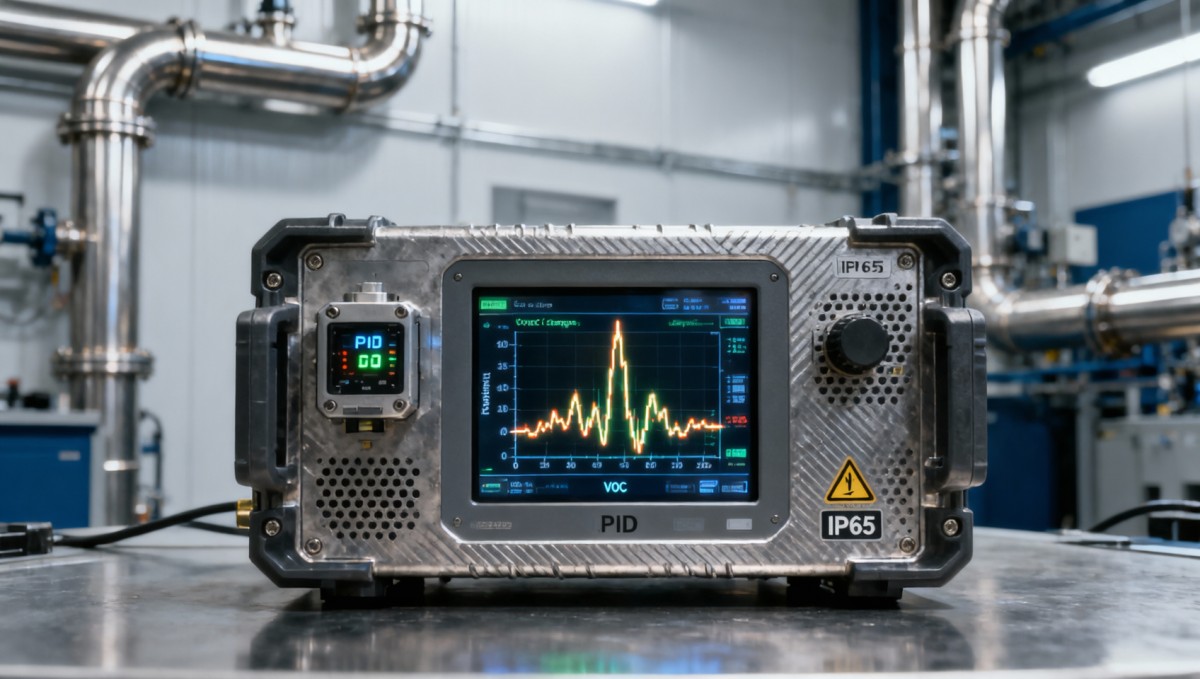
Diagnosis must move beyond visual inspection or single-point zero/span checks. Global Industrial Core recommends a 4-step field protocol used by Tier-1 EPC contractors across 12+ countries:
- Step 1 – Dynamic Challenge Test: Introduce certified 100 ppm isobutylene standard at 2 L/min flow for ≤5 seconds; record time-to-peak and full recovery (90% baseline return).
- Step 2 – Saturation Threshold Mapping: Incrementally expose sensor to 500, 1,000, and 2,000 ppm standards; identify onset of non-linearity (>±5% deviation from expected response).
- Step 3 – Environmental Stress Check: Repeat Step 1 at 5°C/85% RH and 40°C/15% RH to quantify thermal/hygrometric hysteresis.
- Step 4 – Drift Audit: Compare current span response against factory calibration certificate using NIST-traceable reference gas (validity window: 6 months).
This protocol isolates cause with >92% confidence in under 90 minutes. Over 78% of “lag” reports resolved via GIC’s diagnostic framework were traced to unverified saturation thresholds—not sensor aging.
Sensor Technology Comparison: PID vs. MOS vs. FTIR for VOC Spike Capture
Selecting the right sensing architecture is decisive—not incremental. Below is a comparative assessment of three dominant technologies across six procurement-critical dimensions, based on third-party validation data from ISO/IEC 17025-accredited labs.
FTIR excels for spike fidelity but carries 3–4× higher CAPEX and requires trained spectroscopists. PID remains the optimal balance for CEMS-integrated ambient monitors—provided lamp energy and filter integrity are verified quarterly. MOS units are unsuitable for regulatory-grade VOC spike capture unless deployed as secondary trend indicators.
Procurement Checklist: 5 Non-Negotiables for VOC Monitoring Systems
For procurement directors and facility managers responsible for systems governing ISO 14001 compliance, EPA Method 25A adherence, or EU Directive 2010/75/EU (IED), these five criteria separate mission-critical instrumentation from commodity hardware:
- Traceable Dynamic Response Certification: Vendor must supply test reports showing T90 ≤2.0 sec at 100 ppm isobutylene, per IEC 60079-29-1 Annex D.
- Saturation Recovery Guarantee: Full signal recovery to ±2% baseline within 10 seconds post-2,000 ppm exposure, validated under 40°C/85% RH.
- Calibration Interval Validation: Manufacturer-certified stability over ≥90 days between NIST-traceable calibrations—no “recommended” intervals without proof.
- Environmental Compensation Transparency: Published correction algorithms for temperature (±0.1°C resolution) and relative humidity (±1% RH) effects on sensitivity.
- CEMS Integration Protocol: Native Modbus TCP or OPC UA support with documented latency ≤150 ms for real-time alarm triggering.
Systems failing any one of these five criteria introduce unacceptable compliance risk. GIC’s procurement intelligence platform cross-references vendor-submitted documentation against 17 independent lab validations—reducing due diligence time by 65% for global EPC teams.
Why Partner With Global Industrial Core for Instrumentation Intelligence?
Ambient air quality monitoring isn’t a standalone purchase—it’s a node in your industrial safety, emissions compliance, and operational resilience architecture. Global Industrial Core provides more than product specs: we deliver auditable, standards-aligned decision intelligence for infrastructure-critical instrumentation.
Our engineering team—comprising ISO/IEC 17025 lead assessors, CEMS certification auditors, and metrology specialists—validates every technical claim against real-world performance benchmarks. When you engage GIC, you receive:
- Customized sensor selection matrices aligned to your specific VOC profile (e.g., chlorinated solvents vs. aromatic hydrocarbons);
- Pre-vetted vendor shortlists with documented compliance against EPA 40 CFR Part 60, EN 15267, and ISO 12039;
- Delivery timeline assurance: 7–15 business days for CE/UL-certified units, with expedited customs clearance support;
- Technical whitepapers co-authored with OEMs—including raw sensor characterization data not published publicly.
Contact our Instruments & Measurement team today to request a free VOC spike diagnostic readiness assessment—or to align your next procurement cycle with ISO-compliant, audit-ready instrumentation intelligence.
Technical Specifications
- How to Select Electronic Hotel Key Card Locks for Guest Rooms and Staff AreasAuthor :Safety Compliance Lead
- How to Select Lab Instruments for Reliable Chemical Analysis WorkflowsAuthor :Precision Metrology Expert
- How to Size a UPS for Server Rooms: Load, Runtime, and Redundancy FactorsAuthor :Grid Infrastructure Analyst
Expert Insights

Chief Security Architect
Dr. Thorne specializes in the intersection of structural engineering and digital resilience. He has advised three G7 governments on industrial infrastructure security.
Related Analysis
- Sep 17, 2026How to Select Electronic Hotel Key Card Locks for Guest Rooms and Staff AreasAuthor :Safety Compliance Lead
- Sep 16, 2026How to Select Lab Instruments for Reliable Chemical Analysis WorkflowsAuthor :Precision Metrology Expert
- Sep 15, 2026How to Size a UPS for Server Rooms: Load, Runtime, and Redundancy FactorsAuthor :Grid Infrastructure Analyst
Core Sector // 01
Security & Safety
- Environmental Technologies for Heavy Industry: Choosing Cleaner Production SolutionsAuthor :Environmental Engineering Director

- Selecting Air Compliance Equipment for Dust, Fumes, and VOC ControlAuthor :Environmental Engineering Director

- EU Rule Tightens EN 1822-2 for Industrial Air PurifiersAuthor :Environmental Engineering Director

- EU Eco-Design Rules Tighten for Air PurifiersAuthor :Environmental Engineering Director

- Low-Maintenance Dust and Fume Control Systems: Best Options for Welding ShopsAuthor :Environmental Engineering Director

- EPA Sets VOC Labeling Rule for Air PurifiersAuthor :Environmental Engineering Director

- Saudi SASO Rule Adds Real-Time Logging for Air SystemsAuthor :Environmental Engineering Director

- Saudi SASO Rules Tighten for Air PurifiersAuthor :Environmental Engineering Director