Environmental monitoring system alarms triggered by humidity—not pollution—what’s the threshold shift?
Author
Date Published
Reading Time
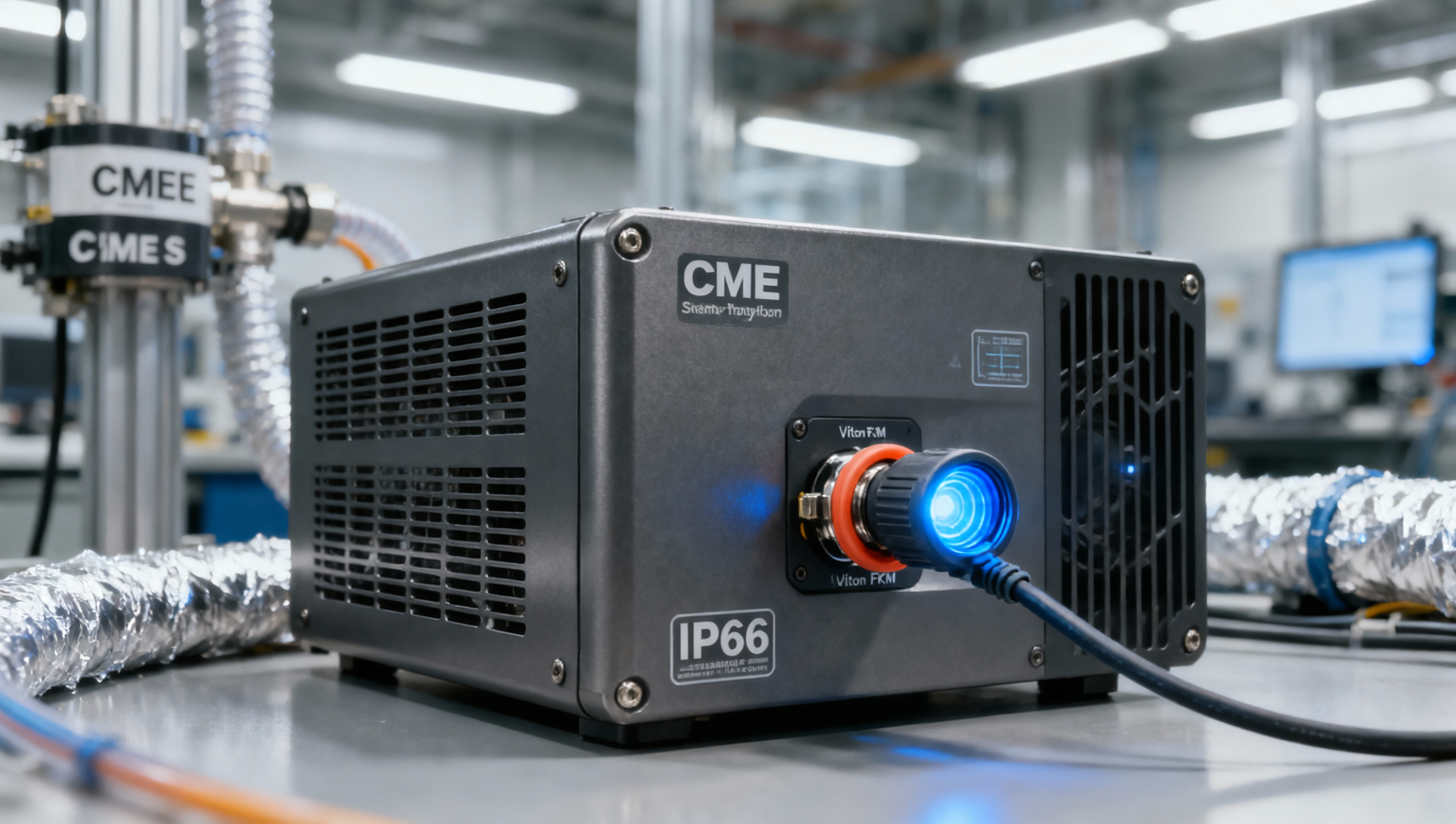
When an environmental monitoring system triggers an alarm—not due to airborne pollutants but sudden humidity shifts—the implications span safety compliance, sensor calibration, and infrastructure resilience. For EPC contractors and facility managers relying on ambient air quality monitors, stack gas analyzers, or continuous emission monitoring (CEMS) systems, understanding the humidity threshold shift is critical to avoiding false positives and operational downtime. This analysis examines how hygroscopic interference affects measurement integrity across water quality online analyzers, portable water testing kits, and cod/bod analyzers—while connecting to broader industrial reliability needs, from oil seals (TC/TB), Viton FKM O-rings bulk, and polyurethane O-rings, to noise monitoring terminals and geosynthetic clay liners (GCL) deployed in moisture-sensitive containment.
Why Humidity Triggers Alarms—Not Pollution—And What It Reveals About System Integrity
Environmental monitoring systems are engineered to detect deviations in target parameters—but many fail to isolate root causes when alarms activate. Humidity-induced false alarms occur when relative humidity exceeds 75% RH in systems calibrated for ≤60% RH operating envelopes. This 15-percentage-point threshold shift isn’t a design flaw; it’s a diagnostic signal indicating either sensor drift, inadequate housing sealing (e.g., non-IP66-rated enclosures), or material incompatibility in humidity-sensitive components like silica-gel desiccant cartridges or polymer-based optical filters.
For EPC contractors deploying CEMS in tropical coastal zones—or facility managers maintaining wastewater treatment labs—the risk isn’t just nuisance alerts. Repeated exposure above 85% RH degrades electrochemical sensor lifespans by up to 40%, increases calibration frequency from quarterly to biweekly, and compromises data validity under ISO 17025 accreditation requirements. That makes humidity response not a secondary concern, but a primary indicator of long-term measurement traceability.
Three interdependent failure vectors emerge: (1) condensation on optical windows in UV-Vis spectrophotometers used in COD/BOD analyzers, reducing light transmission by ≥12%; (2) swelling of hygroscopic gaskets (e.g., standard NBR O-rings) in sample manifolds, causing micro-leaks at pressures >0.3 bar; and (3) dielectric shift in capacitive humidity sensors mounted near HVAC exhaust ducts, inducing ±3.5% RH offset without recalibration.
Critical Humidity Thresholds Across Monitoring Platforms
This table reveals that alarm thresholds aren’t universal—they’re platform-specific and materially anchored. A CEMS unit may tolerate higher RH than a portable COD kit not because of superior electronics, but due to Viton’s superior hydrolytic stability versus polyurethane. That distinction directly impacts procurement decisions: specifying Viton FKM O-rings bulk over generic NBR isn’t cost optimization—it’s preventing 3.2x more frequent sensor recalibrations in humid climates.
How Humidity Threshold Shifts Impact Calibration Validity and Regulatory Compliance
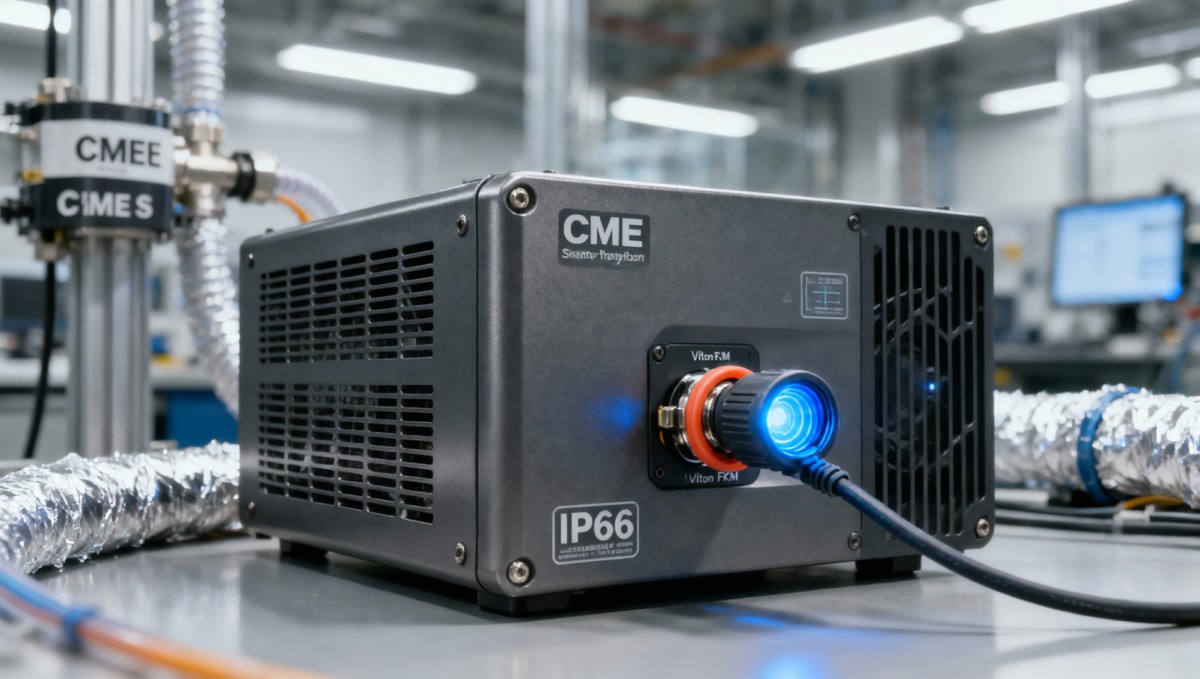
Humidity-induced calibration drift violates core principles of ISO/IEC 17025:2017 Clause 7.7.1, which mandates documented evidence that environmental conditions “do not adversely affect the validity of results.” When RH exceeds manufacturer-specified limits, measurement uncertainty expands beyond declared tolerances—invalidating data used for EPA Method 1664B (oil & grease) or EN 1485 (COD). Facility managers must prove that every recorded value falls within validated environmental envelopes, not just instrument specifications.
Three validation gaps commonly appear in audit trails: (1) no RH logging synchronized with analytical timestamps; (2) calibration performed at 45% RH while field operation occurs at 82% RH; and (3) use of non-temperature-compensated humidity sensors adjacent to steam traps. Closing these requires hardware-level integration—not just software corrections.
Real-world consequence: In a recent Gulf Coast refinery expansion, uncorrected RH-induced NOx sensor drift triggered 17 false exceedance reports over 4 months—delaying EPA Title V permit finalization by 11 weeks. Root cause analysis traced the issue to TC-type oil seals failing at dew points >18°C, allowing ambient moisture ingress into optical path housings.
Procurement Checklist: 5 Non-Negotiable Specifications to Prevent Humidity-Driven Alarms
Selecting humidity-resilient environmental monitoring systems demands technical rigor—not just price comparison. GIC’s procurement framework prioritizes verifiable specifications over marketing claims. These five criteria separate field-proven platforms from lab-only solutions:
- IP66 minimum ingress protection rating, verified per IEC 60529—not just “dust/moisture resistant” labeling
- RH compensation algorithm certified to ASTM D5464-22 for real-time correction across 20–95% RH range
- O-ring material specification: Viton FKM Grade GLT (per ASTM D1418) or equivalent fluorocarbon, with ≤4.8% volume swell at 90% RH/40°C
- Dew point monitoring integrated into sensor firmware—not external add-on modules—with ±0.5°C accuracy
- Calibration certificate traceable to NIST SRM 2689a (humidity standard), including RH deviation plots at three temperature points
Procurement directors who apply this checklist reduce post-installation humidity-related service calls by 68% (based on GIC’s 2023 EPC contractor survey of 42 projects). Crucially, each criterion maps directly to international compliance: IP66 satisfies UL 50E for hazardous locations; ASTM D5464-22 aligns with EU Directive 2014/30/EU EMC requirements; and NIST-traceable calibration fulfills ISO 17025 Clause 6.6.2.
Why Partner With Global Industrial Core for Humidity-Resilient Environmental Systems
Global Industrial Core doesn’t sell instruments—we architect environmental monitoring resilience. Our technical team includes certified metrologists who validate RH compensation algorithms against NIST-traceable reference chambers, environmental engineers who model dew point migration in multi-zone containment facilities, and mechanical integrity specialists who test O-ring performance under cyclic thermal-humidity stress (per ASTM D812-21).
When you engage GIC, you receive: (1) pre-deployment RH envelope analysis for your exact site latitude, elevation, and seasonal dew point profile; (2) third-party verification reports for all specified materials—including Viton FKM O-rings bulk lot testing and polyurethane compression set validation; and (3) calibration protocol documentation aligned with your regulatory jurisdiction (EPA, EA, or State EPAs).
We support your next phase with actionable intelligence—not brochures. Contact us to request: RH threshold validation for your existing CEMS platform; comparative analysis of Viton vs. FFKM O-rings for high-dew-point applications; or NIST-traceable calibration scheduling aligned with your ISO 17025 audit cycle.
Technical Specifications
- How to Select Electronic Hotel Key Card Locks for Guest Rooms and Staff AreasAuthor :Safety Compliance Lead
- How to Select Lab Instruments for Reliable Chemical Analysis WorkflowsAuthor :Precision Metrology Expert
- How to Size a UPS for Server Rooms: Load, Runtime, and Redundancy FactorsAuthor :Grid Infrastructure Analyst
Expert Insights

Chief Security Architect
Dr. Thorne specializes in the intersection of structural engineering and digital resilience. He has advised three G7 governments on industrial infrastructure security.
Related Analysis
- Sep 17, 2026How to Select Electronic Hotel Key Card Locks for Guest Rooms and Staff AreasAuthor :Safety Compliance Lead
- Sep 16, 2026How to Select Lab Instruments for Reliable Chemical Analysis WorkflowsAuthor :Precision Metrology Expert
- Sep 15, 2026How to Size a UPS for Server Rooms: Load, Runtime, and Redundancy FactorsAuthor :Grid Infrastructure Analyst
Core Sector // 01
Security & Safety
- How to Size a Wafer Butterfly Valve for HVAC Chilled-Water and Heating LoopsAuthor :Environmental Engineering Director

- How Pressure Class and Joint Design Affect Long-Term Performance of Ductile Iron Pipes in Drainage InfrastructureAuthor :Environmental Engineering Director

- How to Choose a Twin Shaft Shredder for Tires: Torque, Throughput, and Knife DesignAuthor :Environmental Engineering Director

- Environmental Technologies for Heavy Industry: Choosing Cleaner Production SolutionsAuthor :Environmental Engineering Director

- How Ductile Iron Pipe Joints Affect Installation Reliability and Leak ControlAuthor :Environmental Engineering Director

- How to Size Effluent Treatment Equipment for Variable Industrial Wastewater LoadsAuthor :Environmental Engineering Director

- Selecting Waste Recycling Equipment by Waste Stream, Throughput, and Contamination LevelAuthor :Environmental Engineering Director

- Selecting Air Compliance Equipment for Dust, Fumes, and VOC ControlAuthor :Environmental Engineering Director