Vietnam MOIT Tightens Import Inspection for Industrial Bearings
Author
Date Published
Reading Time
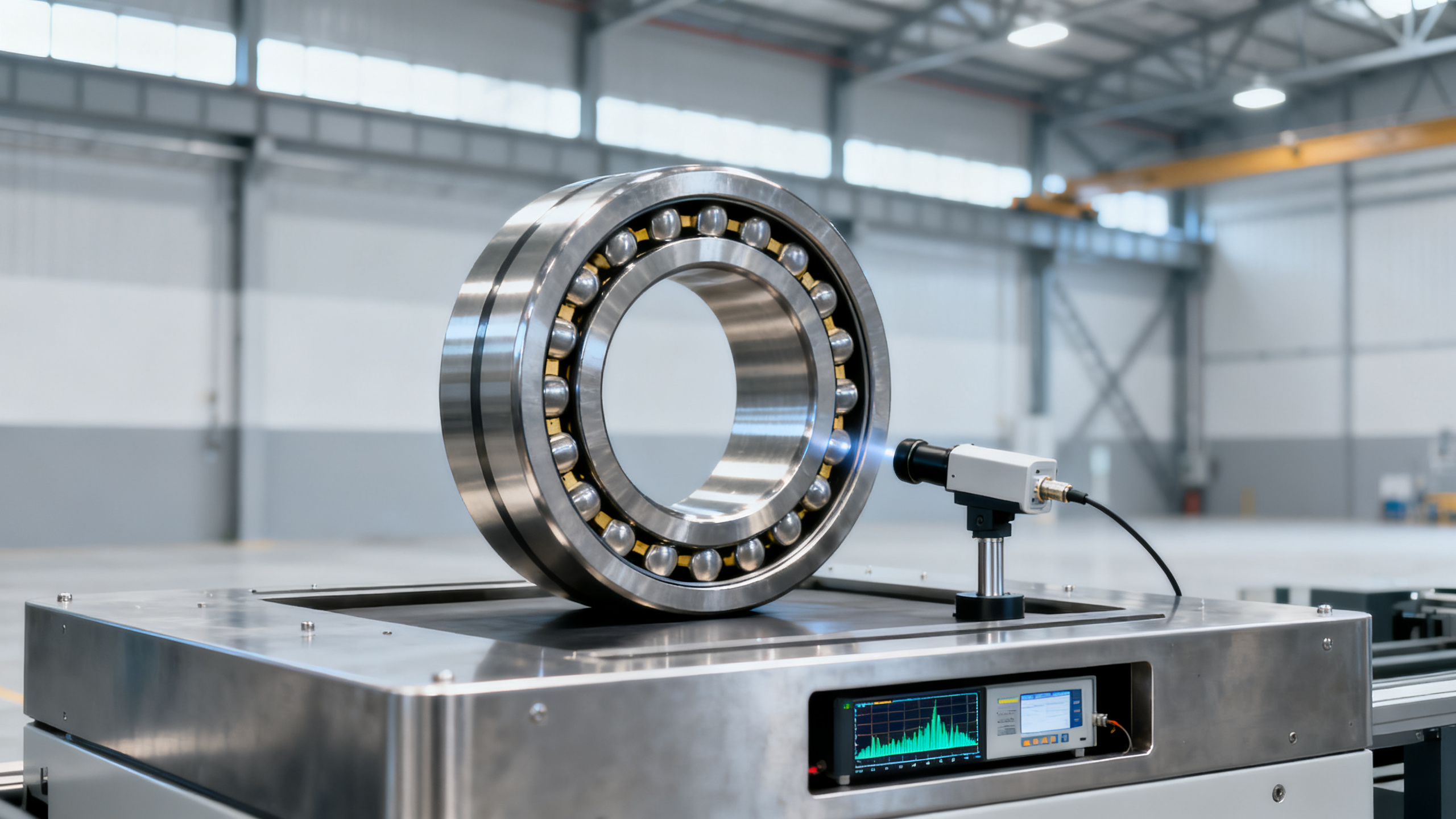
Vietnam’s Ministry of Industry and Trade (MOIT) updated its Technical Regulations on Imported Industrial Mechanical Components on May 7, 2026, mandating ISO 15242-3:2026 for vibration and noise testing of imported rolling bearings. This change directly affects exporters and importers in the industrial bearing supply chain—particularly Chinese manufacturers and distributors serving the Vietnamese market—and signals a measurable shift in compliance requirements, lead times, and cost structures.
Event Overview
On May 7, 2026, Vietnam’s Ministry of Industry and Trade (MOIT) revised Annex III of the Technical Regulations on Imported Industrial Mechanical Components. The revision upgrades the mandatory vibration and noise inspection standard for imported rolling bearings from ISO 15242-1:2017 to ISO 15242-3:2026. Under the new requirement, high-frequency vibration spectrum analysis (10–20 kHz) and acoustic emission (AE) noise threshold evaluation are now compulsory. As confirmed by MOIT’s official notice, this update applies to all rolling bearing imports entering Vietnam as of the effective date.
Which Subsectors Are Affected
Direct Exporters (e.g., Chinese Bearing Manufacturers)
These companies face immediate operational impact because their products must now pass stricter, more granular testing before clearance. The upgrade introduces new measurement domains—not just overall vibration amplitude, but spectral distribution and transient AE events—which many existing quality control protocols do not routinely cover.
Importers & Distributors in Vietnam
Local importers bear responsibility for regulatory compliance at customs. With mandatory third-party testing now required under ISO 15242-3:2026, they experience longer port clearance cycles (12–15 working days versus prior timelines) and higher certification costs—up approximately 37% per batch, according to MOIT’s implementation guidance.
Supply Chain Service Providers (e.g., Testing Labs, Customs Brokers)
Testing laboratories accredited for ISO 15242-3:2026 are limited in Vietnam and regionally. This scarcity increases dependency on international labs, adding coordination complexity and turnaround time. Customs brokers must now verify test reports against the updated standard’s specific clauses—not just the standard number—raising documentation scrutiny.
What Relevant Enterprises or Practitioners Should Focus On and How to Respond
Monitor MOIT’s official technical guidance documents
MOIT has published the revised Annex III but has not yet released detailed interpretation notes or transitional arrangements. Enterprises should track MOIT’s website and authorized notification channels for clarifications on scope (e.g., exemptions for low-volume or spare-part shipments) and enforcement phasing.
Verify current test reports against ISO 15242-3:2026’s specific requirements
ISO 15242-3:2026 introduces distinct pass/fail criteria for AE signal energy thresholds and band-limited RMS values in the 10–20 kHz range—unlike ISO 15242-1:2017. Existing certificates citing only the older standard or generic “ISO 15242” without part number and year are no longer sufficient.
Assess readiness of upstream suppliers and testing partners
Manufacturers should confirm whether their domestic or regional testing partners hold accreditation for ISO 15242-3:2026—and specifically for the 10–20 kHz spectral and AE modules. Where gaps exist, early engagement with labs capable of issuing compliant reports is advisable to avoid shipment delays.
Adjust logistics planning and inventory buffers for extended clearance windows
With verified clearance duration now extended to 12–15 working days, importers and distributors should revise safety stock levels and delivery commitments. Relying on historical clearance timelines may result in stockouts or contractual penalties.
Editorial Perspective / Industry Observation
Observably, this regulatory update reflects Vietnam’s broader trend toward aligning mechanical component import standards with advanced manufacturing benchmarks—not merely harmonizing with ISO numerically, but enforcing higher-resolution performance validation. Analysis shows that the inclusion of AE-based noise thresholding suggests growing emphasis on early-stage defect detection, potentially linked to end-user reliability expectations in sectors like automotive assembly and industrial automation. From an industry perspective, this is less a one-off compliance adjustment and more a signal of tightening technical gatekeeping in Vietnam’s import regime—especially for components where functional noise and vibration correlate strongly with service life. It is not yet a full market barrier, but it does raise the baseline for market access.
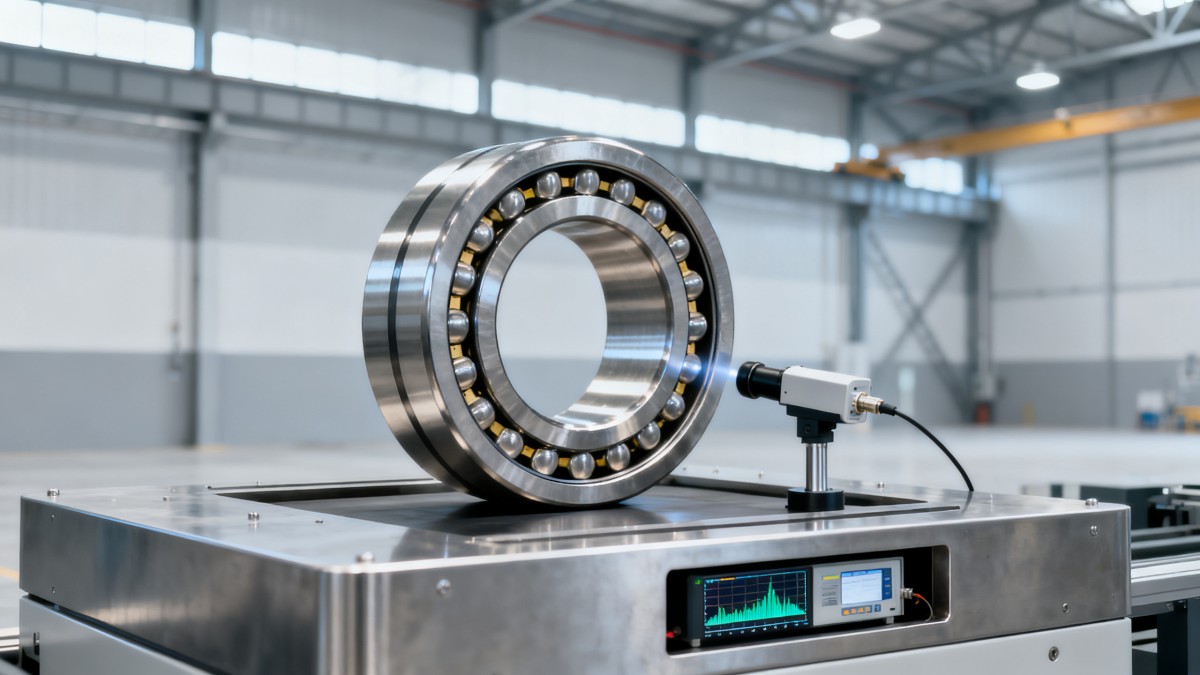
Conclusion: This MOIT update marks a concrete step in Vietnam’s technical regulation evolution for mechanical components. Its significance lies not in sweeping scope changes, but in the precision and granularity of the new verification requirements—and the associated time and cost implications for cross-border bearing trade. Currently, it is best understood as an enforceable compliance milestone requiring operational adaptation, rather than a strategic pivot or long-term policy shift.
Source: Vietnam Ministry of Industry and Trade (MOIT), Technical Regulations on Imported Industrial Mechanical Components, Annex III revision dated May 7, 2026. Note: Implementation details—including potential transitional periods or sector-specific exceptions—remain subject to ongoing MOIT announcements and require continued monitoring.
Technical Specifications
- How to Select an Emissions Monitoring System Analyzer for Compliance ReportingAuthor :Precision Metrology Expert
- How to Select an Access Control Management System for Multi-Site FacilitiesAuthor :Safety Compliance Lead
- Portable Gas Monitor Calibration: How Often Is It Needed for Safe Confined-Space Work?Author :Precision Metrology Expert
Expert Insights

Chief Security Architect
Dr. Thorne specializes in the intersection of structural engineering and digital resilience. He has advised three G7 governments on industrial infrastructure security.
Related Analysis
- Sep 21, 2026How to Select an Emissions Monitoring System Analyzer for Compliance ReportingAuthor :Precision Metrology Expert
- Sep 20, 2026How to Select an Access Control Management System for Multi-Site FacilitiesAuthor :Safety Compliance Lead
- Sep 19, 2026Portable Gas Monitor Calibration: How Often Is It Needed for Safe Confined-Space Work?Author :Precision Metrology Expert
Core Sector // 01
Security & Safety
- Selecting Low-Friction Pneumatic Seals for High-Cycle, Low-Pressure CylindersAuthor :Heavy Industry Strategist

- Selecting Spherical Roller Bearings for Mining: Load, Contamination, and Service LifeAuthor :Heavy Industry Strategist

- Do Deep Groove Ball Bearings Need Special Seals in Coastal Humidity?Author :Heavy Industry Strategist

- How to Select Anti Vibration Rubber Shock Absorbers for Machinery and EquipmentAuthor :Heavy Industry Strategist

- When to Specify Induction Hardened Slewing Ring Bearings for Heavy-Duty EquipmentAuthor :Heavy Industry Strategist

- How to Evaluate Weather Resistant EPDM Extrusion for Outdoor Sealing ApplicationsAuthor :Heavy Industry Strategist

- Bearing and Seal Lead Times Stretch to 22 WeeksAuthor :Heavy Industry Strategist

- Angular Contact Ball Bearings Explained: Contact Angle, Load Capacity, and Common UsesAuthor :Heavy Industry Strategist