Mechanical components for construction equipment that fail early
Author
Date Published
Reading Time
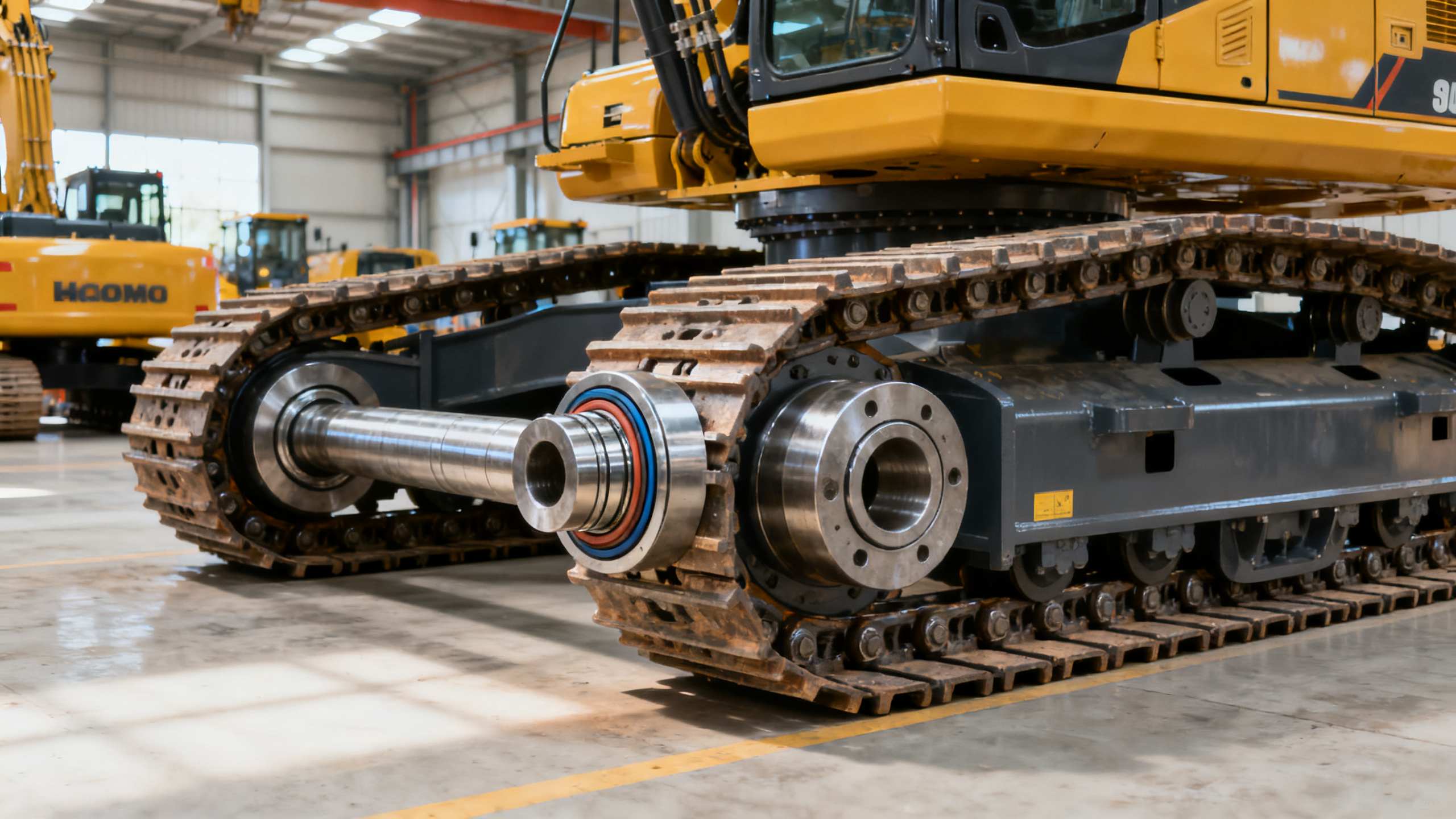
When mechanical components for construction equipment fail earlier than expected, maintenance teams face rising downtime, repeat repairs, and avoidable safety risks. Understanding which parts wear out first—and why—helps aftermarket service professionals diagnose problems faster, plan smarter replacements, and extend machine life. This article explores the most failure-prone components, common root causes, and practical maintenance insights for demanding jobsite conditions.
What early failure means in construction equipment maintenance
In the field, early failure does not simply mean a part broke. It means a component reached unacceptable wear, loss of tolerance, cracking, leakage, deformation, or functional instability well before its expected service interval. For aftermarket maintenance teams, this distinction matters because not all failed parts are caused by poor product quality. Many failures in mechanical components for construction equipment begin with a chain of lubrication loss, contamination, overload, poor alignment, improper installation, or harsh duty cycles that were not fully accounted for during service planning.
Construction machines operate in one of the toughest industrial environments: shock loads, dust ingress, moisture, uneven operator behavior, repeated starts and stops, and long idle periods followed by sudden full-load operation. Under these conditions, even robust mechanical components for construction equipment can fail early if inspection routines are weak or replacement parts do not match the original load and tolerance requirements.
Why the industry pays close attention to failure-prone components
Across the heavy equipment sector, maintenance strategies are shifting from reactive replacement to condition-based intervention. EPC contractors, fleet owners, and service teams increasingly need reliable intelligence on parts that create repeated stoppages. A seized bearing, worn pin, cracked bushing, failed seal, or stretched track chain can shut down excavation, lifting, grading, or material handling operations far beyond the cost of the part itself. The downstream impact includes project delay, labor idle time, site safety exposure, and emergency sourcing pressure.
This is why data-led maintenance guidance has become more valuable than generic spare-parts lists. Platforms such as GIC support industrial decision-makers by connecting technical failure patterns with compliance, metallurgy, reliability, and service practice. For aftermarket professionals, that means better decisions on inspection intervals, stocking priorities, and root-cause analysis for mechanical components for construction equipment.
The components most likely to fail early
Not every machine has the same weak points, but several categories consistently show accelerated wear across excavators, loaders, dozers, rollers, cranes, and compact equipment. The table below provides a practical overview for maintenance planning.
Among all mechanical components for construction equipment, pins, bushings, bearings, and seals usually top the list because they sit directly at the intersection of load, movement, contamination, and lubrication dependency. These are also the parts most likely to show progressive failure before catastrophic breakdown—if technicians know what signs to watch for.
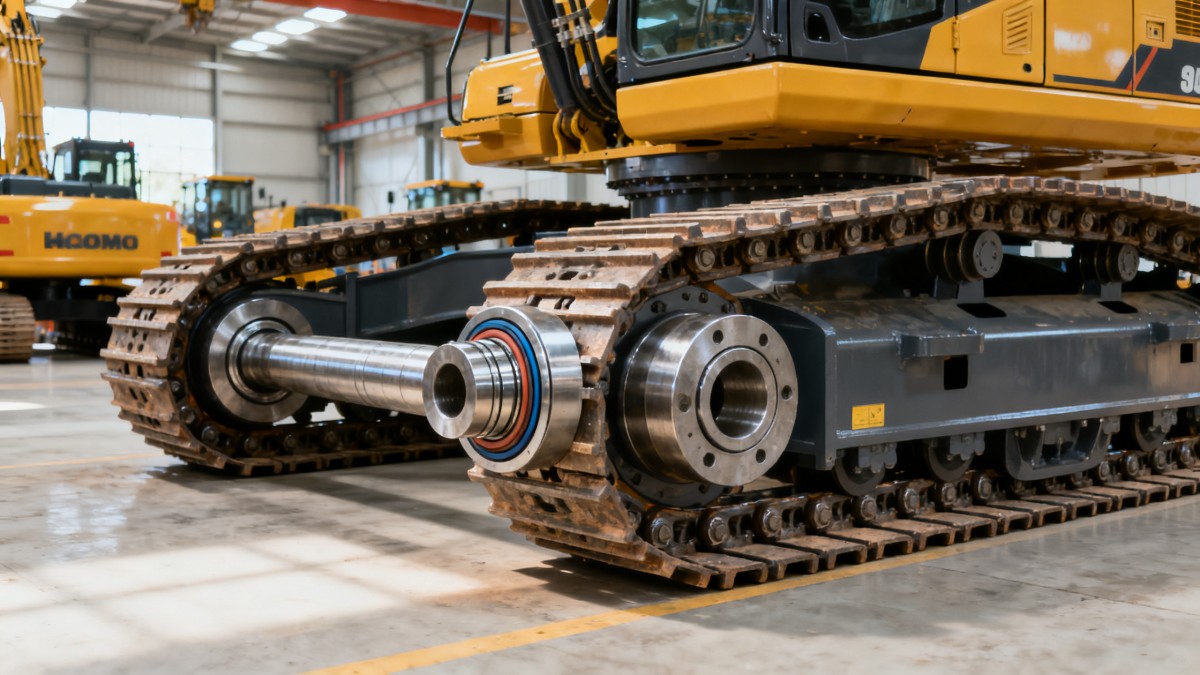
How early failures develop in real jobsite conditions
Early failure rarely comes from a single cause. More often, it develops as a sequence of small service deviations. A dry pin begins to wear. The extra clearance changes load distribution. Shock loads rise in neighboring joints. Dust enters through a compromised seal. Grease no longer stays in place. The result is not one bad part, but a system-level degradation pattern.
For bearings, the pattern may begin with slight contamination or incorrect preload during installation. For gears, it can start with misalignment, low lubricant film strength, or repeated torque spikes. For undercarriage parts, poor track tension and abrasive ground conditions can cut service life dramatically. Understanding these progression paths helps aftermarket technicians move beyond part swapping and toward repeatable failure prevention.
Root causes behind the weakest mechanical components for construction equipment
The most common root causes can be grouped into six practical categories. First is contamination. Fine dust, mud, water, and metallic debris are constant threats, especially where sealing surfaces are already worn. Second is lubrication failure, including wrong grease type, insufficient relubrication frequency, blocked grease passages, or overgreasing that damages seals.
Third is misalignment. This appears in shafts, couplings, bores, mounting faces, and articulated joints. Even small alignment errors can accelerate fatigue and uneven loading. Fourth is overload, often linked to attachments, aggressive operating style, impact use, or machine application outside intended duty limits. Fifth is installation error, such as incorrect torque, improper fits, damaged mating surfaces, or skipped run-in steps. Sixth is material and specification mismatch. Replacement mechanical components for construction equipment must be selected for hardness, dimensional tolerance, sealing compatibility, and real field load—not just nominal interchangeability.
Where aftermarket maintenance teams see the biggest value
For service personnel, the value of understanding high-risk components is immediate. It improves triage speed when a machine arrives with vague symptoms such as vibration, looseness, fluid leakage, uneven movement, or noise under load. It also supports better planning of consumables and repair kits. Instead of stocking only complete assemblies, maintenance teams can prioritize fast-moving wear items such as bushings, seal kits, bearings, wear rings, retaining hardware, and undercarriage parts.
A deeper grasp of failure-prone mechanical components for construction equipment also supports customer communication. When technicians can explain not just what failed but why it failed early, they build trust and reduce disputes over repeat service. This is especially important in industrial environments where uptime commitments and safety accountability are tightly connected.
Typical failure patterns by machine area
Different machine zones create different mechanical risks. Organizing inspections by area often works better than checking parts in isolation.
Front attachment and work tool linkage
Boom, arm, bucket, coupler, and linkage points experience constant articulation and impact. Pins and bushings here often show accelerated wear, especially if grease intervals are missed. Crack initiation around bosses and mounting ears should also be monitored where looseness has already developed.
Power transmission area
Shafts, couplings, bearings, gears, and spline interfaces are vulnerable to misalignment and shock loading. Early warning signs include heat, metallic noise, abnormal backlash, and vibration that changes with load. These symptoms should trigger dimensional and lubrication checks before full disassembly.
Undercarriage and travel system
Tracked machines often consume a large share of maintenance budgets here. Rollers, idlers, sprockets, and track chains degrade quickly in abrasive terrain. Uneven wear usually indicates tension, alignment, or application mismatch rather than isolated part weakness.
Rotating and sealing interfaces
Seals fail early where shafts are scored, housings are out of tolerance, pressure spikes occur, or heat hardens elastomers. Because seals protect larger assemblies, their failure often leads to cascading damage in nearby mechanical components for construction equipment.
Practical maintenance steps that reduce repeat failures
A strong preventive approach starts with inspection discipline. Measure wear, do not guess it. Pin-to-bushing clearance, shaft runout, gear backlash, track tension, and seal land condition should be recorded against machine hours and application type. Trend data is far more useful than isolated observations.
Second, protect lubrication quality. Use the correct lubricant grade, confirm grease is actually reaching the interface, and inspect purge condition for contamination. Third, verify fits and alignment during installation. Many early failures are introduced during repair, not operation. Fourth, replace related wear partners together when the contact relationship has already changed. Installing a new pin into a severely worn bushing, for example, may only create short-term improvement.
Fifth, consider material and duty compatibility when selecting aftermarket parts. Heat treatment, surface finish, hardness profile, sealing material, and dimensional consistency all affect field life. In critical equipment fleets, it is often wiser to qualify suppliers based on documented performance, testing standards, and technical support rather than unit price alone.
What to evaluate when choosing replacement mechanical components for construction equipment
Aftermarket teams should evaluate replacement parts through a reliability lens. Key checks include tolerance control, metallurgy, surface treatment, sealing design, traceability, and compatibility with OEM dimensions and load paths. Where relevant, look for supporting evidence tied to ISO-based quality systems, material certificates, and application-specific testing. For mission-critical fleets, supplier responsiveness and failure-analysis support are also part of the value equation.
This evaluation process matters because the phrase mechanical components for construction equipment covers a broad range of parts, and not all of them behave the same under dynamic loads. A component that performs well in light-duty utility equipment may underperform badly in quarry, demolition, or continuous earthmoving service.
Frequently asked questions from maintenance teams
Which components usually fail first?
In many fleets, pins, bushings, seals, bearings, and undercarriage wear parts are the earliest to show measurable deterioration because they work under movement, load, and contamination at the same time.
Are early failures mostly caused by bad parts?
Not usually. Part quality matters, but lubrication, alignment, contamination control, installation quality, and machine application often drive the failure timeline more strongly.
How can service teams reduce repeat repairs?
Track wear measurements, inspect mating parts, use the right replacement specifications, and document root causes after each major failure. Repeat repairs drop when maintenance teams treat failures as patterns instead of isolated events.
A practical direction for stronger uptime
The most failure-prone mechanical components for construction equipment are usually not mysterious. They are the parts exposed to the harshest combinations of load, motion, impact, and contamination. For aftermarket maintenance professionals, the opportunity is clear: identify high-risk wear zones early, connect symptoms to root causes, and choose replacement strategies based on real service conditions rather than assumptions.
By combining disciplined inspection, correct installation, lubrication control, and better component qualification, maintenance teams can reduce downtime, improve safety, and extend the working life of valuable equipment. In demanding industrial operations, that is not just a maintenance advantage—it is an operational requirement.
Technical Specifications
- How to Select an Emissions Monitoring System Analyzer for Compliance ReportingAuthor :Precision Metrology Expert
- How to Select an Access Control Management System for Multi-Site FacilitiesAuthor :Safety Compliance Lead
- Portable Gas Monitor Calibration: How Often Is It Needed for Safe Confined-Space Work?Author :Precision Metrology Expert
Expert Insights

Chief Security Architect
Dr. Thorne specializes in the intersection of structural engineering and digital resilience. He has advised three G7 governments on industrial infrastructure security.
Related Analysis
- Sep 21, 2026How to Select an Emissions Monitoring System Analyzer for Compliance ReportingAuthor :Precision Metrology Expert
- Sep 20, 2026How to Select an Access Control Management System for Multi-Site FacilitiesAuthor :Safety Compliance Lead
- Sep 19, 2026Portable Gas Monitor Calibration: How Often Is It Needed for Safe Confined-Space Work?Author :Precision Metrology Expert
Core Sector // 01
Security & Safety
- Selecting Low-Friction Pneumatic Seals for High-Cycle, Low-Pressure CylindersAuthor :Heavy Industry Strategist

- Selecting Spherical Roller Bearings for Mining: Load, Contamination, and Service LifeAuthor :Heavy Industry Strategist

- Do Deep Groove Ball Bearings Need Special Seals in Coastal Humidity?Author :Heavy Industry Strategist

- How to Select Anti Vibration Rubber Shock Absorbers for Machinery and EquipmentAuthor :Heavy Industry Strategist

- When to Specify Induction Hardened Slewing Ring Bearings for Heavy-Duty EquipmentAuthor :Heavy Industry Strategist

- How to Evaluate Weather Resistant EPDM Extrusion for Outdoor Sealing ApplicationsAuthor :Heavy Industry Strategist

- Bearing and Seal Lead Times Stretch to 22 WeeksAuthor :Heavy Industry Strategist

- Angular Contact Ball Bearings Explained: Contact Angle, Load Capacity, and Common UsesAuthor :Heavy Industry Strategist