MIIT Optimizes Export Certification for Industrial Optical Lenses and Filters
Author
Date Published
Reading Time
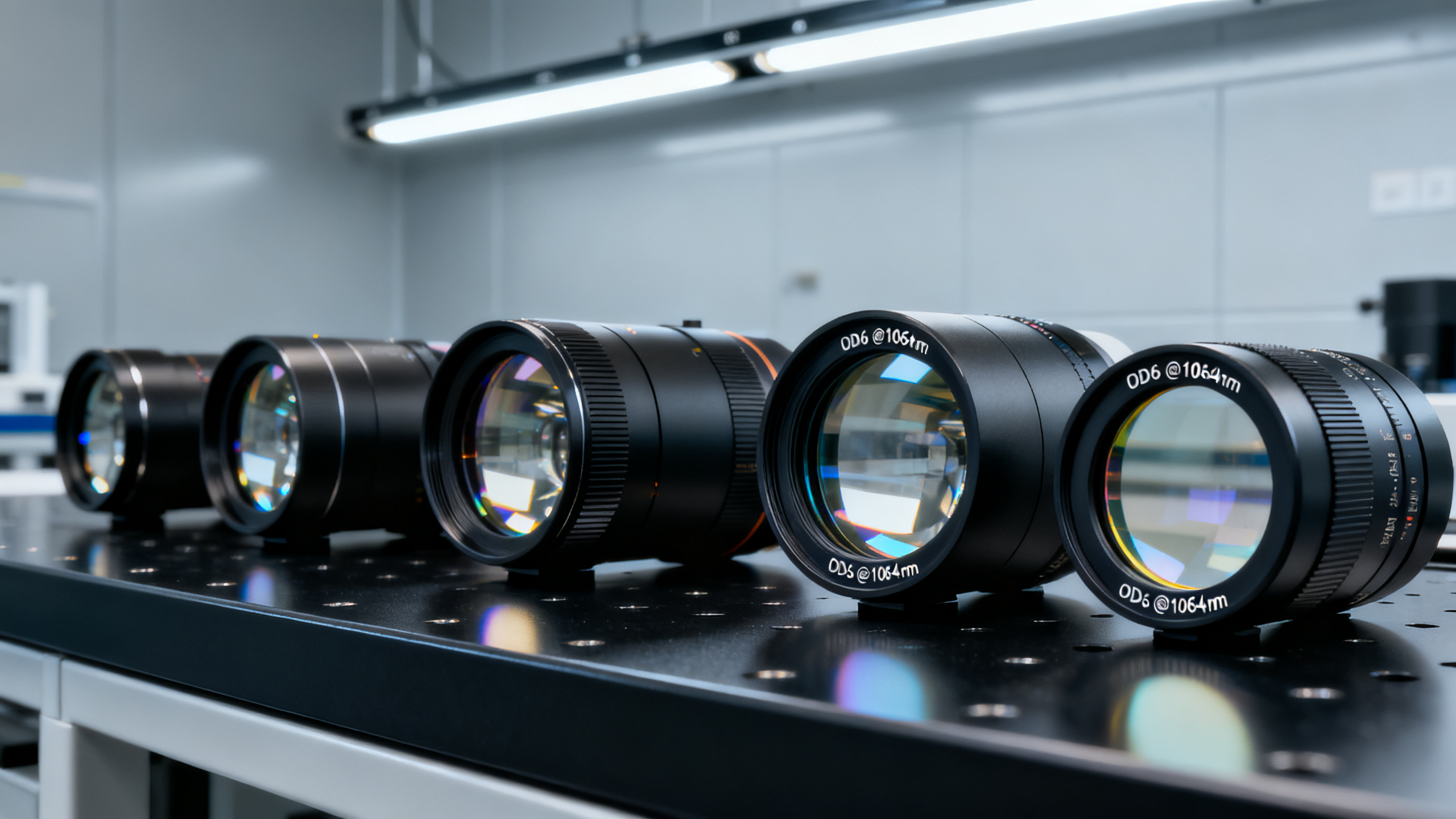
On April 13, 2026, China’s Ministry of Industry and Information Technology (MIIT) issued a notice outlining its 2026 quality work plan, with emphasis on strengthening metrological foundations and improving reliability of critical optical instrument components. The initiative directly impacts manufacturers and exporters of industrial optical lenses, laser filters, and core spectral analysis components—accelerating international market access through streamlined certification pathways.
Official Policy Rollout and Key Measures
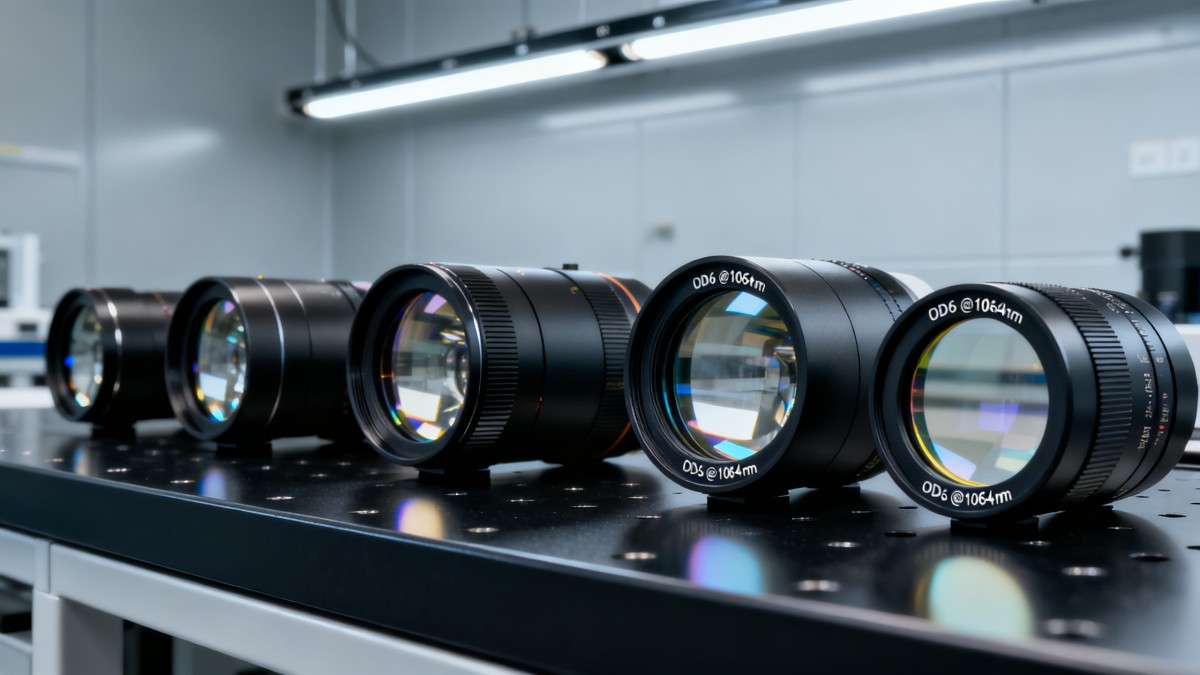
On April 13, 2026, MIIT released a formal notice titled “Deployment of Quality Work for 2026”, which explicitly calls for enhanced metrological support and reliability enhancement of key optical instrument components. The notice affirms institutional support for enterprises seeking multilateral mutual recognition certifications—including CE (European Union), JIS (Japan), and KS (Korea). It further specifies that industrial optical lenses, laser filters, and core spectral analysis components may undergo pre-testing at laboratories accredited under the CNAS-ILAC MRA framework, thereby shortening overseas regulatory approval timelines.
Impact Across Supply Chain Roles
Export-Oriented Manufacturing Enterprises
These firms face revised expectations in product conformity verification. With MIIT’s endorsement of CE, JIS, and KS pathways, they must now prioritize early engagement with CNAS-ILAC MRA-accredited labs—not only for final certification but also for design-stage validation. Delays in test planning or misalignment with target-market technical requirements may now directly affect shipment schedules.
Raw Material and Component Procurement Firms
Suppliers of optical glass, coated substrates, and precision mechanical housings will encounter increased demand for traceable material certifications and batch-level metrological documentation. Buyers are likely to require evidence of compatibility with CE/JIS/KS testing protocols—especially regarding thermal stability, spectral transmission consistency, and long-term irradiation resistance.
Contract Manufacturing and Assembly Providers
Firms engaged in OEM/ODM production of optical modules must ensure process controls meet metrological traceability standards required by CNAS-ILAC MRA labs. Calibration records for assembly jigs, environmental chamber parameters, and interferometric inspection equipment may become mandatory audit items during pre-certification reviews.
Supply Chain Compliance and Testing Service Providers
Labs, certification bodies, and technical consultants specializing in optical device conformity will see heightened demand for CE/JIS/KS gap assessments, test protocol harmonization, and pre-audit readiness reviews. Their role shifts from post-hoc verification toward upstream technical advisory support aligned with MIIT’s reliability targets.
Strategic Priorities for Enterprise Action
Align Pre-Certification Testing with CNAS-ILAC MRA-Accredited Facilities
Enterprises should map their current test plans against the scope of accreditation held by domestic CNAS-ILAC MRA labs—particularly verifying coverage for photometric stability, laser-induced damage threshold (LIDT), and spectral bandwidth repeatability. Redundant or non-accredited testing cycles should be phased out to avoid rework.
Integrate Metrological Traceability into Design and Process Documentation
Design files, bill-of-materials specifications, and manufacturing work instructions must explicitly reference measurement uncertainty budgets, calibration intervals, and traceable reference standards—especially where CE Annex IV or JIS B 7021 compliance is anticipated.
Prepare Technical Dossiers for Multilateral Recognition Pathways
Rather than developing separate dossiers for CE, JIS, and KS, companies should adopt a unified technical file structure based on ISO/IEC 17065 and IEC 61340 principles, annotated for jurisdiction-specific annexes. This reduces duplication and strengthens cross-border acceptance.
Review Supplier Qualification Criteria for Critical Subcomponents
Procurement policies must now include verification of suppliers’ participation in MIIT-endorsed reliability improvement programs—and confirmation that subcomponent test reports originate from CNAS-ILAC MRA-accredited sources, not internal or non-accredited third-party labs.
Industry Perspective: Beyond Certification Efficiency
Analysis shows this MIIT initiative signals a structural shift—from viewing export certification as a procedural hurdle to treating it as an integrated element of product development discipline. Observably, the focus on optical component reliability reflects growing global scrutiny of performance degradation under real-world operating conditions, especially in semiconductor lithography, biomedical imaging, and aerospace sensing applications. It is more appropriate to understand this as a capacity-building measure: by anchoring pre-testing in CNAS-ILAC MRA labs, MIIT aims to raise baseline technical competence across the optical hardware supply chain—not merely expedite paperwork. What deserves closer attention is how rapidly domestic labs scale their capabilities in accelerated life testing, spectral aging, and laser durability assessment—areas where current global leadership remains concentrated in Europe and Japan.
Broader Significance for Optical Hardware Competitiveness
This policy does not introduce new legal obligations—but reshapes competitive advantage. Firms that proactively align with MIIT’s metrology and reliability framework gain earlier visibility into evolving international conformity expectations, reduce time-to-market variance, and strengthen technical credibility with global system integrators. However, success hinges less on speed of certification acquisition and more on depth of integration between R&D, metrology, and regulatory strategy.
Source Attribution and Monitoring Guidance
This article is derived exclusively from the provided information: title, event date (April 13, 2026), and official summary. Specific official source links were not provided in the input and should be verified continuously. Stakeholders are advised to monitor upcoming MIIT implementation guidelines, updates to CNAS accreditation scopes for optical testing, revisions to tender requirements in EU, Japanese, and Korean public procurement portals, and feedback from industry associations such as the China Optics and Optoelectronics Manufacturers Association (COEMA) and the International Commission on Illumination (CIE).
Technical Specifications
- How to Select Electronic Hotel Key Card Locks for Guest Rooms and Staff AreasAuthor :Safety Compliance Lead
- How to Select Lab Instruments for Reliable Chemical Analysis WorkflowsAuthor :Precision Metrology Expert
- How to Size a UPS for Server Rooms: Load, Runtime, and Redundancy FactorsAuthor :Grid Infrastructure Analyst
Expert Insights

Chief Security Architect
Dr. Thorne specializes in the intersection of structural engineering and digital resilience. He has advised three G7 governments on industrial infrastructure security.
Related Analysis
- Sep 17, 2026How to Select Electronic Hotel Key Card Locks for Guest Rooms and Staff AreasAuthor :Safety Compliance Lead
- Sep 16, 2026How to Select Lab Instruments for Reliable Chemical Analysis WorkflowsAuthor :Precision Metrology Expert
- Sep 15, 2026How to Size a UPS for Server Rooms: Load, Runtime, and Redundancy FactorsAuthor :Grid Infrastructure Analyst
Core Sector // 01
Security & Safety
- How to Select Electronic Hotel Key Card Locks for Guest Rooms and Staff AreasAuthor :Safety Compliance Lead

- How to Select Lab Instruments for Reliable Chemical Analysis WorkflowsAuthor :Precision Metrology Expert

- How to Size a UPS for Server Rooms: Load, Runtime, and Redundancy FactorsAuthor :Grid Infrastructure Analyst

- Stainless Steel Welded Tube Applications: Matching Tube Supply to Fabrication NeedsAuthor :Heavy Industry Strategist

- Selecting Low-Friction Pneumatic Seals for High-Cycle, Low-Pressure CylindersAuthor :Heavy Industry Strategist

- Selecting Spherical Roller Bearings for Mining: Load, Contamination, and Service LifeAuthor :Heavy Industry Strategist

- What to Check When Sourcing Vibration Meters Wholesale for Industrial MaintenanceAuthor :Precision Metrology Expert

- How to Size a Wafer Butterfly Valve for HVAC Chilled-Water and Heating LoopsAuthor :Environmental Engineering Director