Smart peephole viewers: night vision quality is not all the same
Author
Date Published
Reading Time
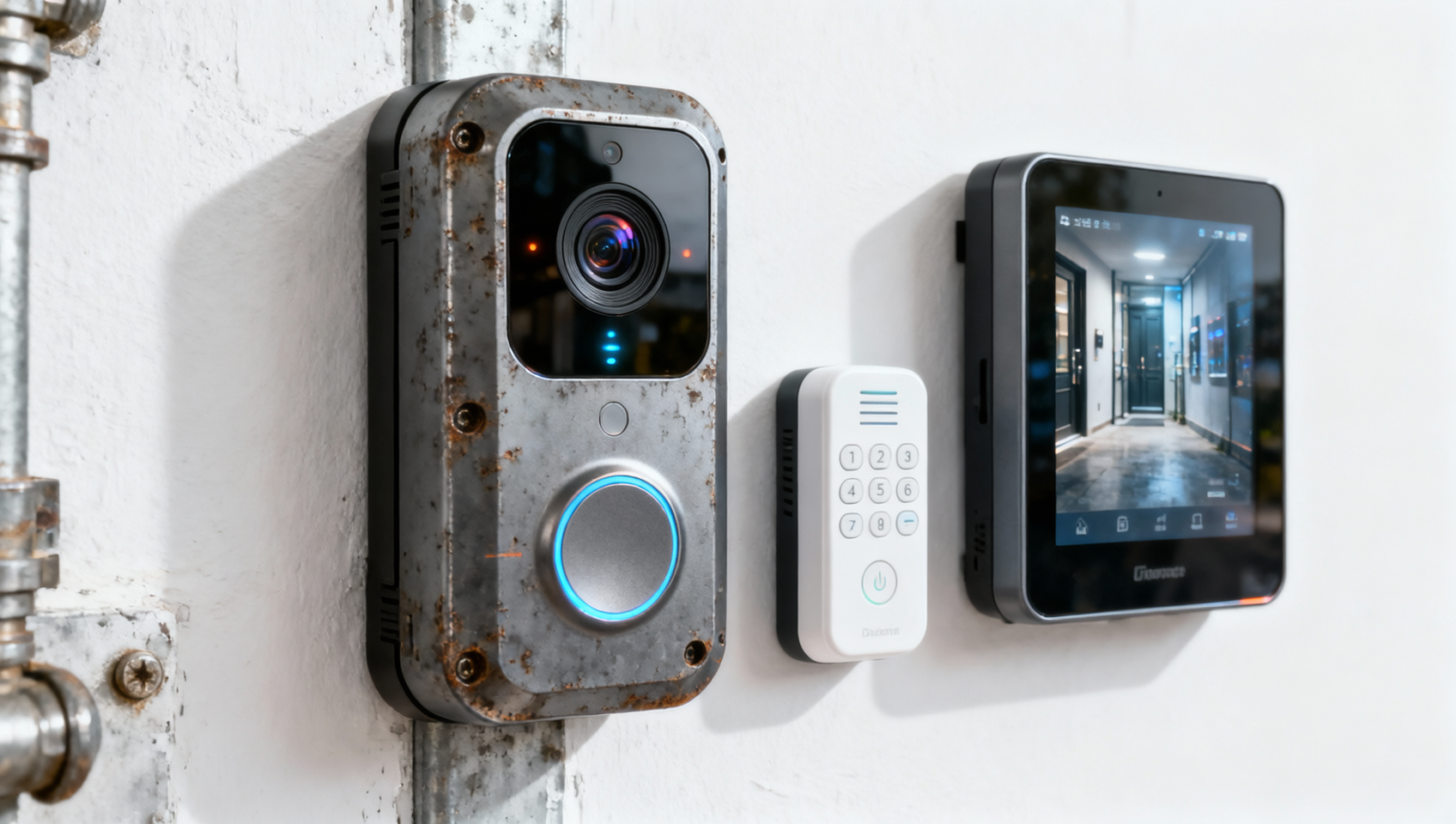
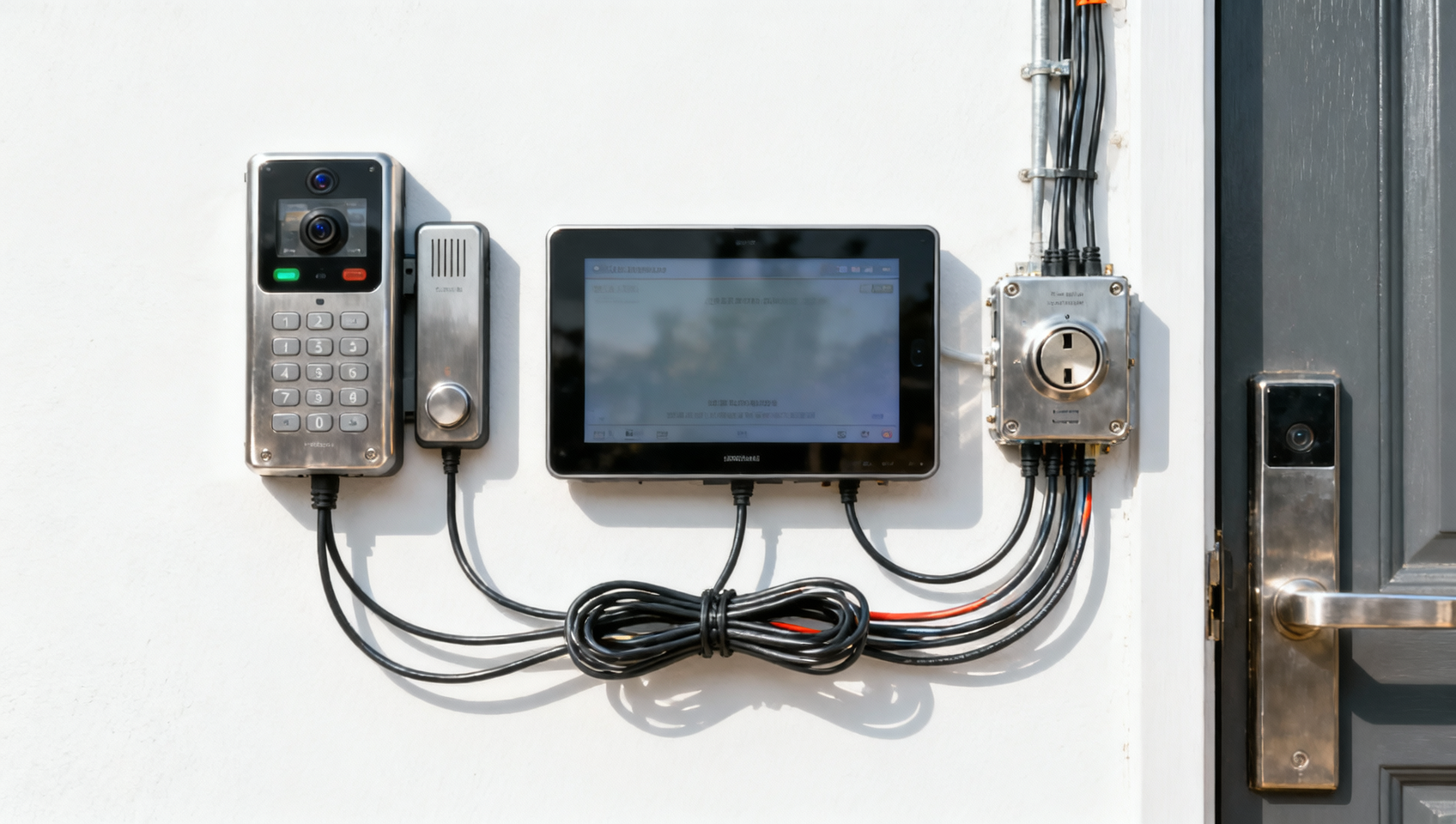
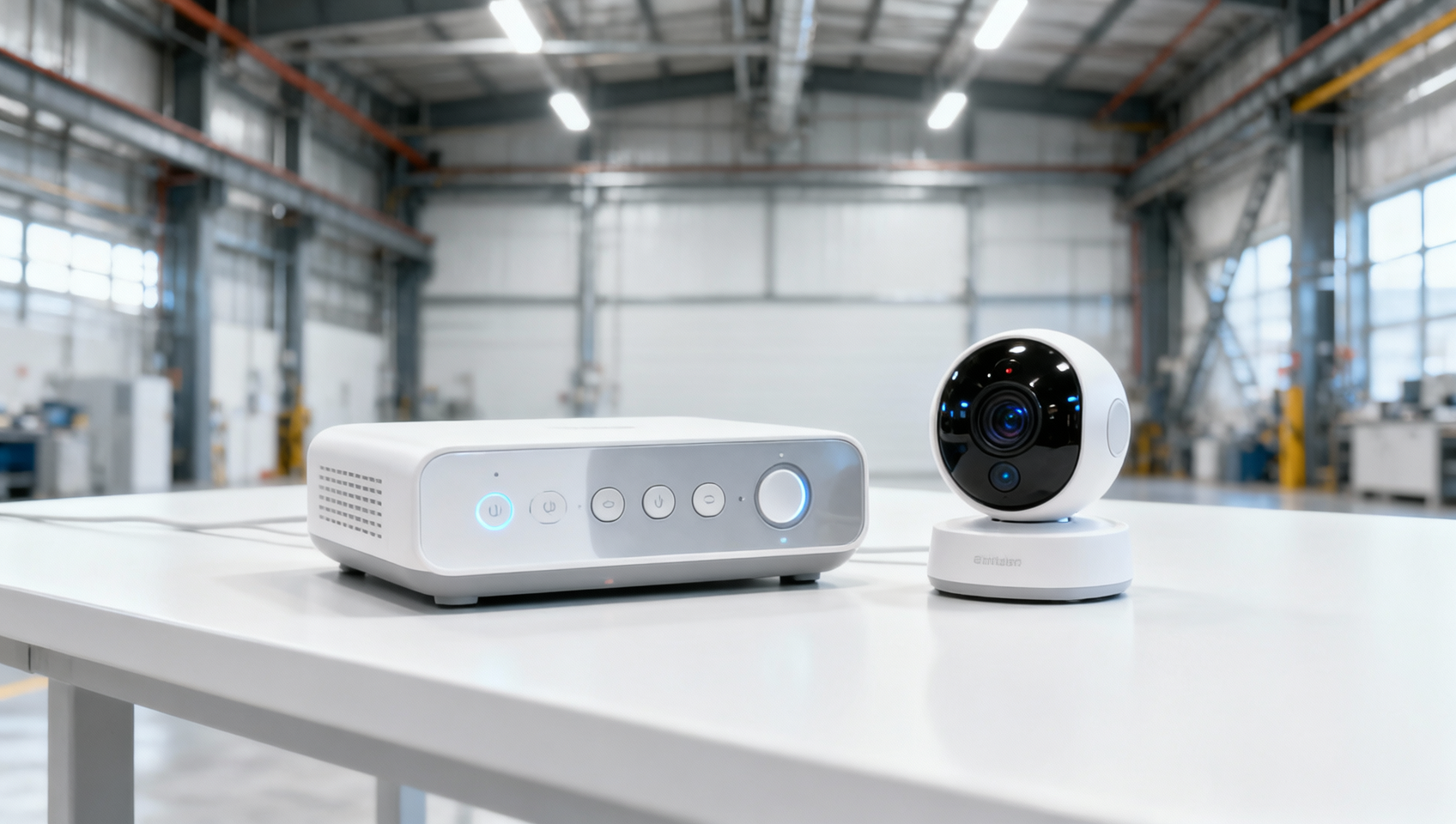
Not all smart peephole viewers deliver the same night vision performance, and that difference can directly affect safety, usability, and buying decisions. For users, buyers, and decision-makers comparing smart peephole viewers, video door phones wholesale options, and wireless intercom systems, understanding low-light clarity, motion detection, and display quality is essential before selecting the right solution.
Why night vision quality changes real-world security outcomes
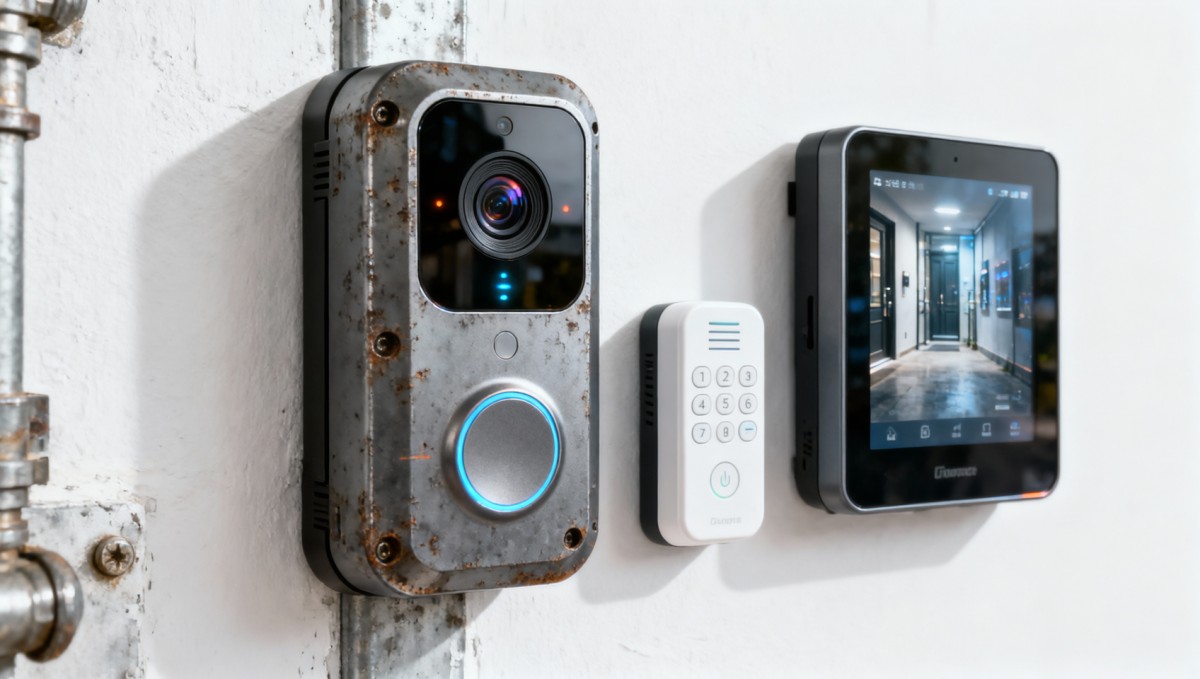
In product comparisons, many buyers focus on camera resolution first. That is understandable, but in smart peephole viewers, night vision quality often matters more than daytime image sharpness. A device that looks acceptable at noon can become nearly unusable after sunset, in dim corridors, covered apartment entrances, or low-light villas. For operators and end users, the issue is not only whether an image appears, but whether a face, package, or suspicious movement can be recognized within 1-3 meters.
This matters across residential, hospitality, mixed-use property, and light commercial settings. Procurement teams evaluating video door phones wholesale programs or wireless intercom systems typically compare multiple lines in the same budget band, yet low-light performance may vary widely because of differences in sensor size, infrared design, exposure tuning, noise reduction, and screen rendering. Two products may share similar marketing claims while producing very different results in actual corridors at night.
For enterprise decision-makers, poor night vision creates a chain of downstream costs. It increases missed visitor identification, false motion alerts, user complaints, and service calls. In properties with moderate traffic, even a small rise in after-hours uncertainty can affect staffing routines and tenant satisfaction. That is why selection should be based on use conditions, not headline specs alone.
Global Industrial Core (GIC) approaches this category from a systems perspective. In security and safety procurement, isolated specifications rarely tell the full story. The right evaluation method connects low-light imaging, installation environment, display behavior, power management, compliance requirements, and sourcing reliability into one decision framework that procurement directors and facility teams can actually use.
Where low-light failure usually appears
- Apartment hallways with weak overhead lighting, where a smart peephole viewer must identify visitors under uneven brightness and wall reflections.
- Villa or house entrances, where the outdoor background can be dark for 8-12 hours per night and motion occurs at wider angles.
- Rental or managed properties, where many doors are installed in batches and inconsistent night vision leads to uneven tenant feedback.
- Sites considering wireless intercom systems, where image transmission, screen quality, and motion-triggered recording must remain usable under low-light conditions.
What actually determines smart peephole viewer night vision quality?
A useful evaluation starts with the imaging chain. In practice, night vision quality is shaped by at least 5 core elements: image sensor sensitivity, lens aperture, infrared illumination pattern, image processing, and display output. If one of these elements is weak, the entire user experience suffers. This is why a smart peephole viewer with a nominally higher pixel count may still underperform a lower-resolution model that has better low-light tuning.
Sensor behavior is especially important. In low light, larger effective light capture generally supports cleaner images, while aggressive digital brightening can introduce noise, smear faces, and blur motion. Buyers comparing video door phones wholesale listings should ask whether the vendor can explain actual low-light performance conditions, not just quote megapixels. In practical screening, image readability at 1 meter, 2 meters, and 3 meters is more useful than a single resolution claim.
Infrared design also differs widely. Some units illuminate the center well but leave the edge area dark. Others create overexposure at short range, making a visitor’s face too bright to identify. A balanced infrared layout should preserve contour and facial contrast without producing a white bloom effect. For doors facing reflective walls or narrow corridors, this balance becomes even more important.
Display quality is often underestimated. A camera may capture usable footage, but if the indoor display panel has poor contrast or narrow brightness control, the operator still cannot judge who is outside. This issue appears frequently in low-cost bundles, especially when smart peephole viewers are sold together with wireless intercom systems aimed at entry-level projects.
Key technical factors procurement teams should verify
The following table helps procurement personnel, facility operators, and sourcing managers compare the low-light factors that most directly affect night usability. It is particularly helpful when screening multiple smart peephole viewer and video door phones wholesale options from different suppliers.
This comparison shows why night vision should be evaluated as a system capability, not a single feature. In many sourcing projects, the highest-risk mistake is assuming that all smart peephole viewers with infrared support will perform similarly. They do not. Differences become visible as soon as the environment includes dim hallways, moving visitors, side-angle approach, or mixed indoor-outdoor lighting.
A practical 4-point test before approval
- Test visitor visibility at 3 distance points: close range, normal doorbell range, and the far end of the expected approach zone.
- Verify image quality under 2 lighting states: weak ambient light and near-total darkness with infrared only.
- Check motion-trigger consistency over at least 10-20 events to identify missed triggers or false activations.
- Review the same event on both live display and recorded playback to confirm usable evidence quality.
Which solution fits which scenario: peephole viewer, video door phone, or wireless intercom?
Not every entry management project needs the same architecture. A standalone smart peephole viewer may fit retrofit residential doors where simple installation and local visual verification are the priority. A video door phone system may be more suitable when remote communication, indoor monitors, or multi-unit integration is required. Wireless intercom systems can add deployment flexibility, but signal stability and night image consistency must still be checked carefully.
For information researchers and procurement teams, the key question is not which category is more advanced, but which one matches the site’s use pattern, door structure, staffing model, and maintenance capacity. In some projects, adding communication features without ensuring reliable low-light image quality only increases cost without solving the real security problem.
A practical selection window often starts with 3 scenario variables: single door or multi-door deployment, expected visitor volume per day, and requirement for remote answer or recording. Once these are clear, it becomes easier to judge whether a smart peephole viewer is enough or whether a broader video door phone or wireless intercom system is justified.
The table below can help compare solution paths before asking suppliers for samples, quotations, or implementation proposals. It is especially useful in mixed procurement where one project may include both retrofit doors and new-build entry points.
The main takeaway is that night vision quality remains central across all three paths. Whether the buyer chooses a smart peephole viewer, a video door phone package, or wireless intercom systems, low-light recognition should remain one of the top 3 decision criteria. Communication features are valuable, but only after the core visual task is handled well.
Common scenario-based recommendations
- For apartment retrofits completed in 1-2 days per batch, prioritize door thickness fit, quick mounting, and stable night viewing over feature-heavy apps.
- For wholesale procurement serving property channels, ask for consistency across batches so the night image does not vary from unit to unit.
- For sites with frequent nighttime deliveries, choose models that preserve motion detail rather than simply increasing brightness.
- For multi-tenant or managed buildings, confirm whether alerts, recording retention, and monitor visibility meet the operating workflow.
How should buyers evaluate procurement risk, compliance, and implementation?
In B2B sourcing, product selection is only one part of the decision. Buyers also need to reduce implementation risk. For smart peephole viewers and related entry communication systems, this means checking door compatibility, installation method, supply stability, documentation quality, after-sales support, and relevant safety or market access requirements. Procurement teams should avoid approving a unit purely from a short demonstration clip.
Compliance review should remain practical and market-specific. Depending on target market and installation environment, purchasers may need to verify common conformity pathways such as CE, UL-related expectations for certain markets, or general electrical safety and EMC documentation. If the project includes power adapters, storage modules, wireless transmission, or battery charging, the documentation package becomes even more important.
From an implementation standpoint, many projects move more smoothly with a 3-stage process: sample validation, pilot installation, then batch rollout. A sample phase of 7-15 days is often sufficient for basic image and fit checks. A pilot phase can then confirm user feedback, false alert rates, and installation time per door. Batch rollout should only begin after these results are reviewed against operational needs.
GIC supports this kind of structured assessment by connecting technical review with sourcing discipline. That is valuable for buyers handling wholesale programs, cross-border supply, or security-related upgrades where a poor product choice affects not just cost, but property trust, maintenance workload, and brand reputation.
A 6-point procurement checklist
- Confirm door structure, thickness range, peephole opening requirements, and whether retrofit installation needs special tools.
- Request night test samples under at least 2 low-light environments relevant to the final site.
- Check wireless stability, storage method, power mode, and expected maintenance cycle for batteries or charging.
- Review available documentation for electrical safety, EMC, user manuals, and labeling consistency.
- Clarify lead time for samples, pilot quantity, and standard batch production, such as 2-4 weeks depending on configuration and order size.
- Define after-sales response scope, spare unit planning, and replacement procedures before signing supply terms.
Typical mistakes that increase total cost
One common mistake is selecting only on unit price. Lower initial cost can be erased by returns, support calls, and repeated installer visits if the night image is unclear. Another mistake is approving based on daytime videos or edited marketing content rather than controlled low-light checks. Procurement teams should also be careful with products that promise broad smart features but provide limited documentation or inconsistent batch quality.
For wholesale buyers, inconsistency is a major risk. If batch A and batch B produce different night vision results, tenant complaints and channel disputes can follow. That is why buyers should ask for fixed key configuration disclosure, sample lock confirmation, and clear communication on any component changes affecting low-light performance.
FAQ: what buyers and users most often ask before choosing
How do I compare night vision if suppliers only show resolution numbers?
Ask for real test footage at 1 meter, 2 meters, and 3 meters in low ambient light and infrared-only conditions. Also request clips with a person approaching, stopping, and turning sideways. This reveals blur, exposure issues, and edge darkness that a resolution number does not show. For a smart peephole viewer, recognition quality matters more than nominal pixel count.
Are wireless intercom systems always better for easier installation?
Not always. Wireless intercom systems reduce cabling, but they still need stable transmission, sensible power planning, and reliable night alert behavior. In some retrofit projects, a simpler smart peephole viewer can deliver faster deployment and lower maintenance. The best option depends on building layout, signal conditions, user habits, and whether two-way communication is essential.
What should video door phones wholesale buyers prioritize first?
Start with 4 areas: batch consistency, night image usability, documentation readiness, and delivery reliability. Wholesale programs often succeed or fail on repeatability. If the display, sensor behavior, or infrared performance changes between shipments, channel support becomes difficult. After that, review packaging, accessories, spare unit policy, and lead times.
How long does a practical evaluation cycle usually take?
For many projects, sample review and installation fit checks can be completed in 7-15 days. A pilot use phase may add 1-2 weeks depending on site access and user feedback collection. More complex projects that combine smart peephole viewers with video door phones wholesale supply or wireless intercom systems may need a 2-4 week validation window before final purchasing approval.
Why work with GIC when comparing smart peephole viewers and entry security solutions?
Global Industrial Core (GIC) is built for buyers who need more than product listings. In security and safety sourcing, decision quality depends on technical interpretation, application fit, compliance awareness, and disciplined supplier evaluation. That is especially true when selecting smart peephole viewers, video door phones wholesale programs, or wireless intercom systems for projects where poor night vision directly affects security confidence.
Our value is practical and decision-oriented. We help teams narrow specifications, compare technical trade-offs, screen documentation, and structure sourcing discussions around operational reality. Instead of treating low-light performance as a marketing phrase, we analyze it alongside installation constraints, usage scenarios, batch procurement concerns, and long-term support expectations.
If you are evaluating new supply options, planning a property upgrade, or preparing a channel procurement program, you can consult GIC on concrete issues such as parameter confirmation, sample assessment, product selection logic, common compliance checkpoints, delivery cycle expectations, and customization boundaries. This shortens internal review time and reduces the chance of approving a visually weak solution that looks acceptable only on paper.
Contact GIC to discuss your target application, required night visibility range, preferred system type, documentation needs, pilot quantity, and quotation scope. Whether you need a focused smart peephole viewer comparison or a broader review of video door phones wholesale and wireless intercom systems, the conversation can start with the exact variables that matter to your project.
Technical Specifications
- RCEP Launches Industrial Waste Equipment Mutual RecognitionAuthor :Environmental Engineering Director
- IEC 61850-90-15:2026 Released — Time Stamp Precision Upgrade Impacts Power Equipment ExportsAuthor :Grid Infrastructure Analyst
- Copper Price Surge Impacts BOM Costs for Industrial Breakers & TransformersAuthor :Grid Infrastructure Analyst
Expert Insights

Chief Security Architect
Dr. Thorne specializes in the intersection of structural engineering and digital resilience. He has advised three G7 governments on industrial infrastructure security.
Related Analysis
- Apr 22, 2026RCEP Launches Industrial Waste Equipment Mutual RecognitionAuthor :Environmental Engineering Director
- Apr 22, 2026IEC 61850-90-15:2026 Released — Time Stamp Precision Upgrade Impacts Power Equipment ExportsAuthor :Grid Infrastructure Analyst
- Apr 22, 2026Copper Price Surge Impacts BOM Costs for Industrial Breakers & TransformersAuthor :Grid Infrastructure Analyst
Core Sector // 01
Security & Safety
- IEC 62061:2026 Effective April 21, 2026 — Safety Controller Recertification RequiredAuthor :Safety Compliance Lead
![]()
- SABIC Launches Industrial Security Localization Plan in Q2 2026Author :Safety Compliance Lead
![]()
- IEC 62061:2026 Released — Higher Certification Bar for Industrial Safety Control SystemsAuthor :Safety Compliance Lead
![]()
- Smart peephole viewers: night vision quality is not all the sameAuthor :Safety Compliance Lead

- Video door phones wholesale: wired systems still win in some jobsAuthor :Safety Compliance Lead

- Wireless intercom systems drop audio in buildings with thick wallsAuthor :Safety Compliance Lead

- Wholesale baby monitors: when extra features become false comfortAuthor :Safety Compliance Lead

- Fleet management devices: hidden costs beyond the monthly planAuthor :Safety Compliance Lead