Fleet management devices: hidden costs beyond the monthly plan
Author
Date Published
Reading Time

At first glance, fleet management devices seem affordable under a simple monthly plan, but the real cost picture is far more complex. For buyers comparing wholesale gps trackers, dashcam dual lens systems, and wholesale dash cams, hidden expenses often emerge in installation, data integration, compliance, maintenance, and driver adoption. Understanding these overlooked factors helps procurement teams and decision-makers avoid budget surprises and build a safer, more efficient fleet strategy.
Why the monthly fee rarely reflects the full fleet technology budget
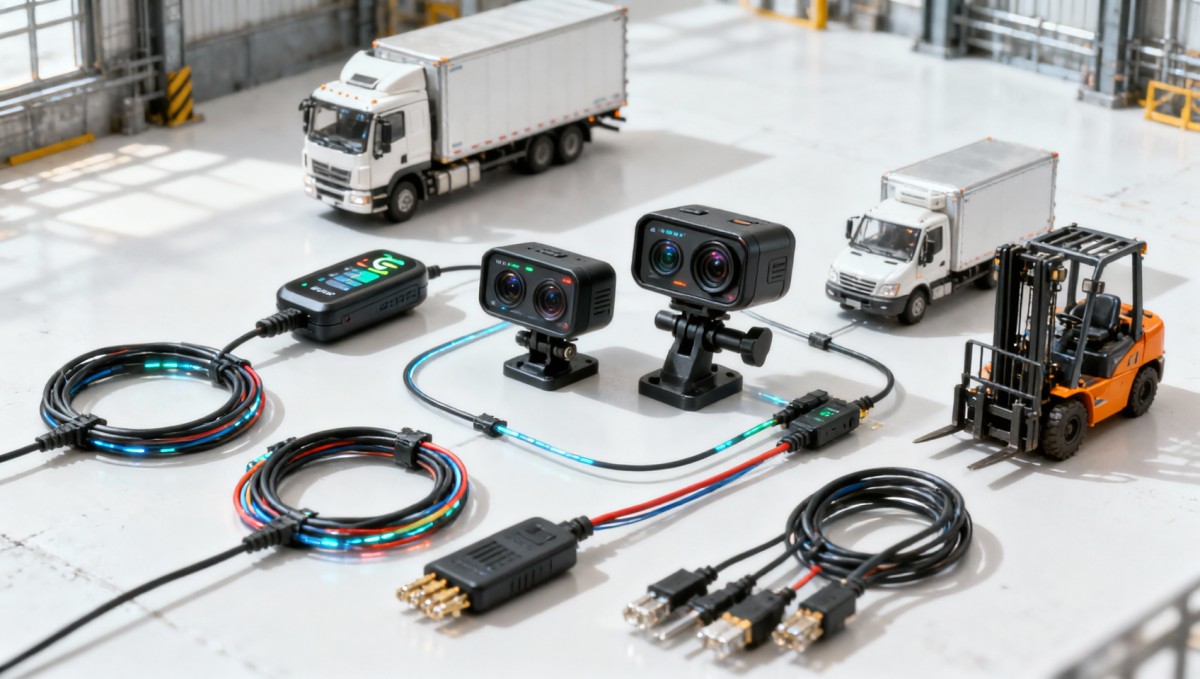
For many transport operators, utility fleets, site-service contractors, and industrial logistics teams, the advertised device subscription looks manageable. A plan may bundle connectivity, a software login, and basic alerts. Yet in real B2B deployment, total cost is shaped by at least 5 additional layers: hardware installation, vehicle downtime, platform integration, policy compliance, and recurring support. This matters even more when fleets scale from 20 vehicles to 200 or operate across mixed assets such as vans, trucks, forklifts, and field-service units.
Information researchers often focus on headline pricing because it is easy to compare. Operators care more about whether the wholesale gps trackers remain stable in tunnels, remote zones, or metal-dense industrial sites. Procurement teams need to evaluate spare parts, warranty conditions, and hidden implementation labor. Enterprise decision-makers usually ask a different question: will the system reduce incidents, idle time, unauthorized use, or insurance friction within 6–12 months, or will it become another fragmented cost center?
This is where a structured sourcing lens becomes valuable. Fleet management devices are not isolated gadgets. They sit at the intersection of safety, telemetry, compliance, and operational control. In industrial environments, a dashcam dual lens unit may support driver coaching, claim defense, and loading-zone visibility, while wholesale dash cams may also need to align with data retention rules, internal IT access controls, and vehicle electrical limits. A low monthly fee can quickly lose meaning if the broader deployment architecture is weak.
Global Industrial Core approaches this category from a procurement and infrastructure perspective rather than a consumer electronics perspective. That means looking beyond sticker price toward lifecycle reliability, fit-for-purpose specification, and sourcing clarity. In most enterprise rollouts, the first 30–90 days determine whether the program delivers measurable control or triggers cost overruns through rework, device swaps, and inconsistent user adoption.
The most common hidden cost categories
- Installation labor and scheduling loss, especially when vehicles must be taken out of service for 2–6 hours per unit.
- SIM data usage, cloud storage expansion, and video retrieval charges not fully included in the base plan.
- Integration work for ERP, dispatch, maintenance software, or API-based reporting dashboards.
- Compliance handling for privacy policy, driver notice, retention period, and incident evidence workflow.
- Replacement, troubleshooting, and training costs over a typical 12–36 month device lifecycle.
Where buyers usually underestimate spending during rollout
The largest budgeting errors usually appear before the fleet sees any operational return. Buyers may assume plug-and-play deployment, but real installations differ by vehicle voltage, cabin layout, camera angle, fuse access, and mounting restrictions. For example, fitting wholesale dash cams into a mixed fleet can require different brackets, wiring harnesses, and power management settings. If 50 vehicles each need even half a day of scheduling and technician time, the implementation cost can exceed several months of subscription fees.
Another overlooked issue is data architecture. Wholesale gps trackers produce location and event streams, but business value depends on how those streams are filtered, exported, and acted on. Some teams only discover after purchase that standard dashboards do not support maintenance triggers, geofencing by project site, or custom exception reports. Then internal IT or external integrators must bridge systems, adding 2–4 weeks of work and extra budget that was never part of the initial comparison sheet.
Video systems create a further cost layer. A dashcam dual lens setup can improve incident review by recording both road-facing and cabin-facing perspectives, but cloud storage requirements rise quickly with event-triggered uploads, retention windows, and high-resolution footage. If the fleet stores 30, 60, or 90 days of selected clips, storage policy becomes a commercial decision, not just a technical one. Without clear rules, teams often overpay for unused archive capacity or under-configure evidence retention.
Training is the cost buyers delay and later regret. Drivers, dispatchers, safety managers, and service technicians use the same system differently. If training is skipped, false alerts go unreviewed, camera faults remain unresolved, and driver resistance grows. In practical terms, 3 user groups usually need distinct onboarding: field operators, supervisors, and administrators. Even a 60–90 minute role-based session per group can prevent months of avoidable friction.
Budget pressure points by deployment phase
The table below helps procurement teams move from monthly-plan thinking to lifecycle-cost thinking. It is especially useful when comparing wholesale gps trackers against video-enabled platforms or mixed telematics packages.
A clear takeaway is that cost leakage usually comes from process gaps, not from hardware alone. When sourcing teams document implementation assumptions in advance, they reduce both change orders and internal disputes about who owns deployment tasks.
A practical 4-step rollout check
- Segment the fleet by vehicle class, power profile, and duty cycle.
- Define required reports, alert logic, and retention periods before vendor comparison.
- Pilot 5–10 vehicles for at least 2 operating weeks before full rollout.
- Review support SLA, replacement process, and training scope in writing.
How to compare wholesale GPS trackers, dual-lens dashcams, and full telematics packages
Not every fleet needs the same level of visibility. A light-duty service fleet may only require route replay, ignition status, and geofencing. A high-liability transport operation may need wholesale dash cams with event video, harsh-driving alerts, and evidence export. Industrial contractors working across regulated sites often require both location intelligence and safety footage, which pushes them toward combined platforms rather than basic wholesale gps trackers alone.
The right comparison starts with use case, not catalog format. If the main business goal is asset visibility, a simple tracking device may be enough. If the goal includes accident review, disputed delivery verification, or in-cab behavior analysis, then a dashcam dual lens design creates operational value despite the higher data and management burden. Buyers who compare only upfront price can miss the fact that different devices solve different layers of risk.
A robust evaluation should cover at least 6 dimensions: installation complexity, evidence usefulness, storage demand, driver acceptance, integration path, and replacement logistics. These criteria matter across sectors including construction support fleets, municipal utilities, warehousing distribution, and third-party logistics. Global Industrial Core advises enterprise buyers to frame the discussion around business outcome per vehicle, not simply device cost per month.
The following table is designed for procurement teams building shortlists. It highlights where apparently similar devices create very different downstream commitments.
This comparison shows why device selection should follow operational priority. When procurement teams match the device category to a specific control objective, they avoid paying for features that remain unused and reduce the chance of a second procurement cycle within 12 months.
Three decision filters that work well in mixed fleets
- If your first concern is location accuracy and utilization, start with tracker-led evaluation.
- If your first concern is incident evidence and behavioral accountability, start with dashcam dual lens evaluation.
- If your first concern spans safety, dispatch, maintenance, and reporting, assess integrated telematics from day one.
What procurement teams should verify before issuing a purchase order
Before approving a fleet technology order, procurement should create a cross-functional checklist with operations, safety, IT, and legal or HR stakeholders. In many organizations, device buying is delegated to one team while long-term administration falls on another. That disconnect causes hidden costs later. A practical pre-PO review should cover 6 areas: technical fit, install scope, data access, compliance handling, service terms, and scale-up flexibility.
Technical fit is more than confirming voltage compatibility. Buyers should ask whether the wholesale gps trackers support the expected reporting interval, whether the wholesale dash cams can handle vibration and temperature variation common in industrial use, and whether a dashcam dual lens unit preserves useful image quality under night driving, yard lighting, and windshield glare. Environmental durability matters if vehicles move between indoor facilities, outdoor sites, and long idle periods.
Service terms require the same level of scrutiny as hardware specification. Review warranty duration, DOA handling, RMA turnaround, spare stock availability, and remote support hours. In practical contracts, replacement timeframes such as 3–7 working days can make a meaningful difference when an incident-facing vehicle cannot operate without active recording. Also check whether firmware updates are included or tied to a premium service tier.
Compliance review is essential whenever video or personal data is involved. That includes notice procedures, retention logic, access rights, export controls, and cross-border data handling if the fleet operates in multiple jurisdictions. The safest sourcing path is not the one with the longest feature sheet, but the one that aligns technical capabilities with internal governance from the start.
A practical pre-purchase checklist
- Confirm vehicle categories, power requirements, and mounting restrictions for each asset class.
- Define 3–5 critical reports, alerts, or KPIs that the platform must deliver from day one.
- Request written clarification on storage duration, retrieval method, and extra usage charges.
- Review contract terms for replacement, service escalation, and termination or migration support.
- Pilot installation on representative vehicles before releasing full-volume procurement.
Standards and governance points worth checking
Depending on deployment geography and project requirements, procurement may also request documentation related to CE, UL, or applicable ISO-aligned management processes where relevant to electrical safety, quality control, and operational consistency. The exact requirement set will vary, but the sourcing principle is consistent: ask for evidence that supports safe installation, stable operation, and traceable support rather than relying on marketing descriptions alone.
Common mistakes, realistic timelines, and how to avoid rework
The first mistake is treating all vehicles the same. A pilot on passenger cars does not fully predict outcomes for trucks, specialty service vans, or heavy-duty field vehicles. The second mistake is overbuying features before defining operational ownership. If no one is responsible for reviewing exceptions, responding to alerts, and coaching drivers, even advanced wholesale dash cams become passive recorders with weak business return.
The third mistake is underestimating internal change management. Drivers may view cameras as surveillance rather than protection unless the company explains the purpose clearly. Supervisors may ignore dashboards if alerts are noisy or poorly configured. A useful benchmark for many fleets is a 3-stage adoption process: pilot, controlled expansion, and policy-based normalization. Each stage should include feedback review, not just technical activation.
A realistic schedule for a mid-sized deployment often includes 1–2 weeks for requirement mapping, 2–4 weeks for pilot setup and review, and another 2–6 weeks for phased installation depending on fleet size and site access. Rush procurement usually increases error rates. That is particularly true when teams are sourcing wholesale gps trackers and video devices from separate channels without a unified implementation owner.
Rework is expensive because it compounds across hardware, labor, and credibility. A misaligned camera angle means another installation visit. Incorrect retention rules mean policy revisions and retraining. Weak API planning means duplicate data entry or delayed reporting. These are manageable risks, but only when buyers treat fleet management devices as operational infrastructure instead of low-cost accessories.
FAQ for fleet buyers and decision-makers
How should we choose between wholesale GPS trackers and wholesale dash cams?
Choose based on the primary problem you need to solve within the next 6–12 months. If location, route discipline, and utilization are the main priorities, wholesale gps trackers are usually the starting point. If claims handling, unsafe driving review, and incident visibility are the key priorities, wholesale dash cams or a dashcam dual lens setup may create greater value. Many industrial fleets eventually use both, but sequencing matters for budget discipline.
What hidden cost shows up most often after installation?
The most common post-install surprise is not the device itself but administration overhead. Teams often discover they need more time for video review, exception handling, storage management, and user support than originally planned. That is why role assignment, alert thresholds, and escalation paths should be defined before the first vehicle goes live.
How long should a pilot run before full deployment?
A short pilot of 2 operating weeks can reveal installation issues, but 4–6 weeks is often more useful for mixed fleets because it captures different routes, weather conditions, shifts, and exception scenarios. The pilot should include at least one high-usage vehicle category and one safety-sensitive use case to make the results relevant.
What should decision-makers ask vendors before signing?
Ask for clarity on 5 items: included data usage, storage retention, installation scope, replacement turnaround, and integration capability. Then ask one more strategic question: what internal resources will we need during the first 90 days? Vendors that answer only with product features are not addressing your real deployment risk.
Why industrial buyers use GIC to evaluate fleet technology more rigorously
For industrial and infrastructure-facing organizations, fleet management devices are part of a larger operational control system that touches safety, equipment uptime, and procurement efficiency. Global Industrial Core supports this evaluation process by connecting technical requirements with sourcing logic. Instead of reducing the decision to a monthly plan, GIC helps buyers assess device categories, implementation implications, and commercial risk through a structured B2B lens.
This is especially valuable for EPC contractors, facility service providers, industrial distributors, and enterprise procurement leaders who need more than a product list. They need clarity on specification fit, compliance questions, deployment dependencies, and vendor-comparison logic. Whether the requirement involves wholesale gps trackers, a dashcam dual lens rollout, or a broader wholesale dash cams sourcing strategy, the right decision depends on technical detail and use-case alignment.
GIC’s strength lies in turning fragmented device information into decision-ready insight. Buyers can use that perspective to compare options across 3 practical layers: operational need, implementation burden, and lifecycle cost. That approach helps reduce rework, shortens internal review cycles, and improves confidence when preparing RFQs, trial plans, or regional rollout proposals.
If you are assessing fleet management devices for industrial or commercial operations, contact Global Industrial Core for support with parameter confirmation, product selection logic, delivery planning, certification-related questions, pilot-scope definition, sample evaluation, and quotation alignment. A clear review before procurement is often the fastest way to avoid hidden costs after deployment.
Technical Specifications
- RCEP Launches Industrial Waste Equipment Mutual RecognitionAuthor :Environmental Engineering Director
- IEC 61850-90-15:2026 Released — Time Stamp Precision Upgrade Impacts Power Equipment ExportsAuthor :Grid Infrastructure Analyst
- Copper Price Surge Impacts BOM Costs for Industrial Breakers & TransformersAuthor :Grid Infrastructure Analyst
Expert Insights

Chief Security Architect
Dr. Thorne specializes in the intersection of structural engineering and digital resilience. He has advised three G7 governments on industrial infrastructure security.
Related Analysis
- Apr 22, 2026RCEP Launches Industrial Waste Equipment Mutual RecognitionAuthor :Environmental Engineering Director
- Apr 22, 2026IEC 61850-90-15:2026 Released — Time Stamp Precision Upgrade Impacts Power Equipment ExportsAuthor :Grid Infrastructure Analyst
- Apr 22, 2026Copper Price Surge Impacts BOM Costs for Industrial Breakers & TransformersAuthor :Grid Infrastructure Analyst
Core Sector // 01
Security & Safety
- IEC 62061:2026 Effective April 21, 2026 — Safety Controller Recertification RequiredAuthor :Safety Compliance Lead
![]()
- SABIC Launches Industrial Security Localization Plan in Q2 2026Author :Safety Compliance Lead
![]()
- IEC 62061:2026 Released — Higher Certification Bar for Industrial Safety Control SystemsAuthor :Safety Compliance Lead
![]()
- Smart peephole viewers: night vision quality is not all the sameAuthor :Safety Compliance Lead

- Video door phones wholesale: wired systems still win in some jobsAuthor :Safety Compliance Lead

- Wireless intercom systems drop audio in buildings with thick wallsAuthor :Safety Compliance Lead

- Wholesale baby monitors: when extra features become false comfortAuthor :Safety Compliance Lead

- Fleet management devices: hidden costs beyond the monthly planAuthor :Safety Compliance Lead