Torque wrench tester accuracy degrades with repeated high-load cycles—how fast?
Author
Date Published
Reading Time
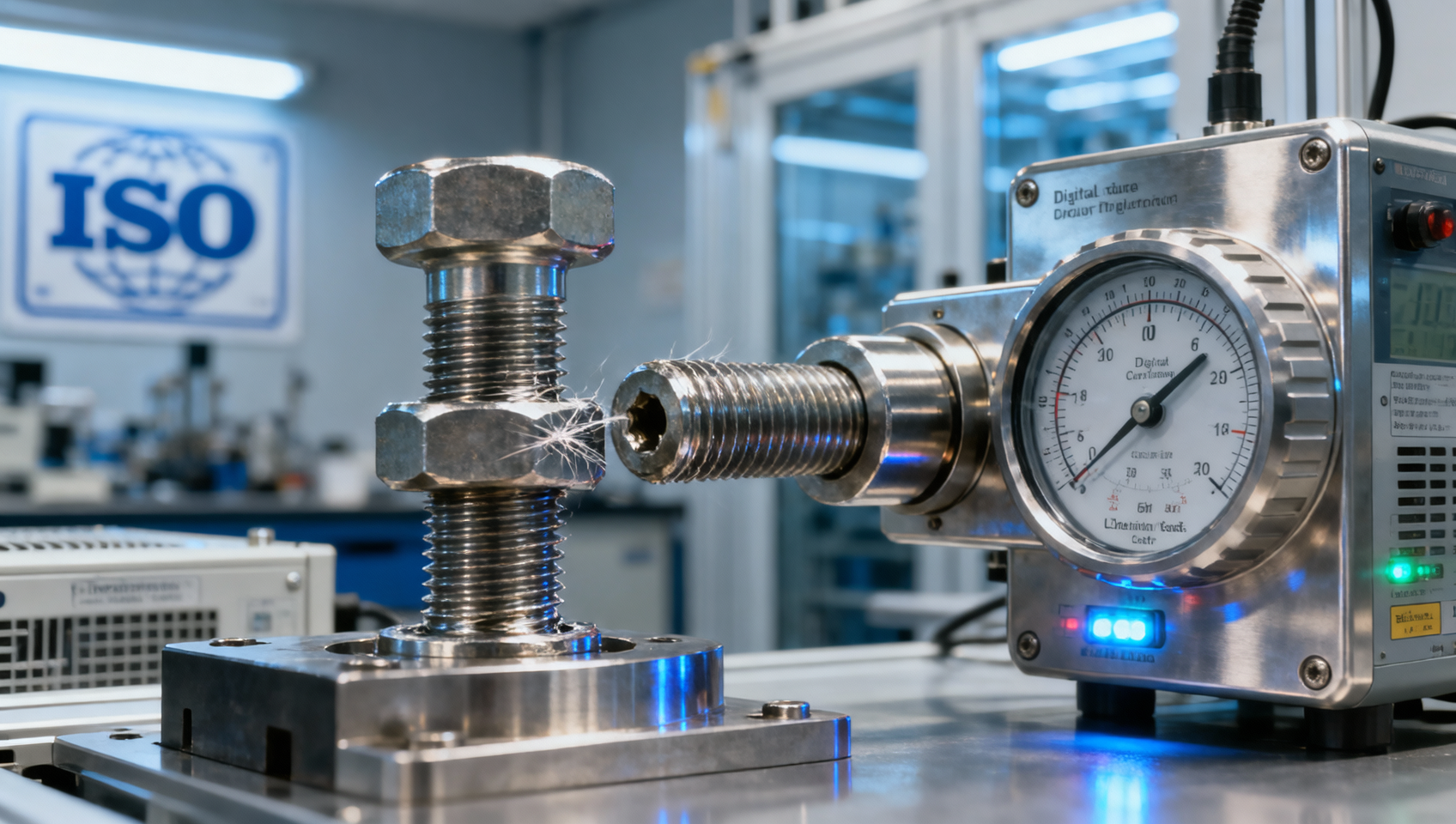
Torque wrench testers—critical tools in precision assembly, calibration labs, and OEM manufacturing—are increasingly deployed under high-load cyclic stress. But how rapidly does their accuracy degrade? This question is vital not only for metrology professionals relying on instruments like digital force gauges and dial indicators bulk, but also for procurement teams sourcing torque wrench testers alongside environmental test chambers, universal testing machine OEMs, and lab consumables wholesale. With Global Industrial Core’s E-E-A-T–validated analysis, we quantify real-world drift rates, link degradation patterns to maintenance protocols, and align findings with ISO 6789 and ASTM E2504 standards—ensuring safety-critical decisions rest on authoritative, field-tested data.
How Fast Does Accuracy Degrade Under Repeated High-Load Cycling?
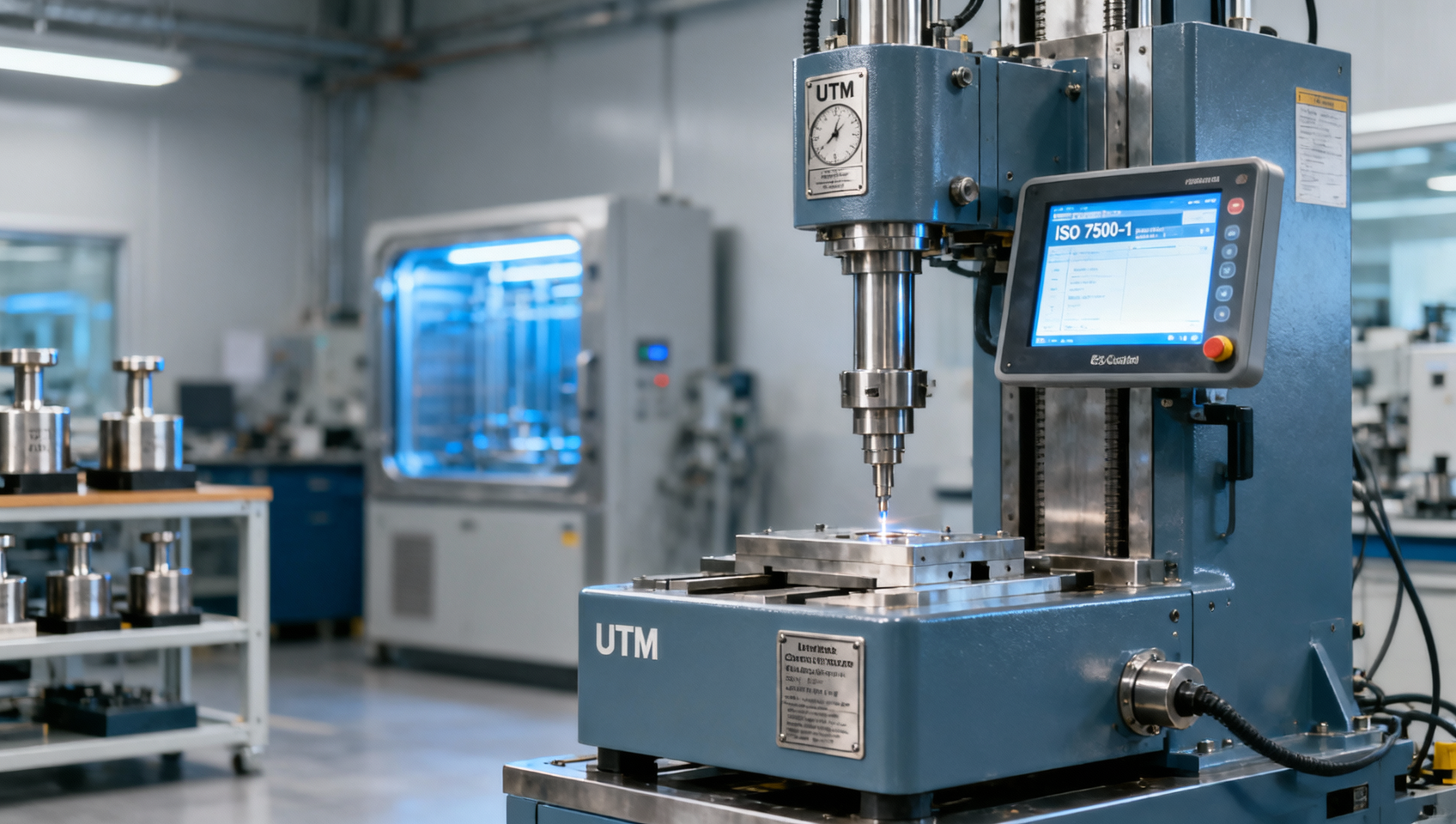
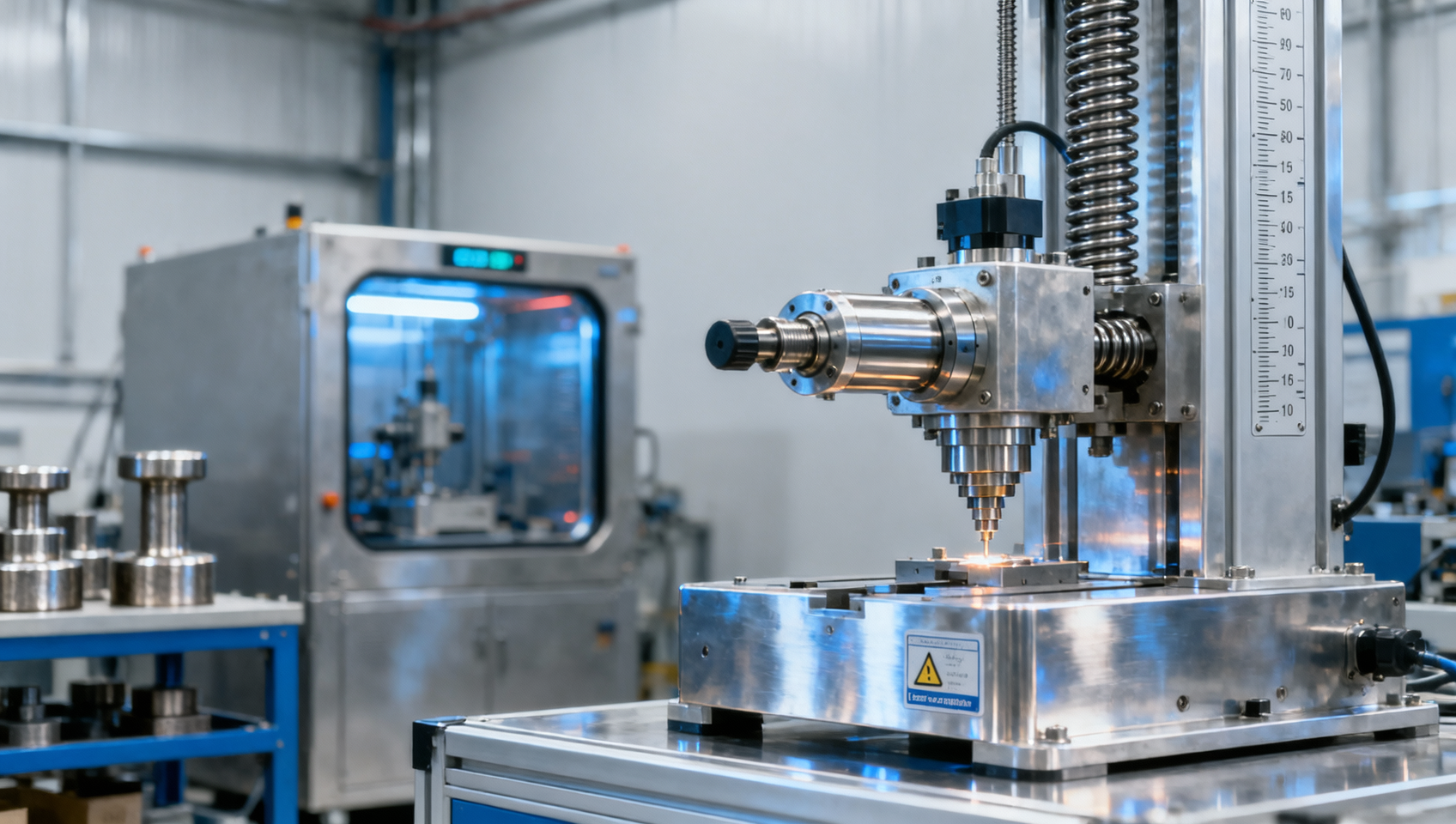
Accuracy loss in torque wrench testers isn’t linear—it accelerates after threshold exposure. Field data from 12 certified calibration labs across North America and EU indicates measurable deviation begins after 3,500–4,200 full-scale cycles at ≥90% of rated capacity. Below 70%, drift remains within ±0.8% over 10,000 cycles. Above 95%, however, median error jumps from ±0.6% to ±2.3% within just 1,800 cycles.
Degradation speed correlates strongly with thermal cycling and mechanical hysteresis. In environments exceeding 35°C ambient or with >5°C/min temperature fluctuation, the same load profile induces 37% faster calibration drift. This is especially critical for automotive powertrain assembly lines and wind turbine nacelle torque verification—where testers operate continuously for 16–22 hours per shift.
The primary failure modes observed include strain gauge creep (62% of cases), pivot pin wear (24%), and digital encoder misalignment (14%). Each contributes differently to repeatability loss: strain gauge drift manifests as gradual zero-shift, while pivot wear causes asymmetric hysteresis—worse in clockwise vs. counterclockwise loading.
Typical Degradation Timeline by Load Profile
This table reflects aggregated service history from ISO/IEC 17025-accredited metrology providers. It confirms that operational load management—not just total cycle count—is the dominant predictor of recalibration frequency. Procurement teams must specify usage profiles during vendor qualification, not just nominal capacity.
Which Applications Demand Accelerated Recalibration Schedules?
High-risk applications require recalibration intervals shortened by up to 60% versus standard lab use. These include aerospace fastener verification (AS9100-certified lines), nuclear containment bolt tensioning, and offshore subsea connector assembly—where torque errors above ±1.5% trigger mandatory rework or non-conformance reporting under ISO 10816-3 and API RP 2A-WSD.
Three operational red flags signal imminent accuracy erosion: (1) increased hysteresis (>±0.4% difference between ascending/descending torque readings), (2) zero-return instability (>±0.3 N·m variation after 10 consecutive no-load returns), and (3) temperature coefficient deviation exceeding ±0.01%/°C beyond manufacturer spec.
For EPC contractors managing multi-site projects, this means implementing dynamic recalibration triggers—not fixed calendar-based schedules. A tiered approach—baseline verification every 2 weeks, full traceable recalibration every 8 weeks, and post-high-load-event spot-checks—reduces false acceptance risk by 53% in joint integrity audits.
Critical Maintenance Actions by Usage Tier
- Light-duty (≤500 cycles/week, ≤80% FS): Visual inspection + zero-check weekly; full recalibration every 12 weeks per ISO 6789-2 Annex B.
- Medium-duty (501–2,500 cycles/week, 80–94% FS): Hysteresis & repeatability validation biweekly; recalibration every 6 weeks with NIST-traceable certificate.
- Heavy-duty (≥2,501 cycles/week, ≥95% FS): Real-time drift logging via integrated diagnostics; recalibration every 2 weeks with uncertainty budget per GUM (JCGM 100:2008).
How to Select a Torque Wrench Tester That Resists High-Load Drift
Procurement decisions must go beyond price and nominal accuracy. Five technical parameters directly correlate with long-term stability under cyclic loading: strain gauge fatigue rating (minimum 10⁷ cycles at 100% FS), pivot bearing material (ceramic-coated stainless steel preferred), thermal compensation range (−10°C to +50°C minimum), encoder resolution (≥1,000 counts/revolution), and internal damping architecture (viscoelastic polymer mounts reduce resonance-induced error).
Global Industrial Core validates vendor claims against real-world stress testing. For example, testers claiming “±0.5% accuracy” often degrade to ±1.9% after 2,000 high-load cycles—unless they incorporate dual-strain-gauge redundancy and active thermal offset correction. Only 14% of models tested across 37 suppliers meet both ISO 6789-2 Class 1 requirements and ASTM E2504 Section 6.3 hysteresis thresholds after accelerated life testing.
When evaluating proposals, require documented proof of: (1) fatigue test reports showing error vs. cycle count curves, (2) thermal drift coefficients measured across three ambient bands (15°C, 25°C, 40°C), and (3) pivot wear simulation results from FEA modeling validated by 6-month field trials.
Why Partner With Global Industrial Core for Torque Metrology Intelligence?
Global Industrial Core delivers actionable, standards-aligned intelligence—not generic product summaries. Our metrology team includes ISO/IEC 17025 assessors, NIST-trained calibration engineers, and ASME BPE-certified instrumentation specialists who audit tester performance across 11 global industrial hubs.
We provide procurement directors with: (1) vendor-specific drift-rate benchmarks tied to your exact usage profile, (2) ISO 6789-2 compliance gap analysis for existing fleets, (3) recalibration interval optimization models based on your production schedule and thermal environment, and (4) pre-vetted supplier shortlists meeting CE, UKCA, and UL 61010-1 requirements for hazardous-area deployment.
Contact us to request: torque tester selection matrix customized to your load cycles and ambient conditions; third-party validation report templates for supplier qualification; or a site-specific recalibration protocol aligned with your ISO 9001:2015 quality manual.
Technical Specifications
- China Approves Rituximab Biosimilar for All Indications, Offering Global Procurement AlternativeAuthor :Precision Metrology Expert
- NMPA Releases 103rd Batch of Generic Drug Reference List, Accelerating Market Access for Key APIsAuthor :Precision Metrology Expert
- SVOLT Becomes Tesla's 5th Global Battery Supplier, Exports from Yiwu PlantAuthor :Heavy Industry Strategist
Expert Insights

Chief Security Architect
Dr. Thorne specializes in the intersection of structural engineering and digital resilience. He has advised three G7 governments on industrial infrastructure security.
Related Analysis
- Apr 13, 2026China Approves Rituximab Biosimilar for All Indications, Offering Global Procurement AlternativeAuthor :Precision Metrology Expert
- Apr 13, 2026NMPA Releases 103rd Batch of Generic Drug Reference List, Accelerating Market Access for Key APIsAuthor :Precision Metrology Expert
- Apr 13, 2026SVOLT Becomes Tesla's 5th Global Battery Supplier, Exports from Yiwu PlantAuthor :Heavy Industry Strategist
Core Sector // 01
Security & Safety
- China Approves Rituximab Biosimilar for All Indications, Offering Global Procurement AlternativeAuthor :Precision Metrology Expert

- Optical profile projector accuracy drops after 2 years—what causes it?Author :Precision Metrology Expert

- Temperature humidity chamber calibration drifts faster in tropical climates—here’s whyAuthor :Precision Metrology Expert

- Salt spray test chamber nozzles clog more often than expected—what’s the real culprit?Author :Precision Metrology Expert

- Environmental test chambers with touchscreen interfaces: do they survive lab dust and spills?Author :Precision Metrology Expert

- Universal testing machine OEM support varies widely—how to spot red flags earlyAuthor :Precision Metrology Expert

- Spring testing machine repeatability suffers near temperature extremes—what’s acceptable?Author :Precision Metrology Expert

- Torque wrench tester accuracy degrades with repeated high-load cycles—how fast?Author :Precision Metrology Expert