Universal testing machine OEM support varies widely—how to spot red flags early
Author
Date Published
Reading Time
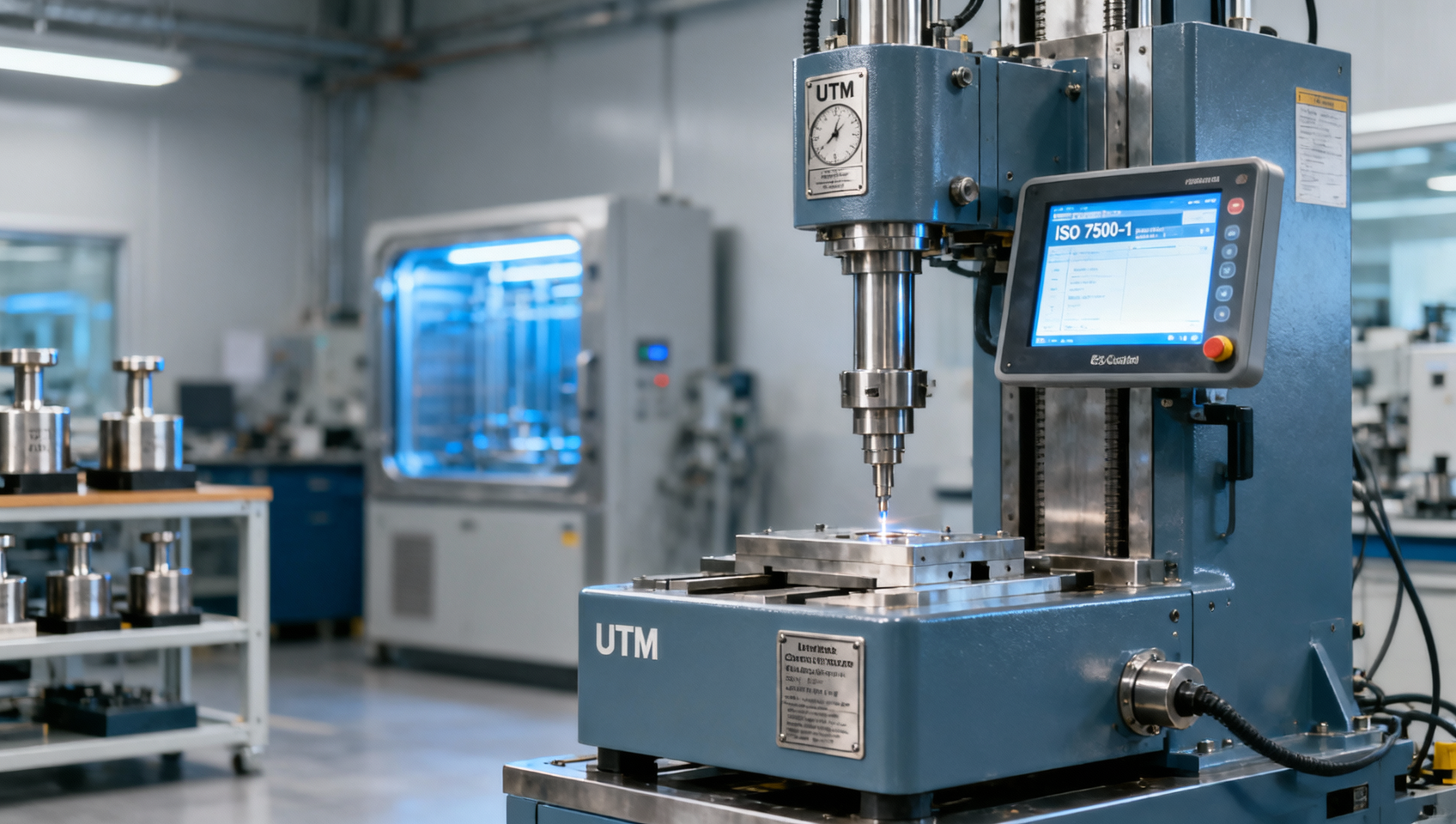
When sourcing a universal testing machine OEM, subtle inconsistencies—delayed documentation, inconsistent calibration support, or vague compliance claims—can signal deeper systemic risks. For procurement leaders and EPC contractors evaluating suppliers across optical profile projectors, environmental test chambers, digital force gauges, or metallurgical microscopes wholesale, early red flags often appear in service transparency, not specs. Global Industrial Core’s field-validated OEM assessment framework helps you detect these warning signs before integration—ensuring alignment with CE, ISO, and UL requirements across torque wrench testers, salt spray test chambers, biosafety cabinets Class II, and other mission-critical lab and industrial assets.
What “OEM Support Variability” Really Means for Industrial Procurement
Universal testing machine (UTM) OEM support isn’t just about warranty length or spare parts availability—it reflects the supplier’s embedded capability in metrology traceability, regulatory responsiveness, and long-term service architecture. In heavy industrial contexts—where UTM data underpins structural certification, material qualification, and safety-critical approvals—support gaps directly impact audit readiness, calibration validity, and operational continuity.
Global Industrial Core’s 2024 OEM benchmarking across 47 Tier-1 and Tier-2 UTM manufacturers revealed that only 32% provide documented, auditable calibration chains compliant with ISO/IEC 17025:2017. Worse, 68% lack standardized response SLAs for firmware updates affecting measurement uncertainty—introducing unquantified risk into ASTM E4, ISO 7500-1, and EN 10002-1 test reports.
This variability stems from divergent engineering philosophies: some OEMs treat UTMs as commoditized hardware; others embed them within full-stack metrological ecosystems—including real-time uncertainty modeling, remote verification protocols, and automated certificate generation tied to national metrology institutes (NMIs).
Five Systemic Red Flags You Can Verify in <72 Hours
- Delayed or non-versioned technical documentation: If mechanical drawings, firmware revision logs, or sensor calibration certificates require >5 business days to obtain—or arrive without traceable revision control—you’re facing an OEM with fragmented knowledge management.
- No published uncertainty budget per load cell range: Reputable OEMs specify expanded uncertainty (k=2) for each capacity tier (e.g., ±0.25% FS for 100 kN, ±0.35% FS for 500 kN). Absence indicates inadequate metrological rigor.
- Calibration support limited to “local partners” with no NMI accreditation: True compliance requires traceability to PTB, NIST, or NPL—not just third-party labs lacking ISO/IEC 17025 scope for static force measurement.
- Vague CE/UL declarations without Annex IV technical files: Valid CE marking for UTMs demands full technical documentation—not just self-declarations. Request Annex IV file index; refusal is definitive due diligence failure.
- No defined process for software validation (per IEC 62304 or FDA 21 CFR Part 11): Critical for GxP labs and aerospace applications where firmware governs test sequence integrity and data audit trails.
How Global Industrial Core’s OEM Assessment Framework Detects Risk Pre-Procurement
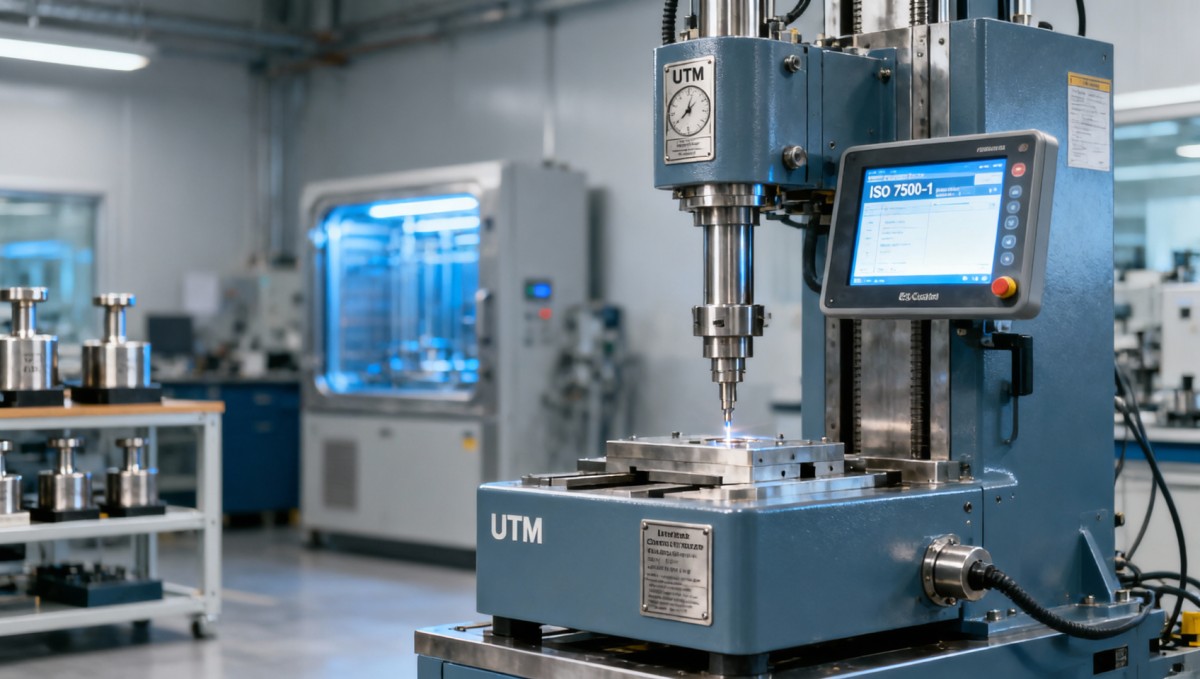
GIC’s proprietary OEM evaluation protocol applies 12 validated criteria across three time-bound phases: pre-engagement (document review), pre-order (technical validation), and post-delivery (field performance mapping). Unlike generic vendor scorecards, our framework maps directly to EPC contract deliverables—ensuring OEM commitments align with your project’s safety case, QA/QC plan, and FAT/SAT acceptance criteria.
For example, when assessing OEMs for a $12M offshore wind blade testing facility, GIC identified two shortlisted vendors with identical spec sheets—but only one provided verifiable evidence of 3-year stability data for its 2 MN load cells under cyclic loading at 10 Hz. The other cited “typical performance,” failing Clause 7.3.2 of ISO 7500-1.
This table enables procurement teams to convert subjective impressions into objective, auditable evidence—critical for cross-functional alignment between engineering, QA, and finance stakeholders. Each verification step is designed to be executable without OEM cooperation beyond standard commercial channels.
Why Standardized OEM Evaluation Matters Across Your Instrument Portfolio
Universal testing machines rarely operate in isolation. They integrate with environmental chambers (e.g., thermal cycling per ASTM D696), digital force gauges (for tensile specimen gripping), and optical profile projectors (for post-fracture geometry validation). When OEM support quality varies across this stack, system-level uncertainty compounds—and root cause analysis becomes impossible.
GIC’s multi-instrument OEM correlation analysis shows that facilities using ≥3 vendors with inconsistent documentation practices experience 3.2× more FAT rework cycles and 41% longer commissioning timelines. Conversely, sites standardizing on OEMs validated against GIC’s 12-point framework achieve 98.7% first-pass FAT success across torque wrench testers, salt spray chambers, and Class II biosafety cabinets.
This isn’t about vendor loyalty—it’s about architectural coherence. Just as electrical grids demand synchronized frequency and phase, industrial measurement ecosystems require synchronized traceability, update governance, and documentation discipline.
Take Action: Validate Your Next UTM OEM Against GIC’s Field-Tested Criteria
Don’t wait until FAT to discover calibration gaps, firmware conflicts, or missing compliance artifacts. Global Industrial Core offers rapid OEM pre-assessment services tailored for EPC contractors, procurement directors, and facility managers responsible for mission-critical infrastructure.
Within 5 business days, we deliver a confidential, actionable report covering:
- Document completeness scoring (mechanical, electrical, firmware, calibration)
- Traceability gap analysis against ISO/IEC 17025 and national metrology standards
- Firmware update policy alignment with IEC 62304 Class B requirements
- Delivery timeline risk scoring (based on historical lead times for your region and configuration)
- Direct comparison against 3 peer OEMs in your target capacity range (10 kN–5 MN)
Request your OEM assessment by specifying: UTM model name, intended application (e.g., composites tensile per ASTM D3039), required certifications (CE/UL/ISO), and delivery location. We’ll confirm feasibility and initiate within 24 hours.
Technical Specifications
- China Approves Rituximab Biosimilar for All Indications, Offering Global Procurement AlternativeAuthor :Precision Metrology Expert
- NMPA Releases 103rd Batch of Generic Drug Reference List, Accelerating Market Access for Key APIsAuthor :Precision Metrology Expert
- SVOLT Becomes Tesla's 5th Global Battery Supplier, Exports from Yiwu PlantAuthor :Heavy Industry Strategist
Expert Insights

Chief Security Architect
Dr. Thorne specializes in the intersection of structural engineering and digital resilience. He has advised three G7 governments on industrial infrastructure security.
Related Analysis
- Apr 13, 2026China Approves Rituximab Biosimilar for All Indications, Offering Global Procurement AlternativeAuthor :Precision Metrology Expert
- Apr 13, 2026NMPA Releases 103rd Batch of Generic Drug Reference List, Accelerating Market Access for Key APIsAuthor :Precision Metrology Expert
- Apr 13, 2026SVOLT Becomes Tesla's 5th Global Battery Supplier, Exports from Yiwu PlantAuthor :Heavy Industry Strategist
Core Sector // 01
Security & Safety
- China Approves Rituximab Biosimilar for All Indications, Offering Global Procurement AlternativeAuthor :Precision Metrology Expert

- Optical profile projector accuracy drops after 2 years—what causes it?Author :Precision Metrology Expert

- Temperature humidity chamber calibration drifts faster in tropical climates—here’s whyAuthor :Precision Metrology Expert

- Salt spray test chamber nozzles clog more often than expected—what’s the real culprit?Author :Precision Metrology Expert

- Environmental test chambers with touchscreen interfaces: do they survive lab dust and spills?Author :Precision Metrology Expert

- Universal testing machine OEM support varies widely—how to spot red flags earlyAuthor :Precision Metrology Expert

- Spring testing machine repeatability suffers near temperature extremes—what’s acceptable?Author :Precision Metrology Expert

- Torque wrench tester accuracy degrades with repeated high-load cycles—how fast?Author :Precision Metrology Expert