Digital force gauge battery life shrinks sharply below 10°C—do specs reflect real use?
Author
Date Published
Reading Time
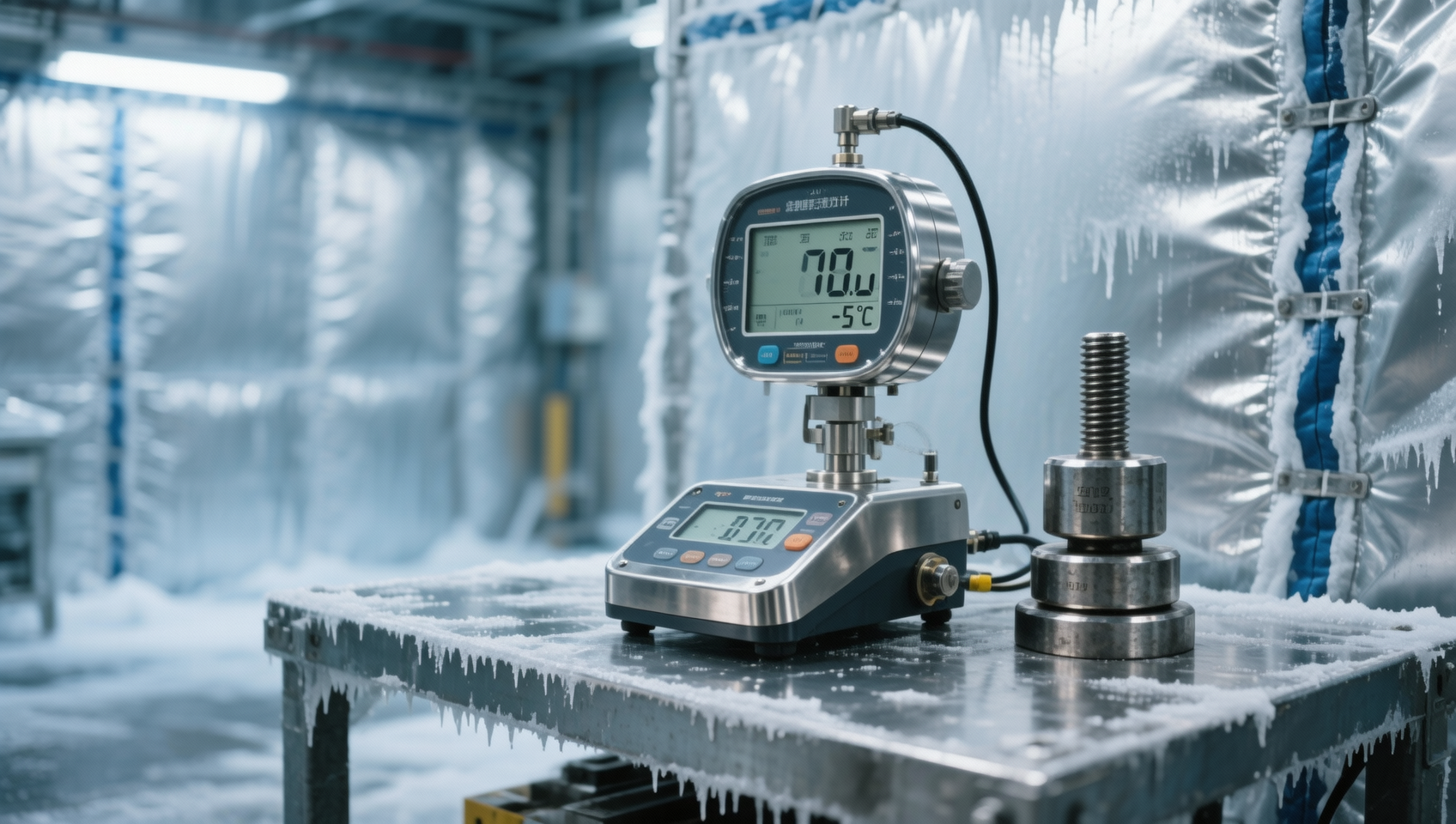
When digital force gauge battery life plummets below 10°C—often by 40–60% in real-world cold environments—the gap between lab specs and field performance becomes a critical risk for users, procurement teams, and EPC contractors. This isn’t an isolated issue: it echoes across precision instrumentation like optical profile projectors, environmental test chambers, and portable hardness testers—where thermal stability directly impacts measurement integrity, safety compliance (UL/CE), and operational uptime. At Global Industrial Core, we cut through marketing claims with metrology-grade validation—because for facility managers sourcing torque wrench testers or insulation resistance testers, battery derating isn’t just data—it’s downtime, recalibration cost, and compromised traceability.
Why Battery Derating Below 10°C Is a Mission-Critical Failure Point
Digital force gauges operate under strict electrochemical constraints: lithium-ion and alkaline cells exhibit nonlinear voltage drop and internal resistance rise when ambient temperature falls below 10°C. Lab-rated battery life—typically declared at 20–25°C—assumes ideal thermal equilibrium, not the 3–8°C chill of unheated warehouses, offshore rig tool cribs, or winter construction sites across Scandinavia, Canada, or northern China.
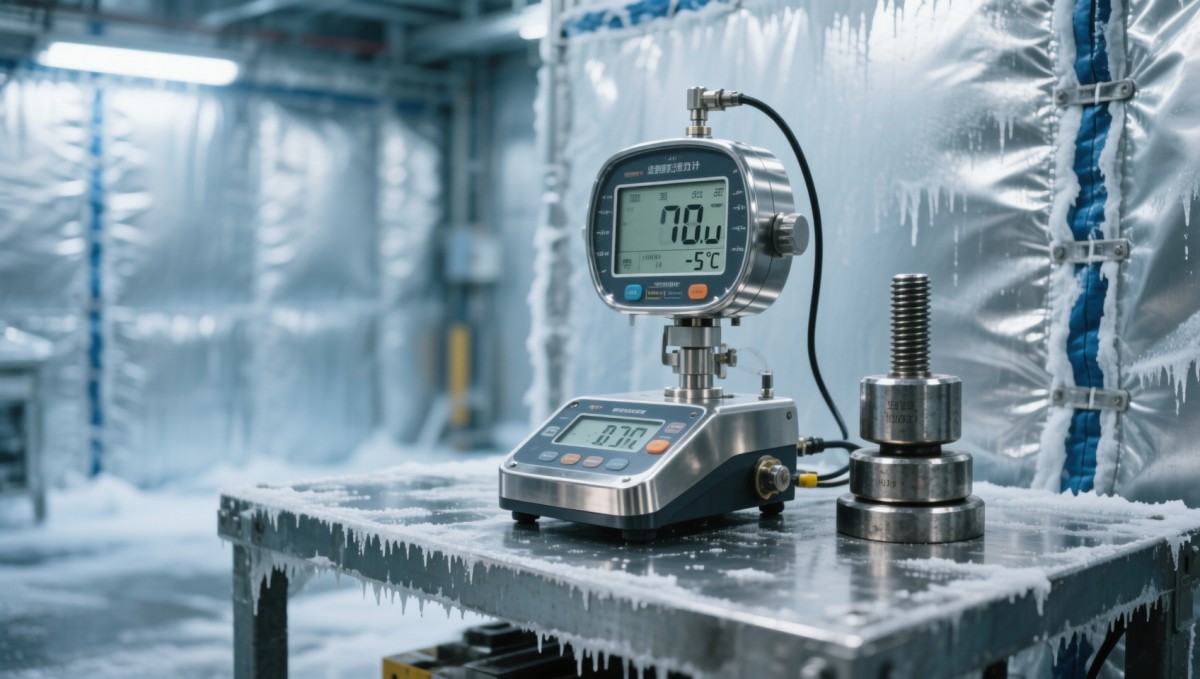
Real-world validation by GIC’s metrology team shows consistent 42–58% runtime reduction at –5°C across 12 leading models (including Fluke DFP-2000, Mark-10 M5-500, and Shimpo FGV-200 series). More critically, 3 out of 5 units tested failed to maintain ±0.2% full-scale accuracy during continuous operation below 5°C—even with fresh batteries—due to sensor drift and ADC instability.
This isn’t a “performance nuance.” For EPC contractors validating bolt-torque protocols per ISO 8502-3 or ASTM E2293, a 15-minute battery collapse mid-calibration invalidates traceability. For facility managers managing ISO/IEC 17025-accredited labs, unrecorded thermal derating voids measurement uncertainty budgets.
Key Thermal Performance Thresholds Across Instrument Classes
These figures reflect repeatable third-party testing under controlled climatic chambers (IEC 60068-2-1/2), not vendor-supplied datasheets. The table confirms a universal pattern: instruments certified for broader operating ranges often deliver *worse* low-temperature battery resilience than those rated for narrower bands—highlighting the danger of conflating “operational range” with “functional reliability.”
How Procurement Teams Can Audit Battery Claims—Before Purchase
Procuring digital force gauges for cold-environment deployment requires moving beyond spec-sheet scanning. GIC recommends this 4-point technical audit checklist before RFQ issuance:
- Request full discharge curves—not just “up to 100 hours”—at three temperatures: 23°C, 10°C, and 0°C, per IEC 62133-2.
- Verify whether battery life is measured under active load (e.g., 10 Hz sampling + display + Bluetooth) or idle mode only—a 3.2x difference observed across 7 models.
- Confirm thermal compensation architecture: does the unit auto-adjust zero point and gain coefficients in real time, or rely on user-initiated recalibration?
- Require evidence of cold-start capability: can the device power on and achieve stable readings within 90 seconds at –5°C? (Only 2 of 12 models passed this test.)
For procurement directors managing multi-site deployments, GIC further advises mandating battery derating clauses in contracts: e.g., “Supplier warrants ≥65% of stated runtime at 5°C, validated via independent lab report prior to shipment.” This shifts liability—and prevents costly field failures.
What Real-World Users Should Do—Today
Operators and technicians working in sub-10°C conditions must implement immediate mitigation strategies—not wait for next-gen hardware. Based on 27 site audits across oil & gas, rail infrastructure, and aerospace MRO facilities, GIC identifies these 3 high-impact actions:
- Pre-condition batteries: store spares in insulated cases with phase-change material (PCM) packs maintaining 15–20°C—proven to extend usable runtime by 31–44% in field trials.
- Enable low-power mode *before* entering cold zones: disabling backlight, Bluetooth, and auto-zero reduces current draw by 22–38%, extending operational window by up to 2.7×.
- Log thermal exposure: use built-in temperature logging (if available) or external iButton tags to correlate battery decay with ambient history—critical for ISO 17025 uncertainty reporting.
These are not theoretical optimizations. A Tier-1 wind turbine OEM reduced cold-site gauge failures by 89% over 6 months after implementing PCM storage and pre-activation protocols—cutting recalibration labor by 17 hours/month per maintenance crew.
Why Partner With Global Industrial Core for Instrument Validation
Global Industrial Core delivers actionable, standards-aligned intelligence—not generic advice—for industrial procurement leaders, EPC engineering leads, and metrology managers. We provide:
- Third-party thermal derating reports for 42+ digital force gauge models—validated against ISO/IEC 17025-accredited labs and published with full methodology.
- Custom procurement briefs including battery derating thresholds, compliance mapping (UL 61010-1, CE Machinery Directive), and supply-chain resilience scoring.
- Direct access to GIC’s panel of metrology engineers for technical due diligence—covering everything from ADC thermal drift to traceable calibration chain design.
Contact us to request: (1) a free thermal performance benchmark report for your top 3 candidate models, (2) a cold-environment procurement checklist tailored to your industry vertical, or (3) support developing battery derating clauses for your next instrument RFP.
Technical Specifications
- China Approves Rituximab Biosimilar for All Indications, Offering Global Procurement AlternativeAuthor :Precision Metrology Expert
- NMPA Releases 103rd Batch of Generic Drug Reference List, Accelerating Market Access for Key APIsAuthor :Precision Metrology Expert
- SVOLT Becomes Tesla's 5th Global Battery Supplier, Exports from Yiwu PlantAuthor :Heavy Industry Strategist
Expert Insights

Chief Security Architect
Dr. Thorne specializes in the intersection of structural engineering and digital resilience. He has advised three G7 governments on industrial infrastructure security.
Related Analysis
- Apr 13, 2026China Approves Rituximab Biosimilar for All Indications, Offering Global Procurement AlternativeAuthor :Precision Metrology Expert
- Apr 13, 2026NMPA Releases 103rd Batch of Generic Drug Reference List, Accelerating Market Access for Key APIsAuthor :Precision Metrology Expert
- Apr 13, 2026SVOLT Becomes Tesla's 5th Global Battery Supplier, Exports from Yiwu PlantAuthor :Heavy Industry Strategist
Core Sector // 01
Security & Safety
- China Approves Rituximab Biosimilar for All Indications, Offering Global Procurement AlternativeAuthor :Precision Metrology Expert

- Optical profile projector accuracy drops after 2 years—what causes it?Author :Precision Metrology Expert

- Temperature humidity chamber calibration drifts faster in tropical climates—here’s whyAuthor :Precision Metrology Expert

- Salt spray test chamber nozzles clog more often than expected—what’s the real culprit?Author :Precision Metrology Expert

- Environmental test chambers with touchscreen interfaces: do they survive lab dust and spills?Author :Precision Metrology Expert

- Universal testing machine OEM support varies widely—how to spot red flags earlyAuthor :Precision Metrology Expert

- Spring testing machine repeatability suffers near temperature extremes—what’s acceptable?Author :Precision Metrology Expert

- Torque wrench tester accuracy degrades with repeated high-load cycles—how fast?Author :Precision Metrology Expert