TÜV SÜD Launches China Industrial Optical Equipment Fast-Track CE Review
Author
Date Published
Reading Time
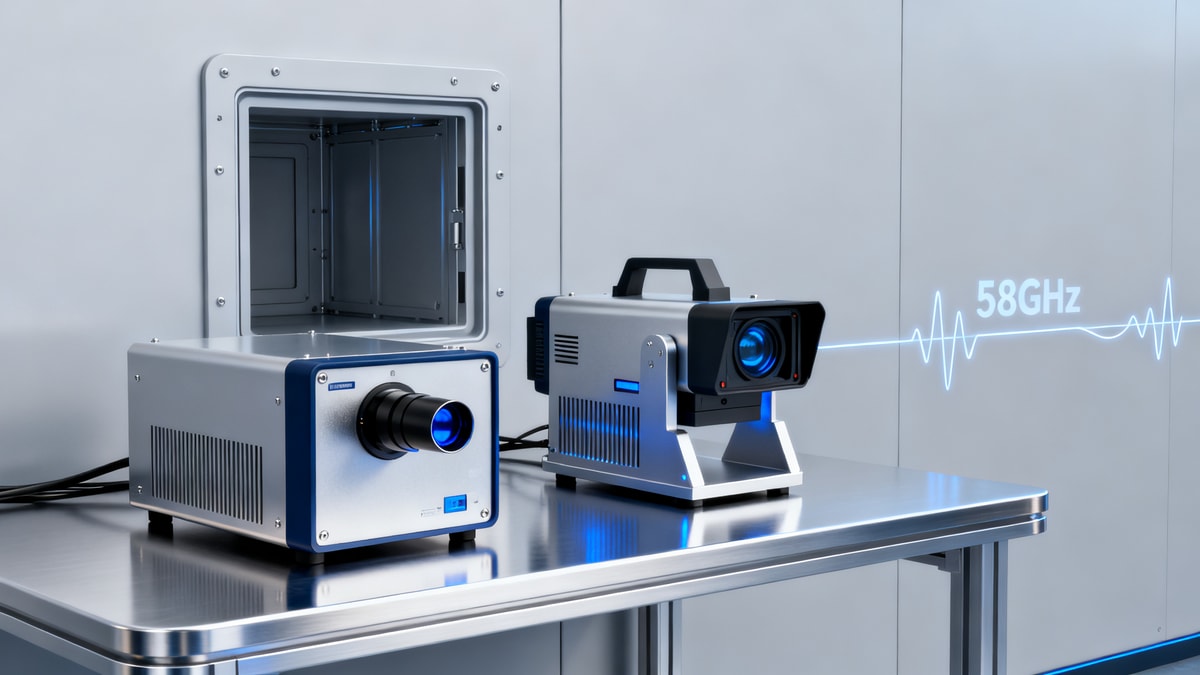
On 30 April 2026, TÜV SÜD announced the launch of its ‘China Industrial Optical Equipment Green Channel’, reducing pre-review turnaround for CE certification to five working days for select products—including laser distance meters, infrared thermal imagers, and machine vision light sources—that have already undergone CNAS calibration. This initiative directly affects manufacturers exporting industrial optical equipment to the EU, particularly those navigating tightened requirements under the updated EU EMC Directive (DIN EN 61000-4-3).
Event Overview
TÜV SÜD officially launched the ‘China Industrial Optical Equipment Green Channel’ on 30 April 2026. The service applies exclusively to laser distance meters, infrared thermal imagers, and machine vision light sources that have completed CNAS-accredited calibration. For eligible products, the pre-review phase of CE certification is shortened to five working days. The move responds to the revised EMC testing requirements specified in DIN EN 61000-4-3.
Industries Affected by This Initiative
Manufacturers of Industrial Optical Equipment
These companies are directly impacted because their CE certification timelines—especially for EMC compliance—are now subject to a faster but conditionally enabled review path. Impact manifests in two ways: first, eligibility depends on prior CNAS calibration, meaning uncalibrated or non-CNAS-certified units do not qualify; second, accelerated pre-review does not shorten full testing or final certification, only the initial document and technical file assessment stage.
Export-Oriented OEMs and ODMs Serving EU Markets
OEMs and ODMs integrating optical components into larger systems (e.g., automated inspection platforms or robotics) face indirect but material implications. If their sub-suppliers rely on this fast-track process, upstream delays or calibration gaps may cascade into system-level CE conformity timelines. The initiative increases visibility into calibration traceability as a prerequisite—not just a quality add-on—but a functional gate for expedited EU market access.
CE Certification Support Providers and Lab Partners
Third-party labs, certification consultants, and technical documentation specialists must now align their service offerings with the new entry condition: CNAS calibration status verification. Their support scope may need to include earlier-stage calibration coordination or gap analysis—particularly for clients whose existing calibration records lack CNAS accreditation or scope coverage for relevant EMC test parameters.
What Relevant Companies or Practitioners Should Monitor and Do Now
Verify CNAS Calibration Coverage Before Submission
Companies should confirm whether their current CNAS calibration certificates explicitly cover the measurement functions and uncertainty budgets required by DIN EN 61000-4-3 for their specific product type. Not all CNAS calibrations meet the directive’s traceability and scope thresholds—even if labeled ‘CNAS-accredited’.
Map Product Families Against Eligible Categories
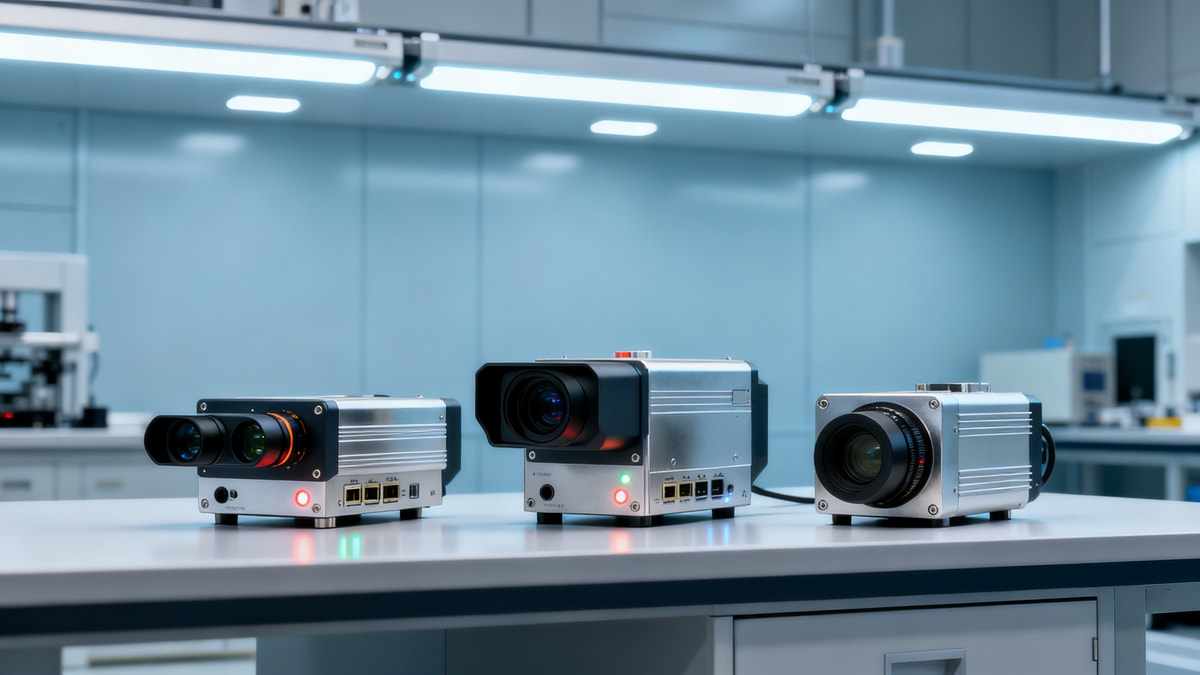
Only laser distance meters, infrared thermal imagers, and machine vision light sources are confirmed as eligible. Other optical devices (e.g., spectrometers, interferometers, or optical encoders) fall outside the green channel’s scope. Firms should audit their export product portfolio against these three categories before allocating internal resources toward fast-track preparation.
Prepare Documentation for Pre-Review Consistency
The five-day pre-review window assumes complete, consistent, and directive-aligned technical documentation. Incomplete risk assessments, outdated harmonized standards references, or missing EMC test plans will trigger re-submission—resetting the clock. Teams should conduct an internal pre-check using TÜV SÜD’s publicly available CE pre-review checklist for industrial optical equipment.
Monitor Official Updates on Scope Expansion or Conditions
This is a newly launched, narrowly defined pilot. There is no public indication yet of timeline extensions, additional product categories, or changes to the CNAS requirement. Stakeholders should subscribe to TÜV SÜD’s official regulatory alerts and review updates quarterly—especially ahead of potential EU Commission revisions to Annex III of the EMC Directive.
Editorial Perspective / Industry Observation
Observably, this initiative functions primarily as a procedural efficiency measure—not a relaxation of technical requirements. It compresses administrative latency, not compliance burden. Analysis shows it reflects growing recognition by notified bodies that calibration infrastructure in China has matured sufficiently in select domains to serve as a reliable proxy for certain pre-assessment checks. However, it remains a conditional, product-specific pathway—not a broad-based certification simplification. From an industry perspective, the green channel signals increasing granularity in how EU market access support is being tailored: not by region or volume, but by measurable technical readiness (e.g., CNAS calibration) and directive alignment (e.g., DIN EN 61000-4-3). Its sustainability and scalability will depend on real-world uptake and error rates during the pre-review phase—data not yet published.
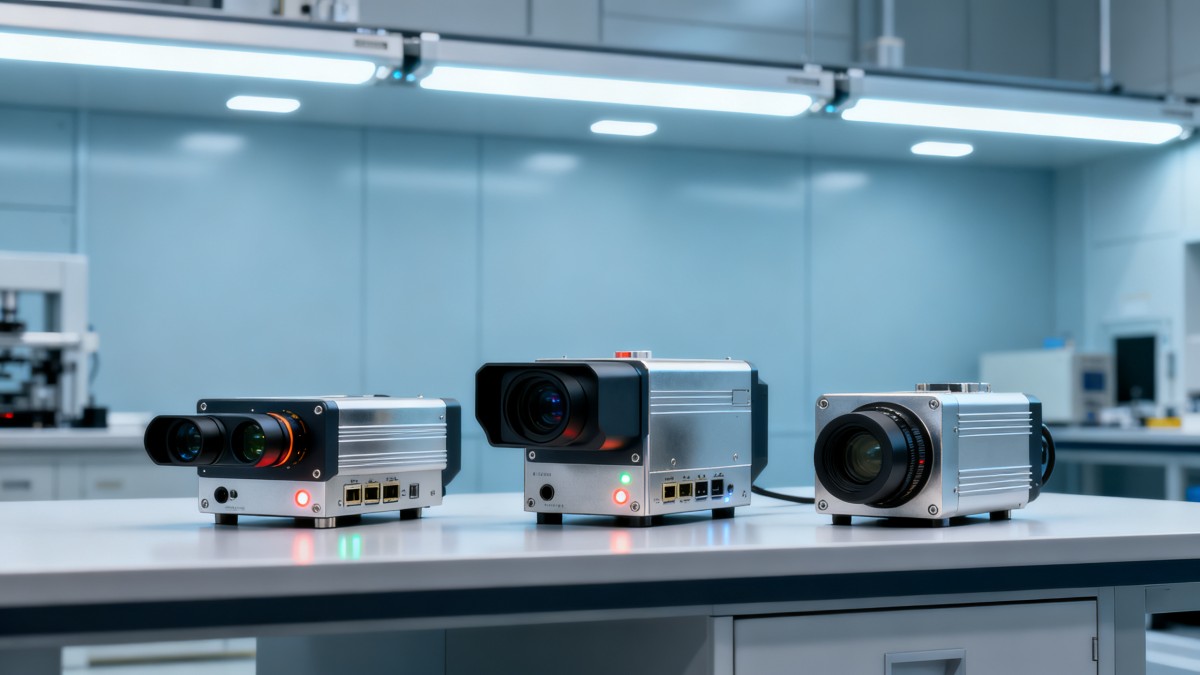
In summary, the TÜV SÜD green channel introduces a time-saving mechanism for a narrow set of industrial optical products meeting strict calibration prerequisites. It does not alter core CE conformity obligations, nor does it reduce testing rigor. Rather, it shifts emphasis toward upstream technical preparedness—making calibration traceability a de facto operational checkpoint for EU-bound optical equipment exporters. Current understanding should treat this as a targeted workflow optimization, not a strategic certification shift.
Source: Official announcement by TÜV SÜD dated 30 April 2026. Scope details and eligibility criteria are based solely on that release. Pending observation: whether TÜV SÜD publishes performance metrics (e.g., average pre-review completion rate, common rejection reasons) or expands eligibility beyond the three named product categories.
Technical Specifications
- ILAC Recognizes CNAS Bearing Vibration ReportsAuthor :Heavy Industry Strategist
- ESMA Mandates EN 14181 QA/QC Level 3 for Industrial Water Sensors in UAEAuthor :Environmental Engineering Director
- JIS T 8201-2026 Enforces New Low-Temp Impact Test for Fire Respirator MasksAuthor :Safety Compliance Lead
Expert Insights

Chief Security Architect
Dr. Thorne specializes in the intersection of structural engineering and digital resilience. He has advised three G7 governments on industrial infrastructure security.
Related Analysis
- May 01, 2026ILAC Recognizes CNAS Bearing Vibration ReportsAuthor :Heavy Industry Strategist
- May 01, 2026ESMA Mandates EN 14181 QA/QC Level 3 for Industrial Water Sensors in UAEAuthor :Environmental Engineering Director
- May 01, 2026JIS T 8201-2026 Enforces New Low-Temp Impact Test for Fire Respirator MasksAuthor :Safety Compliance Lead
Core Sector // 01
Security & Safety
- TÜV SÜD Launches China Industrial Optical Equipment Fast-Track CE ReviewAuthor :Precision Metrology Expert

- New Drone EMC Standard GB/T 44739-2026 Takes Effect May 1, 2026Author :Precision Metrology Expert

- TÜV SÜD Launches China Industrial Optics Fast TrackAuthor :Precision Metrology Expert

- DIN EN 61000-4-3:2026-04 Enforces Stricter EMC Immunity for Industrial Optical Inspection EquipmentAuthor :Precision Metrology Expert

- TÜV Rheinland Tightens RF Immunity for Laser Interferometers to 4.5 V/mAuthor :Precision Metrology Expert

- TÜV Rheinland Tightens RF Immunity for Laser Interferometers to 4.5 V/mAuthor :Precision Metrology Expert
![]()
- TÜV Rheinland Updates EMC Guide for Industrial Optical EquipmentAuthor :Precision Metrology Expert
![]()
- TÜV Rheinland Updates EMC Guide: RF Immunity for Industrial Optical Inspection DevicesAuthor :Precision Metrology Expert
![]()