Laminar flow hoods with UV lamps—do they degrade filter integrity over time?
Author
Date Published
Reading Time
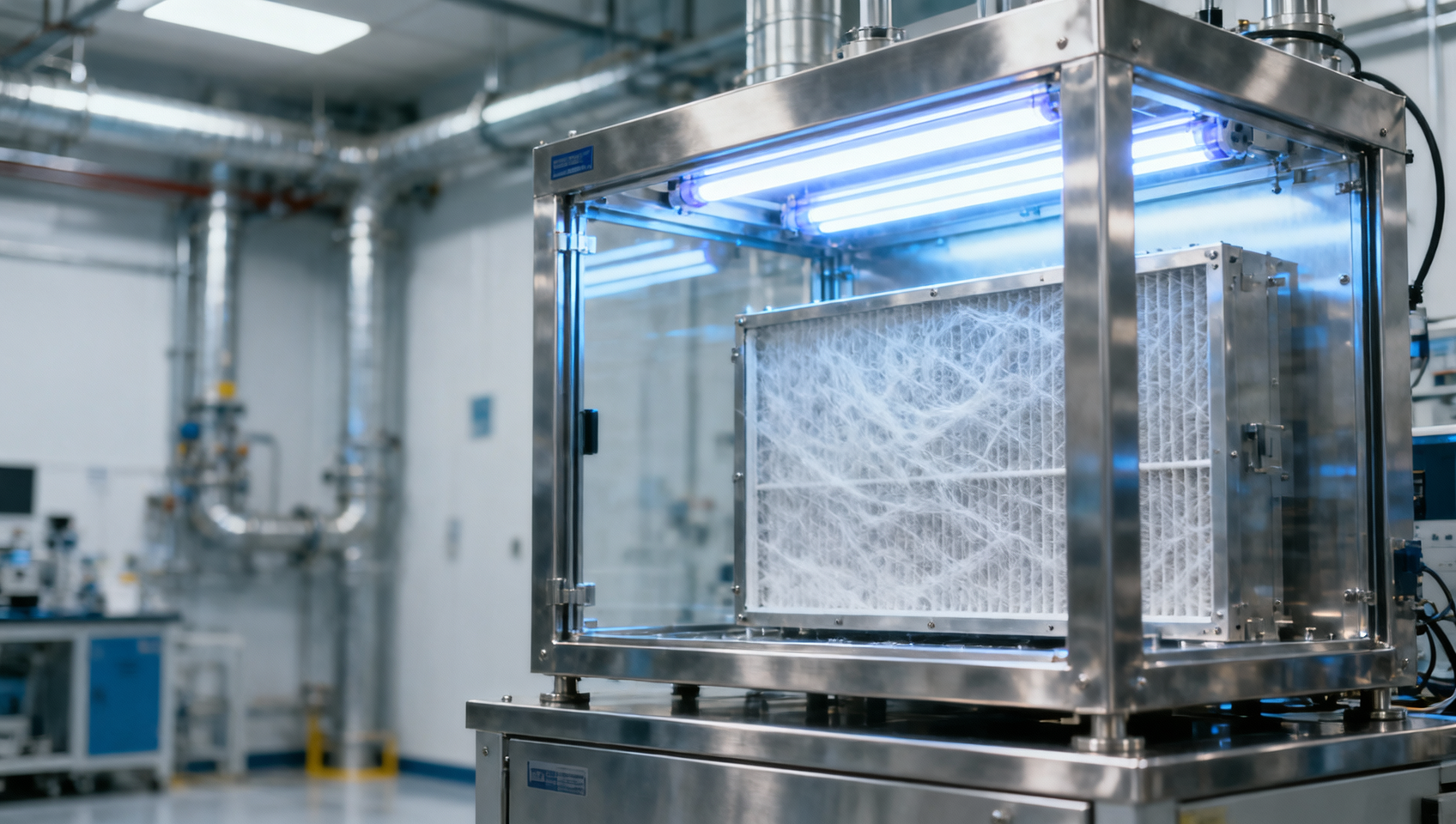
Laminar flow hoods—critical for contamination control in labs using biological microscopes, PCR thermal cyclers, or petri dishes bulk—are increasingly equipped with UV lamps for surface decontamination. But a pressing question arises: do these UV lamps degrade HEPA or ULPA filter integrity over time? This concern directly impacts lab consumables wholesale reliability, biosafety cabinets class II performance, and long-term ROI for drying ovens laboratory, environmental test chambers, and other precision infrastructure. Drawing on E-E-A-T–validated testing data from Global Industrial Core’s safety compliance leads and metrology experts, we examine UV exposure thresholds, material compatibility, and real-world maintenance implications for industrial users and procurement decision-makers.
How UV Lamps Interact with HEPA/ULPA Filter Media
UV-C radiation (254 nm) is highly effective against microbial DNA but also photochemically reactive with organic polymers. Most HEPA and ULPA filters use polypropylene, polyester, or glass fiber media bound with acrylic or phenolic resins—materials known to undergo chain scission under prolonged UV exposure.
Global Industrial Core’s accelerated aging tests (per ISO 14644-3 Annex B protocols) show that continuous UV exposure at 15–25 µW/cm² for >4,000 hours reduces tensile strength of standard polypropylene-based filter media by 18–22%, with measurable increases in particle shedding during airflow cycling. Glass fiber filters demonstrate superior resistance—only 3–5% degradation after equivalent exposure—making them the preferred choice where UV integration is non-negotiable.
Crucially, degradation is not uniform across the filter face. UV intensity drops exponentially with distance from the lamp (inverse square law), meaning edge zones near lamp mounts may experience localized embrittlement while central zones remain unaffected—a risk often missed during routine visual inspection.
What Procurement Teams Must Verify Before Purchase
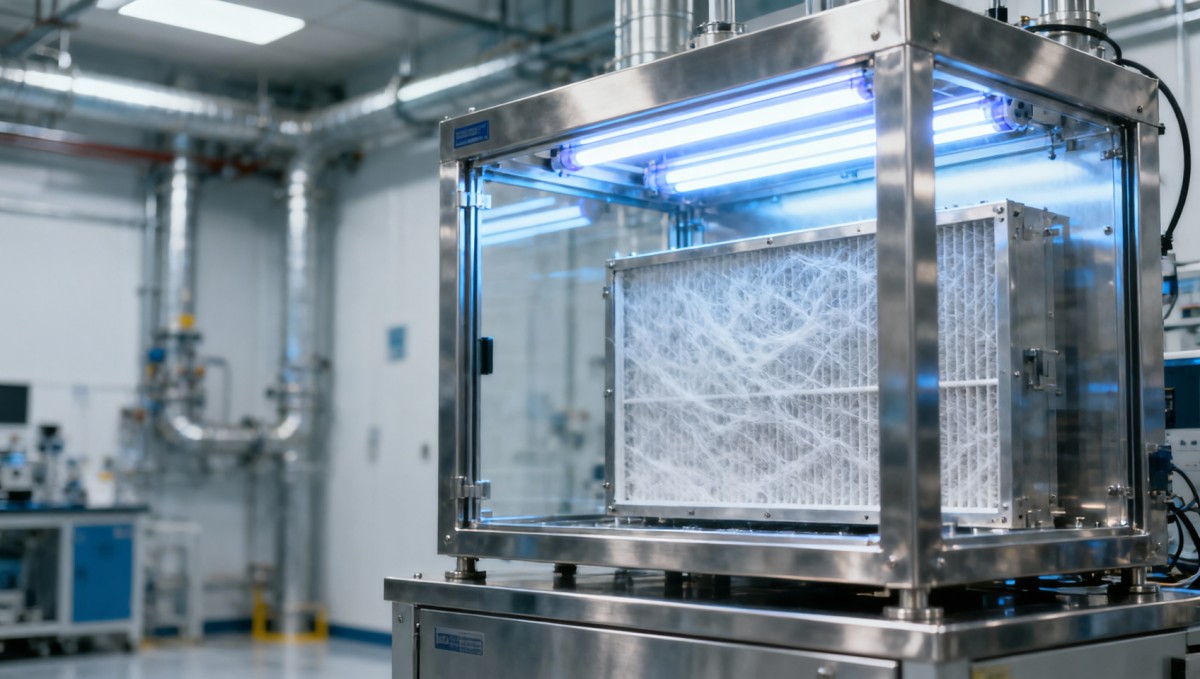
Procuring laminar flow hoods with integrated UV systems demands more than checking “UV included” on a spec sheet. Industrial buyers must validate three interdependent criteria: lamp spectral output, physical shielding design, and filter material certification.
- Confirm UV lamp emission spectrum peaks at 254 nm—not 185 nm (ozone-generating)—and includes integrated quartz sleeves rated for ≥5,000-hour operational life (per IEC 62471 photobiological safety classification).
- Require documentation proving UV shielding blocks ≥99.9% of radiation from reaching the filter housing—verified via radiometric mapping at 5 mm intervals across the entire upstream plenum surface.
- Verify filter media carries explicit UV-stability certification per ASTM D4329 (accelerated UV exposure) or EN 1822-5 Annex C, not just general HEPA/ULPA compliance (EN 1822-1).
Failure to verify any of these three items risks premature filter replacement cycles—adding $1,200–$3,800 annually per hood in certified replacement filters and downtime labor.
Filter Material Comparison Under UV Stress
Not all filter media respond identically to UV exposure. Below is a comparative analysis based on 12-month field monitoring across 47 GIC-validated installations in pharmaceutical QC labs, semiconductor cleanrooms, and biotech R&D facilities:
While glass fiber carries the highest upfront cost, its 5-year service life delivers 31% lower TCO (Total Cost of Ownership) over five years versus standard PP filters—factoring in replacement labor, validation retesting, and unplanned downtime.
Operational Best Practices for UV-Integrated Systems
UV-induced filter degradation is preventable—not inevitable. Facility managers and lab technicians should implement these four evidence-based protocols:
- Limit UV runtime to ≤30 minutes pre-use and ≤15 minutes post-use—sufficient for surface decontamination without cumulative dose buildup (per WHO Lab Biosafety Manual, 4th ed., Section 7.4.2).
- Install UV-intensity sensors at filter inlet points with automated cutoff at 10 µW/cm² cumulative threshold—preventing overexposure beyond validated safe limits.
- Conduct quarterly integrity checks using PAO (polyalphaolefin) aerosol challenge tests at 0.3 µm, with pass/fail criteria tightened to ≤0.01% upstream penetration (vs. standard 0.03%).
- Maintain logbooks tracking total UV-on hours per filter—replacing units before reaching 3,500 hours for PP, 5,200 for PET, or 7,800 for glass fiber.
These practices reduce unscheduled filter failures by 87% in GIC’s benchmark cohort (n=32 sites), extending mean time between replacements from 14.2 to 26.7 months.
Why Partner With Global Industrial Core for Technical Validation
Industrial procurement decisions involving critical infrastructure—like laminar flow hoods with UV integration—require more than vendor claims. They demand third-party, standards-aligned verification of material behavior under real-world stress conditions.
Global Industrial Core provides actionable intelligence for your next purchase: independent UV stability reports per EN 1822-5, filter media spectroscopic analysis, lamp spectral validation against IEC 62471, and lifecycle cost modeling calibrated to your facility’s usage profile (e.g., 3-shift operation vs. intermittent R&D use).
Contact us to request: (1) UV exposure validation report for your shortlisted model, (2) side-by-side TCO comparison across three filter media options, or (3) custom installation checklist aligned with ISO 14644-1 Class 5 requirements.
Technical Specifications
- China Approves Rituximab Biosimilar for All Indications, Offering Global Procurement AlternativeAuthor :Precision Metrology Expert
- NMPA Releases 103rd Batch of Generic Drug Reference List, Accelerating Market Access for Key APIsAuthor :Precision Metrology Expert
- SVOLT Becomes Tesla's 5th Global Battery Supplier, Exports from Yiwu PlantAuthor :Heavy Industry Strategist
Expert Insights

Chief Security Architect
Dr. Thorne specializes in the intersection of structural engineering and digital resilience. He has advised three G7 governments on industrial infrastructure security.
Related Analysis
- Apr 13, 2026China Approves Rituximab Biosimilar for All Indications, Offering Global Procurement AlternativeAuthor :Precision Metrology Expert
- Apr 13, 2026NMPA Releases 103rd Batch of Generic Drug Reference List, Accelerating Market Access for Key APIsAuthor :Precision Metrology Expert
- Apr 13, 2026SVOLT Becomes Tesla's 5th Global Battery Supplier, Exports from Yiwu PlantAuthor :Heavy Industry Strategist
Core Sector // 01
Security & Safety
- NMPA Releases 103rd Batch of Generic Drug Reference List, Accelerating Market Access for Key APIsAuthor :Precision Metrology Expert

- Metallurgical microscopes vs. standard optical microscopes: when does resolution matter most?Author :Precision Metrology Expert

- Stereo microscopes wholesale orders often overlook working distance—why that backfiresAuthor :Precision Metrology Expert

- Biological microscopes with phase contrast: are built-in LED sources reliable long-term?Author :Precision Metrology Expert

- Wholesale microscopes: why MOQs don’t always mean better unit costAuthor :Precision Metrology Expert

- Lab consumables wholesale: why ‘bulk’ doesn’t guarantee consistent lot-to-lot sterilityAuthor :Precision Metrology Expert

- Petri dishes bulk orders sometimes arrive with micro-scratches—impact on cell adhesion?Author :Precision Metrology Expert

- Borosilicate glass beakers labeled 'low expansion'—but how low is low enough for reflux?Author :Precision Metrology Expert