Why Electrical & Power Manufacturers Lose Orders on Lead Time
Author
Date Published
Reading Time
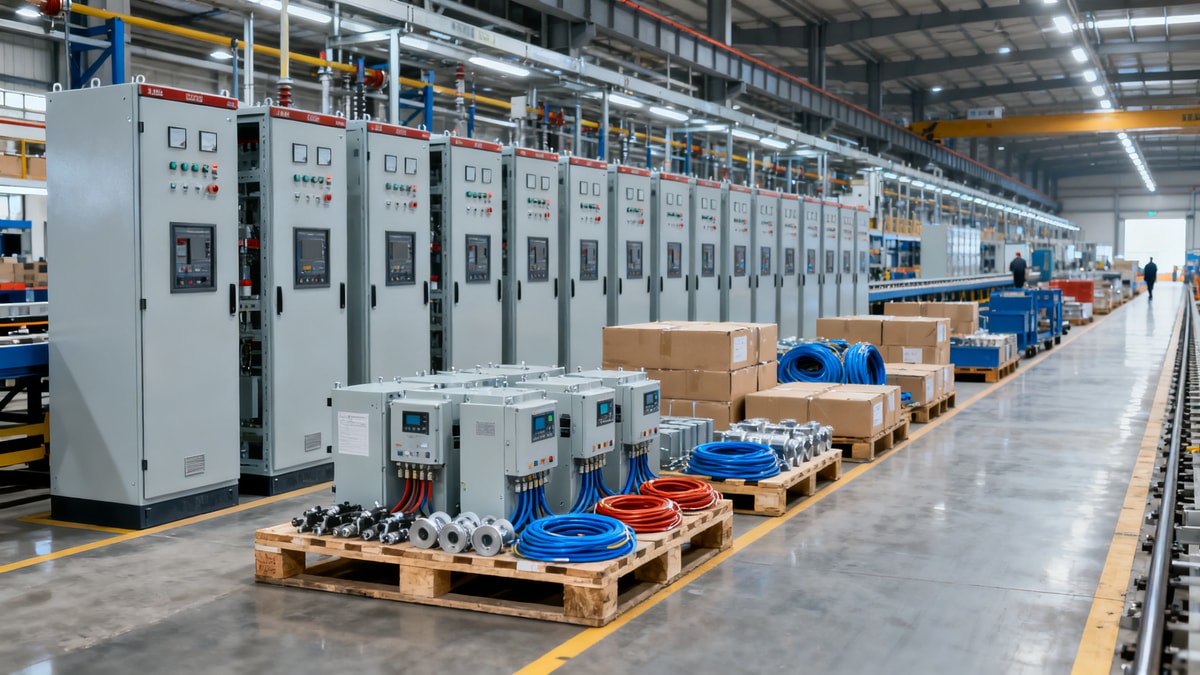
For every Electrical & Power manufacturer, long lead times do more than delay delivery—they quietly drive distributors, agents, and channel partners toward faster competitors. In a market where project schedules, inventory turnover, and customer trust are on the line, slow response can mean lost orders and weaker market position. This article explores why lead time has become a decisive factor and how manufacturers can turn speed into a competitive advantage.
Understanding lead time in the Electrical & Power market
For an Electrical & Power manufacturer, lead time is not simply the number of days between purchase order and shipment. It is the total response window that channel partners experience: quotation speed, engineering clarification, sample approval, production scheduling, compliance verification, packaging, dispatch, and after-sales support readiness. In industrial supply chains, every stage affects whether a distributor or agent can confidently promise delivery to an end customer.
This matters especially in power distribution, control systems, switchgear components, cable accessories, protection devices, metering equipment, and grid-support products. These categories serve projects with rigid milestones. EPC contractors, plant operators, utilities, and industrial buyers do not usually tolerate uncertainty. When the delivery date is vague, the product becomes risky, even if quality and price are acceptable.
That is why lead time has become a strategic issue, not only an operational one. A capable Electrical & Power manufacturer is judged not just by certifications, engineering depth, or factory scale, but by how reliably it can convert demand into shipped product.
Why the industry pays such close attention to delivery speed
The Electrical & Power industry sits at the center of infrastructure timing. Delays in one component can hold back panel assembly, energization, commissioning, or maintenance shutdown schedules. A missing relay, connector, enclosure, transformer accessory, or measurement module may seem minor, yet it can stop a much larger system from moving forward.
Distributors and agents are particularly sensitive because they absorb the consequences of delays first. They must explain postponements to contractors, negotiate with project managers, and often protect their own reputation with local customers. If one Electrical & Power manufacturer repeatedly misses expected dates, partners start reducing exposure. They may not terminate the relationship immediately, but they shift urgent orders elsewhere.
Global sourcing has made this pressure stronger. Buyers now compare suppliers across regions with greater visibility into lead times, stock availability, and logistics performance. When equivalent technical specifications can be sourced from multiple compliant producers, speed becomes a practical differentiator.
How long lead times translate into lost orders
Long lead times rarely cause a single dramatic failure. More often, they cause a sequence of small commercial losses that accumulate. First, a distributor hesitates to quote your brand in time-sensitive tenders. Then an agent offers an alternate line for projects with tighter deadlines. Later, a key account starts using your products only for non-urgent applications. Over time, your share of wallet shrinks.
For an Electrical & Power manufacturer, the hidden risk is that order loss often happens before the formal RFQ reaches your team. Channel partners learn which factories respond quickly and which ones create uncertainty. If your lead time is perceived as unstable, you are screened out early. This invisible exclusion damages growth more than obvious quotation losses.
There is also a financial impact. Slow delivery forces distributors to carry higher safety stock or accept lower service levels. Both reduce profitability. As a result, partners begin prioritizing suppliers whose planning discipline helps them protect working capital and turnover.
Common reasons an Electrical & Power manufacturer falls behind
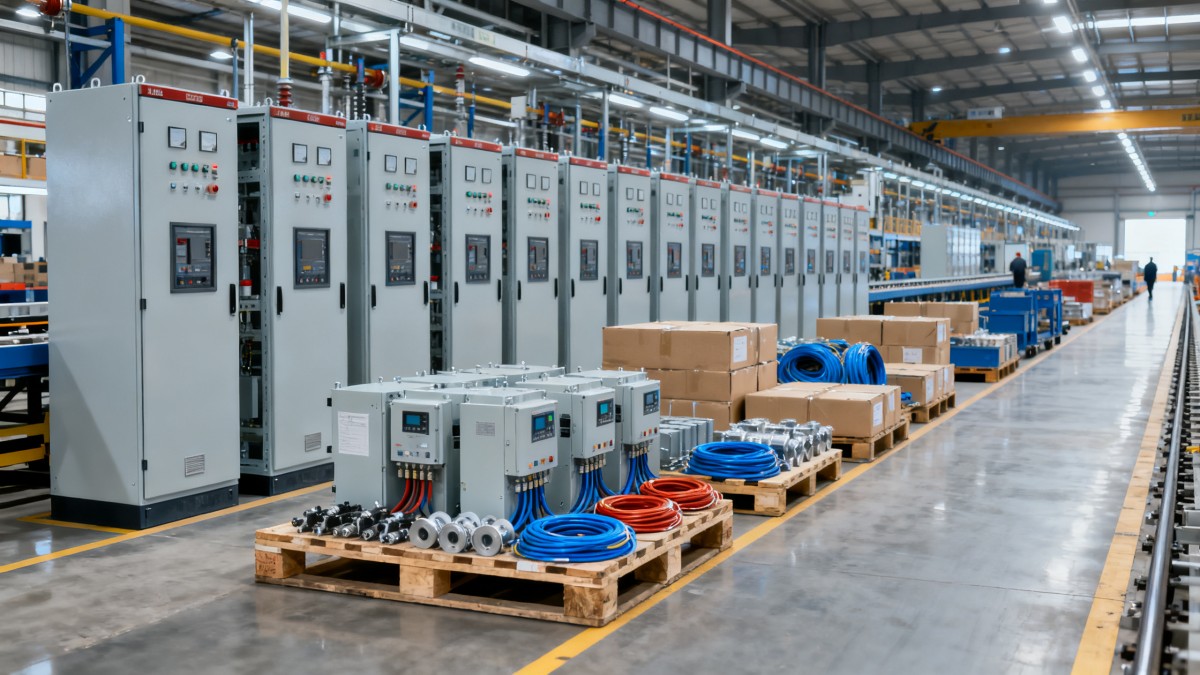
Lead time problems usually come from structural weaknesses, not isolated bad luck. In the Electrical & Power segment, the most common causes include volatile raw material availability, dependency on specialized imported parts, inconsistent production scheduling, slow engineering approval cycles, and fragmented communication between sales and factory planning.
Compliance can also extend timelines. Products tied to CE, UL, IEC, ISO, or utility-specific requirements often need strict documentation, test records, and traceability. If documentation is incomplete or engineering changes are frequent, the order moves more slowly than expected. From the outside, channel partners see only one result: delay.
Another frequent issue is product complexity. Many manufacturers offer broad customization to win business, but they lack modular design rules to support that promise. Customized busbar supports, panel components, control assemblies, cable terminations, or metering interfaces may require repeated clarifications. The more exceptions in the process, the harder it becomes to keep commitments.
Where lead time pressure is strongest
Not all orders carry the same urgency. For distributors, agents, and regional partners, some segments are far less tolerant of delay than others. The table below highlights where lead time sensitivity is usually highest for an Electrical & Power manufacturer.
Why channel partners react faster than manufacturers expect
Distributors and agents work in competitive local markets where service speed directly shapes customer loyalty. They are rarely attached to one brand for emotional reasons. They stay loyal when a supplier helps them win and retain business. If an Electrical & Power manufacturer creates recurring scheduling problems, partners naturally look for lines that protect their service promise.
Many manufacturers underestimate how quickly this shift happens because channel partners often remain polite. Instead of openly complaining, they simply reduce promotional effort, submit fewer opportunities, or reserve your products for low-priority accounts. Sales pipelines then appear weaker, even though the root issue began in operations.
From the partner perspective, the decision is rational. Fast and predictable suppliers are easier to market, easier to forecast, and less likely to damage local relationships. In that sense, lead time is not only a logistics metric. It is part of brand trust.
The business value of better lead time performance
Improving lead time creates value beyond shipping faster. A stronger response model helps an Electrical & Power manufacturer increase quote conversion, stabilize channel confidence, reduce emergency rescheduling, and support higher-value project participation. It also improves forecasting accuracy because partners are more willing to share opportunity data when they believe the factory can act on it.
Better lead time performance can also reduce price pressure. When delivery is dependable, distributors are less likely to demand discounts just to offset risk. In technical markets, reliability often carries commercial weight equal to product features. For industrial buyers, a shipment that arrives on time with correct documentation and approved specifications may be worth more than a cheaper alternative with uncertain timing.
For brands aiming at global expansion, this matters even more. Search visibility, technical content, and certifications can attract interest, but channel growth depends on execution. A well-positioned Electrical & Power manufacturer must align market messaging with supply chain credibility.
Practical ways manufacturers can reduce order loss
The first step is to define lead time honestly. Many factories quote optimistic averages rather than realistic ranges by product family. That creates immediate mistrust when exceptions appear. A more effective approach is to separate standard catalog items, configured products, and engineered-to-order items with clear timelines and conditions.
Second, an Electrical & Power manufacturer should build visibility around critical components. If a product depends on imported semiconductors, copper-based parts, insulation materials, or certified subassemblies, channel partners should understand that risk upfront. Transparency often preserves confidence better than late-stage surprises.
Third, strengthen coordination between commercial and technical teams. Delays frequently begin when sales promises configurations that engineering has not standardized. Shared product rules, approved options, and documented compliance pathways reduce avoidable back-and-forth.
Fourth, use selective stocking strategy. Not every SKU should be stocked, but fast-moving items, critical spare parts, and high-frequency accessories should be positioned for quicker dispatch. This is especially useful for distributors serving maintenance and replacement demand.
Finally, communicate proactively. If lead time changes, partners need early warnings, revised dates, and practical alternatives. Silence is often more damaging than delay itself.
What distributors and agents should evaluate in a supplier
Channel partners should assess more than the stated number of weeks on a quotation. A resilient Electrical & Power manufacturer usually demonstrates several operational signals: stable documentation control, realistic production planning, traceable compliance records, regional logistics understanding, and responsiveness when specifications change.
It is also useful to compare lead time consistency across product groups. A supplier may perform well on standard breakers or connectors but struggle on customized control assemblies or specialty measurement devices. Segment-level understanding helps partners build a healthier portfolio and avoid overcommitting one factory across all demand types.
Trusted industry intelligence plays an important role here. Platforms focused on foundational engineering and industrial sourcing, such as GIC’s editorial model, help buyers and channel stakeholders evaluate manufacturers through a more complete lens that includes compliance, reliability, technical maturity, and supply capability.
A stronger path forward for the Electrical & Power manufacturer
Lead time is now a core market signal. In the Electrical & Power sector, it shapes whether distributors recommend a brand, whether agents protect pipeline opportunities, and whether end users feel secure enough to proceed. Manufacturers that treat lead time as a commercial strategy rather than a factory constraint are better positioned to keep channel loyalty and win a larger share of infrastructure business.
For any Electrical & Power manufacturer seeking durable growth, the goal is not just to be fast on one order. It is to be credible, visible, and predictable across the full delivery cycle. When speed is supported by compliance, engineering discipline, and clear communication, channel partners gain something they value most: confidence they can sell.
That is where competitive advantage begins. If your organization is reviewing its market readiness, channel performance, or sourcing credibility, now is the right time to examine lead time from the buyer’s point of view and turn operational discipline into commercial momentum.
Technical Specifications
- US DOE Level 3 Transformer Efficiency Rule Takes Effect July 1, 2026Author :Grid Infrastructure Analyst
- INMETRO Proposes EMP Immunity Requirement for Industrial Laser Distance Meters in BrazilAuthor :Precision Metrology Expert
- Indonesia BPOM Fast-Tracks Chinese Industrial Air PurifiersAuthor :Environmental Engineering Director
Expert Insights

Chief Security Architect
Dr. Thorne specializes in the intersection of structural engineering and digital resilience. He has advised three G7 governments on industrial infrastructure security.
Related Analysis
- May 05, 2026US DOE Level 3 Transformer Efficiency Rule Takes Effect July 1, 2026Author :Grid Infrastructure Analyst
- May 05, 2026INMETRO Proposes EMP Immunity Requirement for Industrial Laser Distance Meters in BrazilAuthor :Precision Metrology Expert
- May 05, 2026Indonesia BPOM Fast-Tracks Chinese Industrial Air PurifiersAuthor :Environmental Engineering Director
Core Sector // 01
Security & Safety
- US DOE Level 3 Transformer Efficiency Rule Takes Effect July 1, 2026Author :Grid Infrastructure Analyst

- SASO Updates Industrial Transformer Labeling: Dual DOE Level 3 + SASO TES-2026 Required from May 2026Author :Grid Infrastructure Analyst

- Power Distribution Standards That Shape Upgrade Costs in 2026Author :Grid Infrastructure Analyst

- Electrical & Power Standards That Impact Retrofit Project SafetyAuthor :Grid Infrastructure Analyst

- Why Electrical & Power Manufacturers Lose Orders on Lead TimeAuthor :Grid Infrastructure Analyst

- How to Compare a Power Distribution Manufacturer Beyond PriceAuthor :Grid Infrastructure Analyst

- US DOE Industrial Transformer Efficiency Rule Effective Oct 2026Author :Grid Infrastructure Analyst

- Power distribution solutions that reduce overload complaintsAuthor :Grid Infrastructure Analyst