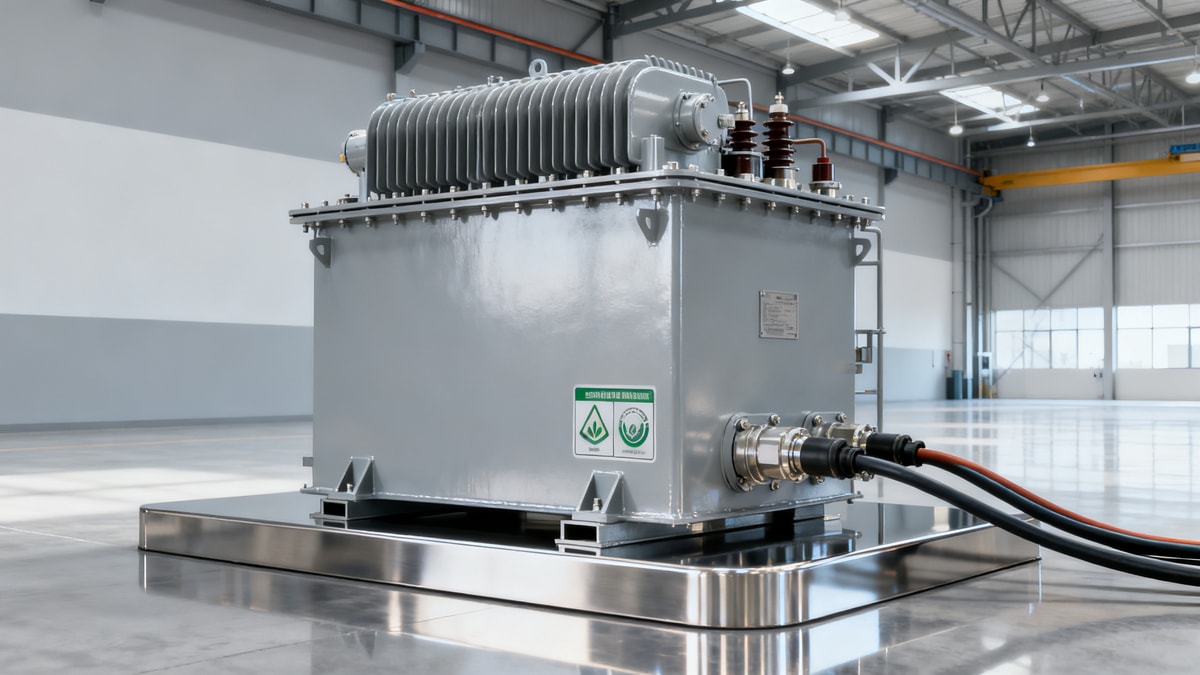
SASO Updates Industrial Transformer Labeling: Dual DOE Level 3 + SASO TES-2026 Required from May 2026
Author
Date Published
Reading Time
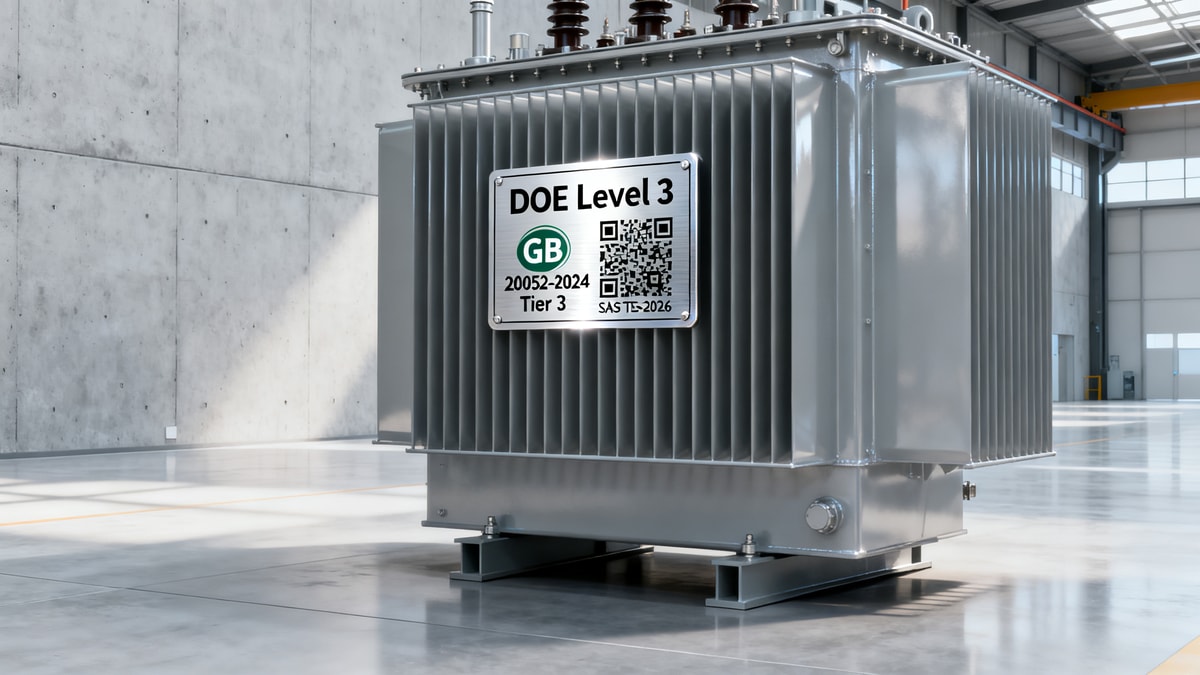
On May 4, 2026, the Saudi Standards, Metrology and Quality Organization (SASO) updated its energy labeling requirements for imported industrial power transformers — mandating dual-label compliance with U.S. DOE Level 3 efficiency standards and China’s GB 20052-2024 Tier 3 values, alongside mandatory application of the SASO TES-2026 tamper-proof QR code. This rule directly affects manufacturers, exporters, and importers supplying industrial transformers to the Saudi market, particularly those engaged in infrastructure, energy, and industrial equipment sectors.
Event Overview
SASO issued the revised SASO IEC 60076-20:2026 Energy Labeling Implementation Rules effective May 4, 2026. Under the update, all imported industrial transformers must display both the U.S. Department of Energy (DOE) Level 3 efficiency rating and the Chinese GB 20052-2024 Tier 3 efficiency value on their nameplates or labels, and must affix the official SASO TES-2026 anti-counterfeiting QR code. Non-compliant shipments risk rejection or return at Jeddah Port.
Which Subsectors Are Affected
Direct Trading Enterprises (Exporters & Importers)
These entities face immediate operational impact as labeling is a customs clearance prerequisite. Since the requirement applies to all imports “as of” May 4, 2026, pre-shipment verification of label content and QR code authenticity becomes critical — not only for regulatory acceptance but also to avoid port delays or cargo rejection.
Manufacturing Enterprises (Transformer OEMs & Contract Producers)
OEMs producing for the Saudi market must revise technical documentation, nameplate designs, and quality control checklists to incorporate dual-efficiency declarations and SASO TES-2026 QR generation. This affects product release timelines, especially for units already in production planning or under contract with delivery windows overlapping the May 2026 enforcement date.
Supply Chain & Logistics Service Providers
Freight forwarders and customs brokers handling transformer shipments into Saudi Arabia must now validate label compliance prior to vessel departure. Inaccurate or missing DOE/GB efficiency values or non-functional TES-2026 QR codes may trigger post-arrival inspection holds — increasing dwell time and demurrage exposure at Jeddah Port.
What Relevant Enterprises or Practitioners Should Focus On — And How to Respond Now
Verify official SASO guidance on TES-2026 QR issuance and validation
The SASO TES-2026 QR code is newly introduced and requires registration and generation via SASO’s official platform. Enterprises should confirm whether access is restricted to local Saudi representatives or if foreign manufacturers can register directly — and whether test QR codes are available for pre-shipment validation.
Review current transformer models against DOE Level 3 and GB 20052-2024 Tier 3 thresholds
DOE Level 3 and GB 20052-2024 Tier 3 define different minimum efficiency values by kVA rating and winding configuration. Manufacturers and exporters must cross-check each model’s certified test reports to ensure both criteria are simultaneously met — not just one or the other — before labeling.
Update internal labeling workflows and supplier-facing specifications
Label artwork, ERP-based documentation templates, and purchase order clauses for transformer suppliers must be revised to explicitly require dual-efficiency statements and TES-2026 QR placement. This includes defining acceptable QR size, contrast ratio, and scannability standards per SASO’s technical annex (if published).
Editorial Perspective / Industry Observation
Observably, this update reflects SASO’s growing alignment with internationally referenced efficiency benchmarks — using DOE and GB standards as proxy metrics rather than developing standalone Saudi thresholds. Analysis shows it functions less as an isolated labeling change and more as an early signal of broader harmonization efforts across Gulf Cooperation Council (GCC) energy regulations. From an industry perspective, the simultaneous adoption of two external national standards suggests SASO is prioritizing interoperability and third-party verifiability over domestic standard creation — a trend likely to extend to other energy-consuming equipment categories. Current enforcement focus remains narrowly on labeling format and QR authenticity; however, future phases may involve mandatory third-party certification or factory audits to verify claimed efficiency values.
Conclusion
This regulation marks a procedural tightening rather than a fundamental shift in efficiency expectations — the underlying efficiency thresholds (DOE Level 3, GB Tier 3) were already widely adopted in global export markets. It is best understood not as a new performance mandate, but as a formalized traceability and transparency requirement for market access. Enterprises should treat it as an operational compliance milestone requiring coordinated updates across labeling, documentation, and customs coordination — not as a technical redesign trigger.
Source Attribution
Main source: SASO IEC 60076-20:2026 Energy Labeling Implementation Rules (effective May 4, 2026).
Points requiring ongoing observation: SASO’s official TES-2026 QR code issuance process, including eligibility, registration timeline, and validation mechanism — details remain pending public release as of the rule’s effective date.
Technical Specifications
- US DOE Level 3 Transformer Efficiency Rule Takes Effect July 1, 2026Author :Grid Infrastructure Analyst
- INMETRO Proposes EMP Immunity Requirement for Industrial Laser Distance Meters in BrazilAuthor :Precision Metrology Expert
- Indonesia BPOM Fast-Tracks Chinese Industrial Air PurifiersAuthor :Environmental Engineering Director
Expert Insights

Chief Security Architect
Dr. Thorne specializes in the intersection of structural engineering and digital resilience. He has advised three G7 governments on industrial infrastructure security.
Related Analysis
- May 05, 2026US DOE Level 3 Transformer Efficiency Rule Takes Effect July 1, 2026Author :Grid Infrastructure Analyst
- May 05, 2026INMETRO Proposes EMP Immunity Requirement for Industrial Laser Distance Meters in BrazilAuthor :Precision Metrology Expert
- May 05, 2026Indonesia BPOM Fast-Tracks Chinese Industrial Air PurifiersAuthor :Environmental Engineering Director
Core Sector // 01
Security & Safety
- US DOE Level 3 Transformer Efficiency Rule Takes Effect July 1, 2026Author :Grid Infrastructure Analyst

- SASO Updates Industrial Transformer Labeling: Dual DOE Level 3 + SASO TES-2026 Required from May 2026Author :Grid Infrastructure Analyst

- Power Distribution Standards That Shape Upgrade Costs in 2026Author :Grid Infrastructure Analyst

- Electrical & Power Standards That Impact Retrofit Project SafetyAuthor :Grid Infrastructure Analyst

- Why Electrical & Power Manufacturers Lose Orders on Lead TimeAuthor :Grid Infrastructure Analyst

- How to Compare a Power Distribution Manufacturer Beyond PriceAuthor :Grid Infrastructure Analyst

- US DOE Industrial Transformer Efficiency Rule Effective Oct 2026Author :Grid Infrastructure Analyst

- Power distribution solutions that reduce overload complaintsAuthor :Grid Infrastructure Analyst