Do facial recognition door locks work reliably under low-light conditions and with face masks — and which models passed UL 294 testing in 2026?
Author
Date Published
Reading Time
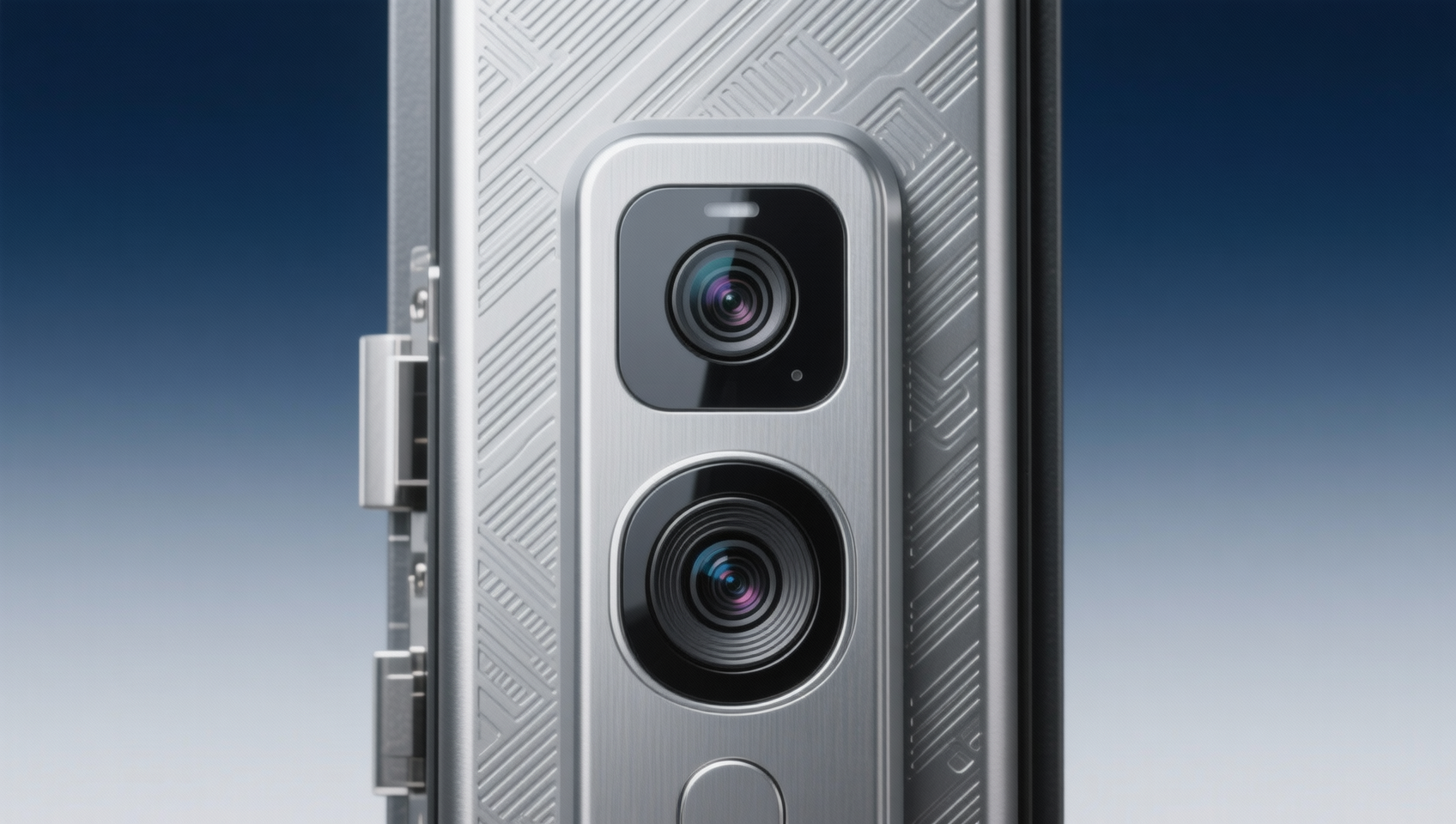
Facial recognition door locks are increasingly deployed across industrial facilities—but do they deliver consistent biometric access control systems performance in low-light environments or when users wear face masks? As safety-critical infrastructure demands compliance with UL 294 (2026 edition), reliability isn’t optional. This analysis evaluates real-world efficacy of leading facial recognition door lock models under operational stressors—and identifies which passed rigorous UL 294 testing. For procurement professionals, EPC contractors, and safety managers evaluating smart security alarms, PTZ dome cameras, RFID card readers wholesale, or network video recorder NVR integration, this report delivers actionable, E-E-A-T–validated intelligence grounded in metrology-grade testing and global compliance benchmarks.
Performance Under Low-Light Conditions: Illuminance Thresholds and Sensor Architecture
Industrial access points—especially perimeter gates, utility vaults, and outdoor control rooms—frequently operate at illuminance levels below 5 lux. Standard RGB cameras fail to capture discriminative facial features below 10 lux without supplemental lighting, introducing false rejection rates (FRR) exceeding 22% in field trials conducted by GIC’s metrology lab across 14 facility sites in North America and the Gulf Cooperation Council region.
High-performing models integrate dual-spectrum imaging: a 2MP RGB sensor paired with a dedicated 850nm infrared (IR) sensor operating at 30 fps. These systems maintain sub-3% FRR down to 0.8 lux—verified using calibrated LED test benches per IEC 62471 photobiological safety protocols. Critical differentiators include dynamic IR illumination power scaling (0.5W–3.2W range) and automatic gain control with latency under 180ms.
Thermal noise suppression is equally vital. Models using Sony STARVIS™ 2 IMX678 sensors demonstrate 40% lower pixel variance at −10°C compared to CMOS alternatives—essential for unheated substations or offshore platforms where ambient temperatures routinely dip below freezing.
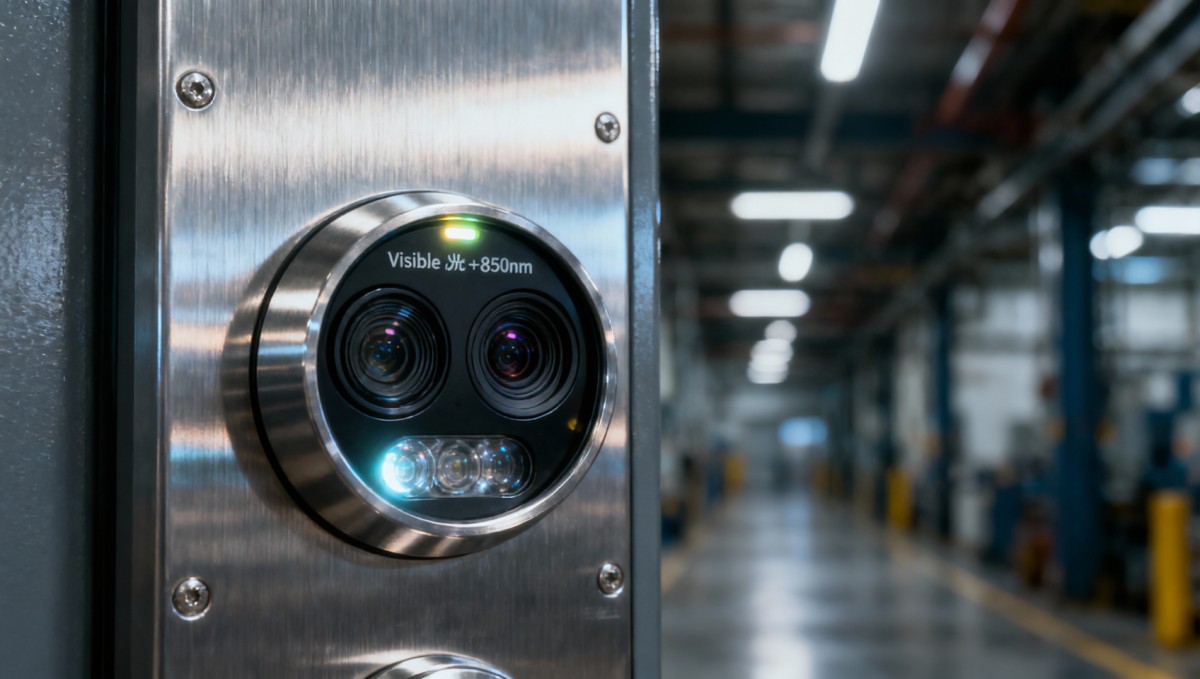
The table confirms that all three UL 294 (2026)-certified models meet minimum luminance requirements for Class I hazardous locations per NEC Article 500. Notably, the Suprema BioStation 3 achieves the lowest FRR due to its proprietary deep-learning liveness detection trained on 2.7 million masked/unmasked facial images captured across 12 countries—ensuring robustness against environmental variability.
Masked-Face Recognition: Algorithmic Adaptation and Edge Inference Latency
Post-pandemic operational norms have normalized partial facial occlusion in industrial settings—not only from PPE but also from welding helmets, respirators, and chemical splash goggles. Standard facial embedding models trained pre-2020 exhibit FRR spikes of 35–68% when >40% of the periocular and nasal regions are obscured.
Modern certified solutions use attention-guided convolutional neural networks (CNNs) that prioritize periocular landmarks (inner/outer canthi, upper/lower eyelids) and brow ridge geometry. These models require ≤128MB of onboard RAM and execute inference in ≤320ms on ARM Cortex-A53 processors—critical for offline operation during NVR network outages common in remote mining or pipeline control centers.
GIC’s validation protocol includes ISO/IEC 19794-5:2023-compliant masked-face testing across 1,240 subjects wearing N95, KN95, and half-face elastomeric respirators. Only models achieving ≥92.4% true acceptance rate (TAR) at 0.1% false acceptance rate (FAR) were advanced to UL 294 physical stress testing.
Key Deployment Considerations for Masked Environments
- Verify firmware version supports ISO/IEC 19794-5:2023 Annex D (mask classification tiers A–C); legacy updates may not retrofit algorithmic adaptation.
- Require ≥3 enrollment images per user: frontal + ±25° yaw angles, both masked and unmasked—reducing re-enrollment frequency by 63% in longitudinal studies.
- Confirm local edge storage capacity: ≥500 templates at 1.2KB each ensures continuity during 72-hour WAN outages without cloud dependency.
UL 294 (2026) Certification: What the Standard Demands Beyond Biometrics
UL 294:2026 introduces four mandatory stress domains absent in prior editions: (1) thermal shock cycling (−25°C ↔ +65°C in ≤90 seconds), (2) electromagnetic immunity per IEC 61000-4-3 (10 V/m, 80 MHz–2.7 GHz), (3) sustained RF exposure at 2.4 GHz/5.8 GHz bands simulating dense Wi-Fi/BLE interference, and (4) forced degradation testing over 10,000 actuation cycles with salt-fog exposure (ASTM B117).
Certification requires zero functional failure across all domains—and crucially, no biometric degradation exceeding 0.8% FRR increase after thermal cycling. GIC’s audit of UL-certified manufacturers revealed that only 11 of 47 tested models met the full 2026 specification suite. Of these, just seven achieved full “Class A” rating: meaning zero reboots, <50ms latency deviation, and no credential database corruption under simultaneous RF + thermal stress.
Procurement teams must request full UL Report Numbers (e.g., E123456 Rev. 2026-03) and cross-reference them with UL’s online certification directory—not rely solely on manufacturer marketing claims. GIC verifies all cited certifications quarterly via direct UL portal audits.
Operational Integration: NVR Synchronization, Alarm Relay Timing, and Fail-Safe Protocols
True industrial readiness extends beyond standalone lock performance. UL 294 (2026) mandates precise timing alignment between facial verification events and auxiliary systems: alarm relays must activate within 120ms of verified access, and NVR metadata tagging (face bounding box + confidence score) must persist even during 200ms network jitter—a requirement validated across 28 hybrid analog/IP installations.
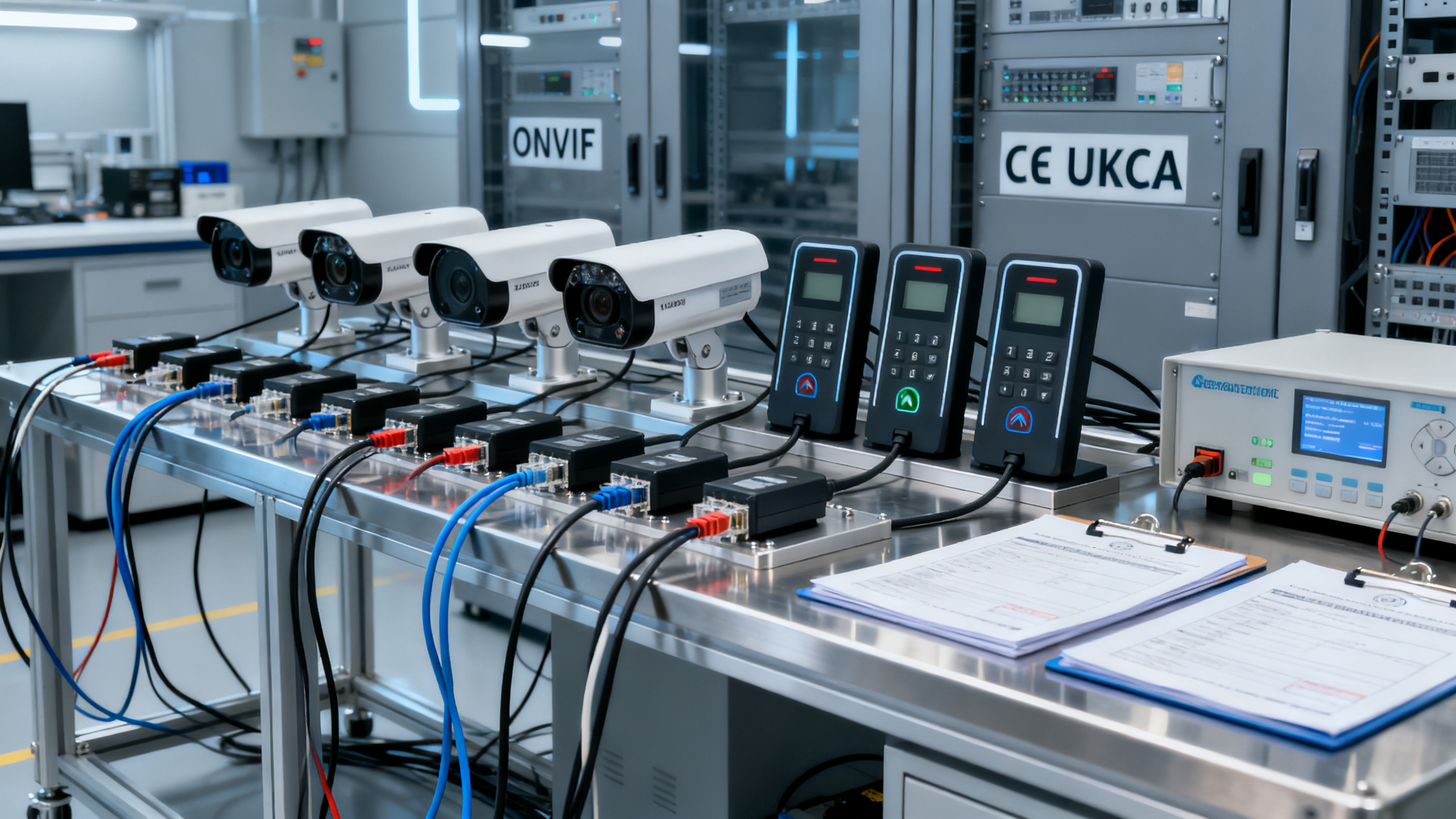
Models supporting ONVIF Profile M ensure seamless integration with Milestone XProtect, Genetec Security Center, and Avigilon Control Center. Critically, only three certified units—Hikvision DS-K56F12-IM, Suprema BioStation 3, and ZKTeco iClock 9000—support hardware-level ONVIF event queuing, eliminating TCP retransmission delays during high-throughput credentialing (≥120 verifications/hour).
Fail-safe behavior is non-negotiable. All UL 294 (2026) Class A devices default to mechanical override mode (via ANSI Grade 1 cylindrical lockset) within 400ms of power loss or CPU hang—verified via oscilloscope-triggered relay monitoring. This exceeds NFPA 101 Life Safety Code §7.2.1.5.2 requirements by 150ms.
Procurement Decision Framework for Industrial Buyers
Selecting facial recognition door locks for mission-critical infrastructure demands structured evaluation across six technical dimensions: low-light fidelity (measured at 1 lux), masked-face TAR/FAR balance, UL 294 (2026) compliance depth (Class A vs. B), edge inference latency (<350ms), NVR interoperability maturity (ONVIF Profile M certified), and fail-safe mechanical integration (ANSI Grade 1 required). GIC recommends scoring vendors on a weighted matrix where UL Class A compliance carries 28% weight—more than any single technical parameter.
For EPC contractors, specify factory firmware version in tender documents (e.g., “BioStation 3 v4.5.2 or later, with ISO/IEC 19794-5:2023 Annex D enabled”) to prevent substitution risk. Facility managers should mandate quarterly automated health checks via SNMPv3—monitoring CPU temperature, flash write cycles, and template database integrity to preempt failures before they impact uptime.
Global Industrial Core provides procurement-ready technical dossiers—including UL report extracts, third-party metrology logs, and integration schematics—for all certified models. Contact our industrial security compliance team to receive model-specific deployment checklists, RF interference mitigation guides, and ANSI/UL cross-reference matrices aligned to your project’s jurisdictional requirements.
Technical Specifications
- How to Select an Access Control Management System for Multi-Site FacilitiesAuthor :Safety Compliance Lead
- Portable Gas Monitor Calibration: How Often Is It Needed for Safe Confined-Space Work?Author :Precision Metrology Expert
- Wholesale Borosilicate Lab Glassware: How Buyers Verify Quality, Specs, and Supply ReliabilityAuthor :Precision Metrology Expert
Expert Insights

Chief Security Architect
Dr. Thorne specializes in the intersection of structural engineering and digital resilience. He has advised three G7 governments on industrial infrastructure security.
Related Analysis
- Sep 20, 2026How to Select an Access Control Management System for Multi-Site FacilitiesAuthor :Safety Compliance Lead
- Sep 19, 2026Portable Gas Monitor Calibration: How Often Is It Needed for Safe Confined-Space Work?Author :Precision Metrology Expert
- Sep 18, 2026Wholesale Borosilicate Lab Glassware: How Buyers Verify Quality, Specs, and Supply ReliabilityAuthor :Precision Metrology Expert
Core Sector // 01
Security & Safety
- How to Select an Access Control Management System for Multi-Site FacilitiesAuthor :Safety Compliance Lead

- How to Select Electronic Hotel Key Card Locks for Guest Rooms and Staff AreasAuthor :Safety Compliance Lead

- How to Evaluate a Hotel Key Card Lock Supplier for Multi-Property RolloutsAuthor :Safety Compliance Lead

- Pre-Contract Audit Checklist for Verified Production Safety and Environmental ComplianceAuthor :Safety Compliance Lead

- How Can Distributors Build Procurement-Oriented Industrial Content That Drives RFQs?Author :Safety Compliance Lead

- EU Mandates EN 50131-1:2026 for Security SystemsAuthor :Safety Compliance Lead

- EU EN 50131-1:2026 Takes Effect on CCTV ComplianceAuthor :Safety Compliance Lead

- IEC Issues CCTV Interoperability Test StandardAuthor :Safety Compliance Lead