Global Industrial Optical Lens Lead Times Exceed 24 Weeks
Author
Date Published
Reading Time

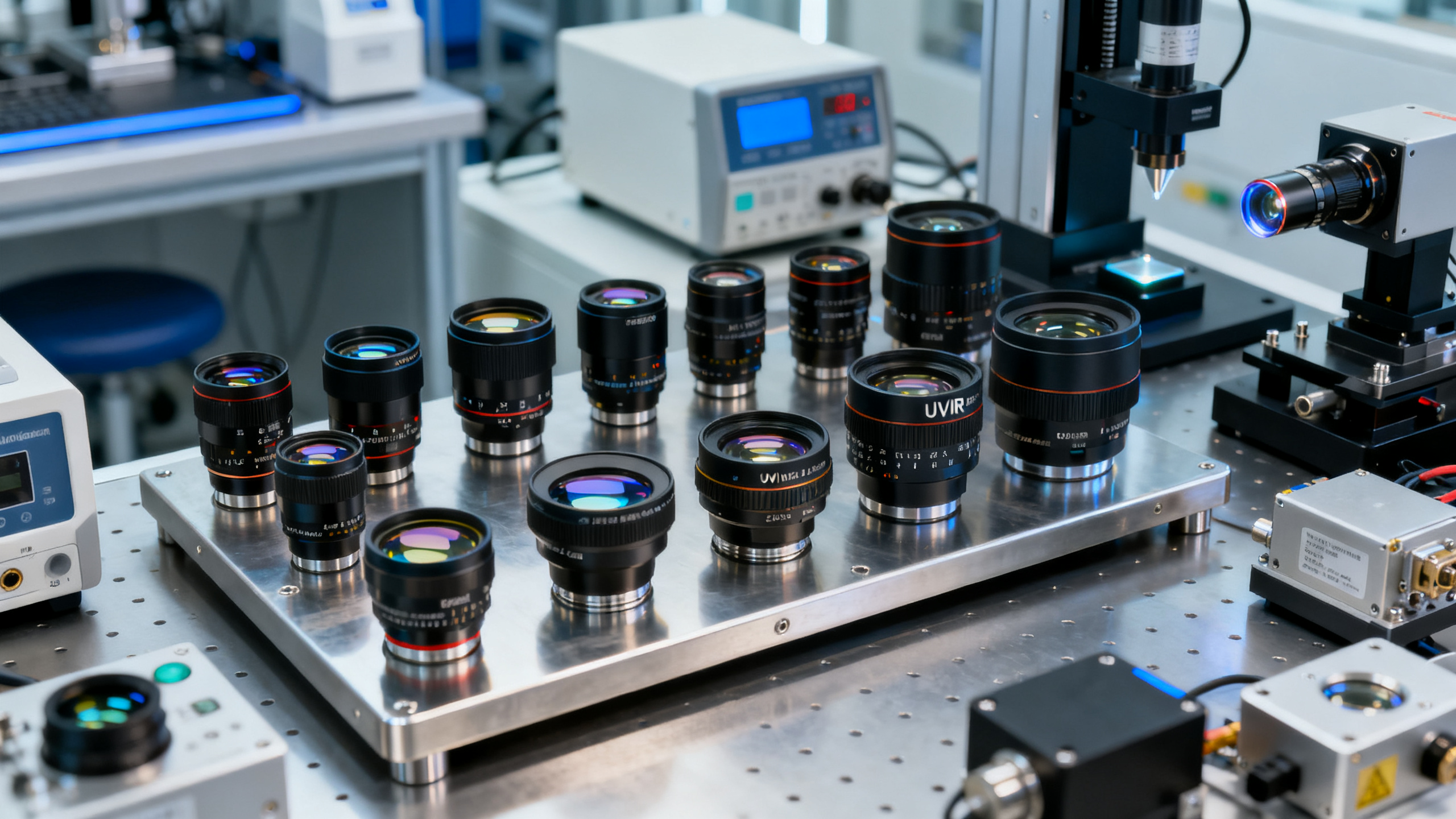
On May 7, 2026, German specialty glass manufacturer SCHOTT and Japanese optical materials supplier HOYA jointly announced the suspension of supply of key lanthanum-based optical glasses—including LaK9 and LaF28—to industrial optical lens manufacturers. This decision, driven by prioritized allocation of lanthanum glass capacity toward medical imaging and photolithography lenses, has extended global lead times for industrial telecentric and machine vision lenses to over 24 weeks. Manufacturers in China are accelerating adoption of domestically developed alternative glass formulations.
Event Overview
On May 7, 2026, SCHOTT and HOYA issued a joint public notice confirming the immediate suspension of non-medical-grade lanthanum optical glass supply—specifically grades LaK9 and LaF28—to industrial optical lens producers. The notice cited sustained reallocation of production capacity toward medical imaging and semiconductor photolithography applications as the primary reason. As a direct consequence, lead times for industrial-grade telecentric and machine vision lenses worldwide have exceeded 24 weeks.
Impact on Specific Industry Segments
Industrial lens manufacturers (OEM/ODM lens makers): These firms rely directly on LaK9 and LaF28 for high-performance, low-distortion lens designs used in precision metrology and automated inspection. Supply suspension disrupts BOM continuity, delays new product launches, and increases validation timelines for substitute materials.
Machine vision system integrators: Longer lens lead times constrain system delivery schedules, especially for time-sensitive factory automation deployments. Integration testing cycles may extend due to lens availability uncertainty and potential optical performance variance with alternative glass.
Industrial automation equipment suppliers: Companies embedding vision-guided positioning or AI-based defect detection into end machines face cascading delays in final assembly and commissioning—particularly where custom telecentric optics are integral to measurement accuracy.
Procurement and supply chain managers (across electronics, automotive, and semiconductor equipment sectors): Sourcing teams must now reassess multi-tier material dependencies, validate secondary suppliers, and adjust safety stock policies for critical optical components—not just lenses, but also related mounts, calibration targets, and illumination modules affected by optical redesigns.
What Enterprises and Practitioners Should Monitor and Do Now
Track official communications from SCHOTT and HOYA on scope and duration
The current notice specifies suspension “effective immediately” but does not define an end date or volume thresholds. Stakeholders should monitor both companies’ official channels for updates on possible phased resumption, priority tiers, or qualification pathways for industrial customers.
Validate optical performance of domestic替代 glass alternatives in critical applications
Chinese glass developers (e.g., CDGM, Hikari, and emerging domestic suppliers) are advancing lanthanum-free or reduced-lanthanum formulations. However, substitution requires full re-characterization—including thermal stability, Abbe number consistency, and coating adhesion—especially for high-magnification telecentric systems operating under varying ambient conditions.
Review lens-dependent product roadmaps and adjust delivery commitments
Manufacturers with upcoming product launches or contract renewals tied to specific lens SKUs should initiate internal impact assessments: identify which designs use LaK9/LaF28, quantify redesign effort required, and assess feasibility of interim workarounds (e.g., modified optical paths, software-based distortion correction).
Engage early with qualified lens assemblers offering dual-material platforms
Some Tier-2 industrial lens suppliers already maintain parallel design libraries using both legacy and alternative glasses. Early engagement allows co-development of drop-in replacements with minimized mechanical and electrical interface changes—reducing validation overhead compared to full redesign.
Editorial Perspective / Industry Observation
Observably, this development signals a structural shift—not a temporary shortage—in the allocation of strategic optical materials. Lanthanum glass is increasingly treated as a mission-critical resource governed by application priority rather than market demand alone. Analysis shows that medical and semiconductor lithography segments now command de facto allocation rights, effectively relegating industrial optics to residual capacity. From an industry perspective, this event is less a supply shock and more a formal recognition of long-emerging tiering in advanced optical materials access. It underscores growing interdependence between industrial automation hardware and upstream specialty materials policy—even outside regulated sectors.
Current more appropriate understanding is that this is not a transient bottleneck but an inflection point indicating tighter, more deliberate control over high-performance optical material flows. Continued monitoring is warranted—not only for glass availability, but for how lens manufacturers adapt their design philosophies, qualification frameworks, and supplier diversification strategies.

Conclusively, this event reflects an evolving hierarchy in optical material allocation, where industrial applications now operate under constrained access to foundational materials previously considered broadly available. It highlights increasing exposure of machine vision and precision metrology supply chains to upstream strategic material decisions—decisions shaped more by healthcare and semiconductor imperatives than by industrial market dynamics. Stakeholders should treat this not as a logistical anomaly, but as a signal to recalibrate long-term component sourcing, optical design flexibility, and cross-supplier qualification protocols.
Source Disclosure: Primary information derived from the joint announcement issued by SCHOTT AG and HOYA Corporation on May 7, 2026. No third-party data, analyst reports, or unconfirmed industry commentary were referenced. Ongoing developments—including timeline revisions, regional exemptions, or updated qualification criteria—remain subject to official updates from SCHOTT and HOYA and are noted here as pending observation.
Technical Specifications
- Air Handling Unit Supplier Checklist: Performance Data, Lead Times, and SupportAuthor :Environmental Engineering Director
- Buying Fiberglass Water Tanks Wholesale: Compare Quotes and Delivery CostsAuthor :Environmental Engineering Director
- Choosing an XLPE Power Cable Supplier: Test Reports, Traceability, and Lead TimesAuthor :Grid Infrastructure Analyst
Expert Insights

Chief Security Architect
Dr. Thorne specializes in the intersection of structural engineering and digital resilience. He has advised three G7 governments on industrial infrastructure security.
Related Analysis
- Oct 19, 2026Air Handling Unit Supplier Checklist: Performance Data, Lead Times, and SupportAuthor :Environmental Engineering Director
- Oct 18, 2026Buying Fiberglass Water Tanks Wholesale: Compare Quotes and Delivery CostsAuthor :Environmental Engineering Director
- Oct 17, 2026Choosing an XLPE Power Cable Supplier: Test Reports, Traceability, and Lead TimesAuthor :Grid Infrastructure Analyst
Core Sector // 01
Security & Safety
- IEC 62443-3-3:2026 Raises Cybersecurity Bar for Industrial OpticsAuthor :Precision Metrology Expert

- EU Sets New CE Rules for Industrial OpticsAuthor :Precision Metrology Expert

- How to Evaluate a Metallurgical Microscope Exporter for Image Quality and ComplianceAuthor :Precision Metrology Expert

- UL Expands Certification Route for Hazardous-Area OpticsAuthor :Precision Metrology Expert

- Shanghai Port Delays Deepen Under Origin ChecksAuthor :Precision Metrology Expert

- CIOE 2026 to Spotlight Vision and Tactile SensorsAuthor :Precision Metrology Expert

- MWC Shanghai 2026 Opens June 24 With CPO and Industrial Security in FocusAuthor :Precision Metrology Expert

- Brazil Tightens INMETRO Rules for Industrial Optical LensesAuthor :Precision Metrology Expert