CPSC Mandates IEC 62471-2:2026 RG2+ Labels for Industrial IR Cameras
Author
Date Published
Reading Time
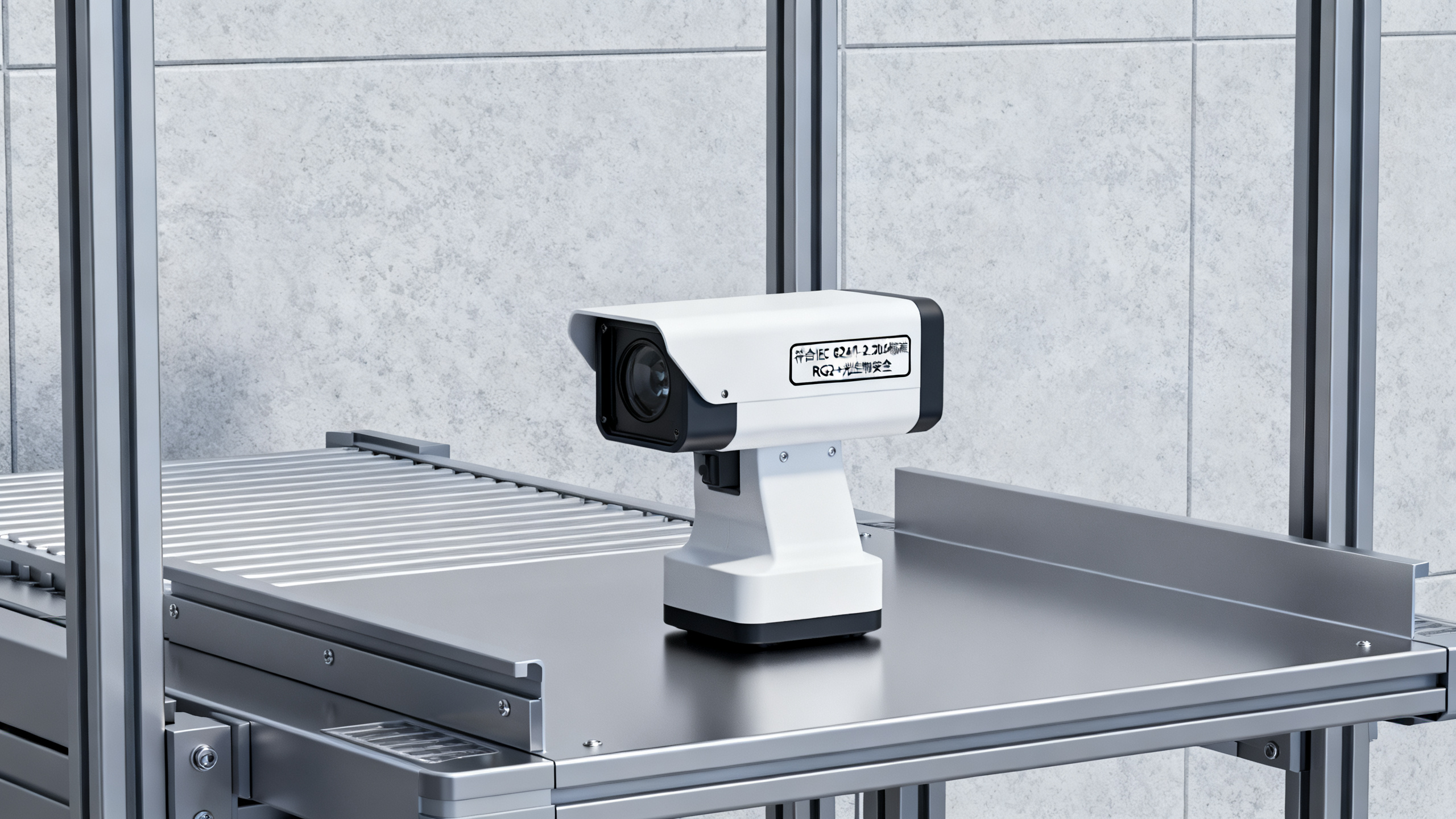
On May 8, 2026, the U.S. Consumer Product Safety Commission (CPSC) issued an urgent technical compliance notice requiring industrial-grade infrared (IR) thermal imagers — including handheld and fixed units used in industrial inspection, power line maintenance, and fire rescue — to carry visible photobiological safety labels per IEC 62471-2:2026, indicating Risk Group 2 (RG2) or higher. This directive directly affects manufacturers, importers, and distributors exporting such devices to the U.S., with non-compliant units subject to detention and recall under the Federal Hazardous Substances Act.
Event Overview
The U.S. Consumer Product Safety Commission (CPSC) released a technical compliance reminder on May 8, 2026, addressed to importers of infrared thermal imaging equipment. The notice specifies that all IR thermal imagers intended for industrial detection, electrical infrastructure inspection, and firefighting/rescue applications must undergo photobiological radiation hazard assessment in accordance with IEC 62471-2:2026. Devices determined to fall within Risk Group 2 (RG2) or RG3 must display the corresponding label in a prominent location on the device body. Units without such labeling will be deemed non-compliant under the Federal Hazardous Substances Act, potentially triggering customs detention and mandatory recall.
Industries Affected
Direct Exporters and Importers
Companies importing IR thermal imagers into the U.S. are directly responsible for regulatory compliance under CPSC rules. Failure to affix the required RG2+ label — verified through third-party testing — may result in shipment rejection at U.S. ports, delayed clearance, or post-entry enforcement actions including product recall.
IR Optical Component and System Manufacturers (e.g., Chinese OEM/ODM Firms)
Manufacturers supplying complete IR camera systems or core optical modules to U.S.-bound exporters must ensure their products meet the IEC 62471-2:2026 photobiological safety classification. As the notice explicitly calls for immediate third-party RG testing, upstream producers face revised design validation requirements and potential requalification timelines before shipment.
Distribution and Channel Partners
U.S.-based distributors, integrators, and value-added resellers handling industrial IR cameras must verify label compliance prior to resale or integration into larger systems (e.g., drone-mounted thermal payloads or substation monitoring suites). Absence of the label may expose them to liability as “importers” under CPSC’s definition if they assume ownership upon entry.
Key Considerations and Immediate Actions for Stakeholders
Monitor official CPSC guidance and potential updates to enforcement timing
The May 8 notice is a compliance reminder, not a final rulemaking. Stakeholders should track whether CPSC issues a formal rule, compliance deadline extension, or clarifying FAQs — particularly regarding applicability to legacy models already in U.S. distribution channels.
Prioritize third-party RG testing for high-volume export SKUs
Given the requirement for independent verification, companies should identify top-selling industrial IR camera models destined for the U.S. market and initiate IEC 62471-2:2026 testing without delay. Testing turnaround time and lab capacity — especially for labs accredited to the 2026 edition — may constrain near-term shipments.
Distinguish between regulatory signal and operational implementation
This notice signals heightened CPSC scrutiny of optical radiation hazards in non-consumer-grade electro-optical equipment. However, it does not yet define test protocols for IR-specific emission profiles beyond the general framework of IEC 62471-2:2026. Practical implementation depends on how accredited labs interpret and apply the standard to thermal imaging systems emitting only in the mid- to long-wave IR spectrum (3–14 µm), where photobiological risk is typically low but not excluded by the standard.
Update labeling workflows and documentation for U.S.-bound units
Manufacturers and importers must revise packaging, user manuals, and physical labeling procedures to include the RG2/RG3 designation. Label placement must be durable, legible, and positioned per CPSC visibility expectations — separate from existing CE or FCC markings.
Editorial Observation / Industry Perspective
Observably, this notice reflects CPSC’s expanding scope beyond traditional consumer products toward performance-critical industrial tools with optical interfaces. Analysis shows the agency is applying photobiological safety frameworks — historically reserved for UV/visible lasers and LEDs — to broader electro-optical instrumentation. It is more accurately interpreted as an early-stage regulatory signal than an immediately enforceable mandate with penalties; however, its specificity regarding standard edition (IEC 62471-2:2026), risk group thresholds (RG2+), and application domains indicates deliberate targeting of a defined product segment. The industry should treat this as a marker of evolving expectations for radiometric transparency in export-ready IR hardware — particularly where human proximity during operation is routine (e.g., utility pole inspections, structural fire assessments).
In summary, the CPSC’s May 2026 notice introduces a new, standardized labeling requirement for industrial IR thermal imagers entering the U.S. market. Its significance lies not in introducing novel safety risks, but in formalizing accountability for photobiological hazard communication — shifting responsibility upstream to manufacturers and importers. Currently, it is best understood as a procedural compliance trigger requiring verification, labeling, and documentation updates — rather than evidence of newly identified hazards or imminent market disruption.
Source: U.S. Consumer Product Safety Commission (CPSC) technical compliance reminder, issued May 8, 2026.
Note: Ongoing observation is warranted for CPSC follow-up documents, including potential enforcement guidance, transition periods, or interpretations of IEC 62471-2:2026 applicability to passive thermal imaging systems.
Technical Specifications
- How to Select an Emissions Monitoring System Analyzer for Compliance ReportingAuthor :Precision Metrology Expert
- How to Select an Access Control Management System for Multi-Site FacilitiesAuthor :Safety Compliance Lead
- Portable Gas Monitor Calibration: How Often Is It Needed for Safe Confined-Space Work?Author :Precision Metrology Expert
Expert Insights

Chief Security Architect
Dr. Thorne specializes in the intersection of structural engineering and digital resilience. He has advised three G7 governments on industrial infrastructure security.
Related Analysis
- Sep 21, 2026How to Select an Emissions Monitoring System Analyzer for Compliance ReportingAuthor :Precision Metrology Expert
- Sep 20, 2026How to Select an Access Control Management System for Multi-Site FacilitiesAuthor :Safety Compliance Lead
- Sep 19, 2026Portable Gas Monitor Calibration: How Often Is It Needed for Safe Confined-Space Work?Author :Precision Metrology Expert
Core Sector // 01
Security & Safety
- IEC 62443-3-3:2026 Raises Cybersecurity Bar for Industrial OpticsAuthor :Precision Metrology Expert

- EU Sets New CE Rules for Industrial OpticsAuthor :Precision Metrology Expert

- How to Evaluate a Metallurgical Microscope Exporter for Image Quality and ComplianceAuthor :Precision Metrology Expert

- UL Expands Certification Route for Hazardous-Area OpticsAuthor :Precision Metrology Expert

- Shanghai Port Delays Deepen Under Origin ChecksAuthor :Precision Metrology Expert

- CIOE 2026 to Spotlight Vision and Tactile SensorsAuthor :Precision Metrology Expert

- MWC Shanghai 2026 Opens June 24 With CPO and Industrial Security in FocusAuthor :Precision Metrology Expert

- Brazil Tightens INMETRO Rules for Industrial Optical LensesAuthor :Precision Metrology Expert