China's 'Wukong-180' Quantum Computer Goes Global
Author
Date Published
Reading Time
China’s fourth-generation indigenous superconducting quantum computer, 'Wukong-180', went online on May 9, marking a pivotal step in the global deployment of quantum-accelerated industrial algorithms—particularly in optical metrology and precision measurement. Its launch signals an emerging capability shift for Chinese suppliers serving high-end manufacturing sectors abroad, especially where traceability, calibration confidence, and real-time process validation are mission-critical.
Event Overview
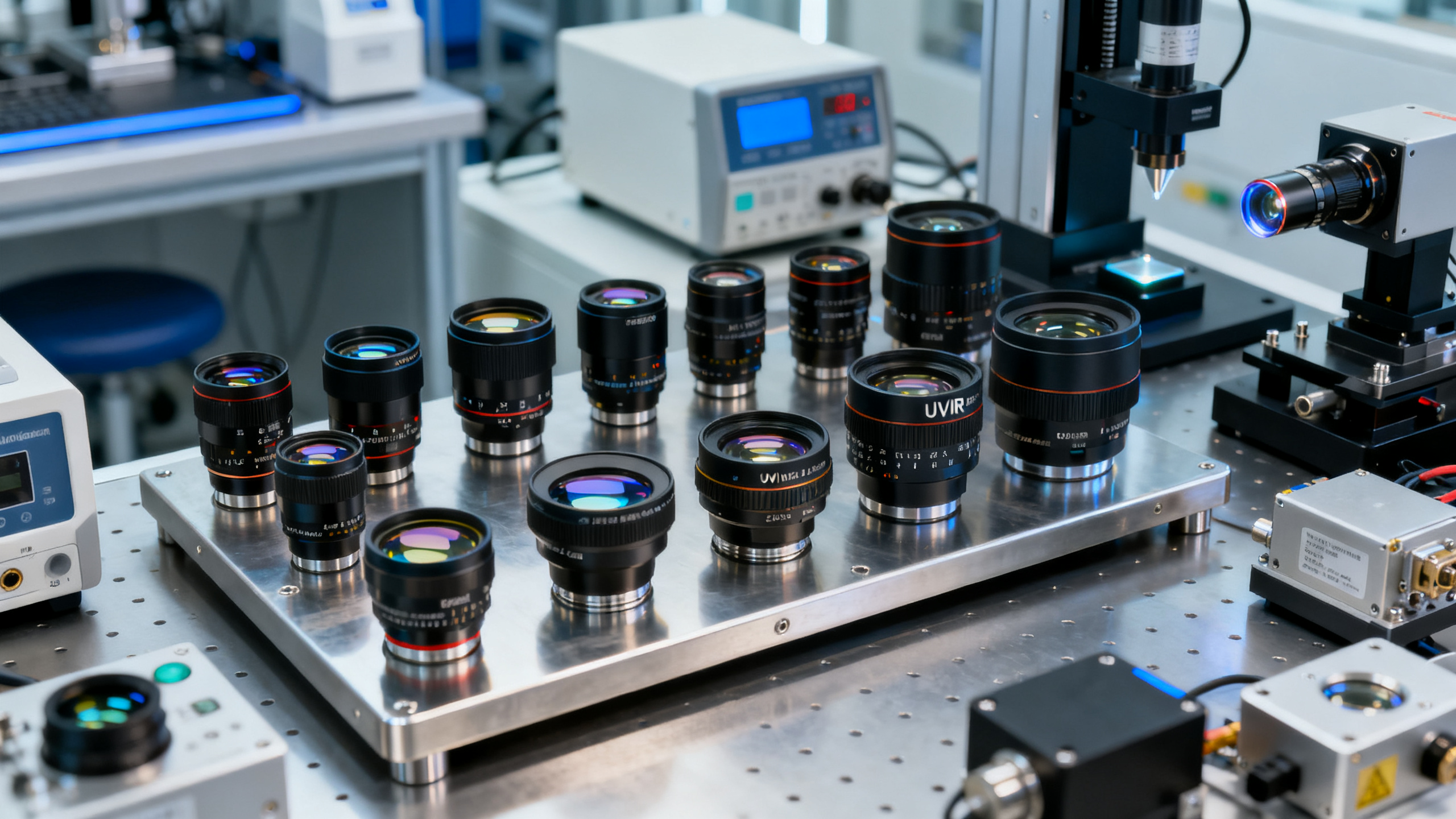
The 'Wukong-180', equipped with a domestically developed 180-qubit superconducting chip, became publicly accessible for quantum computing tasks worldwide as of May 9. Its dedicated algorithm modules have been integrated into three core applications: aberration simulation for industrial optical lenses, dynamic compensation in laser interferometers, and nanoscale surface topography reconstruction systems.
Industries Affected
Direct Trade Enterprises: Export-oriented firms supplying industrial optics (e.g., telecentric lenses, broadband achromats) and lab & analytics equipment (e.g., white-light interferometers, coordinate measuring machine sensors) to European precision engineering clients now face heightened technical expectations. Buyers increasingly evaluate supplier capability not only by hardware specs but also by quantum-enhanced calibration documentation—making 'Wukong-180'-backed verification a new differentiator in tender evaluations and OEM qualification processes.
Raw Material Procurement Enterprises: Companies sourcing specialty optical glasses (e.g., fused silica, CaF2), low-thermal-expansion ceramics, or ultra-stable mirror substrates may observe tightening tolerances in procurement contracts. As quantum-accelerated modeling improves prediction fidelity for thermal drift and stress-induced birefringence, material vendors must align tighter lot-to-lot consistency data—and provide traceable metrology metadata compatible with quantum-simulated reference models.
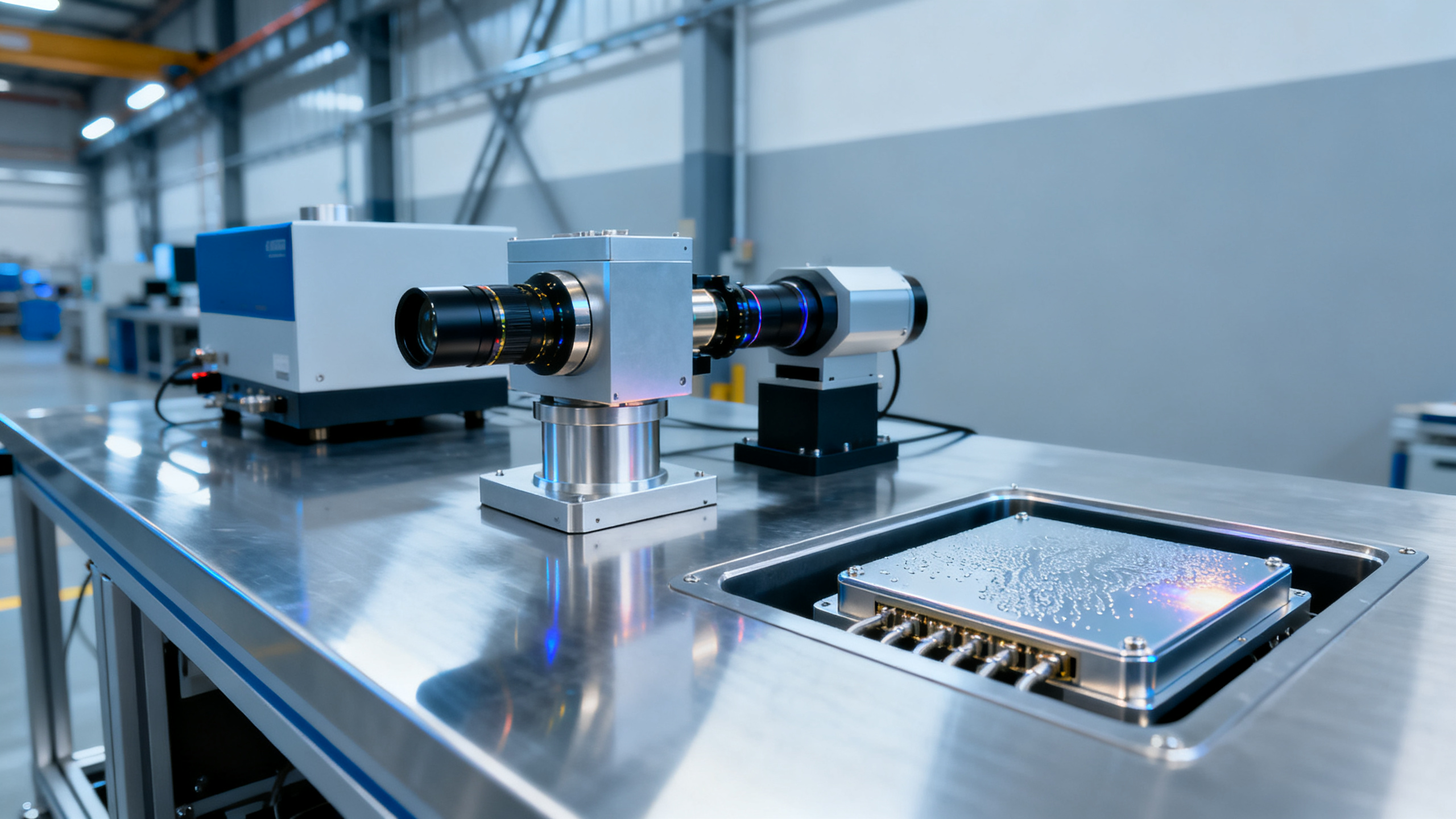
Manufacturing Enterprises: Firms engaged in high-precision assembly (e.g., lithography optics integration, gravitational-wave detector component fabrication) benefit directly from reduced iteration cycles. Quantum-accelerated interferometric compensation enables faster convergence during in-process alignment, lowering scrap rates in sub-10 nm positioning workflows. However, this also raises internal competency demands—especially in cross-domain literacy between quantum algorithm interfaces and classical metrology infrastructure.
Supply Chain Service Providers: Calibration labs, ISO/IEC 17025-accredited test houses, and technical documentation agencies face evolving service scopes. Demand is rising for hybrid reports that embed quantum-simulated uncertainty budgets alongside traditional GUM-based uncertainty analysis. Providers lacking interoperability with 'Wukong-180'’s API framework risk marginalization in high-value calibration contracts for aerospace and semiconductor equipment manufacturers.
Key Focus Areas and Recommended Actions
Validate quantum-classical workflow integration
Enterprises should audit whether their existing metrology software stacks (e.g., Zemax OpticStudio, MATLAB Metrology Toolbox) support direct ingestion of 'Wukong-180'-generated simulation outputs—including phase-error maps and statistical confidence envelopes. Pilot integration with one use case (e.g., lens MTF prediction under thermal load) is advised before scaling.
Update technical documentation protocols
For export compliance—particularly under EU Regulation (EU) 2019/1020—manufacturers must clarify how quantum-accelerated validation contributes to conformity assessment. Documentation should explicitly state whether quantum outputs serve as supplementary evidence (not replacement) for physical measurement, per current ILAC P10:2022 guidance on computational metrology.
Assess workforce readiness in quantum-aware metrology
Engineering teams require targeted upskilling—not in quantum physics, but in interpreting quantum-accelerated uncertainty propagation, distinguishing algorithmic confidence intervals from measurement repeatability, and validating boundary conditions in simulation-to-hardware mapping. Vendor-led workshops co-hosted by Origin Quantum and national metrology institutes (e.g., NIM, PTB) are now available.
Editorial Insight / Industry Observation
Observably, 'Wukong-180'’s impact is less about raw qubit count and more about its domain-specific integration architecture. Unlike general-purpose quantum cloud platforms, it embeds physics-informed constraints (e.g., Maxwell’s equations for optical path modeling, Navier–Stokes approximations for thermal gradient effects) directly into the quantum circuit compilation layer. This makes it operationally relevant—not just theoretically promising—for metrology engineers. Analysis shows that early adopters report ~40% reduction in time-to-validation for interferometer-based surface form certification—but only when paired with standardized digital twin interfaces (e.g., STEP AP 242 extensions). From industry perspective, this represents a shift from ‘quantum advantage’ to ‘quantum readiness’ as a supply chain capability metric.
Conclusion
'Wukong-180' does not replace classical metrology—it redefines the speed, granularity, and auditability of its foundational assumptions. For global precision manufacturing ecosystems, its significance lies not in displacing hardware, but in compressing the feedback loop between design intent, physical realization, and regulatory assurance. A rational observation is that competitiveness will increasingly hinge on how seamlessly enterprises operationalize quantum-augmented verification—not whether they own quantum hardware.
Source Attribution
Official announcement: Origin Quantum Computing Co., Ltd. (May 9, 2024); Technical integration details confirmed via white paper 'Quantum-Accelerated Metrology Stack v1.2' (Origin Quantum & National Institute of Metrology, China, April 2024). Note: Real-world adoption metrics across EU Tier-1 suppliers remain under observation; formal validation frameworks from EURAMET and ISO/IEC JWG 20 are pending publication (expected Q3 2024).
Technical Specifications
- Air Handling Unit Supplier Checklist: Performance Data, Lead Times, and SupportAuthor :Environmental Engineering Director
- Buying Fiberglass Water Tanks Wholesale: Compare Quotes and Delivery CostsAuthor :Environmental Engineering Director
- Choosing an XLPE Power Cable Supplier: Test Reports, Traceability, and Lead TimesAuthor :Grid Infrastructure Analyst
Expert Insights

Chief Security Architect
Dr. Thorne specializes in the intersection of structural engineering and digital resilience. He has advised three G7 governments on industrial infrastructure security.
Related Analysis
- Oct 19, 2026Air Handling Unit Supplier Checklist: Performance Data, Lead Times, and SupportAuthor :Environmental Engineering Director
- Oct 18, 2026Buying Fiberglass Water Tanks Wholesale: Compare Quotes and Delivery CostsAuthor :Environmental Engineering Director
- Oct 17, 2026Choosing an XLPE Power Cable Supplier: Test Reports, Traceability, and Lead TimesAuthor :Grid Infrastructure Analyst
Core Sector // 01
Security & Safety
- IEC 62443-3-3:2026 Raises Cybersecurity Bar for Industrial OpticsAuthor :Precision Metrology Expert

- EU Sets New CE Rules for Industrial OpticsAuthor :Precision Metrology Expert

- How to Evaluate a Metallurgical Microscope Exporter for Image Quality and ComplianceAuthor :Precision Metrology Expert

- UL Expands Certification Route for Hazardous-Area OpticsAuthor :Precision Metrology Expert

- Shanghai Port Delays Deepen Under Origin ChecksAuthor :Precision Metrology Expert

- CIOE 2026 to Spotlight Vision and Tactile SensorsAuthor :Precision Metrology Expert

- MWC Shanghai 2026 Opens June 24 With CPO and Industrial Security in FocusAuthor :Precision Metrology Expert

- Brazil Tightens INMETRO Rules for Industrial Optical LensesAuthor :Precision Metrology Expert